US tech credit risks surge as AI capex hits $1.57 trillion
A rapid buildout of debt-fuelled data centres by US tech giants is colliding with falling AI prices and Chinese competition, raising the prospect of massive capital destruction.
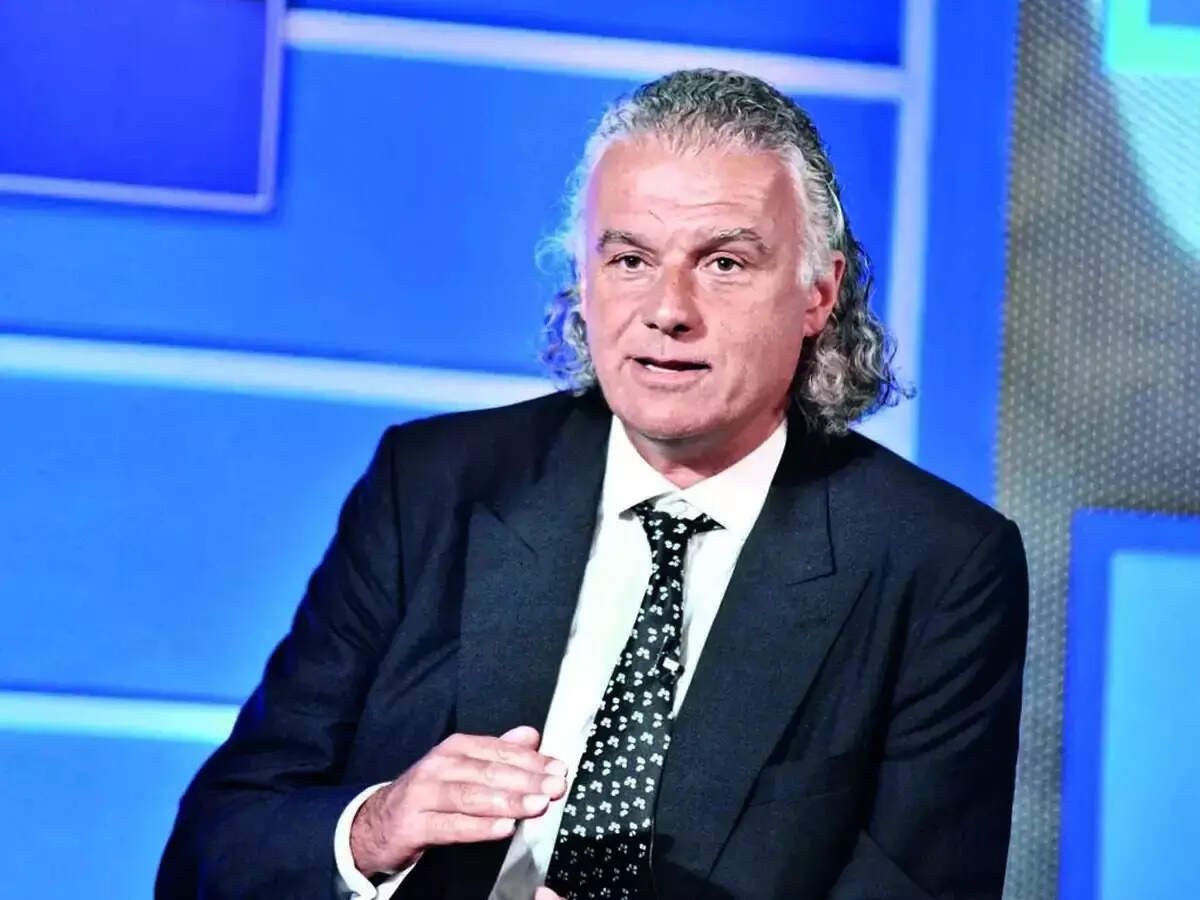
The US artificial intelligence investment cycle is showing signs of severe strain as a rapid buildout of infrastructure collides with falling prices and mounting credit risks. Veteran strategist Chris Wood warns that the sector is approaching an extended hangover, with markets overestimating near-term returns while underestimating the capital required to get there.
Microsoft, Alphabet, Amazon and Meta are projected to spend a combined $1.57 trillion on capital expenditure over 2026 and 2027. Alphabet recently raised its 2026 guidance by $15 billion to as much as $205 billion. Together, these four companies are now directing an estimated 92% of their forecast operating cash flow towards physical infrastructure, abandoning the asset-light models that defined their earlier growth.
This spending is increasingly funded by debt rather than cash. The leading hyperscalers issued $194 billion of investment-grade debt in 2026, far surpassing the $55 billion raised by the US energy sector. Credit markets are reacting: 10-year bond spreads for Amazon, Alphabet and Meta have widened to 78, 70 and 104 basis points over Treasuries, respectively, since early July. Oracle was downgraded to BBB- on July 9 with its spreads jumping to 219 basis points, while highly leveraged cloud provider CoreWeave has seen its five-year credit-default-swap spread climb to 701 basis points.
The revenue needed to service this debt is threatened by an intensifying price war and Chinese competition. Chinese AI models processed nearly five times as many tokens as leading US models on the OpenRouter platform in the week ending July 19. The July 17 launch of Moonshot AI’s Kimi K3, which offers roughly 95% of the performance of Anthropic’s Claude Fable 5, has reinforced the commoditisation threat first highlighted by the DeepSeek moment. The average price for one million AI tokens has dropped 25% since late May to $1.55.
The underlying business case relies heavily on a handful of unprofitable customers. Microsoft, Alphabet, Amazon and Oracle held $2.1 trillion in remaining performance obligations at the end of the first quarter, a 184% surge from a year earlier. Roughly half of that backlog is tied to OpenAI and Anthropic, neither of which is currently profitable. Hyperscalers have essentially extended massive, unsecured credit to cash-burning startups while building capacity on speculative demand.
Balance sheet risks appear significantly understated. Off-balance-sheet data-centre lease commitments for the top five US hyperscalers have ballooned to $662 billion from $152 billion at the end of 2023, with one estimate putting total "hidden" debt at $1.65 trillion, eclipsing their $1.35 trillion of reported debt. Meanwhile, recent earnings growth has been flattered by a $71.5 billion surge in other non-operating income, which accounted for two-thirds of the hyperscalers' annualised profit increase.
Wood emphasises that AI is not a passing fad and that cheaper computing will ultimately drive adoption. However, the gap between current expenditure and actual revenue generation is widening. "The time for an extended AI hangover after the initial surge of enthusiasm is approaching, if it has not already arrived," Wood said.