US imposes 12.5% tariffs on Singapore goods over forced labour
Washington will apply 12.5% duties to roughly a third of Singapore's US-bound domestic exports, escalating trade friction under a forced-labour probe.
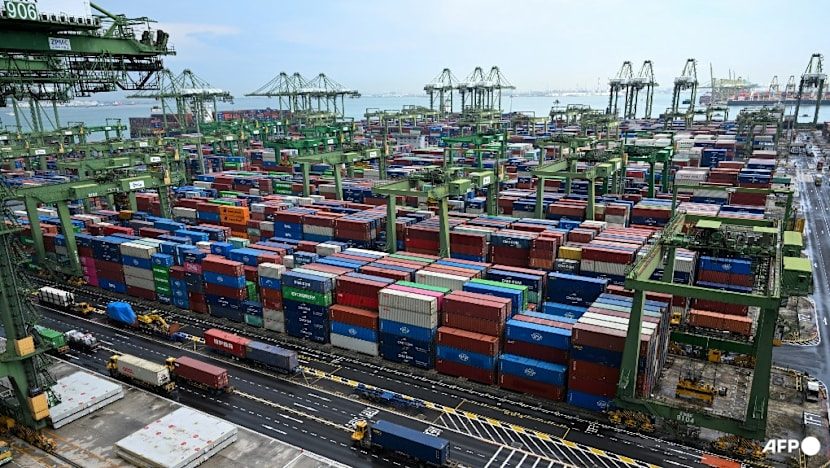
The United States will impose a 12.5% tariff on selected Singaporean goods starting Friday (Jul 24), concluding a Section 301 investigation that found the city-state lacking sufficient bans on imports produced with forced labour. The duties will impact a significant slice of bilateral trade. Singapore’s Ministry of Trade and Industry estimates roughly one-third of its domestic exports to the US face exposure, though goods already subject to sector-specific tariffs like steel and aluminium are exempt.
Singapore is one of 54 economies, including China and Britain, that the US Trade Representative concluded in June failed to effectively enforce forced labour import prohibitions. This triggered the maximum proposed 12.5% rate, compared to a lower 10% rate designated for 16 other economies that have explicit bans or commitments to enact them. The new duties take effect the same day a separate round of global tariffs introduced earlier this year by US President Donald Trump is set to expire.
US officials indicated the latest measures are designed to be more resilient to legal challenges than previous rounds. For executives and investors, the sudden application of a 12.5% levy creates immediate margin pressure and supply chain uncertainty. While the exemption for goods entering under the US-Mexico-Canada free trade pact provides a narrow avenue for tariff avoidance, companies will need to rapidly audit their operations to determine exact liability.
Singapore’s government has firmly rejected the justification for the penalties. Foreign Affairs Minister Vivian Balakrishnan told US Secretary of State Marco Rubio that the move has "no technical or economic basis". Balakrishnan emphasized that the US actually runs a growing trade surplus with Singapore, undermining the premise that the city-state represents an unfair threat to American commercial interests.
"Nevertheless, you know as well as I do that the American administration, for its own domestic political reasons, needs to raise tariff revenue," Balakrishnan said on the sidelines of the ASEAN Foreign Ministers' Meeting. He noted that Singapore is simply trying to avoid becoming "collateral damage" as Washington raises duties broadly across its trading partners. Despite the diplomatic pushback, the new cost structure takes effect Friday.