Nigeria to expand cost-reflective power tariffs to unlock $10bn investment
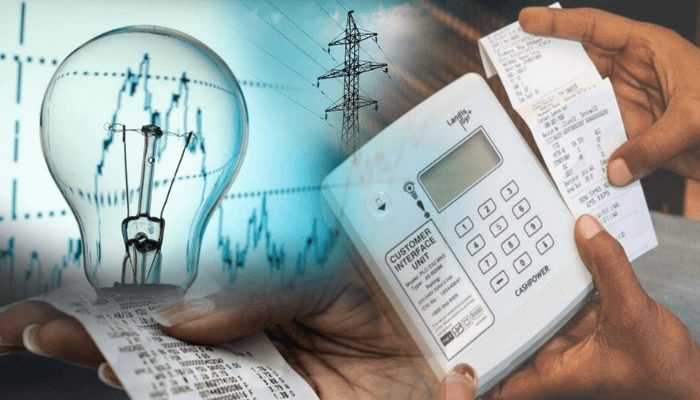
Nigeria has made full cost-reflective electricity tariffs official policy to attract the tenfold increase in annual investment needed to fix its grid, though a massive legacy debt overhang continues to threaten the sector's financial viability.
Nigeria has committed to extending cost-reflective electricity tariffs to all consumer bands, moving beyond the premium Band A class that shifted to market rates last year. Sadiq Wanka, special adviser to President Bola Tinubu on power infrastructure, said the policy is settled, with the only unresolved issue being the timeline. The government is delaying broader implementation until it establishes targeted subsidies through the Nigerian Electricity Regulatory Commission’s Power Consumer Assistance Fund to protect low-income households.
The pricing reform is central to closing a severe financing gap. Current public and private spending across generation, transmission, and distribution stands at roughly $1 billion annually. According to the government’s 2024 Integrated Resource Plan, that figure must increase tenfold to achieve universal access and reliable industrial power.
That projected capital deployment will overwhelmingly favour renewables. By 2045, solar and hydropower are expected to account for about 80 percent of grid capacity. Wanka noted this trajectory is driven purely by economics, not climate targets. “That analysis was done not really looking at a climate perspective, but looking at what is the least-cost way to deliver power,” he said.
De-risked investment pathways
For investors unwilling to wait for systemic tariff fixes, Wanka highlighted structures that bypass national payment risks. Vertically integrated models, like the Aba power project where an investor owns both generation and distribution, offer full insulation. Interconnected mini-grids and industrial-cluster arrangements, such as those in Kano, provide similar shields by allowing operators to set tariffs directly or isolate service quality.
Policy changes are also opening state-level and transmission assets to private capital. The 2023 Electricity Act decentralized regulation, prompting states like Lagos, Kano, Jigawa, and Katsina to take equity stakes in local distribution utilities. Additionally, officials are finalising a Transmission Infrastructure Fund by year-end to seed early-stage private transmission projects.
Legacy debt drags on reforms
Despite the policy ambition, the sector’s balance sheet remains under severe strain. The government has begun clearing legacy debts using a Series I bond, deploying N501 billion in February 2026 to settle verified obligations. Olu Verheijen, special adviser to the President on energy, noted that N333.12 billion has been paid to eight generation companies operating 17 power plants, and the first coupon of N63.5 billion was settled in July 2026.
However, these interventions barely dent the overall liabilities. Joy Ogaji, managing director of the Association of Power Generation Companies, said total sector debt reached N7.66 trillion by June 2026. The bond programme covers only about 25.46 percent of that liability, leaving over N5.07 trillion outstanding.
Revenue shortfalls continue to accumulate. Between January and April 2026, generation companies received an average of just 42.5 percent of their monthly invoices, creating a persistent monthly gap of N122.7 billion. A separate tariff shortfall of N1.78 trillion was recorded between April 2025 and April 2026. Ogaji warned that without strict enforcement of cost-reflective tariffs and funded subsidies, the sector’s debt could balloon to N17.11 trillion by 2033, describing the situation as a growing financial contagion.