Micron Technology Hits $1 Trillion Valuation on AI Memory Chip Demand
Micron Technology has crossed a $1 trillion market capitalization after a five-year rally driven by artificial intelligence server demand, though analysts warn the sector remains vulnerable to cyclical downturns.
Micron Technology (NASDAQ: MU) officially crossed a $1 trillion market capitalization in May 2026, capping a remarkable five-year rally driven by surging demand for artificial intelligence infrastructure. The memory chipmaker’s shares are currently trading close to $1,000. This represents a stark contrast to their sub-$80 valuation just half a decade ago.
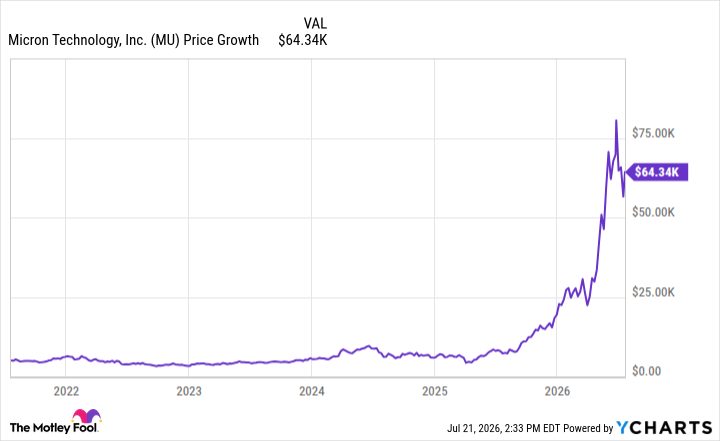
The financial impact of this sustained upward trajectory is substantial for early backers. An initial $5,000 investment in the company five years ago would now be worth $64,340. This equates to a return of nearly 1,200 percent for long-term shareholders who maintained their positions through significant market volatility.
The path to this trillion-dollar milestone was highly irregular and fraught with traditional semiconductor risks. Micron experienced a severe downturn in 2022 as global memory prices crashed. The company gradually clawed back its losses throughout 2023 before its valuation exploded this year on the back of new technological tailwinds.
This recent surge is directly tied to the rapid proliferation of AI servers, which require massive amounts of high-bandwidth memory (HBM) chips. Micron has successfully positioned itself to capture this insatiable demand from the data center market. Market observers now draw comparisons to the early, explosive growth trajectories of other major semiconductor players.
However, market professionals caution that this current momentum may not guarantee future stability for new investors entering the trade. The memory chip industry is historically defined by a boom-bust nature, and current valuations price in sustained, uninterrupted growth. If enterprise demand for AI hardware cools even marginally, Micron’s stock could fall hard once again.
Market participants must carefully weigh the company’s impressive recent performance against the inherent volatility of the broader memory sector. While the trillion-dollar milestone validates Micron's strategic pivot toward high-bandwidth memory, the industry remains unforgiving to late arrivals. Committing new capital inherently requires a high tolerance for the cyclical downturns that follow semiconductor supercycles.