EU leaders fail to break $1.7 trillion budget deadlock as political pressure mounts
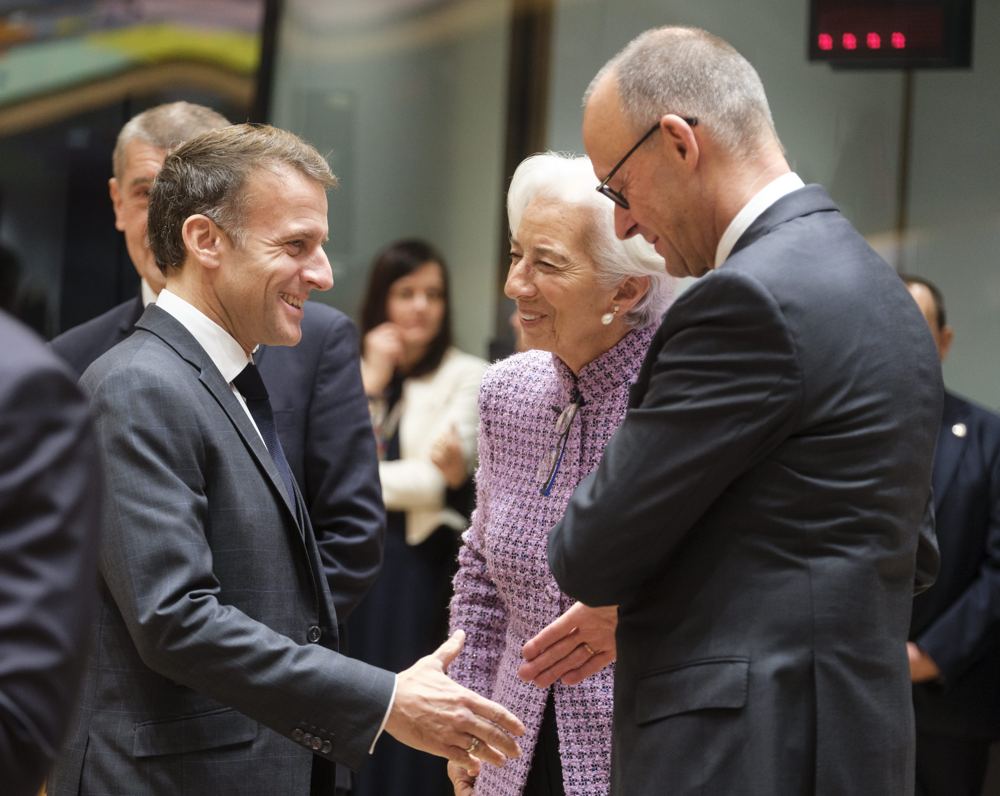
EU leaders failed to break a deadlock over the bloc’s budget, with talks set to resume in December as a key deadline looms.
European leaders failed to break a deadlock over the EU's next long-term budget on Thursday, leaving negotiators under pressure to meet their year-end target before a busy 2027 election cycle adds further complications.
National leaders are divided over the European Union's next long-term budget, which sets spending priorities and limits from 2028 to 2034. It requires unanimous approval from all 27 member states to pass, as well as a majority vote in favor from members of the European Parliament.
Representatives from EU member states met on Wednesday and Thursday to discuss the latest budget proposal from European Council President António Costa, which amounts to a spending plan worth 1.58 trillion euros ($1.73 trillion). It marks a downward revision of around 10% from the original proposals for the bloc's long-term budget, known as the Multiannual Financial Framework, or MFF.
The EU's budget negotiations come against a backdrop of surging government borrowing costs, spiraling inflation and sluggish growth across much of the continent, as well as concerns about rising budget deficits in various EU countries.
Failure to meet the year-end deadline for the budget to be agreed risks deepening the political deadlock at the center of the ongoing talks.
At a summit in Brussels Thursday, budget talks went on for 12 hours, according to a BBC report, with some participants said to have walked out of the meeting as conflicts emerged around spending priorities and aid for Ukraine.
A spokesperson for the European Commission was not available to comment on Thursday's talks.
German Chancellor Friedrich Merz told reporters on Thursday evening that the talks had brought "new movement" towards reducing the overall size of the budget, adding that leaders would reconvene in mid-December to resume talks.
But he also said: "The European Union comprises of 27 member states, not 23 or 24."
Merz, alongside the leaders of Denmark, the Netherlands, Austria, Finland and Sweden, said in September that the original 2-trillion-euro proposal would need to be reduced by "several hundred billion euros."
"We must make choices," they said in a letter addressed to Costa and Irish Taoiseach Micheál Martin, pointing out that their six countries finance almost 40% of all contributions to the budget.
They called for funding to be focused on defense spending, competitiveness and innovation and "the fight against irregular migration."
Costa labeled the revised budget plans "realistic" when he presented them last week, noting that despite the 10.2% reduction in spending the proposals still represented a 120% jump in competitiveness funding and a 232% upswing for defense compared to the current budget.
"We didn't reach an agreement," he said in a statement after Thursday's meeting. "Regarding the global volume of the budget, some member states asked for further reductions, most opposed further cuts. And some even proposed to reverse some cuts."
Some European parliamentarians also appeared unconvinced by the new proposals.
"Parliament is consistent and proposes more investments, [the] Council is inconsistent and proposes cuts," Romanian MEP Siegfried Mureşan said on Wednesday.
"When the Council finally reaches a position, that's when negotiations will start, not when they end. As prime ministers cannot dictate to national parliaments, prime ministers also cannot dictate to the European Parliament to adopt a budget that is too small, and which does not equip Europe for the future."
Elections are set to go ahead in key EU economies including Spain, Poland and Italy over the next 12 months, while France's spring presidential election is at the forefront of regional leaders' minds.
Current front-runner for the French presidency, far-right candidate Marine Le Pen, has previously called for the country to leave the EU and to cut its contributions to the bloc's budget.
Incumbent French President Emmanuel Macron stressed on Thursday that he had limited time left to have his say on EU spending.
"After 31 December, I will no longer be in a position, politically or democratically, to reopen discussions on the budget and bring them to a conclusion, as we will be entering a period far too close to the presidential election in France," he told reporters after the talks, according to French publication France 24 .
France, the EU's second-biggest economy after Germany, is being tasked with drastically cutting spending to bring its 5.1% national deficit closer to an EU guideline of 3%, while reeling from months of mass protests, riots and strikes over education funding and a cost-of-living crisis.