Nicaragua Natural Resources Explained 2026
Nicaragua earned a record US$8,908.9 million from exports in 2025, led by gold, coffee, beef and sugar, with US sanctions and tariffs shaping the trade. The post Nicaragua Natural Resources Explained 2026 appeared first on The Rio Times .
A plain-English guide to what Nicaragua digs, grows and generates, who buys it, and how US sanctions and tariffs shape that trade.
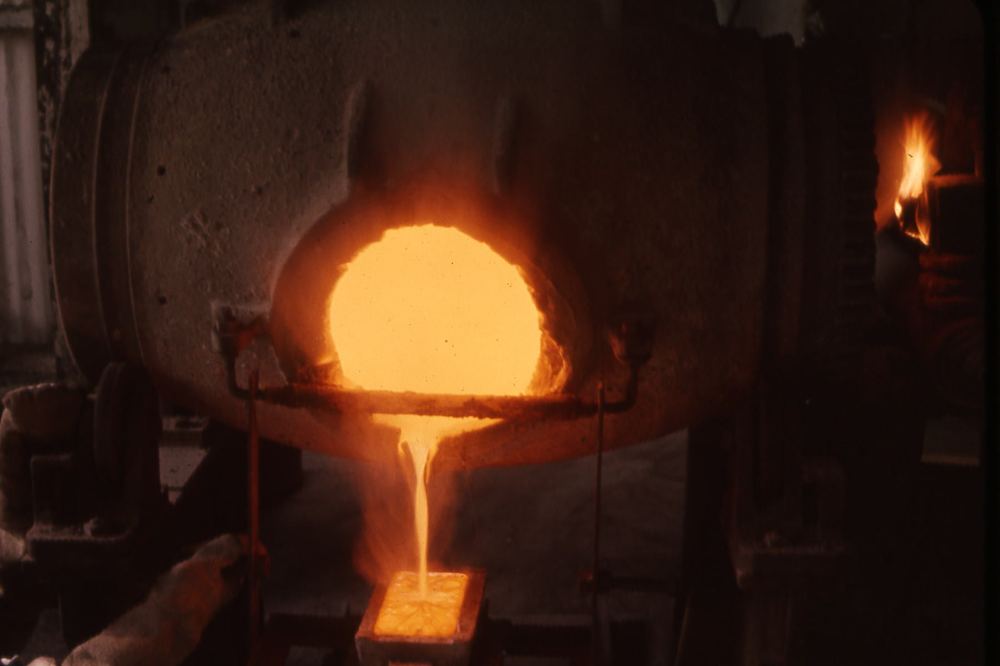
Nicaragua sells gold, coffee, beef and sugar abroad, with exports up 15.4% to US$8.9089 billion in 2025, the Central Bank of Nicaragua (BCN) said on 27 February 2026, and its president called it a record on 25 March. Gold alone earned US$1.9710 billion, the BCN’s fourth-quarter 2025 foreign trade report shows.
For readers in the United States, these goods connect Nicaragua to American sanctions lists, tariff schedules and supermarket shelves. The BCN’s export table for January to September 2026 shows US$2.1323 billion of goods going to the US, of which gold was US$1.2593 billion.
Gold is Nicaragua’s top commodity export, according to US Treasury press release jy2339 of 15 May 2024. In 2025 the BCN’s fourth-quarter foreign trade report put gold exports up 45.6% on 2024.
Price explains a large part of the rise. The BCN reports 593.7 thousand ounces sold in 2025 at an average US$3,319.7 per ounce, against US$2,340.7 per ounce in 2024, when exports were US$1.3539 billion.
The first quarter of 2026 made the pattern clearer. The BCN’s first-quarter 2026 foreign trade report shows gold exports of US$898.7 million, up 152.1%, on 190.0 thousand ounces at US$4,728.9 per ounce.
A year earlier, in the first quarter of 2025, the BCN recorded US$356.5 million on 128.6 thousand ounces at US$2,772.6 per ounce. Price and volume both rose, and price rose by more.
On 12 December 2023, La Gaceta, the official gazette, listed 20 inactive mining concessions (state licences to mine a set area). The Ministry of Energy and Mines, which grants and withdraws mining licences, cancelled them.
On 12 February 2025, the ministry revoked eight open-pit concessions, officially 79,373.38 hectares. Mineral Trading S.A., a mining company, lost four of them.
On 31 October 2025, Calibre Mining Nicaragua, now part of the Canadian miner Equinox Gold, relinquished two permits, Kisauri and Geranio. Kisauri covers 43,457.09 hectares and Geranio 47,895.22, or 91,352.31 in all, and two more permits of 87,541.45 hectares were given up in the days before.
Our report on a mining concession extension in Nueva Segovia shows one recent local case. This guide leaves 2026 grants out because no gazette notice could be confirmed.
Equinox Gold’s Form 6-K to 30 June 2026, a report foreign companies file with US regulators, filed with the US Securities and Exchange Commission, shows Nicaragua gold output of 140,757 ounces in the first half of 2026. The second quarter gave 59,476 ounces, and 2026 guidance is 225,000 to 250,000.
The filing gives output and guidance, not sales by buyer, so any effect of sanctions is not stated there. Our report on gold sanctions and US buyers follows that side of the story.
The Office of Foreign Assets Control (OFAC), the Treasury office that enforces US sanctions, built its pressure on gold in steps. On 27 November 2018, OFAC listed the first people under Executive Order 13851, a US order aimed at repression and corruption in Nicaragua: Néstor Moncada Lau, national security adviser to President Daniel Ortega, and Rosario Murillo, his wife and then vice president.
On 17 June 2022, Treasury sanctioned ENIMINAS (Empresa Nicaragüense de Minas, the state miner) and its board president Ruy Delgado López. Its press release jy0822 said Nicaraguan gold exports to the US in 2021 were above US$744 million, up 30%, and 79% of all gold exports.
Brian Nelson, Treasury’s Under Secretary for Terrorism and Financial Intelligence, said that day that “the regime has turned its back on the Nicaraguan people”. On 24 October 2022, Treasury designated the General Directorate of Mines, the Energy Ministry’s mining office, and a new executive order amended Order 13851 to allow sanctions on the gold sector.
A general licence, a blanket permission to finish existing deals, gave a wind-down period, according to release jy1046 of 24 October 2022. Nelson said then: “we can and will use every tool at our disposal to deny the Ortega-Murillo regime the resources they need”.
On 15 May 2024, release jy2339 named COMINTSA, a mining company, and Capital Mining Investment Nicaragua, a gold intermediary. On 16 April 2026, release sb0451 named seven gold firms (EMSA, Minero, Thomas Metal, Xinxin, Brother Metal, Zhong Fu and Santa Rita).
Treasury tied those listings to the 2025 seizure of the BHMB Mining Nicaragua plant, which had US investment, and says BHMB reportedly received no compensation. Treasury Secretary Scott Bessent said: “The United States will not allow the illicit confiscation of American-owned assets”.
The BCN’s January to September 2026 export table shows how large the US link still is, with US$1.2593 billion of gold among US$2.1323 billion of goods sent to the US. Gold to Canada was US$903.7 million, and all markets together took US$5.0291 billion.
The BCN’s first-quarter 2026 report puts the US share of goods exports at 41.1%, with Canada at 20.9% and El Salvador at 6.6%. In the fourth quarter of 2025 the US took 38.0% and Canada 17.4%.
For US readers, these listings name specific firms and people, not the whole country, and each round added names. Whether they will reach more gold buyers is not known.
Who owns and runs these firms is covered in our guide to who runs Nicaragua’s economy . The Treasury releases cited above list the named firms.
Coffee earned US$918.4 million in 2025, up from US$524.4 million in 2024, the BCN’s fourth-quarter 2025 report shows. Exporters sold 3,370.6 thousand quintales (100-pound sacks) at an average US$272.5 per quintal.
In the first quarter of 2026, coffee exports were US$366.0 million, up 60%, on 1,195.0 thousand quintales at US$306.3 each, the BCN’s first-quarter 2026 report says. The season ahead is covered in our report on the 2026/27 coffee harvest .
Beef earned US$960.8 million in 2025, up 27.1%, on 329.8 million pounds at US$2.9 per pound, the BCN’s fourth-quarter 2025 report shows. Ovidio Reyes, the BCN’s president, said on 25 March 2026 that beef exports were above US$900 million.
In the first quarter of 2026, beef exports were US$289.6 million, up 35.7%, on 89.7 million pounds, the BCN reports. Its January to September 2026 table shows US$357.0 million of beef going to the US.
Reyes said on 25 March 2026 that 2025 exports came to almost US$9 billion, a record. Free zones, the export-factory parks, contributed US$3.581 billion of that total, up 1.6%.
Sugar earned US$165.9 million in 2025, down 30.4%, on 7.6 million quintales at US$21.8 each, the BCN’s fourth-quarter 2025 report says. In the first quarter of 2026 it earned US$82.7 million, down 23.0%.
Coffee to the US was US$243.5 million and sugar US$36.0 million from January to September 2026, the BCN’s export table shows. Lobster to the US added US$27.2 million, and the fishing sector earned US$186.4 million in 2025, up 6.7%, per the BCN’s fourth-quarter report.
CAFTA-DR is the free-trade deal between the US, Central American countries and the Dominican Republic. It gives Nicaragua a duty-free sugar quota of 30,800 metric tons for calendar 2026, a notice of 18 December 2025 in the Federal Register, the US government’s daily gazette, states.
The US Trade Representative (USTR), the White House trade office, opened a case on Nicaragua under Section 301 of the Trade Act of 1974, a US trade law against unfair practices, on 10 December 2024. On 20 October 2025 it found Nicaragua’s practices actionable.
On 10 December 2025 USTR announced a tariff on goods not originating under CAFTA-DR. The Federal Register notice of 29 December 2025 (volume 90, page 60850) sets it at 0% from 1 January 2026, 10% from 2027 and 15% from 2028. Other US tariffs changed repeatedly during 2026, so the picture has moved.
Check the current USTR notice before relying on any rate; our explainer on US tariffs on Nicaragua gives background.
Nicaragua generated 4,670.1 gigawatt-hours (GWh), a standard unit for large amounts of electricity, in 2025. The figure comes from the BCN’s Statistical Yearbook 2025, Table I-29, which uses preliminary data from INE, the national energy institute.
The table does not split the others group into wind, biomass and solar, and it does not label which sources are renewable. Hydro and geothermal alone gave 29.1% of 2025 generation.
An upper bound follows from the table. If every unit in the others group were renewable, hydro, geothermal and others would add to about 66%, an inference from the table and not an official number.
Thermal plants still supplied about one third of 2025 generation, so fuel prices remain part of the story. The table is preliminary, so shares may change.
Lake Cocibolca, also called Lake Nicaragua, is Central America’s largest lake and Nicaragua’s biggest freshwater reservoir. No official area or depth figure from INETER, the national territorial institute, was found.
The Río San Juan drains the lake to the Caribbean and runs along much of the border with Costa Rica. That makes the lake and river a border matter too.