Nolan's $264M Debut Tests AI Cost-Cutting Logic in Hollywood
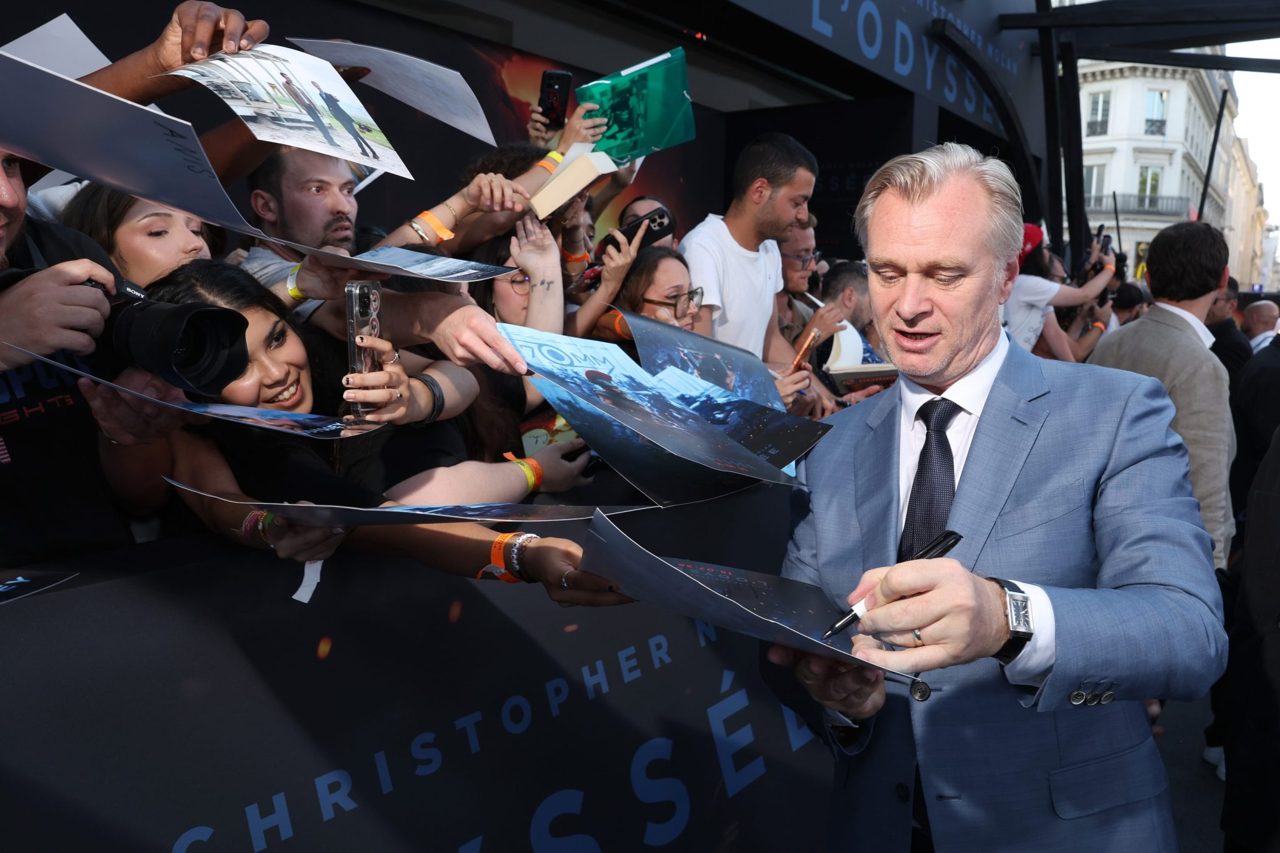
Christopher Nolan’s R-rated Greek epic recouped its $250 million budget in three days, offering Hollywood a high-margin counterargument to the industry’s rush toward AI-driven cost cutting.
Christopher Nolan’s The Odyssey generated $264 million at the global box office in its opening weekend, instantly covering the film’s $250 million production budget. The three-hour, R-rated adaptation of Homer’s epic delivered the largest debut of Nolan’s career, surpassing his Batman films and Oppenheimer.
For media executives and investors, the result underscores the financial power of a singular directorial brand in a fractured entertainment landscape. Paul Dergarabedian, senior analyst at Comscore, noted that Nolan functions as his own franchise asset. “It’s an automatic must-see cinematic event when Christopher Nolan’s name is on the movie,” Dergarabedian said.
That commercial firepower arrives as major streamers aggressively pursue artificial intelligence to compress production budgets. Netflix spent up to $600 million acquiring Ben Affleck’s AI filmmaking startup and reported that AI touched roughly 300 titles in 2026, halving visual-effects costs on certain scenes. Amazon MGM’s head of AI Studios, Albert Cheng, recently summarized the strategy to investors: “We can actually fit five movies into what we would typically spend on one.”
Nolan’s strategy runs directly counter to this volume-based, cost-cutting approach. By relying on 70mm film and practical effects, he positions his output as a scarce, premium product. Only 41 theaters worldwide can show The Odyssey in 70mm, a limitation that drove fans to travel across oceans, with one braving a 14-hour journey just to see it.
Dergarabedian argued that this handmade approach serves as a market differentiator when studios are utilizing AI to maximize content volume. “He’s an analog man in a digital AI world, and I think that’s incredibly appealing,” Dergarabedian said. “AI is a fantastic tool, but it’s not a replacement for creativity,” he added, noting that audiences recognize the difference when “a lot of people are punching in a prompt to create a movie.”
The broader question for media companies is whether this scarcity model can scale industry-wide, or if it remains the exclusive domain of proven auteurs. Still, with a lifetime global gross exceeding $6 billion and roughly $2.4 billion domestically, Nolan’s track record suggests a viable premium market for human authorship. “His impact on cinema will be felt for decades to come,” Dergarabedian said.