The Army Just Did Something Extraordinary To Break China’s Rare Earth Monopoly
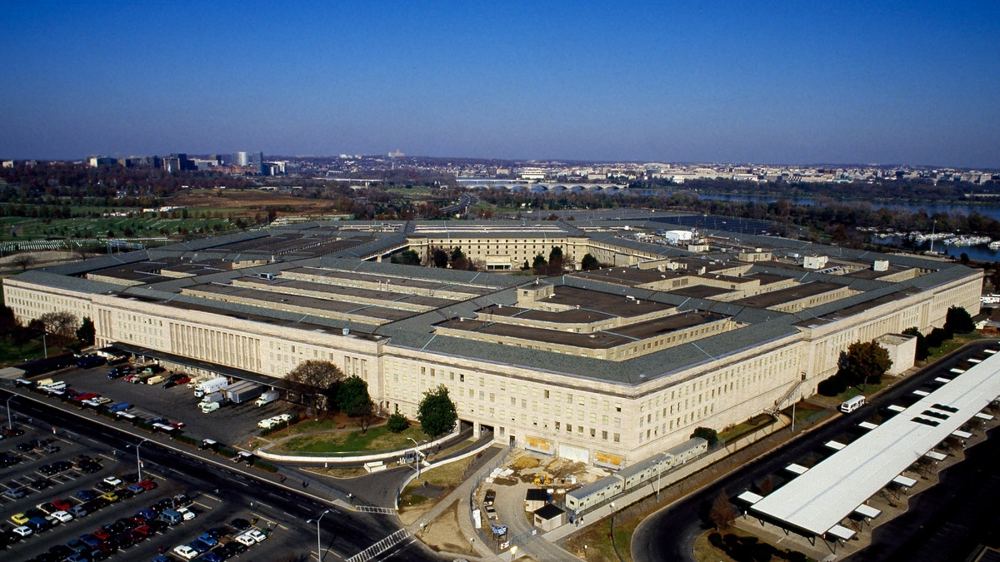
On November 3, the Pentagon did something it’s never done before. The Army signed a non-binding term sheet to host a commercial rare earth plant on one of its own bases, under a lease that could run past the year 2100. And the company it chose, REalloys (NASDAQ: ALOY), already has a head start on what the Army needs most: turning rare earths into metal outside of China. The site is roughly 200 acres of land inside Utah's Tooele Army Depot, a 43,000-acre installation whose main job is handling ammunition. But it's the length of the deal that…
Diamondback to Buy Double Eagle’s Midland Stake for $5 Billion
Tom majored in International Business at Amsterdam’s Higher School of Economics and later completed an Executive MBA in Energy Transition at the University of Groningen.…
On November 3, the Pentagon did something it’s never done before. The Army signed a non-binding term sheet to host a commercial rare earth plant on one of its own bases, under a lease that could run past the year 2100.
And the company it chose, REalloys (NASDAQ: ALOY ) , already has a head start on what the Army needs most: turning rare earths into metal outside of China.
The site is roughly 200 acres of land inside Utah's Tooele Army Depot, a 43,000-acre installation whose main job is handling ammunition. But it's the length of the deal that makes this announcement so unprecedented.
Federal law normally caps leases like this at five years. This term sheet , however, sets an initial 50-year lease, with the option to renew for 25 more. With the renewal, that's up to 75 years total, or 15 times longer than the law's usual cap.
That tells you exactly how critical it is to the Army’s future. Nobody signs a lease that could outlast everyone at the table to fix a shortage they expect to clear up in a few years.
The Army is treating China's grip on rare earths as a problem that will be around for generations, and it wants an answer that lasts just as long.
And it all comes down to two metals: dysprosium and terbium.
Most people have never heard of either one. But the two rare earth metals are critical to powering our military’s technology. That’s because they keep the high-power magnets inside precision-guided munitions, radar and sonar stable at extreme temperatures.
And those magnets are all over the U.S. arsenal. Every F-35, Tomahawk missile and Virginia-class submarine relies on rare earth magnets to work.
As recently as 2023, China handled 99% of the world's processing of heavy rare earths. In other words, nearly every pound of these metals had to pass through China before it could go anywhere else.
As the Army's Dr. Jeff Waksman put it, "Rare earth processing is a known national security vulnerability, with China specifically holding a near 100% global monopoly on dysprosium and terbium."
For years, we've bought these metals on China’s terms because there was simply no other choice.
In April 2025, Beijing showed why that poses such a massive threat though. That’s when it began requiring export licenses for seven rare earth elements, including dysprosium and terbium, and Western buyers suddenly needed Chinese regulators to approve their shipments.
That’s why Washington set a deadline on finding the solution scheduled for just weeks from now.
Starting January 1, 2027, U.S. defense contractors can't deliver rare earth magnets whose materials were mined, refined or produced in China, Russia, North Korea or Iran. What that means is every contractor has to know not just where a magnet was made, but where the individual minerals inside it were processed too.
That's why Utah’s Tooele Army Depot could become a key part of securing our military’s supply chains for the better part of the next century.
To lock down its rare earth supply, the Army is using something called an Enhanced Use Lease . It lets the Army lease underused land on its bases to private companies, and the setup is simple.
REalloys (NASDAQ: ALOY ) carries the cost of building and running the plant, and from the day the lease starts, it pays the Army rent at fair market value .
A second rent stream kicks in once the plant is operating, and through all of it, the land remains federal property. Waksman says the Army gets all of this without putting taxpayer dollars at risk.
The Army doesn’t simply secure a long-term tenant though. The more important part is that, under the agreement, it would get first dibs on any dysprosium and terbium made at Tooele.
Look at what that adds up to for REalloys. The Army is handing over land on one of its own bases for decades, and in return it wants to be first in line to buy its supply. Putting that capability on an Army installation is about as direct a commitment as the defense industry can get.
Once the new sourcing rules hit, the Army wants to know exactly where its dysprosium and terbium comes from. At Tooele, the answer is inside its own perimeter.
Tooele was earmarked for these two metals back in June. That's when the Army chose REalloys as one of only four companies allowed to negotiate for plants on Army bases.
And the plans go well past refining. There's no mine on the base, CEO Lipi Sternheim told Fox Business , but there is the capability to go "from oxides straight through to magnets," if the company decides to build that far.
At full scale, REalloys believes Tooele could be the biggest plant in the West for turning heavy rare earths into metal.
North America has no shortage of rare earth mines and separation plants being announced right now. But a mine or a processing plant doesn't automatically give a defense contractor the metal it needs.
Someone still has to turn that material into metal and then get it approved by defense buyers who need to know exactly where every gram came from.
That's the step REalloys has built its business around. Its work in Euclid, Ohio, builds on more than three decades of experience in advanced metal and magnet processing , including long-term collaborations with Ames Laboratory.
And it’s working to make that step cleaner, too. Earlier this year, it demonstrated in independent lab testing a patent-pending process that removes hydrofluoric acid , one of the most hazardous chemicals used in making metal, from a key step in the process.
And this isn’t REalloys’ first work with the Pentagon. In March, the Defense Logistics Agency awarded its Ohio unit a contract to design a plant for samarium and gadolinium, two more rare earth metals the U.S. is working to start producing again.
In other words, the Pentagon was already working with REalloys to help rebuild American metal production months before the Army picked it for Tooele.
Of course, a plant at Tooele won’t be built overnight. But the Pentagon’s new sourcing rules kick in on January 1. So, the real question for the Army, and for every defense contractor, is where this metal comes from in the meantime.
For REalloys, the answer starts in Saskatchewan. The company has secured supply rights to about 80% of the output from a fully funded expansion at the Saskatchewan Research Council's rare earth facility, and its first metal from there is targeted for early 2027, right as the new sourcing rules take effect .
Once the expansion is built out, it's designed to turn out 15 tonnes of terbium oxide and 30 tonnes of dysprosium oxide each year . Those are the same two metals the Army wants at Tooele. In other words, REalloys plans to be producing them well before the Tooele plant is up and running.
Of course, a plant is only as good as the raw material feeding it. That’s where Greenland comes in. Critical Metals has agreed to sell REalloys 15% of the rare earth material from its Tanbreez project under a binding 15-year deal, once the mine is producing. That gives REalloys a long-term source of supply from outside China.
Put it all together, and REalloys has the know-how, a potentially steady supply of raw material, and, after closing a roughly $100 million private placement in June , the cash to keep building.
REalloys doesn't claim to be the only player, though. North America needs more than one supplier, and the real test is who can move beyond the pilot stage and deliver the metals customers can actually use, in reliable volumes and with a supply chain they can trace.
The Army isn't the only one that needs an answer to where their rare earths come from.