Heavier Offshore Wind Monopiles Strain Jack-Up Vessel Designs
A new engineering study warns that installing massive offshore wind foundations generates structural loads exceeding extreme storms, threatening to increase vessel costs and delay renewable projects.
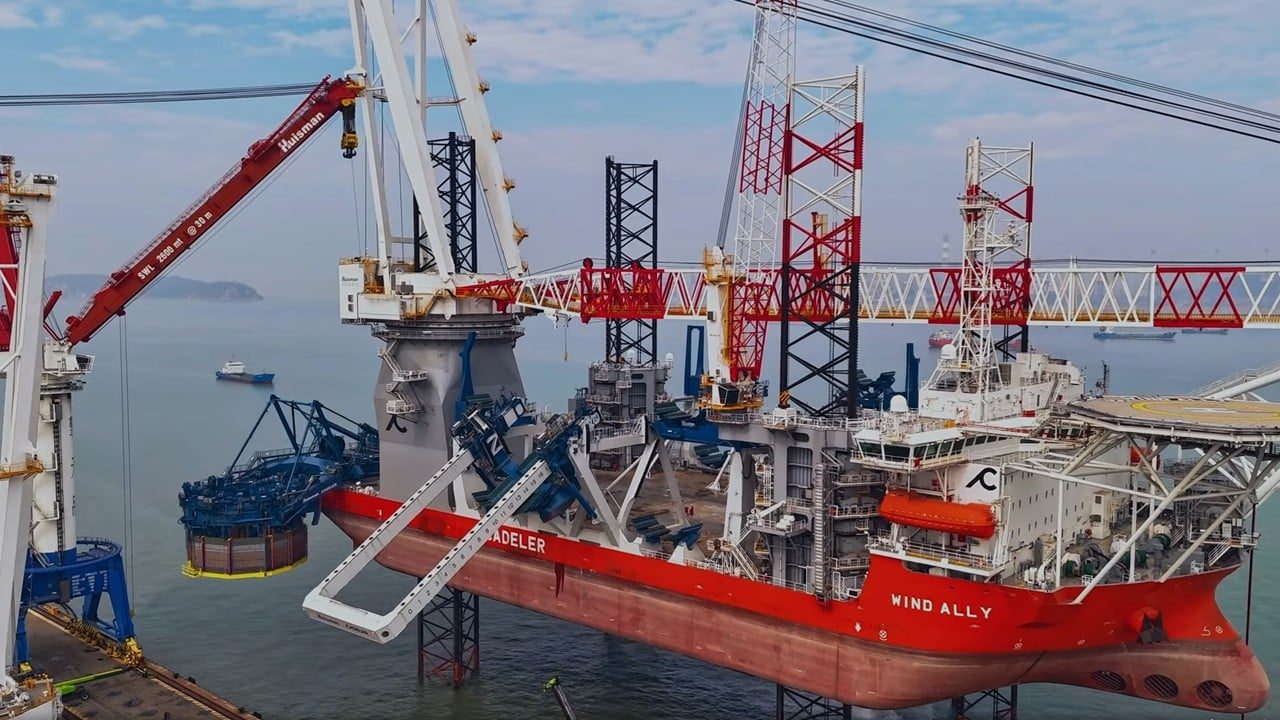
GustoMSC has released a study demonstrating that the physical process of lowering massive offshore wind foundations into the sea generates structural forces on jack-up vessels that can exceed those of 50-year North Sea survival storms. As the offshore wind industry scales up turbine capacity to improve efficiency, the sheer size of these components is fundamentally altering the risk profile of marine operations.
Modern monopiles now regularly exceed 10 metres in diameter and 2,500 tonnes. When partially submerged, they do not simply hang passively from a crane. Instead, they act as giant hydrodynamic structures. GustoMSC’s analysis of a modern four-legged jack-up comparable to the Cadeler A-Class found that at submersions of 10 to 15 metres, the pile and the vessel interact dynamically.
Under certain moderate wave conditions, this interaction causes the motions of the pile and the vessel to amplify one another. The resulting pressure on the lower guide can hit levels 20% higher than extreme survival loads. The hydrodynamic forces transferred from the monopile can actually exceed the wave forces acting directly on the vessel's legs.
For vessel operators and offshore wind developers, this presents a serious commercial constraint. If routine installation loads begin to dictate the structural engineering of jack-up fleets, the capital cost of building and chartering suitable installation vessels is likely to rise. This dynamic threatens to create a supply chain bottleneck precisely when global offshore wind capacity is expanding rapidly, potentially squeezing developer margins.
To mitigate the risk of project delays and structural damage, the industry must abandon simplified models that treat monopiles as static cargo. Future engineering assessments will require complex, multi-variable simulations accounting for hull flexibility, varying wave headings, and combined foundation loads. Though the actual lowering process takes only minutes, ensuring safe installation for next-generation turbines will demand highly specialized maritime assets, restricting the number of vessels capable of executing these contracts.