Buffett credits luck as he exits Berkshire top post at 95
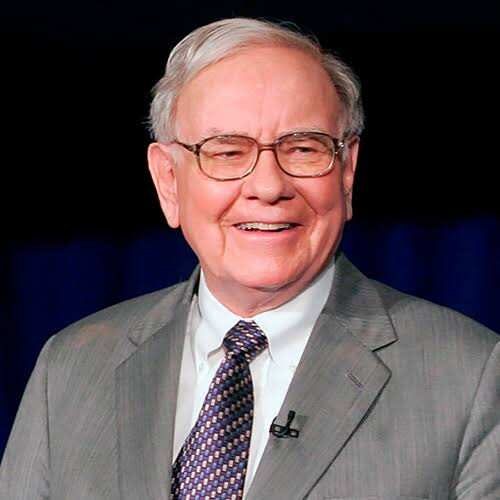
As Warren Buffett steps away from Berkshire Hathaway's leadership, the 95-year-old investor credited his career to circumstance rather than skill, highlighting a missed opportunity in passive investing that underscores his firm's enduring market influence.
Warren Buffett is stepping back from his role at the helm of Berkshire Hathaway, using a recent interview with CNBC to reflect on the forces that built his career. At 95 years old, the legendary investor attributed his decades of market outperformance to profound luck rather than intrinsic genius, offering a rare humble assessment from an industry often defined by outsized egos.
"If my father had been a plumber, I would not have had the same advantage I had. So I was incredibly lucky," he said. For market professionals, this acknowledgment from an architect of modern value investing serves as a sobering reminder of the structural advantages, such as early exposure and initial capital access, that often separate successful fund managers from the broader market.
Buffett, who turns 96 next month, was candid about his current cognitive state as he transitions out of the executive suite. "I am losing marbles at this point. I accumulated marbles for a longer time than I deserved. And that is just a matter of luck," he said. His departure from the top post closes a defining chapter in corporate America, though his investing principles are expected to guide Berkshire Hathaway for generations.
Despite his active management legacy, Buffett pointed to a historical example that inadvertently champions passive market strategies. He recalled buying shares of the natural gas company Cities Service at $38 apiece in 1942 for a total of $114, right after the Japanese attack on Pearl Harbor.
He later expressed regret over that specific trade. "If I put that $114 into the S&P 500 at that time, and reinvested the dividends, think of a figure as to what it would be worth today?" he noted. "The answer is about $400,000. So if I as a little kid had taken that 114 bucks... $400,000 today. One person's lifetime. That's America."
This mathematical reality underscores a fundamental tension in modern asset management. While Berkshire Hathaway was built on identifying undervalued companies, Buffett's own calculation highlights the sheer compounding power of broad market indices over highly concentrated stock picks. For today's institutional investors wrestling with high active management fees, the $400,000 figure remains a potent argument for low-cost index tracking.
Beyond his market influence, Buffett's broader legacy remains tied to a 2006 commitment to donate more than 99% of his Berkshire Hathaway stock to philanthropic foundations. That pledge ensures his wealth will continue to circulate long after he fully steps away from the company he built.