Burnham backs North Sea drilling, Hormuz security in Trump call
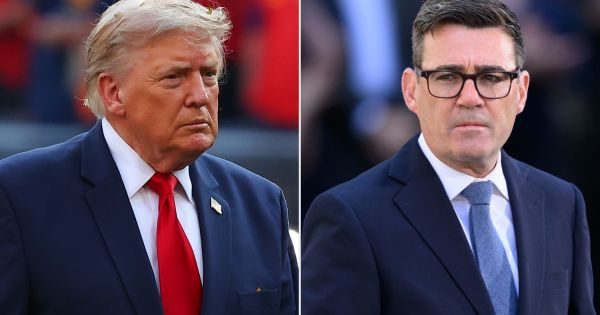
Newly appointed UK Prime Minister Andy Burnham used his first call with US President Donald Trump to signal a pro-growth agenda focused on North Sea energy expansion and securing critical global supply chains.
Andy Burnham spoke with Donald Trump immediately after taking office on Monday afternoon, choosing the US president for his inaugural diplomatic outreach. This underscores the weight the new UK government places on the transatlantic relationship.
The conversation carries immediate implications for European energy markets. During the call, Mr Trump expressed strong interest in expanding oil drilling in the North Sea. This proposition aligns closely with Mr Burnham’s stated priority of driving reindustrialization and delivering economic growth across every region of the UK. For energy executives and investors, the exchange suggests the new administration may look favourably upon new licensing and capital expenditure in the offshore basin.
Beyond upstream energy, the leaders addressed critical global trade bottlenecks. Following an update from Mr Trump on the Middle East, Mr Burnham explicitly committed the UK to securing the movement of shipping in the Strait of Hormuz. By linking military deployments in the region directly to lower business costs, the prime minister signalled that his defence policy will have a clear, bottom-line economic rationale aimed at protecting global supply chains.
Mr Trump described the discussion, which covered the broader alliance and trade, as "interesting" and going "very well." The president accepted an invitation to visit Manchester, a trip that could coincide with the rumoured 2027 G20 summit in the city. Hosting the G20 would likely act as a major catalyst for infrastructure investment in the northern English hub.
The Washington call was the first in a rapid series of engagements with Western leaders. Mr Burnham also spoke with German Chancellor Merz, French President Emmanuel Macron, European Commission President Ursula von der Leyen, European Council President Antonio Costa, NATO Secretary General Mark Rutte, and Ukrainian President Volodymyr Zelenskyy.
For market participants, the initial exchange signals a government intent on coupling domestic industrial policy with transatlantic alignment. The emphasis on physical supply chain security and fossil fuel expansion in his very first act suggests a pragmatic approach to economic growth, prioritizing near-term energy security over strict environmental constraints.