Uzbekistan plans $10bn power expansion mixing renewables and nuclear
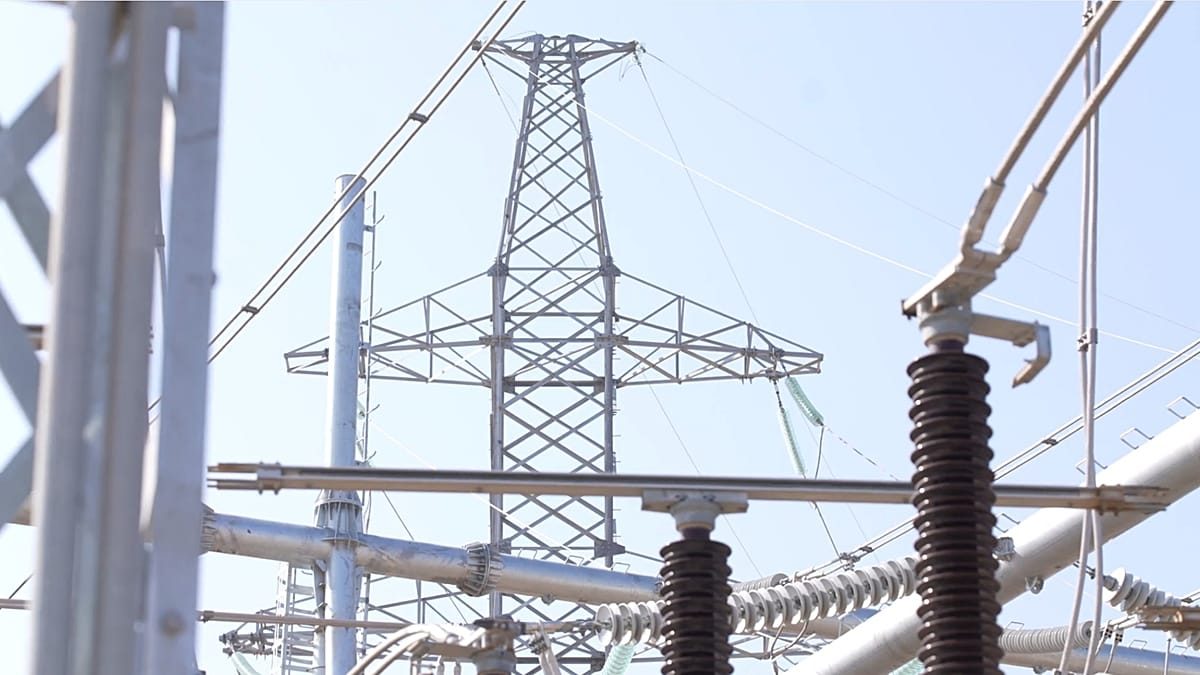
Uzbekistan is committing nearly $10 billion to green energy and grid upgrades alongside its first nuclear plant, creating a major multi-year infrastructure pipeline for international investors.
Uzbekistan plans to increase its electricity generation capacity from 82 billion kilowatt-hours to over 120 billion kilowatt-hours within five years. The effort hinges on attracting foreign capital to overhaul an energy system currently dominated by natural gas.
President Shavkat Mirziyoyev announced at the Tashkent International Investment Forum that renewables should account for 54% of electricity generation by 2030. The government has already secured nearly $6 billion in foreign investment for green energy and plans to commit a further $4 billion to transmission networks. For international capital markets, the scale of the spending turns the country's power sector into a significant frontier infrastructure play tied to industrial and digital growth.
The European Bank for Reconstruction and Development (EBRD) is anchoring much of this financing. In 2025, the bank deployed over $1 billion across projects in Uzbekistan, including a $142 million package for a 1GW solar and 1,336MWh battery storage plant with ACWA Power. It also arranged $195.5 million for a 300MW solar and 75MWh storage facility with Masdar in the Kashkadarya region.
Huseyin Ozhan, the EBRD's Managing Director for Central Asia and Mongolia, noted that building this capacity requires synchronized regulatory reform. "We need to look at it from two angles. Number one, investments. And number two, policy engagement," he said. "Most of the countries in Central Asia have already committed to full decarbonisation in 2050 or 2060. There is a long-term decarbonisation plan and roadmaps accompanying these decisions."
While renewables represent the primary investment route to displace ageing fossil-fuel infrastructure, they are not the sole focus of the capacity expansion. Construction began in June on Uzbekistan's first nuclear power project in the Jizzakh region. The planned facility includes two roughly 1,000MW reactors alongside two 55MW small modular reactors.
Sama Bilbao y León, Director General of the World Nuclear Association, framed the nuclear build-out as a deliberate strategy to free up natural gas. "In the case of Uzbekistan, this is a country with 75% of its electricity coming from natural gas and with a desire to use that natural gas for other applications. This is where nuclear energy is going to take a very important role," she said.
The combined approach creates a layered investment opportunity. Projects are increasingly bundling generation with storage, moving beyond standalone power plants. For investors, the shift means backing a comprehensive system upgrade where generation capacity, battery storage, grid modernisation, and nuclear baseload must advance simultaneously to meet soaring demand.