BYD's $1bn Brazil plant scales up as EU tariffs loom
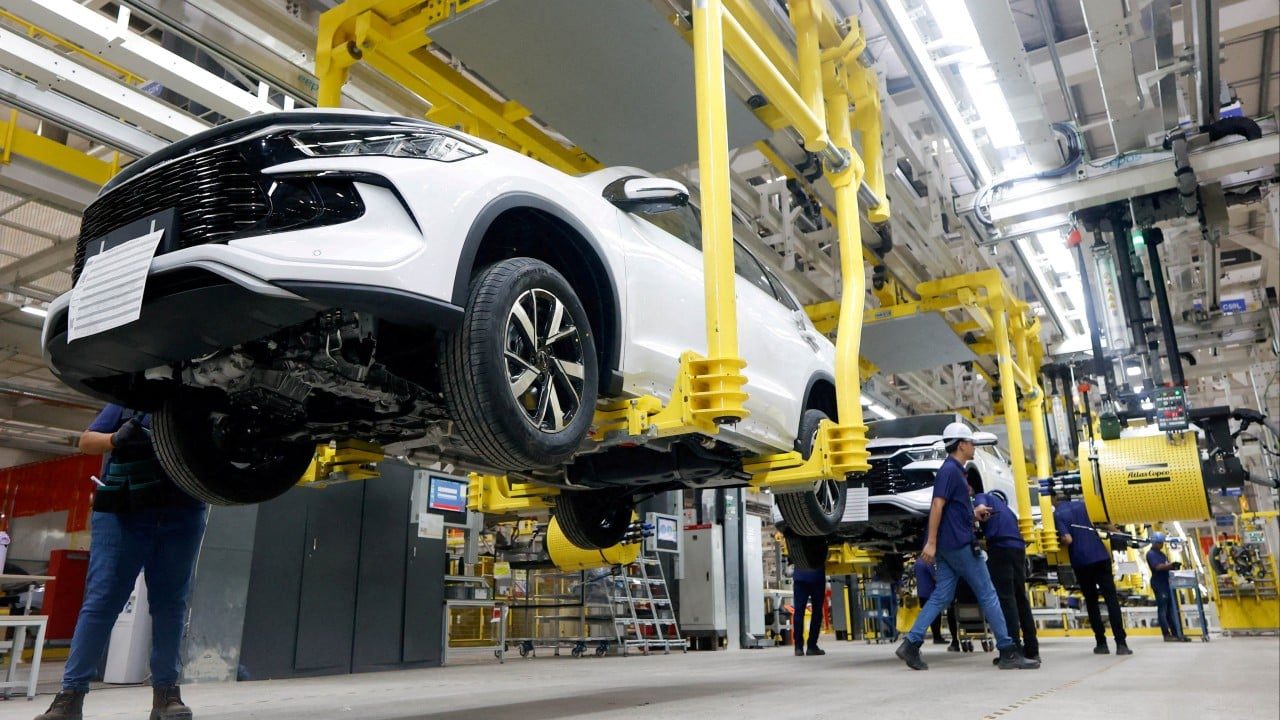
BYD has reached a 100,000-vehicle production milestone at its new Brazilian plant and secured 100,000 export orders, underscoring a strategic shift toward Latin American markets as European policymakers weigh protectionist tariffs on Chinese electric vehicles.
BYD has produced its 100,000th electric vehicle in Brazil, a BYD Seagull, marking a rapid operational ramp-up at its new manufacturing hub. The facility in Camacari, located in the northeastern state of Bahia, currently employs more than 5,500 workers.
The Chinese automaker constructed the 4.68 million square metre complex in just 15 months, a timeline that underscores the company's capital deployment speed. Publicly available information shows the total investment reaches approximately 5.5 billion reals, equivalent to US$1 billion.
That substantial capital expenditure is already translating into a concrete export pipeline. The initial phase of the Camacari site targets an annual production capacity of 150,000 vehicles. The longer-term blueprint, however, aims to scale output to 600,000 units annually. A significant portion of this future volume is already secured through regional demand.
“We have already received orders for 50,000 cars from Argentina and 50,000 cars from Mexico, which will be exported from the Camacari factory,” said Stella Li, BYD’s head for the Americas.
This 100,000-vehicle export backlog provides BYD with near-term revenue visibility as it navigates increasingly hostile trade dynamics elsewhere. In Europe, political pressure is mounting to implement higher tariffs on Chinese electric vehicles. Policymakers are actively seeking measures to shield local legacy automakers from a recent surge in competitively priced Chinese imports.
For investors, the stark contrast between BYD’s Latin American manufacturing momentum and its European regulatory headwinds highlights a deliberate geographical hedging strategy. The scale of the Bahia complex signals that BYD is treating Latin America as a primary manufacturing and export base rather than a secondary market.
By localizing production in Brazil to supply Argentina and Mexico, the manufacturer can bypass potential future cross-border tariffs. As Europe moves toward protectionism, BYD's $1 billion Brazilian bet demonstrates how Chinese automakers are redirecting capital toward emerging markets to insulate their global growth trajectories from Western trade barriers.