Record Samsung profit fails to halt $100bn market wipeout
A forecast nineteen-fold leap in Samsung Electronics' quarterly profit failed to stop investors from erasing over $100bn in market value as doubts mount over the sustainability of the AI-driven memory boom.
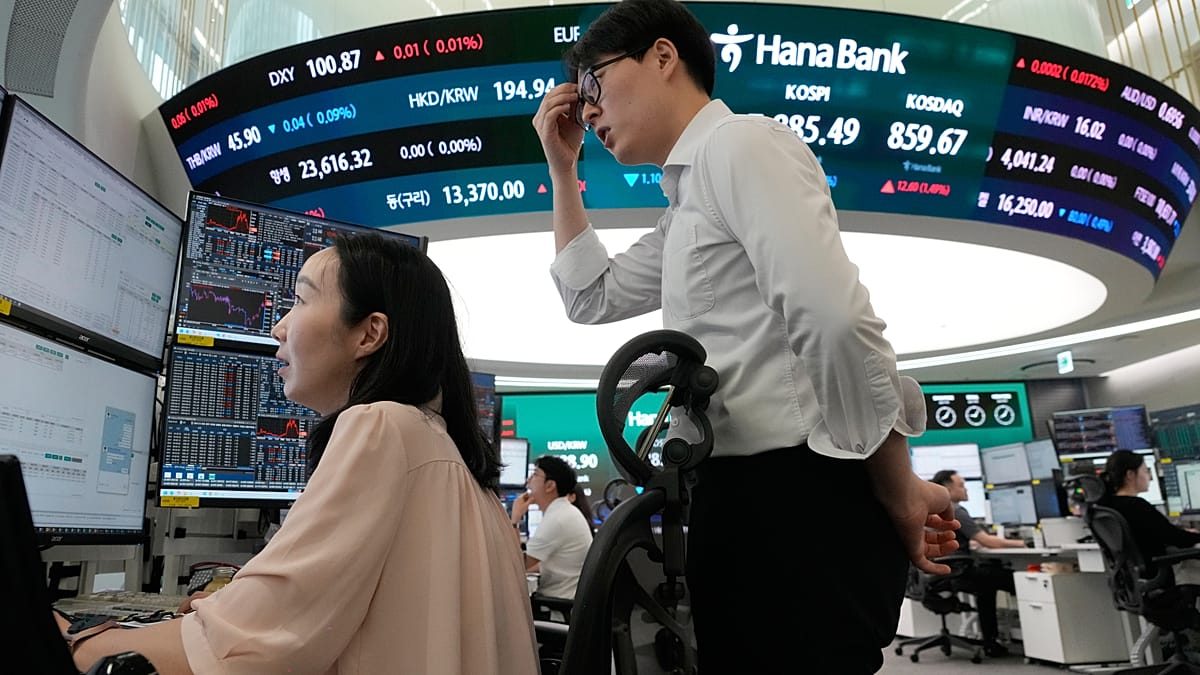
Samsung Electronics expects an operating profit of roughly 89.4 trillion won (€51bn) for the April-June quarter, dwarfing the 4.7 trillion won earned a year prior and exceeding the combined total of the previous three years. Rather than rewarding this performance, the market punished the stock, erasing more than $100bn (€87.5bn) in market value. Shares fell over 10% intraday before closing nearly 7% lower, pulling rival SK Hynix and the broader Kospi index down.
The surge in profitability is a direct result of the AI data centre buildout, which has pushed memory chip prices to unprecedented levels. According to Citi Research, average selling prices for DRAM rose 44% quarter-on-quarter, while NAND flash climbed 53%. Demand has expanded beyond specialised high-bandwidth memory into conventional chips used in servers, phones and PCs, prompting customers to secure longer-term supply contracts.
Tuesday's dramatic sell-off was driven partly by market mechanics. The stock had already more than doubled this year, pricing in a historic quarter well in advance. Furthermore, leveraged local ETF products tracking the shares have increased their vulnerability to outsized price swings.
There was also a tangible flaw in the guidance. Revenue reached an estimated 171 trillion won (€97.6bn), a 129% year-on-year increase, but it fell slightly short of analyst expectations. "We believe the slight revenue miss was largely driven by more moderate DRAM price hikes than expected, which likely spooked investors who are increasingly pricing in structural strength in memory prices," said Jing Jie Yu, an analyst at Morningstar.
The overriding concern for investors is the durability of the current upswing. Markets are questioning whether the technology giants funding AI infrastructure can maintain their capital expenditure without taking on excessive debt against returns that are not yet guaranteed. This anxiety was the catalyst for last week's broader chip sell-off across Asia and signals a shift in how investors are pricing semiconductor risk.
All eyes will now turn to Samsung's full results on 30 July. The upcoming report, which will include a division-by-division breakdown, is expected to reveal whether this extraordinary demand represents a permanent structural shift in the semiconductor industry or simply the peak of another traditional memory cycle.