Venezuela Oil Field Hits 115,000 Barrels
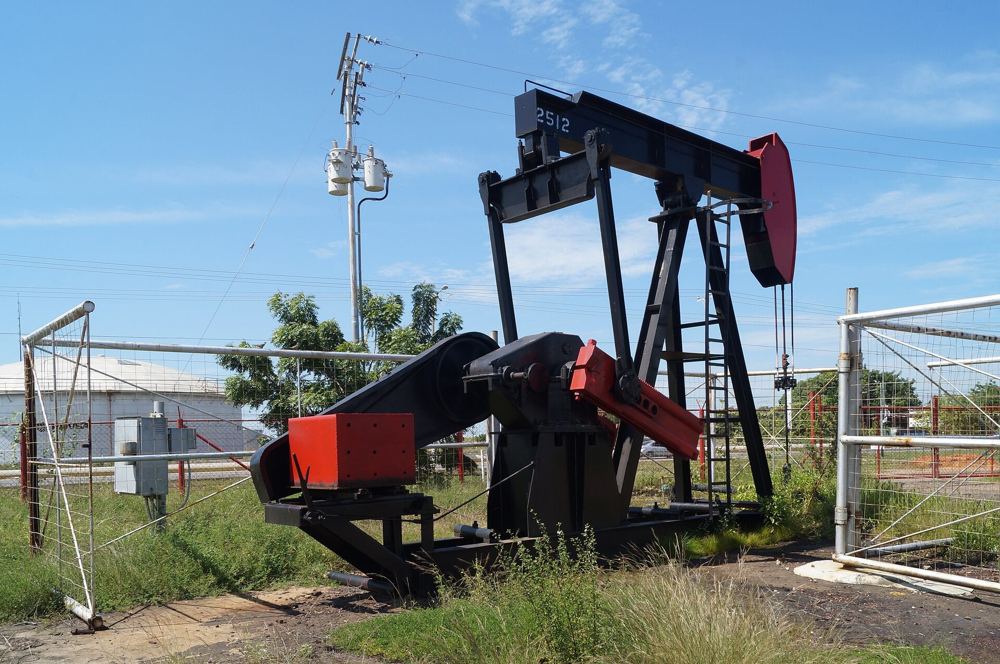
Acting president Delcy Rodríguez says a Zulia field hit 115,000 barrels a day, with 120,000 targeted by December, as US and Venezuelan officials toured it. The post Venezuela Oil Field Hits 115,000 Barrels appeared first on The Rio Times .
Venezuela is led by an acting president, Delcy Rodríguez, after US forces captured former president Nicolás Maduro in January 2026. Washington now works closely with her government, mainly on oil.
NABEP is the private company, led by Venezuelan businessman Alejandro Betancourt, that holds rights to 17 oil fields under the deal. PDVSA is Venezuela’s state oil company, and Zulia is the western state around Lake Maracaibo where much of the country’s oil is pumped.
A Venezuela oil field in Zulia state reached 115,000 barrels a day on Friday 23 October 2026, acting president Delcy Rodríguez said during an inspection with the top US diplomat in Caracas. For US readers the visit shows the American-backed oil deal moving from signed paper to working wells, and Washington says it should help ease fuel prices at home.
Rodríguez said output should reach 120,000 barrels a day by December, El Universal of Mexico reported from the event, which state television channel VTV broadcast. The US chargé d’affaires, John Barrett, called the work “impressive” and Venezuela “a great partner”, in remarks carried by Contrapunto and El Nacional of Caracas.
The visit came as Brent crude, the world benchmark, closed Friday at US$116.72 a barrel in London futures, its highest since late April, Contrapunto reported. The Trump administration says the deal can lower US gasoline prices, which the war with Iran pushed up, EFE reported on 1 September.
El Diario of Caracas reported that the day included a satellite link with an installation on the Costa Oriental del Lago, the eastern shore of Lake Maracaibo in Zulia state. Present were Rodríguez, Barrett, Alejandro Betancourt, who leads the company NABEP, and Héctor Obregón Pérez, president of the state oil company PDVSA.
Betancourt, who spoke at a government event for the first time according to El Diario, said the group saw a compression module called Bachaquero Lago 2. He added that two more sites, Bachaquero 3 and Ceuta 4, should join output at the PetroZamora operation within four months.
Betancourt said State Department staff took part in the visit and, in a translated remark, that operations had set a record of 115,000 barrels, without saying which period the figure covers. Rodríguez described 115,000 barrels as Friday’s production, according to El Universal.
“We want to show the country the progress,” Rodríguez said in a translated remark, adding that “we go to action and we go to production.” She said she wants Venezuela to become one of the world’s main crude producers and wants the money to reach wages, hospitals and schools.
The two governments announced the oil agreement in late August 2026, after US forces captured Maduro in January and the countries restored diplomatic ties on 30 March, El Universal reported. Rodríguez said on Friday that it covers 17 agreements to develop 65 billion barrels of Venezuelan reserves, and that eight of the 17 are “greenfield” sites, meaning fields not yet developed.
The White House said NABEP would invest about US$100 billion and pay about US$200 billion in taxes to Venezuelan authorities over 25 years, EFE reported on 1 September. It added that the US Defense Department would hold 35% of NABEP’s parent company and the State Department could buy 20% of the oil at production cost for US strategic reserves.
The same report said NABEP gets drilling rights for a century and that the US government would hold a veto over board appointments. Outlets describe the share of Venezuela’s reserves differently, with EFE calling it about a fifth and El Universal a quarter.
NABEP presents itself as Venezuela’s second-largest crude producer, with output above 200,000 barrels a day, and says it wants to pass 1 million, EFE reported. Those are company claims that this article has not been able to confirm independently.
Venezuelan government figures put national output at 1,252,000 barrels a day and the western region at a record 382,500, according to the state-run outlet Ciudad CCS. By our calculation, 115,000 barrels is about 9% of the national total and about 30% of the western region.
In early October Rodríguez told a business assembly that PDVSA had signed 61 agreements, with 44 more under negotiation, and that oil output was up 8% this year, El Universal reported. She said the effect of production would be felt from next year.
One Venezuela oil field at 115,000 barrels a day is a small share of world supply, so it will not move global prices by itself. It does show that the first projects under the deal are producing, which is what investors in the sector wanted to see.
EFE reported on 1 September that the deal raised suspicion among those who think the Trump administration is not truly pushing for a democratic transition in Venezuela. Venezuela has no election date, and opposition supporters marched on 22 October to demand one, as we covered in Venezuela Marchers Demand Election Date .
EFE also reported that Betancourt has been investigated in Spain, Switzerland and the United States over alleged money laundering and tax fraud linked to PDVSA operations. He rejects the accusations, and the sources reviewed do not report any conviction.
Venezuela’s own reserve claims also draw doubt, as shown in Venezuela’s 303bn Barrels Draw Expert Doubt . Our explainer What Is Going On Between Venezuela and the United States? covers the wider picture.
Investors in oil producers and oilfield service companies can treat Friday’s figures as an early sign that US-backed projects can lift Venezuelan supply. Drivers should not expect a quick change at the pump, because world prices are set in a global market far larger than one field.
For background on the resources behind the deal, see Venezuela Natural Resources Explained 2026 and Venezuela Sees US$76 Billion Oil Investment . Both explain where the oil sits and how much money Venezuela says it needs.
Polymarket, an online prediction exchange, puts the odds that OPEC’s secondary-source tables show Venezuelan output of at least 1.2 million barrels a day in any month of 2026 at 56%, and 1.3 million at 14%, on 24 October at 5:08 a.m. ET. The 1 million and 1.1 million markets have already settled Yes.
The 1.2 million market has traded about US$11,400 and the whole set of Venezuela output markets about US$188,000 in volume. These are bets, not polls, and they settle on OPEC figures built from outside estimates rather than on the Venezuelan government’s own number.
Why we show this: prediction markets turn real-money bets into a live probability that moves within minutes of the news, which is why investors, campaigns and newsrooms in the United States now follow them closely. We show them next to polls and official results, never instead of them.
No independent measurement of the 115,000 barrels a day was found, and the figure comes from officials and a company at a government-led event. Betancourt did not say which period it covers, and the sources do not show how much comes from the new projects rather than older wells.
The White House terms are quoted from EFE, because the original White House document was not opened for this article. It is also not known how much of the oil income will reach Venezuelan households, or whether output will reach 120,000 barrels a day by December.
Acting president Delcy Rodríguez said a field in Zulia state reached 115,000 barrels a day while she toured projects with the top US diplomat in Caracas. She said output should reach 120,000 by December.
The projects are run by the state oil company PDVSA with NABEP, a private company led by businessman Alejandro Betancourt. NABEP holds rights to 17 fields under the deal announced in late August.
The Trump administration says it can, but no price effect has been shown. One field at 115,000 barrels a day is small beside world supply.
Venezuelan government figures put national output at 1,252,000 barrels a day. Those figures come from the government and have not been independently confirmed.
No election date has been set. Opposition supporters marched on 22 October to demand one.
Sources: El Universal, 23 October 2026 ; El Diario, 23 October 2026 ; El Nacional, 23 October 2026 ; Contrapunto, 23 October 2026 ; Ciudad CCS, Venezuelan state-run outlet, 23 October 2026 ; EFE, 1 September 2026 ; El Universal, 8 October 2026 ; Contrapunto, Brent close, 23 October 2026 ; OPEC Monthly Oil Market Report (market settlement source) .
Editorial responsibility: Matthias Camenzind , Editor-in-Chief · Editorial standards · Report an error