US Aid to Kenya Falls 61% by 2030
The US will cut annual health funding to Kenya by 61% by 2030, shifting HIV, TB and malaria costs to Nairobi under a five-year framework. The post US Aid to Kenya Falls 61% by 2030 appeared first on The Rio Times .
, Who. US Chargé d’Affaires Susan Burns announced the schedule at the Trust Summit in Nairobi., What. US health funding falls from US$414 million in 2026 to US$161 million in 2030, down 61%., Why it matters. Kenya must take over HIV, TB and malaria costs, which backers call ownership and critics call risk., The deal. The December 2025 framework offers up to US$1.6 billion, matched by about US$850 million of Kenyan spending., Still unknown. Yearly US amounts for 2027 to 2029 and how much Kenya’s Parliament has funded.
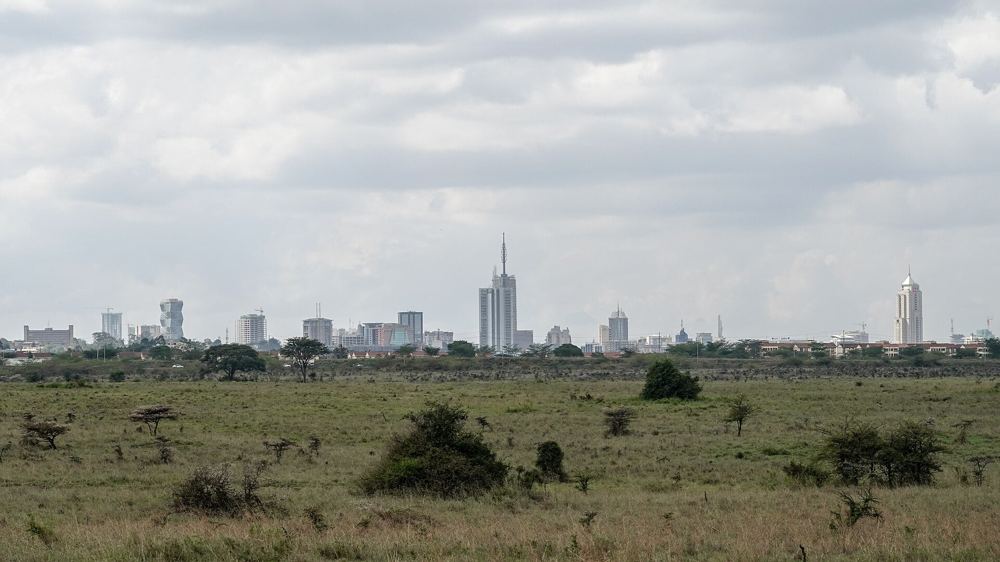
NAIROBI, The United States will cut its annual health funding to Kenya from US$414 million in 2026 to US$161 million in 2030, a fall of US$253 million or 61%, according to US Chargé d’Affaires Susan Burns. She set out the schedule at the Trust Summit in Nairobi on Thursday 22 October 2026, as Kenya takes over more of the bill for HIV, tuberculosis and malaria care.
For American readers, this is an early test of the America First Global Health Strategy, which Washington published in September 2025 and which asks partner governments to lead and pay for their own health programmes. Kenya was reported as the first country to sign such a government-to-government health pact, in December 2025.
Burns said US funding “decreases each year” to 2030 as Kenya’s “own health spending rises”, in remarks reported by Kenyans.co.ke. Kenyan media put the same figures at KSh53.6 billion for 2026 and KSh20.8 billion for 2030.
She added that the United States is “not walking away” and remains the largest bilateral donor to Kenya’s health sector, contributing “far more than all other bilateral donors combined”. That is Burns’s own claim, and we could not check it against independent donor data.
The framework was signed on 4 December 2025 and offers up to US$1.6 billion over five years, with Kenya pledging about US$850 million in extra domestic health spending. Together that comes to roughly US$2.45 billion.
The money covers HIV, tuberculosis, malaria, polio, maternal and child health, disease surveillance and outbreak preparedness. Funding moves from US-backed partner organisations to direct government-to-government payments, reimbursed against agreed performance targets.
A separate implementing agreement signed in Nairobi on 17 July 2026 puts US funding at US$1.686 billion for 2026 to 2032, according to the Kenya News Agency. That is slightly above the US$1.6 billion headline, and the reports we reviewed do not explain the gap.
According to reports of her remarks, Burns said Kenya will fold its HIV, TB, malaria, polio and maternal and child health programmes into the benefits package of the Social Health Authority, the national health insurer. The shrinking US share is meant to be replaced by Kenyan public money.
The reports we reviewed show no year-by-year Kenyan budget for that domestic share. It is also not clear how much Parliament has appropriated so far.
The High Court issued conservatory orders on 19 December 2025 that froze the framework, after petitioners raised objections over patient data and Parliament’s role. In a ruling dated 9 October and reported on 13 October, the Court of Appeal set those orders aside while the government’s appeal is heard.
As our earlier report on the ruling explains, the court did not decide whether the deal is constitutional, and it cited about 1.4 million patients who rely on the drugs and services the framework covers. Government officials also argued that any break in HIV and TB treatment could cause drug resistance.
Washington will spend less on Kenyan health care each year, which lowers the US bill but shifts the risk of any treatment gap to Nairobi. The test is whether Kenya’s own spending rises fast enough to cover HIV, TB and malaria care.
The next clear signal will be how much Kenya sets aside for health in its coming budgets. Ghana faces a similar question after saying the US sought a review of its US$109 million health deal .
Kenyans.co.ke, US health funding cut · US Embassy Nairobi, remarks at the 2026 Trust Summit · US State Department, framework announcement · Kenya News Agency, July 2026 agreement · allAfrica, Court of Appeal ruling
Africa: The New Scramble, why the world’s powers are competing for the continent
Editorial responsibility: Matthias Camenzind , Editor-in-Chief · Editorial standards · Report an error
US annual health funding falls from US$414 million in 2026 to US$161 million in 2030, a cut of US$253 million or 61%. Burns announced the schedule on Thursday 22 October 2026.
No. Burns said the US is “not walking away” and remains the largest bilateral health donor, which we could not check independently, but its annual funding falls each year to 2030.
It covers HIV, tuberculosis, malaria, polio, maternal and child health, disease surveillance and outbreak preparedness. It offers up to US$1.6 billion from Washington, plus about US$850 million of extra Kenyan spending.
A High Court order froze it in December 2025, but the Court of Appeal set that order aside in a ruling dated 9 October 2026. The government’s appeal is still pending, and the court did not rule on constitutionality.