Qatar deal to buy U.S. natural gas shows how Iran war has redrawn global energy markets
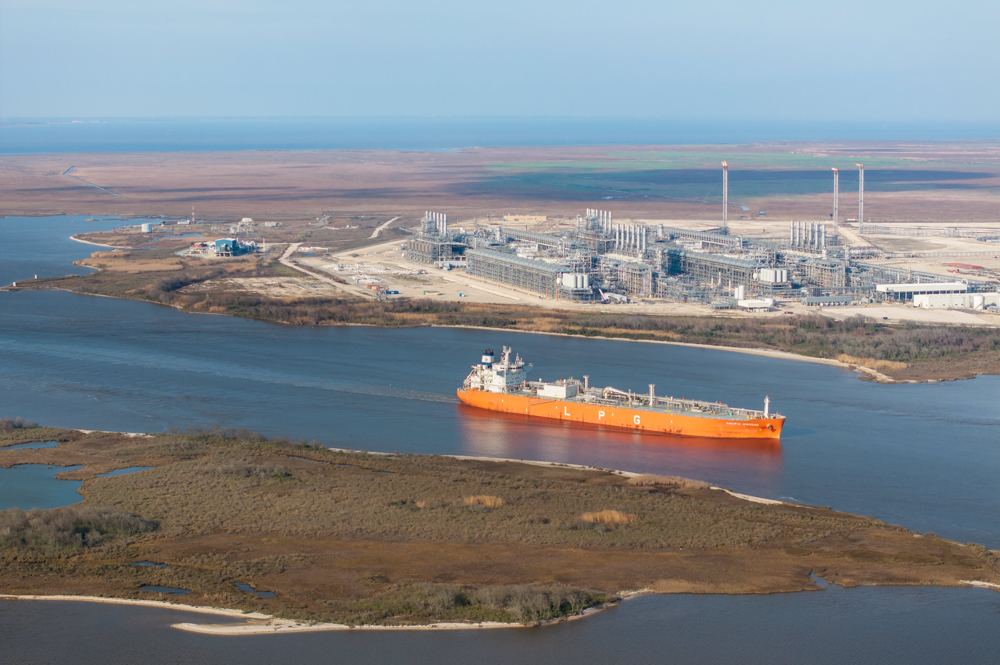
The Iran war is transforming global energy markets and benefiting U.S. companies, especially liquified natural gas exporters.
Before the Iran war, Qatar was one of the biggest natural gas exporters in the world. After only eight months, the Gulf state is now buying supplies from its principal competitor, the United States.
QatarEnergy struck a deal Thursday with U.S. exporter Cheniere Energy to buy 4 million metric tons of liquefied natural gas (LNG) annually through 2054. The purchase price is indexed to the U.S. Henry Hub price plus a fixed fee. Deliveries are expected to begin in the 2030s.
"We look forward to reliably supplying QatarEnergy from both Sabine Pass and Corpus Christi into the second half of this century," Cheniere CEO Jack Fusco said in a statement.
The deal signals how the Iran war is reshaping global energy markets to the benefit of U.S. companies, cementing the dominance of American LNG exporters. Shares of Cheniere and Venture Global , the other independent U.S. player, have gained 26% and 40%, respectively, since the start of the war.
Qatar was second only to the U.S. in LNG exports before the war. But shipments have since collapsed in the eight months since Iran bombed its key production facility at Ras Laffan. The attack badly damaged two production lines, taking out about 17% of Qatar's LNG export capacity.
It will take about three years to repair the damage at Ras Laffan, Qatar's Energy Minister Saad Sherida Al-Kaabi has said. The Persian Gulf state has declared force majeure, citing unexpected, uncontrollable events preventing contracts from being honored, every month since the March attack.
"It did give us a big blow, if you will, for our production capability for the next few years," Al-Kaabi said in an interview on the sidelines of the U.N. General Assembly in September. Qatar is exporting "very little" LNG right now because "we can't export through the Hormuz Strait," he said. "Very sparingly, some ships are crossing the straits but a very small amount, it's not something that would even be measurable in a percentage point," the energy minister said.
And it is far from clear what security conditions in Hormuz will look like when the repairs are done at Ras Laffan. The decades-long contract with Cheniere indicates that Qatar sees a risk that freedom of navigation will never return to Hormuz as Iran keeps attacking tankers, Munton said.
It is harder to find ways to get around Hormuz in the case of LNG because it is fundamentally a waterborne product, the analyst said.
"It's liquefied so it can be put on a ship and that requires access to seaborne routes," Munton said. "They've got to access the Strait of Hormuz. There's no other way of getting LNG to market. They're just stuck."
With its production badly damaged and Hormuz blocked off, QatarEnergy is expanding its LNG trading business through the Cheniere deal, Munton said.
It secured a $3 billion loan earlier this month from Chinese banks that could allow it to secure more U.S. LNG to honor its international delivery commitments, said Manav Gupta, a UBS analyst, in a note to clients Thursday.
Venture Global, for example, is in advanced talks with QatarEnergy to supply 3 million metric tons annually, unnamed sources told Reuters .
With the Qatar deal, Cheniere is disproving the bears' case that it will struggle to secure incremental sales which would in turn constrain capacity expansion, Gupta said. UBS has a stock price target of $340 on Cheniere, implying 18% upside from Thursday's close.
Wall Street is broadly bullish on both Cheniere and Venture Global. Nearly 90% of equity analysts who cover Cheniere rate it a buy, with an average price target of $314, implying about 9% upside from Thursday's close.
Nearly 60% of analysts recommend Venture Global as a buy with the rest rating it a hold. The average price target of $17 would amount to some 35% upside from Thursday's close.