BlackRock's Rick Rieder sees 'historic' opportunity in high-quality bonds
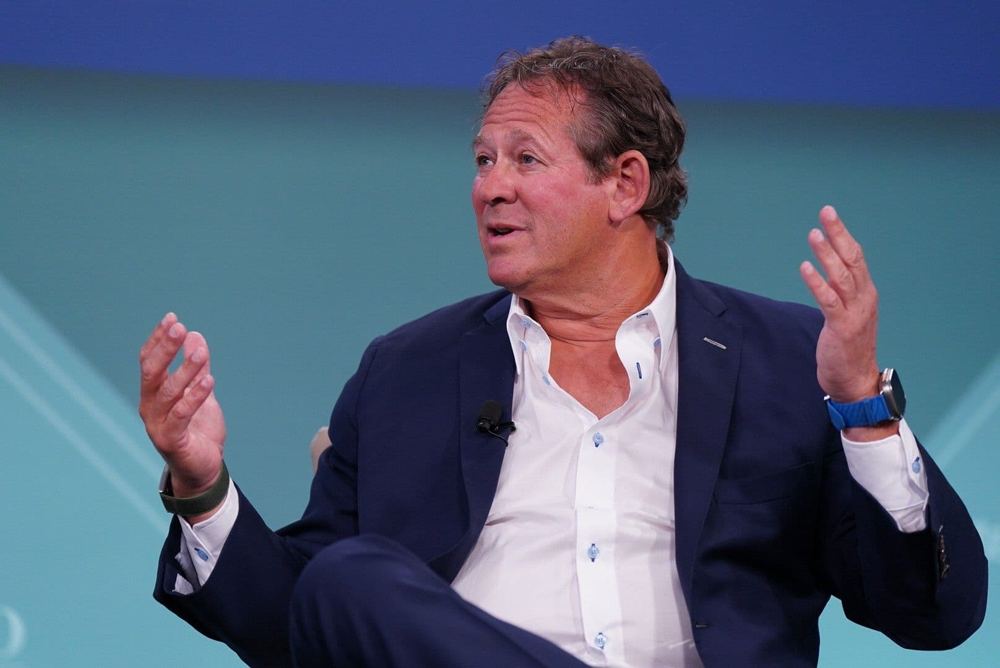
Rick Rieder, BlackRock's CIO of global fixed income, lays out his expectations for the fourth quarter and where he sees the best opportunities.
Investors may be wary of the volatility hitting parts of the bond market right now, but they have an "historic" opportunity to grab attractive yields in high-quality credit, Rick Rieder, BlackRock's chief investment officer for global fixed income, told CNBC in an exclusive interview.
Hypothetically, it's now possible for investors to build a diversified portfolio that yields more than 7% with less than three years of duration and an average credit quality of A-, he said. Duration is a measurement of a bond's price sensitivity to fluctuations in rates, and issues with shorter maturities tend to have lower duration.
"Not only is it historic in that these yields are where they are, but the only time these yields are ever here is when there's some problem, like an economic problem or default problem," Rieder said in an interview about his fourth-quarter outlook , released Wednesday.
That isn't the case now, where the economy remains strong, he said. "So you don't really have to worry about defaults of any significance."
While Rieder didn't specifically identify the credits in the aforementioned portfolio, the iShares Aaa - A Rated Corporate Bond ETF (QLTA) has a 30-day SEC yield of 5.68% and an effective duration of 6.48 years, higher than Rieder's low duration focus.
The iShares Flexible Income Active ETF (BINC) , which is managed by Rieder, has a 5.66% 30-day SEC yield and three-year effective duration, but its portfolio extends beyond investment-grade credit.
Rieder sees the best opportunity right now in investment-grade corporate bonds, which he pointed out he hasn't said "in a really long time." Investment grade bonds are rated AAA through BBB- by S&P and Fitch, while Moody's rates them Aaa through Baa3.
That includes hyperscaler bonds, which have flooded the market with issuance this year as they ramp up their AI infrastructure. Alphabet , Amazon , Meta Platforms and Oracle have issued a total of about $228.4 billion in bonds year to date, as of Oct. 20, according to LSEG.
"They're very low leverage. They have tremendous amounts of cash flow coming in," Rieder said of the hyperscalers in general. "You're now getting to buy these entities which are higher quality, paying you a very attractive yield to get it."
Rieder's iShares Flexible Income Active ETF has upped its allocation to investment-grade corporates to 14.3% of its portfolio. In July , that stood at 8.5%.
That said, investors need to be patient and sit tight since rates could still move higher from here, he advised.
"Your starting point is by far your best barometer of what your return is going to be," he noted. "So if you get seven and a quarter, maybe you get eight, maybe you get six, but ... if your holding period is a year or longer, you're going to get that yield."
Caution should also be exercised outside of investment-grade credit, which requires more selectivity and deep research, he warned. That includes AI names.
"There's parts of the data center supply that's not hyperscaler guaranteed or hyperscaler backed," he said. "That we've been more cautious around, and we'll continue to be."
The bond market, particularly high-yield credit, has been rocked as investor concern grows over the massive amount of debt some companies are taking out to fund their artificial intelligence build-out.
Junk-rated CoreWeave has become the poster child, seeing its stock drop, bond yields jump and credit-default spreads widen. Oracle , which is sitting in the lower end of investment grade and is seen as a bellwether on the broader AI market, has also taken some hits.
Rieder is also keeping an eye on the Federal Reserve , which is expected to raise its federal funds rate again in December to combat inflation. The market is currently pricing in a nearly 90% probability that the central bank will hike at that time, according to the CME Group FedWatch tool .
The money manager expects that to happen, although he does not agree with it. Higher rates are hurting parts of the economy, like housing, while not having much of an impact on other areas, such as tech companies' capital expenditures, which have become a big driver of growth, he said.
"They're not borrowing off the overnight funds rate," Rieder noted. "There's a lot of floating rate finance in housing, credit card, auto loan finance, and you're seeing those areas already under pressure."
Instead, the market is and will continue to price the AI supply coming into the market, he added.
Rieder sees a number of possible risks ahead, including rising levels of government debt across the globe. In the United States, the budget deficit has grown to $2 trillion for fiscal 2026.
"The more the central banks raise the rates, the cost of debt to these to already indebted governments is something we've got to be careful about over time," he said.
Bond supply coming from AI companies should also be watched.
"With the amount of supply that's coming, data center, hyperscaler, there's some crowding-out effect that's taking place," he said. "With government rates moving higher, that is something that we just got to keep an eye on."
In the meantime, Rieder would just continue to reap the rewards of high investment-grade yields "and smile a lot," he said.