Why Britain Keeps Changing Prime Ministers
Britain has had six prime ministers since 2016. We explain Reform UK's surge, Labour's loss of Wales, Starmer's fall and Labour's recovery under Andy Burnham. The post Why Britain Keeps Changing Prime Ministers appeared first on The Rio Times .
Britain has had six prime ministers since the 2016 Brexit vote, and the latest change shows both the revolt against the old parties and their way back.
Andy Burnham became Britain’s prime minister on 20 July 2026, after Keir Starmer resigned as Labour leader under pressure from his own MPs. He is the sixth person to take the job since the Brexit referendum of 2016, and the fifth to arrive without first winning a general election as leader.
For Americans the churn matters because Britain is Washington’s closest ally, a nuclear power and one of the world’s largest financial centres. It is also the clearest test in Europe of whether an old party can win back voters who drifted to an insurgent.
Labour won 411 of 650 seats in July 2024 with about a third of the vote, because Britain’s first-past-the-post system rewards the party that comes first in each seat. Reform UK won about one vote in seven but only five seats.
That gap between votes and seats fed Reform’s complaint that the system shuts out its voters. By mid-March 2026 YouGov had Reform on 25%, the Greens on 19%, and Labour and the Conservatives tied on 17%.
The local and devolved elections of 7 May 2026 turned the polls into seats. In Wales, where Labour had led every government since devolution in 1999, Plaid Cymru won 43 of the Senedd’s 96 seats, Reform 34 and Labour only 9.
Welsh Labour’s leader and first minister, Eluned Morgan, lost her own seat. Plaid Cymru’s Rhun ap Iorwerth became first minister at the head of a minority government.
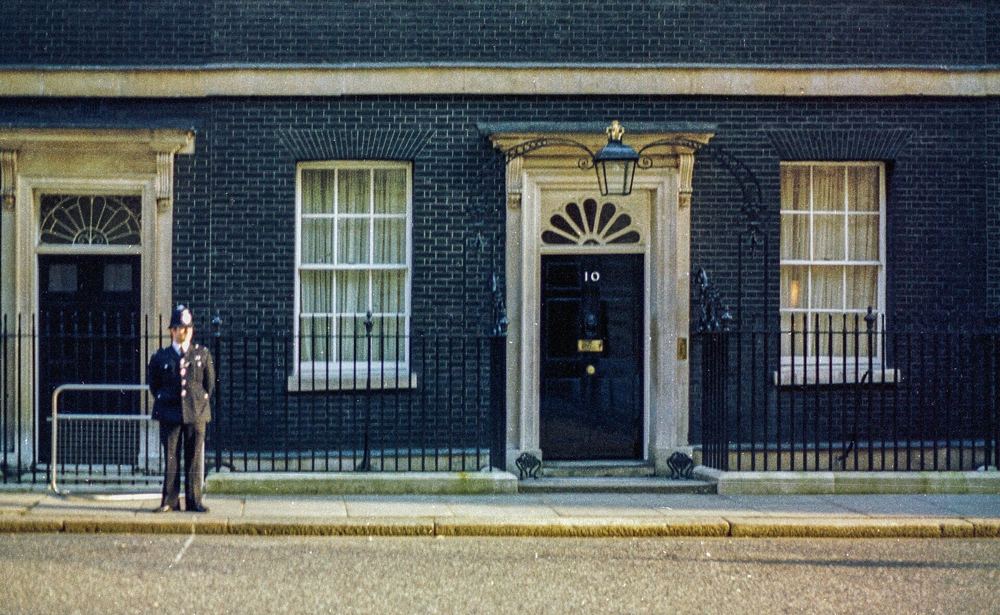
Burnham, who had spent nine years as mayor of Greater Manchester, won a seat in Parliament at the Makerfield by-election. On 22 June 2026 Starmer announced outside Downing Street that he would resign as Labour leader.
“I have heard the answer of my parliamentary party to that question, and I accept that answer with good grace.” Keir Starmer, Downing Street, 22 June 2026
When nominations closed in July, Burnham was the only candidate, and Labour declared him leader on 17 July. He became prime minister three days later, on 20 July 2026.
Nigel Farage, Reform’s leader, demanded an immediate general election in July, saying Burnham had no mandate for power. His argument fits the wider European complaint: the establishment changes its leaders inside the party while voters who want a different party wait years for a say.
British law supports the government on the procedure. A prime minister needs the confidence of the House of Commons, not a personal election, and the next general election is due by 2029.
Since the change at the top, Labour has climbed back. YouGov had Reform and Labour tied on 22% in late July, and on 18 and 19 October Labour on 27%, the Conservatives on 23% and Reform on 22%.
In YouGov’s poll of 11 and 12 October, Reform’s 21% was its joint-lowest of this parliament. In our reading, Britain is therefore Europe’s clearest counter-example to the idea that voters, once lost to an insurgent, never come back.
The recovery is fragile, though. The three leading parties are within five points of each other, and a Pew Research Center survey this spring found 51% of Britons dissatisfied with how their democracy works.
On Kalshi, regulated in the US by the Commodity Futures Trading Commission, traders give Labour a 38% chance and Reform 37% of winning the next general election, with the Conservatives on 21%. More than 261,000 contracts have been traded on that question, as of 21 October at 10:27 a.m. ET.
Why we show this: prediction markets turn real-money bets into a live probability that moves within minutes of the news, which is why investors, campaigns and newsrooms in the United States now follow them closely. We show them next to polls and official results, never instead of them.
A stable Britain matters to Washington on defence, intelligence and trade, and frequent changes at the top make long-term deals harder. A Reform victory, which the markets now price at roughly one in three, would put an anti-immigration party in charge of a G7 economy.
For investors, political churn has already cost Britain once, when markets turned on Liz Truss’s 2022 budget plans. Any sign of fiscal drift under a new leader is watched closely in the bond market.
Nobody knows when Burnham will call an election, and he does not have to before 2029. It is also unclear whether Labour’s recovery will survive his first budget.
Britain is one of five countries in our explainer on why Europe’s politics are breaking . For the opposite approach to an insurgent party, see why Germany’s top party in the polls is kept out of power .
Andy Burnham of the Labour Party became prime minister on 20 July 2026. He replaced Keir Starmer, who announced on 22 June that he would resign as Labour leader.
His MPs withdrew their support after Labour’s heavy losses in the May 2026 elections. He said he accepted their verdict with good grace.
No general election was held. He was elected Labour leader unopposed in July, and a prime minister needs the confidence of the House of Commons, not a separate vote.
It must be held by 2029, and no date has been set. Reform UK’s Nigel Farage has demanded an immediate election.
Not in the latest YouGov poll. On 18 and 19 October Labour had 27%, the Conservatives 23% and Reform 22%, after Reform had led YouGov’s poll in March 2026.
Sources: gov.uk, Prime Minister and past prime ministers ; UK Parliament election results, 4 July 2024 ; STV News (22 June 2026) ; Deseret News (17 July 2026) ; Nation.Cymru on Farage (July 2026) ; Senedd 2026 results ; Swansea Bay News (8 May 2026) ; YouGov ( 15-16 March , 26-27 July , 4-5 October , 11-12 October , 18-19 October 2026 ); Pew Research Center (10 June 2026) ; Kalshi public market data (21 October 2026).
More: Why Europe’s politics are breaking , our guide to the crisis from France and Spain to Germany, Romania and Britain.
Editorial responsibility: Matthias Camenzind , Editor-in-Chief · Editorial standards · Report an error