SpaceX quarterly revenue jumps, beats estimates as AI business surges
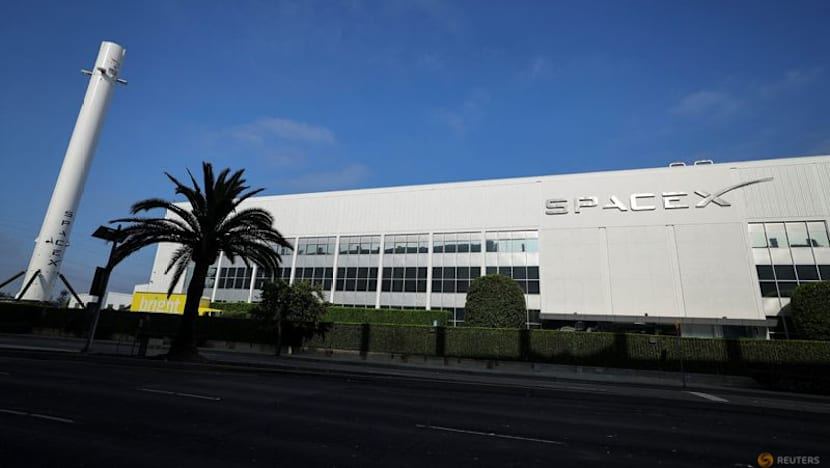
Oct 20 : Elon Musk's SpaceX on Tuesday said its third-quarter revenue more than doubled, beating estimates as AI and Starlink grew, while capital spending nearly tripled as it invested in compute infrastructure, sending its shares up about 3 per cent in extended trading.
Starlink and SpaceX's broader connectivity operations have been the company's main financial engine, underpinning Musk's AI ambitions. But SpaceX's own AI software, including xAI's Grok, has so far been overshadowed by rivals OpenAI, Anthropic and Google.
Revenue in the third quarter stood at $14.58 billion, compared with analysts' estimate of $12.72 billion, according to data compiled by LSEG.
It reported a net profit of $4.4 billion for the three months ended September 30, compared with analysts' expectation for a profit of $1.57 billion.
AI revenue rose more than ninefold to $7.6 billion, mostly from renting out computing capacity, but AI took $16.4 billion of the company's $19.6 billion in capital spending, which SpaceX expects to stay near that level in the near future.
SpaceX is making its AI money mainly by renting out data-center capacity to developers such as Anthropic, Google and Reflection AI rather than from its own models, a business closer to a cloud provider's than an AI lab's.
The company's AI business spans Grok, social-media platform X and a fast-growing data-center operation. It is also the company's biggest area of investment.
The business earns revenue from compute contracts with Anthropic, Alphabet's Google and Reflection AI.
Operating losses at the AI unit have been large and SpaceX has cautioned it will need sustained investment before it can consistently generate profits.
The company has said geographic expansion beyond the wealthiest countries could push average revenue per user lower over time. Investors have been keen to know whether that pricing pressure has started to show up as SpaceX enters more international markets and rolls out lower-priced plans.
Investors are also watching whether SpaceX can keep growing while improving the economics of its network. It is spending heavily on coverage, capacity and direct-to-device mobile services.
Starship, SpaceX's next-generation reusable rocket system, has yet to enter commercial service. It is expected to enable deployment of higher-bandwidth Starlink satellites and orbital AI-computing infrastructure. The company's ability to turn Starship into a reliably reusable vehicle is central to its longer-term strategy.
SpaceX successfully deployed several Starlink satellites last month, in Starship's first orbital test flight that ended hours earlier than expected after an engine issue.
The space segment includes commercial launches, government missions and Starship development and remains a significant source of costs and uncertainty.
Falcon launch activity has stayed robust, but revenue can vary with the mix of internal Starlink deployments, commercial customer missions and government contracts.
SpaceX has increasingly prioritized launches for its own satellite network over third-party payloads, while absorbing significant costs tied to Starship's development.
Investors will also be keen to hear Musk's comments on a much-talked-about potential merger between SpaceX and Tesla, which reports results on Wednesday.
Our chief editor shares analysis and picks of the week's biggest news every Saturday.
Get our pick of top stories and thought-provoking articles in your inbox
Stay updated with notifications for breaking news and our best stories
Join our channel for the top reads for the day on your preferred chat app