MLB Cap Proposal Masks True Player Pay Limits
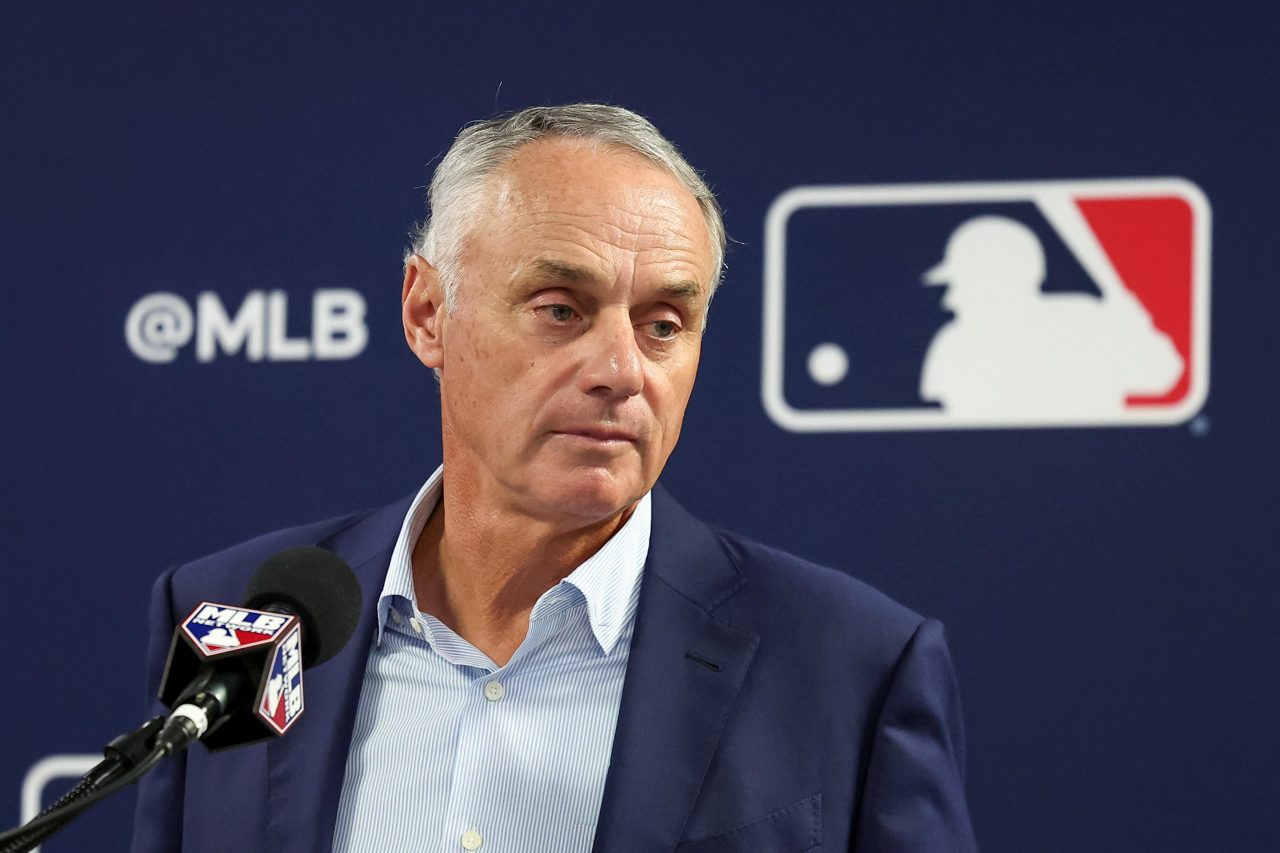
Major League Baseball's push for a hard salary cap ahead of a potential lockout relies on accounting metrics that inflate the proposed payroll floor, while the players' union seeks to force profitable, low-spending franchises to invest their revenue-sharing subsidies.
Major League Baseball is pursuing a hard salary cap for the first time since the 1994-95 strike, setting up a financial clash with the players' union ahead of a potential lockout. The league argues the current luxury tax system has failed, pointing to a widening gap in team payrolls.
MLB claims the distance between the highest and lowest spenders is now seven times. Actual data from last year shows a 4.8x disparity, with the Los Angeles Dodgers at $417,341,608 compared to the Miami Marlins at $86,926,975. The league contends a hard cap would compress this gap to just 1.4x.
However, the league’s proposed 2027 cap of $245.3 million and floor of $171.2 million relies on a specific payroll calculation that masks true player compensation. By including $17,209,029 per club for benefits and $1,666,667 for pre-arbitration pools, the effective cap drops to $226,424,304 and the floor to $152,324,304. Factoring in record amateur signing bonuses of $392.5 million would lower these limits even further.
The MLB Players Association views the economic disparity through a different lens. Interim Executive Director Bruce Meyer notes that many low-payroll clubs are highly profitable but "simply aren't trying to win." Last year, a record $402,637,907 was collected from nine clubs, with nearly $200 million routed directly to revenue sharing.
Since 2003, over $1.6 billion in luxury tax penalties have been collected to subsidize smaller-market franchises. To ensure these funds are actually spent on talent, the union has proposed a "Competitive Integrity Tax" penalizing teams that fail to meet minimum payroll thresholds. The MLBPA also wants to "significantly increase sharing of local media revenues from high to low revenue teams" and guarantee small-market clubs at least $240 million in annual revenue, provided the money is used to compete.
Underlying MLB’s cap push is a bid for a 50/50 split of baseball-related revenues, excluding ancillary ballpark development. For franchise owners, this represents a definitive mechanism to cap labor costs as a percentage of revenue.
The dispute carries direct implications for entry-level player costs. MLB has pitched a $1 million minimum salary for 2027, touting it as "the largest year-over-year increase in the minimum salary in baseball history by nearly $100,000." However, this concession is tied to the cap system; under the current expiring deal, the 2027 minimum would likely only reach $800,000.