Comoros Brings 27.5% Debt Ratio to IMF Talks
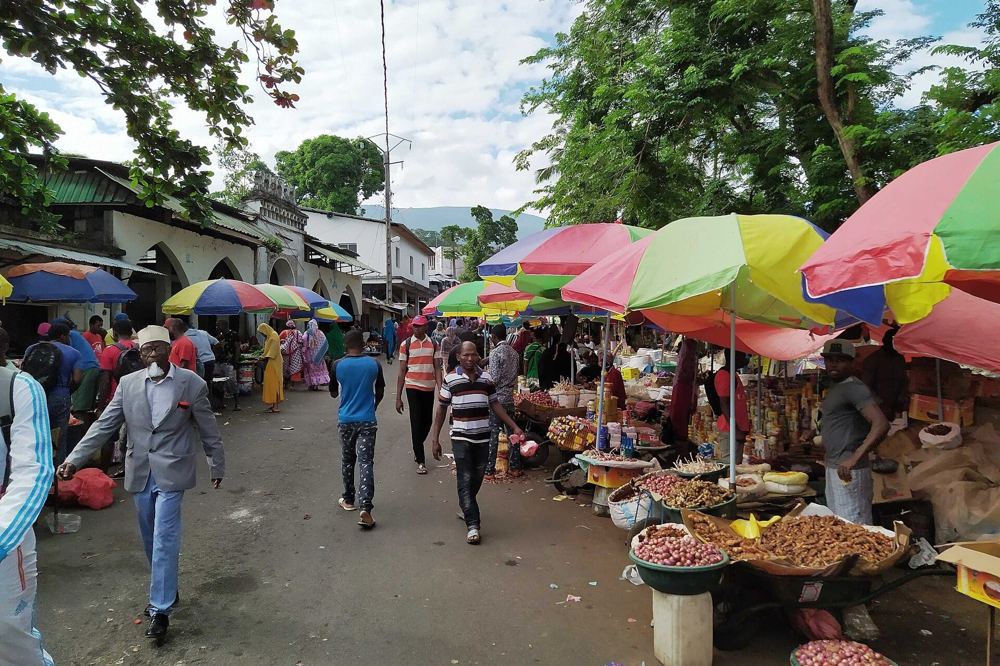
The Comoros took a low debt ratio to IMF talks on Africa's debt burden in Bangkok, but the Fund now sees growth slowing and debt rising in 2026. The post Comoros Brings 27.5% Debt Ratio to IMF Talks appeared first on The Rio Times .
The Comoros joined African finance ministers and central bank governors for talks with IMF Managing Director Kristalina Georgieva in Bangkok on Tuesday 13 October 2026, where the weight of debt service on public finances dominated the agenda, the Moroni newspaper Al-Watwan reported on Monday 19 October. The Comorian delegation was led by Finance Minister Moussa Abderemane, who is also the country’s governor at the International Monetary Fund (IMF) and the World Bank.
The islands arrive with less debt than most of the continent, as the finance ministry’s debt office puts public debt at 27.5% of GDP at the end of 2025. Yet the IMF’s October World Economic Outlook projects debt rising to 34.7% of GDP in 2026 and growth slowing to 2.9%, from 3.8% in 2025.
For US readers, the Comoros is a small test of how poor island states cope as foreign aid shrinks and borrowing stays expensive, two themes that ran through the governors’ statement. Direct ties are thin, since US goods trade with the islands came to US$2.1 million of exports and US$0.8 million of imports in 2025.
The meeting was co-chaired by Gambian Finance Minister Seedy Keita and Georgieva, according to Al-Watwan, and it focused on the pressure that debt service puts on public finances as shocks multiply and external aid declines. In their joint statement, the governors and the IMF expected African growth of 4.5% in 2026 and said inflation should ease to 9.3%, a level they still called high.
They warned that higher energy prices, expensive financing, debt service and falling aid limit what governments can invest, and they named tighter global financial conditions and a possible strong El Niño as further risks. They called for modern, efficient and fair tax systems, tighter spending control to protect the vulnerable, and full use of the African Continental Free Trade Area (AfCFTA).
The governors also welcomed sub-Saharan Africa’s third seat on the IMF Executive Board and asked for more African representation at the Fund. The IMF said it would keep supporting its African members with policy advice, capacity building and financing when needed, Al-Watwan reported.
Central government debt stood at 217.7 billion Comorian francs (about US$497 million) at the end of 2025, down 1.94% from a year earlier, according to the debt office’s December 2025 bulletin. Foreign creditors hold 81.4% of it, and debt service absorbed about 26% of government revenue, excluding grants, last year.
The World Bank’s International Development Association (IDA) is the largest single creditor with 39.4 billion francs (about US$90 million), followed by the Export-Import Bank of China with 37.0 billion francs (about US$85 million). The bulletin records external arrears of 2.1 billion francs (about US$4.8 million), mostly on a 2015 Exim Bank of India loan for a heavy fuel oil power plant.
Dollar figures in this article use about 437.8 Comorian francs per US dollar, derived from the franc’s fixed peg of 491.96775 per euro and the euro’s closing rate on Friday 16 October. The IMF’s own debt figures are higher than the ministry’s, at 30.5% of GDP for 2025 in the October forecasts and 32.9% in the IMF’s February programme review.
The Comoros has a four-year Extended Credit Facility (ECF) arrangement with the IMF, approved on 1 June 2023 for about US$43 million. When the IMF board completed the fifth review on 11 February 2026, total disbursements reached about US$28.6 million.
The programme’s priorities include raising domestic revenue through stronger tax and customs administration and fewer tax exemptions, and restructuring the state-owned postal bank. In February the IMF expected growth to rise to 4.1% in 2026, but its October forecasts cut that to 2.9% and raised expected 2026 inflation to 4.0%, from 2.4%.
The US State Department’s 2026 Fiscal Transparency Report found that the Comoros did not meet minimum requirements, and the one fix it listed was publishing the executive budget proposal online in time. The same review found that the government publishes debt data, including limited information on state-owned companies, and that its audit office met international standards of independence.
Foreign commercial debt is small and owed to the regional Trade and Development Bank and France’s Bpifrance rather than to bondholders, according to the debt bulletin. Most lending comes from multilateral and bilateral lenders, so the Comoros’ finances matter to US investors mainly through the IMF and World Bank programmes the United States helps fund.
For American travellers, the State Department advises exercising increased caution in the Comoros, its Level 2 rating, issued on 12 January 2026. It cites petty crime, reports of piracy affecting small boats, protests that can turn violent, and limited medical care.
The full joint statement could not be found on the IMF’s website on 19 October, so its wording is quoted as reported by Al-Watwan. Al-Watwan also put the debt ratio at 27.6% of GDP, slightly above the 27.5% in the debt office’s bulletin.
It is not known what the Comorian delegation proposed at the meeting, or whether the weaker growth forecast will change the targets of the IMF programme before it ends in mid-2027. The IMF will next update its forecasts in the April 2027 World Economic Outlook.
African finance ministers and central bank governors met IMF Managing Director Kristalina Georgieva on 13 October 2026. Debt service, falling aid and tax reform dominated the talks.
Public debt was 217.7 billion Comorian francs (about US$497 million) at the end of 2025, or 27.5% of GDP. The IMF’s own estimate for 2025 is 30.5%.
The World Bank’s IDA is the largest single creditor, followed by the Export-Import Bank of China. The Saudi Fund for Development comes third, ahead of the IMF and the African Development Bank.
Yes, a four-year Extended Credit Facility worth about US$43 million approved in June 2023. About US$28.6 million had been disbursed by February 2026.
The State Department rates the Comoros at Level 2 and advises increased caution. It cites crime, protests, piracy affecting small boats and limited medical care.
Sources: Al-Watwan, The Comoros at the African governors’ caucus and the IMF, 19 October 2026 , Al-Watwan, The IMF reaffirms its support for the continent, 19 October 2026 , Ministry of Finance of the Comoros, Public Debt Directorate, debt statistics bulletin, December 2025 (PDF) , IMF, Press Release 26/045, fifth ECF review and 2025 Article IV, 11 February 2026 , IMF DataMapper, World Economic Outlook October 2026, Comoros , IMF, Comoros country page , US Census Bureau, trade in goods with Comoros , US State Department, 2026 Fiscal Transparency Report, Comoros , US State Department, Comoros travel advisory . All retrieved 19 October 2026.
Africa: The New Scramble, why the world’s powers are competing for the continent
Editorial responsibility: Matthias Camenzind , Editor-in-Chief · Editorial standards · Report an error