South Korea bets on five regional airports to spread its tourism boom beyond Seoul
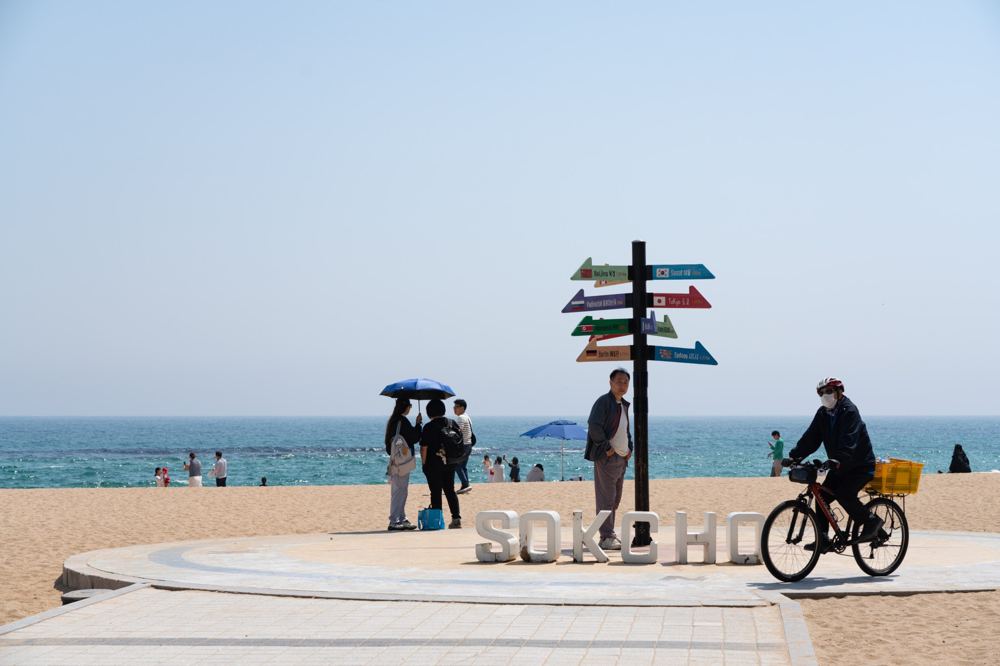
South Korea drew 18.9 million foreign visitors in 2025, yet only a third ventured outside Seoul.
South Korea plans to develop five new tourism hubs around regional airports, as the country tries to spread a record-breaking travel boom beyond the capital.
The country drew 18.9 million foreign visitors in 2025, surpassing the previous high of 17.5 million set in 2019. Yet the boom is concentrated in Seoul, the country’s capital, particularly in trendy neighborhoods like Itaewon and Seongsu-dong .
“Many foreign visitors come to Korea because of its culture, but only one-third ever travel outside of Seoul and the capital region,” Daehyun Kim, South Korea’s vice minister of culture, sports and tourism, said at the Global Tourism Economy Forum (GTEF) in Macau on Oct. 16. “For tourists to visit local areas, they need to be able to travel there directly without passing through Seoul, so we recently announced the plan to develop five major tourism hubs around five regional airports: Gimhae, Daegu, Cheongju, Muan, and Yangyang.”
Seoul is also trying to tie the K-wave to rural destinations, so the economic benefits of tourism trickle down to local communities.
“We’re turning popular drama and movie filming locations , local festivals and regional cuisine into unique tourism experiences that visitors can only enjoy in those specific regions,” Kim explained. “Over the past 13 years, over 1,400 tourism-related local businesses, including accommodations, restaurants and tour programs, have been established across 147 regions.”
Other Asian countries are also betting on tourism growth in their secondary cities. In China, domestic and international travelers are now moving beyond traditional gateway hubs like Beijing and Shanghai to destinations like Chengdu and Chongqing . (The latter has gone viral on social media platforms as China’s “cyberpunk city,” aided by a trend of tourists riding pillion with a professional motorbike rider against the city’s skyline. )
“China is a huge proponent of one journey, multiple stops,” said Pansy Ho, chairperson and executive director of MGM China, one of Macau’s six gaming concession holders, in a press conference at the GTEF. “If people come to China, they can see the Great Wall in Beijing, the terracotta warriors in Xi’an, and then take a spin and go over to Hangzhou.”
Airlines are cashing in too. Tony Fernandes, CEO of Malaysia-headquartered aviation company Capital A , said his biggest destinations are no longer capital cities like Delhi or Mumbai, but secondary and tertiary cities.
“The GDP of these cities is growing much quicker than the capital cities, there’s a lot of disposable income, and a lot of these populations have not been connected,” Fernandes said during a separate panel discussion at GTEF.
Those cities, Fernandes concluded, present untapped opportunities. He recalled a conversation where the governor of Guangdong province asked him to start a flight to Shantou. Upon learning that the city had a population of five million, larger than Kuala Lumpur, Malaysia’s capital, he readily agreed.