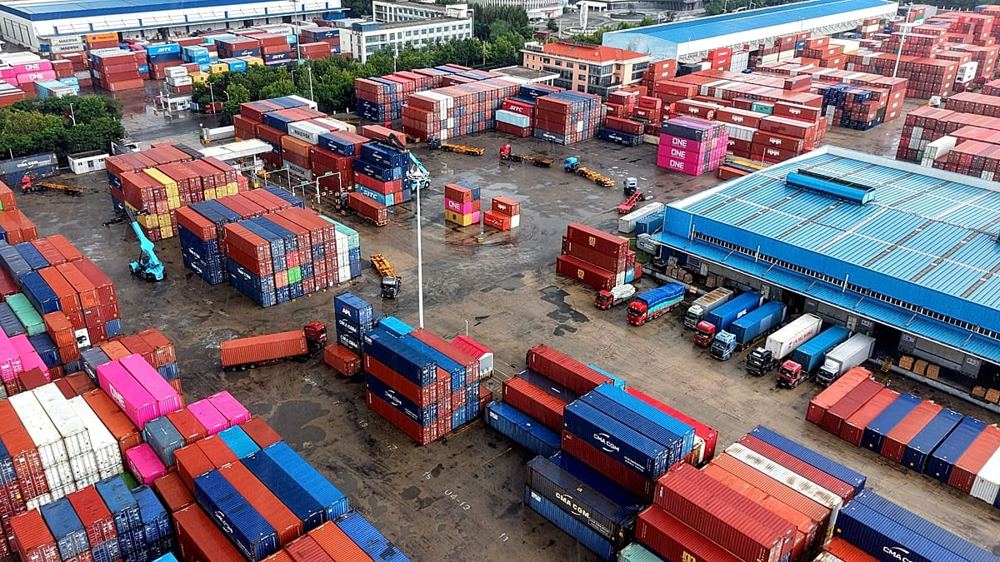
Afghan border opening could forge China-to-Gulf trade route

China is considering opening its Afghanistan border for the first time in nearly a century, a move that would create a critical overland trade route for Iran to bypass a US naval blockade.
China is weighing whether to open a border crossing in the remote Wakhan Corridor, a step that would establish a direct cargo route from the East China Sea to the Persian Gulf. The potential opening comes as US naval blockades during the "Twelve Day War" have severely restricted Iranian maritime access to the Indian Ocean. In response, Tehran is accelerating overland infrastructure projects to secure its export channels.
Tehran is already Afghanistan's top trading partner and is extending a railway northward from the city of Herat. Yet, “Iran’s answer to its maritime vulnerability [exposed by the US blockade] lies in overland infrastructure,” write analysts Eldaniz Gusseinov and Daniel Longerich. “The Afghan route gives Iran only partial insurance, since a through connection to China is not yet built and depends on Beijing’s willingness to open the border,” they add.
Beijing has historically kept the single Wakhan border checkpoint closed, citing security risks from Uyghur militants and a preference for routing trade through Pakistan. The establishment of a new Cenling County across from the frontier in March has sparked speculation about a policy shift. “The administrative change hints at China’s plan for greater integration with Afghanistan, and beyond to Central Asia,” writes analyst Philip Acey.
Security risks cloud logistics prospects
Any infrastructure investment remains highly vulnerable to regional instability. “Militant groups operating in Afghanistan, including Islamic State Khorasan Province and the East Turkestan Islamic Movement (ETIM)