Chinese Missile Seen as Challenge to Pacific ‘Zone of Peace’
Beijing fired a long-range missile into the Pacific hours after Australia signed a defence treaty with Fiji, drawing criticism from many states angry at what they called a 'destabilising' show of force. The post Chinese Missile Seen as Challenge to Pacific ‘Zone of Peace’ appeared first on Asia Financial .
Beijing fired a long-range missile into the Pacific hours after Australia signed a defence treaty with Fiji, drawing criticism from many states angry at what they called a ‘destabilising’ show of force.
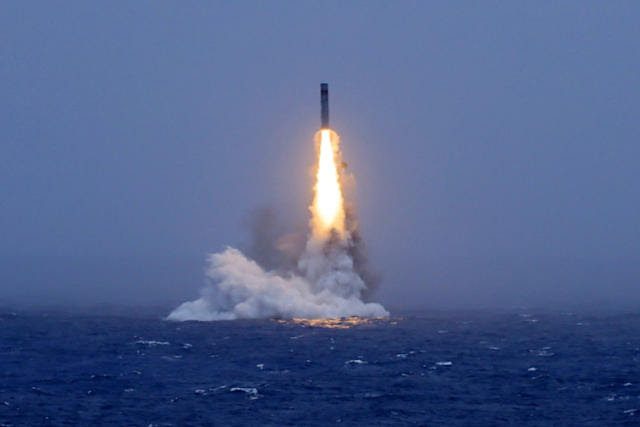
China’s move to fire a strategic missile carrying a dummy warhead into the Pacific Ocean on Monday has drawn a chorus of condemnation from nations in the region.
The move was a reminder of Beijing’s military capability, which some experts said was deliberately timed, hours after Australia signed a defence treaty with Fiji, and may have stemmed from its anger at being outmanoeuvred in the race to win hearts and minds of citizens in not only Fiji, but many other Pacific island states .
Australian foreign minister Penny Wong, who travelled to Fiji with Prime Minister Anthony Albanese for the declaration of the Ocean of Peace Alliance, described Beijing’s action as “destabilising.”
“Pacific Islands Forum leaders have made clear they want the Pacific to be an ocean of peace. We regard this proposed test as counter to that,” Wong said.
New Zealand described the test as involving a nuclear-capable “long-range ballistic missile”, but China’s defence and foreign ministries did not confirm whether an intercontinental ballistic missile (ICBM) had been used.
A Chinese spokesperson claimed the missile stunt was “ a routine arrangement of annual training” by the PLA Navy and that relevant countries were informed in advance, several hours in advance.
Fiji became the fourth ally to sign a defence treaty with Australia, following tie-ups with the United States, New Zealand and Papua New Guinea.
Pacific affairs expert Tess Newton Cain said this was clearly aimed at Pacific nations with standing militaries such as Papua New Guinea and Tonga.
“It’s significant because it’s very much focused on the countries that have military capacity,” she told AFP. “It provides a very clear point of entry to have further security conversations down the track.”
Albanese will visit the Solomon Islands before returning home later this week for bilateral talks with leaders from India, Papua New Guinea and Tonga.
Australia’s alliance with Fiji mirrors the sweeping Pukpuk Treaty with Papua New Guinea, which is due to come into effect on Wednesday.
Australia and Vanuatu signed a security and economic agreement in June that bars the establishment of any foreign military base in the Pacific nation. China later warned Australia against playing “geopolitical games.”
Beijing’s desire to expand its presence in the Pacific has been obvious for years. China has been seeking to increase its influence in the region, showering islands with new hospitals, freshly paved roads and gleaming sports stadiums.
And the missile fired on Monday was the second that China has shot into the Pacific in recent times.
Monday’s test followed China’s elite Rocket Force firing an ICBM into the sea near French Polynesia in 2024, its first launch of such a missile over international waters in more than 40 years, AFP reported.
A nuclear submarine launched a “strategic missile carrying a training simulation warhead” at 12:01pm (0401 GMT), a Chinese navy statement said, adding that it had “accurately land(ed) in the designated sea area”.
Alex Luck, a naval analyst focused on Chinese military modernisation, told AFP that the missile could have been the advanced submarine-launched ballistic missile JL-3, an extended-range variant of China’s JL-2.
New Zealand’s foreign minister said the launch was carried out “within hours” of his country being told.
“The Pacific is an Ocean of Peace and we are deeply concerned by China’s testing of nuclear-capable weapons into the South Pacific,” Foreign Minister Winston Peters said in a statement, adding that the launch “is not consistent with regional stability”.
Japan also said it had “expressed serious concerns over China’s increasing military activity”.
Asked about the reactions, China’s foreign affairs ministry said, at a regular news briefing on Monday, the launch was “not directed at any specific country or target”.
Beijing has ramped up its nuclear development and boosted its defence spending massively since Xi Jinping took power in March 2013.
According to the Pentagon, China held more than 500 operational nuclear warheads as of May 2023 and is likely to have more than 1,000 by 2030.
Beijing test-fired the missile on the same day that it began annual joint naval exercises with Russia off Qingdao, a major military port and seaside resort in China’s east.
The two sides plan to conduct “harbour-based planning” such as “exercises in command and tactical coordination”, according to state news agency Xinhua.
“For the next step, the participating warships will proceed to the sea near Qingdao to conduct drills in areas such as joint reconnaissance, air and missile defence, as well as training in the actual use of weapons,” Xinhua said.
Fiji’s Rabuka, however, played down concern that China would see the treaty as a snub.
“I do not expect China to have any severe pushback,” he told reporters. “I believe that they will welcome the understanding that it is between Australia and Fiji. It does not threaten Fiji’s relationship with China.”
Peters said after the launch that New Zealand was concerned “this now seems to be a recurring pattern”.
The 2024 ICBM test appeared to be one of China’s advanced Dong Feng-31 missiles, analysts said at the time, a weapon capable of delivering a thermonuclear warhead.
The long-range missile splashed into part of the ocean long designated a nuclear-free zone under an international treaty.
New Zealand’s Defence Force has privately warned that Beijing’s naval forays and ballistic missile tests would become a “persistent” feature of the Pacific, according to an internal document obtained by AFP last month.
Luck said: “The Chinese nuclear-powered submarine fleet has, over the past few years, undergone a significant push for modernisation and expansion.
“In line with this trend, we should expect a significant increase in missile testing and the frequency of such tests getting conducted.”
Pacific island nations remain deeply scarred by the US, British and French nuclear tests in the region in the decades after World War II.
Meanwhile, major stock markets traded mixed on Monday as a recovery for technology share prices petered out and quarterly earnings season kicks into gear.
After a tough end to June, fuelled by worries that company valuations linked to the AI boom may have been overdone, the mood lifted last Thursday after data showed the United States created fewer jobs than expected last month.
That soothed fears that the Federal Reserve could hike interest rates amid elevated inflation. Even so, the dollar rose against main rivals Monday, with traders awaiting minutes this week from the Fed’s last policy meeting.
“Investors are not walking away from the AI story, but they are asking whether a sector priced for perfection can keep delivering,” noted Patrick Munnelly, a market strategist at traders Tickmill Group, according to AFP.