Bajos De Mena Explained: Why This Santiago Area Matters
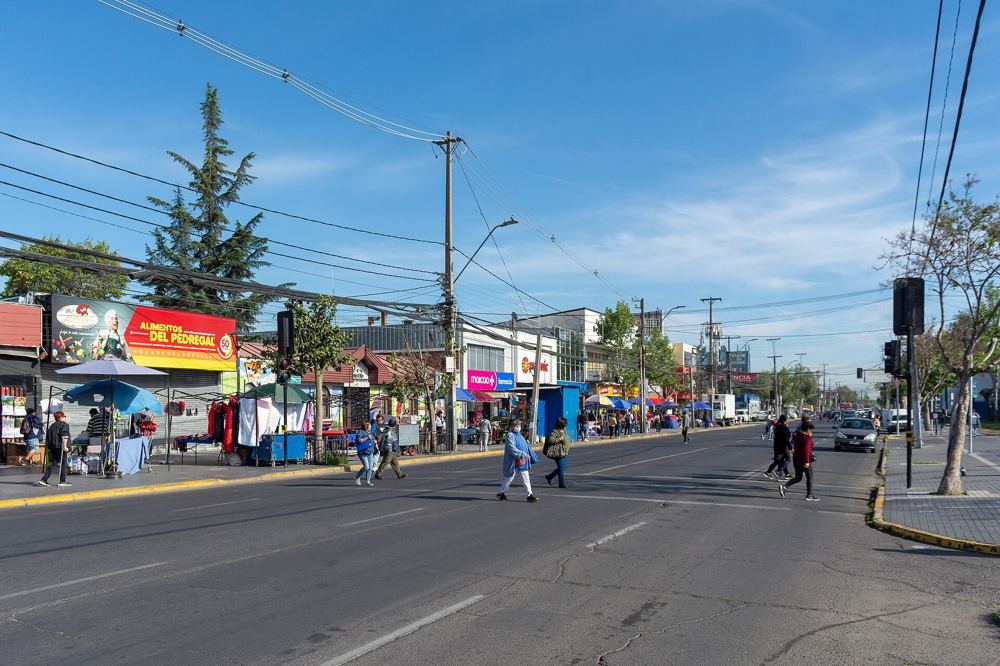
Bajos de Mena is a mass-housing district of Puente Alto, Chile. Here is how it was built, why blocks were demolished and what is still unsettled. The post Bajos De Mena Explained: Why This Santiago Area Matters appeared first on The Rio Times .
Bajos de Mena is a district of Puente Alto, on the south-eastern edge of Greater Santiago, where the state built large blocks of social housing. It returned to the headlines this week after a crowd damaged its public clinic, as covered in Mob Attack Closes Puente Alto Cesfam 16 Oct .
For US readers, it is a case study in how a mass-housing policy can shape safety, services and local politics for decades. It is a residential district, not a business or tourist zone.
Puente Alto had 568,106 residents at the 2017 census, making it Chile’s most populous commune, according to the census figures carried by 24 Horas. The district is one sector inside it, and CEDEUS cites 78,425 residents there from the same census.
CEDEUS is the Centre for Sustainable Urban Development, a university research group that has studied the district. It says the area’s origins go back to the 1960s and that it consolidated in the 1990s, when a 2010 study it cites called it Chile’s biggest ghetto.
Housing Minister Cristián Monckeberg said in 2018 that the district’s homes were built in the 1980s and 1990s as part of a mass public policy. He called that policy poorly conceived and said the government was correcting it.
Many of the apartments were small, about 39 square metres in the Francisco Coloane and Cerro Morado villages, according to the ministry. It describes about 6,000 people living in 1,300 apartments across 61 blocks in that project area, with overcrowding and shared households.
The ministry says the Marta Brunet village was built by the Copeva company and showed serious defects after the 1997 rains, a year after it opened. The Clinic reported in 2009 that the nearby Villa El Volcán 2, also built by Copeva, was meant to house about 1,700 families in apartments of roughly 40 square metres.
After the leaks, some original owners left, and people without housing took over the abandoned apartments, The Clinic said. By 2009 more than 900 of those apartments had already been demolished.
El Volcán 2 is also the name attached to the eviction that preceded this week’s protest, according to CNN Chile. No outlet reviewed says how today’s occupants relate to those of 2009.
In 2013 Serviu, the state housing agency, began relocating families under the Segunda Oportunidad programme and demolishing emptied blocks. Cooperativa reported that a block cleared in Francisco Coloane was knocked down to prevent future land takeovers and crime.
CEDEUS notes that the early demolitions had no planned use for the cleared land, which left vacant lots beside partly occupied buildings. Some residents also said they felt pressured to leave, which the mayor at the time, Germán Codina, denied.
In 2018 the ministry began demolishing the last two blocks of Francisco Coloane and Cerro Morado to make room for homes for more than 500 families. By December 2020 the first 41 families had moved into 61-square-metre replacements, out of 495 planned.
In February 2023 the ministry handed over 280 homes in the Cordilleras de doña Marta complex for families from the Marta Brunet village. It said two more complexes were then under construction nearby.
The ministry also said in 2020 that it was building a shared civic centre for the Volcán II and III sectors, with a health centre and banking services. It added that a security post with Carabineros and firefighters was already operating there.
In late September 2024 gunmen fired more than 150 rounds at a wake in the district, and a 17-year-old died, BioBioChile reported. The attackers also threatened staff at the same Cesfam Raúl Silva Henríquez, which then offered only emergency care.
The Metropolitan presidential delegation announced a fixed police post at the clinic for at least 30 days, and Codina, then mayor, criticised the downgrading of the 66th police station. Mayor Matías Toledo says that post was withdrawn about three months before this week’s attack, and on 16 October the government said Carabineros would restore it, 24 Horas reported.
BioBioChile also reported a public clash on 5 August 2026 between Toledo and presidential delegate Codina over police numbers. For the national context, see Chile Security and Crime Explained 2026 .
Visitors to Santiago will find the main sights, hotels and business districts elsewhere, as our Santiago city page and our guide What to Do in Santiago in October 2026: Foro de las Artes, Festival Bamba and Iron Maiden show. Anyone living near the area should follow local advice around eviction dates.
For US investors and analysts, the district shows how housing, policing and municipal-national relations interact, a theme covered in Chile History Explained, From Origins to 2026 and Who Dominates Chile, Elites and Regions Explained . It is one commune, and no source reviewed ties it to wider economic risk.
No single official population figure for the district was found, and counts vary with the boundary drawn. The total number of blocks still standing and the final cost of the regeneration programme are also not stated in the sources reviewed.
It is not established whether today’s occupants of El Volcán 2 are linked to the families who moved in after 1997, and outlets name the building differently. Nobody has been named or charged over the clinic attack, and the government’s announced complaint and review of the police response had produced no findings by Friday evening.
It is a district of Puente Alto, in Greater Santiago, built around large social-housing blocks. CEDEUS cites 78,425 residents from the 2017 census, though counts vary with the boundary used.
The housing minister said in 2018 that it was built in the 1980s and 1990s under a mass public policy, and firms such as Copeva built blocks. The ministry says one Copeva village showed serious defects after the 1997 rains.
The Clinic reported that after leaks and departures, people without housing took over abandoned apartments in Villa El Volcán 2. This week’s eviction notice concerns the El Volcán 2 occupation, CNN Chile said.
Serviu and the housing ministry have demolished blocks for years and built replacement homes, such as 280 in the Cordilleras de doña Marta complex. More complexes were under construction in 2023, and the full programme is not finished.
It is a residential district, not a tourist destination, and the main visitor areas of Santiago lie elsewhere. The sources reviewed describe local public-order problems, so travellers should follow local advice.
Sources: Housing Ministry (Minvu), 22 June 2018 ; Housing Ministry (Minvu), 19 December 2020 ; Housing Ministry (Minvu), 3 February 2023 ; CEDEUS, April 2020 ; 24 Horas, 2017 census ; Cooperativa, 16 May 2013 ; The Clinic, 21 December 2009 ; BioBioChile, 26 September 2024 ; BioBioChile, 5 August 2026 ; 24 Horas, 16 October 2026 ; La Tercera, 16 October 2026 ; CNN Chile, 16 October 2026 .
Editorial responsibility: Matthias Camenzind , Editor-in-Chief · Editorial standards · Report an error
Living in or visiting Santiago? See this month's events and our Santiago city guide with rents, safety and upcoming concerts.