Despite making over $200,000 a year, many NFL referees still hold full-time jobs as attorneys, aerospace engineers, and college professors
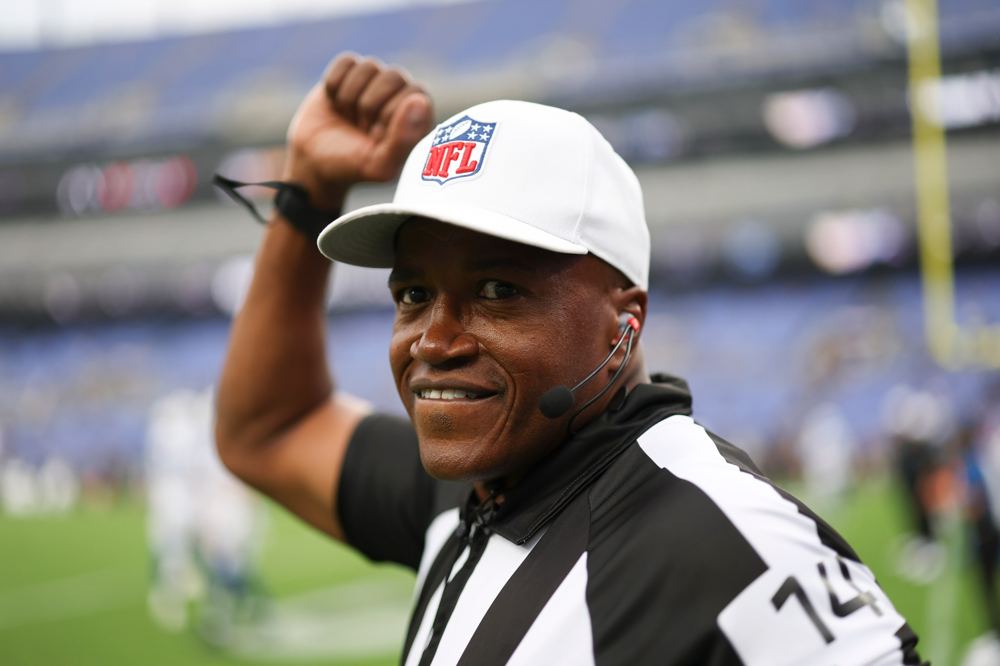
Gen Z may be juggling multiple jobs out of financial necessity, but they’re not alone. Many of the NFL’s 121 referees hold second jobs—just for fun.
From August to January, NFL officials travel weekly across the country, and sometimes abroad, to oversee some of the world’s most-watched sporting events. But when the final whistle blows, another job is often waiting for them the next morning.
Many of the NFL’s 121 officials hold full-time jobs outside football: Clete Blakeman is a personal injury attorney in Nebraska, Brad Rogers is a senior lecturer at Texas Tech University’s business school, and Shawn Hochuli is a California-based financial advisor. The unusual career combinations recently went viral on social media .
But these aren’t just side hustles to supplement their NFL paychecks. Referees earned an average of $205,000 a year in 2025, according to Sports Illustrated , on top of a reported 10% increase in per-game pay in 2026. Instead, many officials built careers in other fields before reaching the NFL, and continue to pursue them alongside football.
Shawn Smith joined the NFL in 2015, but has also spent the last three decades in auditing. He’s said there are more parallels between the career paths than people might realize.
“Most folks don’t want to see an auditor come and most folks don’t care about refereeing,” Smith, who currently works at Blue Cross Blue Shield of Michigan, told Detroit news affiliate WXYZ earlier this year. “But one of the things we do is we have to be objective, we have to be independent, we have to be disciplined in our craft.”
That commitment extends well beyond game day. During the season, officials spend more than 30 hours a week studying video and the rulebook, according to the NFL . They also meet with their crews and review evaluations from supervisors, making officiating feel like a second full-time job.
Adrian Hill is another example. A 16-year NFL officiating veteran, he also works as a principal software engineer at NASA’s Goddard Space Flight Center in Maryland. For him, the two jobs require very different approaches to decision-making.
“With the NFL, you’re making split decisions on the field, it goes by in a flash,” Hill told CBS Baltimore in 2021. “On the spacecraft side, it’s very different. When we make decisions, it’s very measured, we weigh decisions.”
“I feel more pressure on the NFL field,” Hill said. “When the lights go on, we blow the whistle, and the action is live. If you had a heart rate monitor, my heart rate is at the highest. I know people say it’s just a game, but 20 million people are watching, you make the snap decision.”
Reaching that level takes years of work. The NFL requires prospective officials to have at least 10 years of football officiating experience, including at least five years at the varsity college or minor professional level. Individuals also have to be in “excellent physical condition” and belong to an accredited football officials association or have previous experience in football as a player or coach.
If those boxes are checked, the application process is relatively simple: candidates are invited to mail off their collegiate officiating schedule for the past three seasons to the NFL’s Manhattan headquarters.
For Hill, pursuing two demanding careers is proof that people don’t have to choose just one path.
“If someone told a kid they could be a professional football player and medical doctor, you’d think that would never happen,” Hill said. “If you have that drive and determination, you can do it. Don’t listen to them. You can go out and do both.”
NFL officials aren’t the only ones balancing two very different careers. For some, a second pursuit starts as a passion project. For others, it’s a way to make ends meet.
Comedian and actor Ken Jeong, for example, started his career as a licensed physician when he began pursuing comedy on the side. “During the day, I was a doctor. At night, you know, I was a comic,” he told NPR in 2014. “And it was really just to let off some steam. It became like golf, you know, in many ways. Most doctors have golf as a hobby. Mine was doing comedy.”
Eventually, he was able to leave medicine behind and pursue comedy as a full-time career. But for many, maintaining two jobs is a necessity.
Several U.S. Olympic athletes went viral earlier this year for balancing full-time jobs with the demands of elite competition . Alpine skier Keely Cashman, who represented Team USA at the 2022 and 2026 Winter Olympics, spends part of the year working as a barista in her small California town.
Cory Thiesse and Korey Dropkin, meanwhile, became the first American team to win a medal in Olympic mixed doubles curling, taking silver. Outside competition, Thiesse works as a lab technician at a mercury-testing lab, while Dropkin works as a full-time real estate agent.
“I feel grateful that I have a job that pays the bills while I go compete in curling,” Thiesse said earlier this year.
That balancing act is growing in familiarity for many young workers navigating a difficult job market and rising underemployment, when people work in jobs that don’t require the degrees they earned. A study from EY found that 39% of Gen Z held both a job and a “side hustle.”