Brazil Arrests Márcio Canella in Fuel Probe
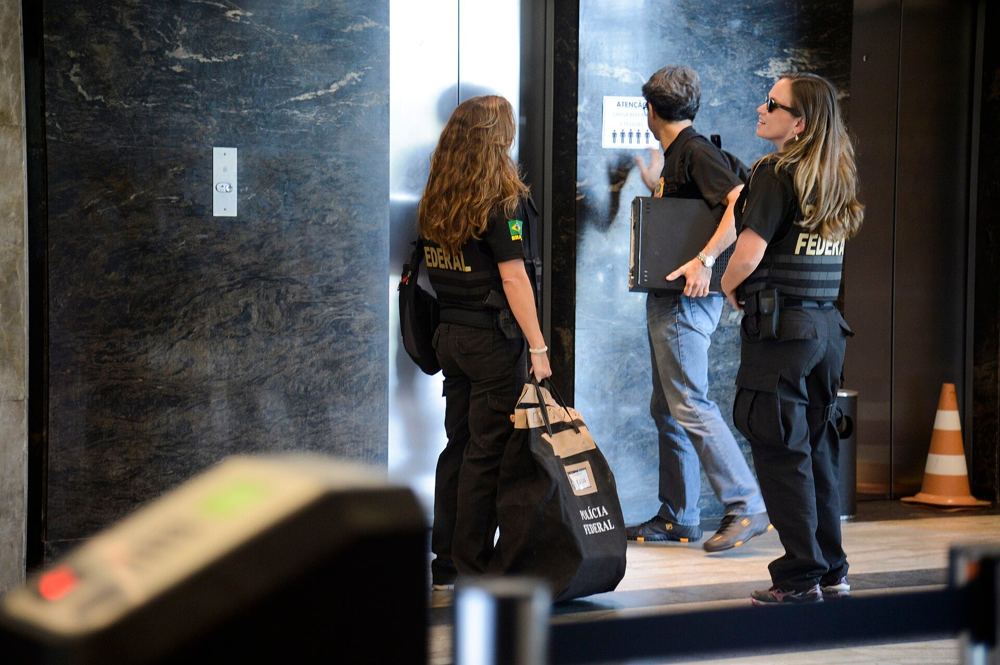
Brazil's Federal Police arrested deputy-elect Márcio Canella on 15 October in a fuel-station laundering probe that allegedly moved about US$1.5 billion. The post Brazil Arrests Márcio Canella in Fuel Probe appeared first on The Rio Times .
Date, polls, debates, odds and how the runoff works, updated every day.
Brazil runoff polls · Polymarket and Kalshi odds · When results come
Implied chance of winning Brazil’s presidency on 25 October, from traders’ prices.
As of 15 October, 1:20 pm ET (18:20 Lisbon) , updated every 20 minutes. Prices are bets, not polls, and can move fast.
Why we show this: prediction markets turn real-money bets into a live probability that moves within minutes of the news, which is why investors, campaigns and newsrooms in the United States now follow them closely. We show them next to polls and official results, never instead of them.
Brazil’s Federal Police arrested deputy-elect Márcio Canella on Thursday in a probe into a network that allegedly moved about US$1.5 billion. The arrest comes ten days before the presidential runoff between Lula and Flávio Bolsonaro.
Márcio Canella, a Rio de Janeiro state deputy-elect, was arrested on Thursday, 15 October, in an alleged fuel-station laundering case. Investigators say the scheme moved more than 7.6 billion reais (about US$1.5 billion) through filling stations over six years.
Federal Police agents served six preventive arrest warrants and 16 search warrants, all authorised by Supreme Court Justice Alexandre de Moraes. The arrests come ten days before Brazil’s runoff on Sunday, 25 October, between President Lula and Senator Flávio Bolsonaro.
US readers follow the runoff, and Canella was once backed for the Senate by Flávio Bolsonaro, one of its two candidates. No source reviewed links the arrest to the vote.
The Federal Police launched the eighth phase of Operation Unha e Carne on the morning of Thursday, 15 October. It follows the sixth phase in July , which traced the same filling-station network.
Agents served warrants in Rio de Janeiro city and six other towns, including Niterói, Petrópolis, Angra dos Reis and Búzios. All six people targeted by arrest warrants were arrested, the Federal Police said.
Besides Canella, those arrested include Marcus Amim, a former secretary of Rio’s state Civil Police. Jovem Pan and Veja describe the other four as police officers.
The Federal Police alleges an armed criminal organisation with public agents and political and institutional ties. Suspects may face charges of money laundering, corruption, illegal fuel sales and cartel formation.
Canella is a former mayor of Belford Roxo, a city in the Baixada Fluminense district of greater Rio de Janeiro. He belongs to União Brasil, a centre-right party that left Flávio Bolsonaro’s Rio coalition in August.
He won 197,178 votes on Sunday, 4 October, the second-highest total for Rio’s 70-seat state assembly, known as Alerj. Jovem Pan says he is due to start that term in 2027.
Flávio Bolsonaro is a senator for the conservative Liberal Party, a son of former president Jair Bolsonaro and Lula’s runoff rival. Veja says Flávio announced Canella’s Senate pre-candidacy in February; Canella quit that race on Monday, 3 August, O Povo says.
Police had arrested him once before, on Tuesday, 7 July, over a rifle found in his car. His defence said the rifle belonged to his police escort, and Moraes freed him on Friday, 10 July.
Moraes signed the order on Tuesday, 13 October, in Inquiry 5020, which the Federal Police requested on Friday, 4 September. The Prosecutor-General’s Office backed the measures on Monday, 14 September, the decision records.
The decision sets out police claims that Canella was the group’s political link to officials and a recurring recipient of money. Seized handwritten ledgers list payments to “Canella” from two filling stations, which police link to him, the decision says.
Police also say a company Canella co-owns sent him about 1.4 million reais (about US$278,000) between May 2025 and April 2026. Their analysis could not identify the primary source of those funds, the decision says.
Moraes, adopting the Prosecutor-General’s reasoning, cited a concrete risk to public order, pointing to Canella’s alleged leadership role. These are police allegations accepted for pretrial detention, not findings of guilt.
Moraes capped the freeze on bank balances and other assets at 700 million reais (about US$139 million). Police had asked for a freeze matching the 7.6 billion reais the network allegedly moved, about US$1.5 billion.
The Federal Police say the court suspended the activities of 112 companies, 96 of them fuel stations used to disguise criminal proceeds. The order also reaches crypto assets, vehicles, property, aircraft and shares held through the B3 exchange.
The 25 October runoff pits Lula against Flávio Bolsonaro, and US investors are watching it. No source shows a link between the arrest and either campaign, so it is a crime-and-politics story, not a market event.
The decision’s list of targeted companies contains only private limited companies, so no listed fuel distributor appears in it. The operation follows guidelines the Supreme Court set in its favelas case, known as ADPF 635, on organised crime in Rio.
For wider context, see the guides on who dominates Brazil and on foreign powers and investors in Brazil . Visitors to Rio can consult the Rio de Janeiro city guide , as the case has no known effect on travel.
No detailed response from Canella appeared in the sources reviewed, and Poder360 had no reply from his lawyers at publication. O Folha de Minas reported that his defence had not yet seen the file and that Canella denies criminal ties.
Amim’s defence had not commented publicly. The sources do not say whether prosecutors have filed charges against any of the six.
It is not known whether Canella can take his assembly seat in 2027, or how the Rio assembly will respond. No reaction from Flávio Bolsonaro’s campaign appeared in the sources reviewed.
Police must question the suspects and file a first report on seized material within 30 days, the decision says. The runoff on Sunday, 25 October, comes before that report is due.
No appeal by the defence had been announced in the sources reviewed. A preventive arrest is not a conviction.
He is a former mayor of Belford Roxo and a state deputy-elect for União Brasil in Rio de Janeiro. He won 197,178 votes on 4 October, the second-highest total for the state assembly.
Justice Alexandre de Moraes ordered his preventive arrest in an inquiry into alleged money laundering through fuel stations. Police allege he was the group’s political link to officials and a recurring recipient of money.
Police say the network moved more than 7.6 billion reais, about US$1.5 billion, over six years. Moraes capped the asset freeze at 700 million reais, about US$139 million.
No source reviewed links the arrest to the 25 October runoff between Lula and Flávio Bolsonaro. Canella quit the Senate race in August, and his party left Flávio’s Rio coalition.
Guilt has not been decided, and the arrest is a pretrial measure based on police allegations. Canella denies links to criminal groups, according to O Folha de Minas.
Six people were arrested in total, including Marcus Amim, a former secretary of Rio’s state Civil Police. Jovem Pan and Veja describe the other four as police officers.
Sources: Federal Police release, 15 October ; Supreme Court decision, Inquiry 5020, signed 13 October ; Agência Brasil, 15 October ; Poder360, 15 October ; Poder360, arrest report ; InfoMoney, 15 October ; Jovem Pan, 15 October ; RIC, 15 October ; O Folha de Minas, 15 October ; Veja, 15 October ; O Povo, 4 August ; SBT News, 3 August ; Superior Electoral Court results, 4 October ; O Povo, 25 July ; Jornal Opção, 11 July ; BandNews FM, 7 July (all accessed 15 October 2026). Conversions use the central bank’s PTAX selling rate of Wednesday, 14 October 2026, of 5.0441 reais per US$1.
Editorial responsibility: Matthias Camenzind , Editor-in-Chief · Editorial standards · Report an error