How lower fuel economy targets could boost pickups and V-8 engines
An analyst who follows the industry says there are four ways recent changes to fuel economy rules will shift investment toward the most profitable segments.
Automakers could see a financial tail wind that runs in the billions of dollars after the U.S. lowered fuel economy standards and stopped issuing fines for violations of those rules, according to an auto analyst.
The National Highway Traffic Safety Administration in late September sharply reduced fuel economy targets for light-duty vehicles to an average of 34.9 miles per gallon by 2031. Under the previous rules the Biden administration finalized in 2024, the U.S. fleet was then expected to average 50.4 miles per gallon by the same time.
That followed Congress voting last year to eliminate the fines automakers faced for failing to comply with regulations. Several years ago, General Motors and Stellantis paid hundreds of millions of dollars in civil penalties for failing to meet U.S. fuel economy requirements for prior model years, Reuters reported.
"We've already seen [costs from fines and credits] come down even this year and serve as incremental earnings tail winds," said Itay Michaeli, an analyst for TD Cowen. "And it could be a few to several hundred million dollars."
The new rules also eliminate the selling and trading of credits automakers use to compensate for producing fuel-thirsty vehicles. The NHTSA has in the past allowed automakers at risk of exceeding their fuel economy average to buy credits from others that make low- or zero-emission vehicles.
Historically, state and federal credits have been revenue sources for electric vehicle producers such as Tesla and Rivian .
Those changes take the pressure off automakers that have tended to produce less-efficient vehicles, such as SUVs, pickup trucks or high-performance sports cars. But they also allow automakers to redirect their portfolios and investments away from products made for compliance and toward ones that are more profitable, Michaeli said.
There are three pieces to the potential strategy shift, he said. First, automakers can sell more internal-combustion vehicles and fewer of what are often called "compliance cars," which are slower-selling or less profitable fuel-efficient vehicles or EVs that automakers make in order to stay on the right side of fuel economy or emissions rules.
In the past year, several automakers have written down billions in EV-related investments, showing how those vehicles have been difficult to make profitable in the U.S.
Ford announced a $19.5 billion special charge in December as part of a business restructuring and a pullback in EV investments, while GM recorded a $7.1 billion impact in the fourth quarter related to its own pullback and restructuring in China. At Porsche, EV-related write-downs drove automotive operating profit down 98% in 2025, and Honda's contributed to the company's first annual loss in about 70 years.
A second possible change is what Michaeli calls "ICE optimization", the loosened regulations allow automakers to sell more high-margin vehicles, which often come with larger engines.
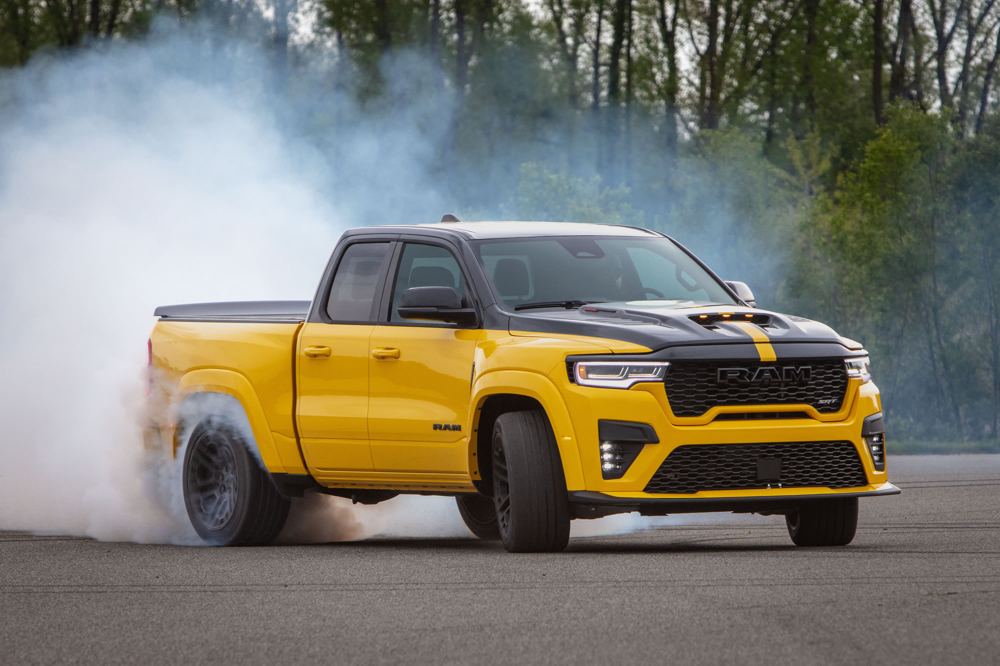
Detroit automakers, and some foreign ones, have already been reintroducing V-8 engines. Stellantis' Ram brand has brought the gas-guzzling engines back for its full-size pickup line. GM, meanwhile, said in September that it will bring a new generation of small-block V-8 engines to its full-size Silverado and Sierra pickup trucks. And Ford has increased V-8 availability across its F-150 pickups, the top-selling vehicle in the U.S.
"So to kind of work down the funnel," Michaeli said automakers might be thinking, "I don't have to pay compliance costs, I don't have to buy credits. That's great. Now I can maybe sell more pickup trucks, and within those pickup trucks, I could sell more V-8s and different trims of those pickup trucks."
Michaeli said the third piece is that automakers are also redirecting research and development investments away from projects focused on meeting fuel-efficiency regulations and toward those that either boost profits or support further investment in powertrain development or other technology.
After both the elimination of federal tax credits for EVs and the market pullback in that segment, automakers are left with big questions about how to invest, said John Murphy, an automotive analyst.
"Balance sheets and cash on balance sheet may need to be far higher than they thought previously, because there's such extreme uncertainty around where powertrains need to ultimately go," Murphy said. "Remember, powertrain is the most expensive part of a vehicle."
Despite regulatory changes, hybrids have surged in the U.S. market over the past several months, and some companies have been better positioned for that increase than others. Murphy expects that to continue.
"Our forecasts are that hybrids, absent a change in the regulatory regime, will go from 14% of the market last year to about 34% of the market by the end of the decade," he said. "So that's a big shift that's happening quickly. There are some months where we've been about 19% [hybrids]."
That said, Michaeli argued that EVs are still likely to continue growth. Electric vehicles have an exceptionally high loyalty rate, he said.
EV owners are more likely to replace their vehicle with another EV than hybrid or gasoline-vehicle owners are to stay with the same powertrain type, Michaeli said. EVs are also still preferred platforms for other innovative technologies, such as autonomous driving features.
But the main reason Michaeli sees potential for EVs is the sheer number of two-car households in the U.S., the highest share of such households in the world. Michaeli said he thinks those households are most likely to opt for one EV and one ICE vehicle. There are roughly 300 million vehicles on U.S. roads today, he said. Only about 7.5 million of those are EVs, according to the Alliance for Automotive Innovation, a trade group for automakers.
"A lot of next-generation EVs are still coming," he said. "Imagine what happens as those EVs hit the market and ramp. That's why it's really hard to be negative structurally on U.S. EV demand, because when it turns, it can turn very, very sharply."