Saudi Oil Exports Threatened as Houthis Declare Red Sea Blockade
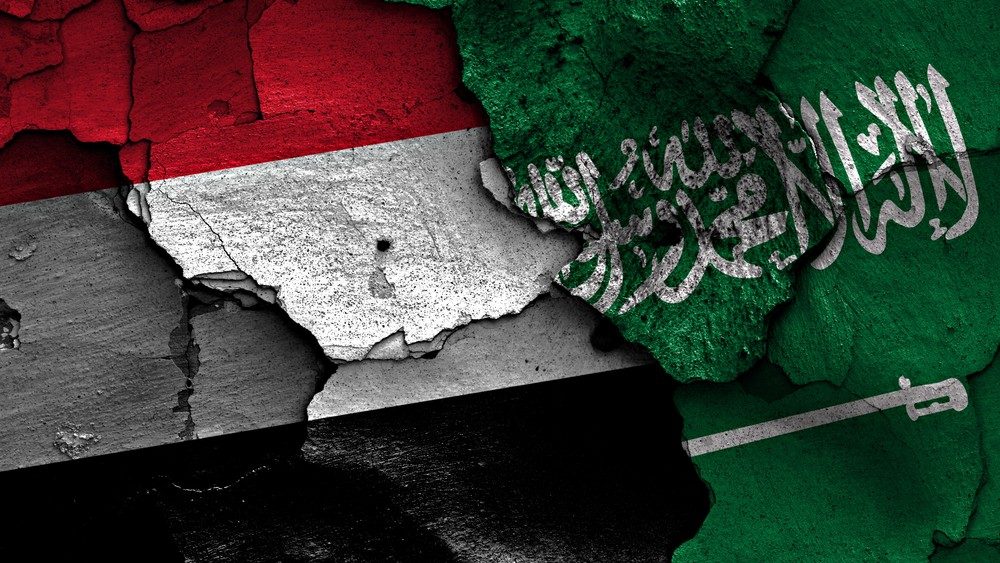
Yemen's Houthis have declared a naval blockade on Saudi Arabia, threatening a critical Red Sea export route and leaving Riyadh exposed to potential disruptions of roughly 7% of global oil supply.
Yemen’s Iran-aligned Houthis declared an immediate naval blockade on Saudi Arabia on Monday, formally dragging the U.S.-Iran conflict into the southern Red Sea. The group framed the "maritime embargo" as retaliation for a Saudi-led siege of Yemen. Riyadh had not issued an official response by late Monday, leaving markets to assess the immediate logistical fallout.
The declaration directly threatens the Bab el-Mandeb Strait, a waterway Saudi Arabia relies upon to route oil exports when the Strait of Hormuz is compromised. Iran had explicitly instructed the Houthis to prepare a closure of this southern entrance if U.S. assaults on Iranian power infrastructure persisted. With tanker traffic through Hormuz already severely curtailed, a simultaneous closure at Bab el-Mandeb would leave Saudi export infrastructure effectively trapped at both ends.
The physical reality of those northern disruptions is already reflected in shipping data. Satellite imagery captured on July 18 showed only a single ship-to-ship oil transfer occurring outside the Strait of Hormuz, a steep drop from three such transfers just a week earlier. Maritime tracking sources estimate that supertanker crossings through Hormuz collapsed to an average of just two per day last week, down from a baseline of eight per day in late June and early July.
If the Houthi blockade is enforced, the combined chokepoints could wipe roughly 7% of global oil supply from the market. This dual-threat scenario represents a worst-case outcome for global energy logistics, forcing Saudi Aramco and other regional producers to scramble for alternative, severely limited export pathways or rapidly curtail production.
The Houthi escalation coincides with an intensification of U.S. military operations. American forces conducted a ninth consecutive night of strikes on Iran, targeting infrastructure in cities including Tabriz, Chabahar, and Bandar Imam Khomeini. Iran’s Revolutionary Guards responded by claiming attacks on U.S. military assets stationed in Jordan, Kuwait, and Syria. Kuwait also confirmed a separate strike on a desalination plant that ignited a fire, underscoring the widening geographic scope of the conflict.
Traders initially reacted to the Red Sea blockade by pushing Brent crude above $90 per barrel. However, those gains proved fleeting as diplomatic murmurs tempered the geopolitical risk premium. Reports indicated that Iran has received a formal proposal for a 10-day ceasefire, and both Tehran and Washington have signaled a willingness to return to the negotiating table. Brent subsequently pulled back to trade near $88.04, while West Texas Intermediate declined to approximately $82.29.