Peru Senate Panel to Vote on Crime Powers
Senators weighing 20 decree powers for Peru's conservative president heard small-business owners say they pay extortion gangs all the time. The post Peru Senate Panel to Vote on Crime Powers appeared first on The Rio Times .
A Peru Senate committee plans to vote on Thursday 15 October on 90 days of decree powers for President Keiko Fujimori. The bill would let her government change laws on crime and on the El Niño weather pattern without new votes in Congress.
For US companies, travellers and investors, the vote will shape how fast Peru can rewrite its rules on extortion and organised crime. Fujimori, a conservative who took office on 28 July, saw the lower house reject the trimmed plan once before passing it on a second vote.
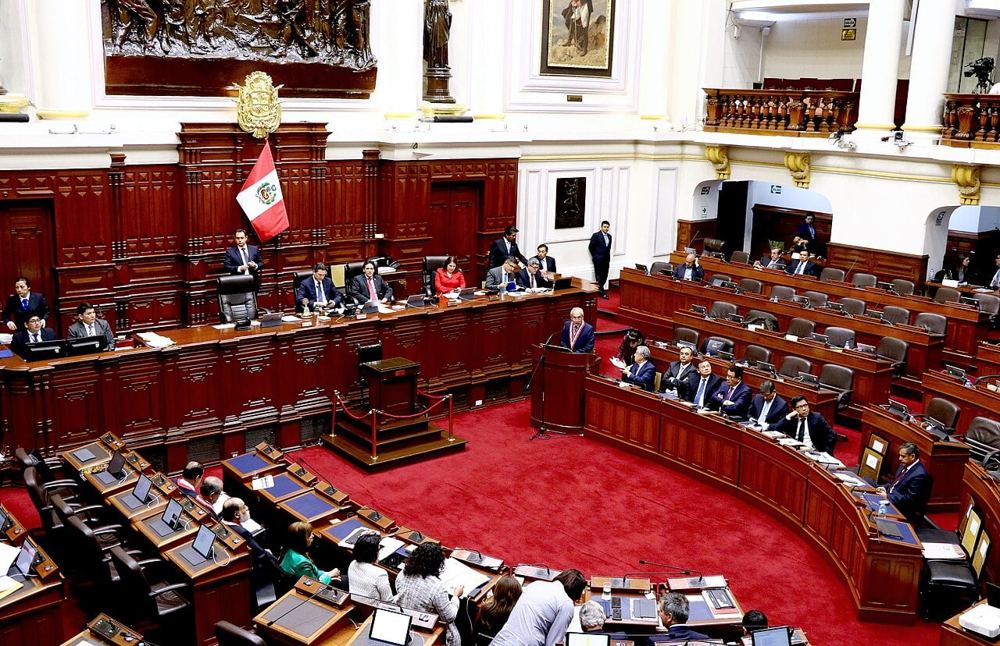
The Peru Senate’s Constitution Committee met on Tuesday 13 October to review the bill, which the lower house passed a week earlier. Its chair, Carlos Mesía, is a senator for Fuerza Popular, Fujimori’s conservative party.
Mesía said the committee had declared itself in permanent session and would vote on Thursday. He added that the full Senate would debate the approved text on Monday 19 October, El Comercio, a leading Lima daily, reported.
Senator Patricia Iturregui of Buen Gobierno, a party that wants the deputies’ text kept intact, asked first to settle the Senate’s room for changes. Mesía replied that there was no time, because “the committee only has seven working days to issue its report.”
The session was suspended shortly after 1 p.m. without a vote, and no time to resume had been set by late Tuesday. It followed Saturday’s sitting, which broke down after the clash described in Peru Senate Clash Interrupts 90-Day Powers Hearing .
Before the break, committee chairs, business groups and a constitutional lawyer spoke, the Congress news service said. Defence committee chair Francisco Calisto proposed clearer rules for troops when police are overwhelmed, and a stronger national intelligence system.
Representatives of small and micro businesses told senators what crime already costs them. “We small businesses pay protection money all the time,” they said, according to El Comercio.
Alfonso López Chau, who leads the opposition Ahora Nación party, said dropped measures could return to Congress as urgent bills. Business speaker Rebeca Antezana Díaz replied that firms could not wait.
The groups also asked for a tax reform and a law to promote Peruvian cuisine, which the bill does not cover. Simpler rules to bring small firms into the formal economy were among the measures the deputies dropped, El Comercio’s tally shows.
The text passed by the lower house lists extortion, contract killings, organised crime and cybercrime among the areas open to decrees. It also covers migration control, weapons oversight, prison reform and identifying and blocking illicit communications, the Congress news service said.
Peru’s Chamber of Deputies, the lower house of Congress, approved the bill late on Tuesday 6 October by 66 votes to 34, with 24 abstentions. It had failed at a first vote, before a motion to reconsider passed by 75 votes to 33.
Deputies kept only 20 of the 66 measures the government had asked for, all on citizen security and El Niño weather risks. Our earlier report, Peru Deputies Back 90-Day Decree Powers for Fujimori , covers that vote in detail.
On El Niño, a Pacific warming that can flood Peru’s coast, the bill covers direct civil defence aid in an emergency’s first 15 days. It also covers support for farmers and simpler procedures for infrastructure, housing, water and sanitation.
Members of the Peru Senate disagree on whether they may add back measures the deputies dropped. Víctor Flores, another Fuerza Popular senator, ruled out restoring all 66, Infobae Perú reported: “No, no, by no means.”
Flores said senators could add some points, but only within the two subjects the lower house approved. He also said the government’s plan would go ahead “with powers and without powers.”
Mesía said the Peru Senate would respect the lower-house text but adjust its parts on El Niño and security, Correo, a Lima daily, reported. On the TV programme Panorama, he complained that deputies had refused to let the government label criminal organisations “hostile groups.”
Héctor Ventura, a third Fuerza Popular senator, wants the Senate to add work by the armed forces in support of the police. Iturregui and Senator Iber Maraví of the opposition Juntos por el Perú party oppose adding subjects the lower house left out.
Juntos por el Perú is the left-wing party of Roberto Sánchez, whom Fujimori beat in this year’s presidential runoff. Víctor García Toma, a constitutional lawyer, told the committee the Senate may reshape the two subjects but cannot add matters such as insurance or banking.
Oscar Reto of Buen Gobierno, who presides over the Chamber of Deputies, has said the Peru Senate has no right to distort the deputies’ text. Mesía told El Comercio in an interview that Reto was “mistaken.”
Fuerza Popular and Renovación Popular, the conservative party of Rafael López Aliaga, hold six committee votes, matching the opposition, El Comercio reported. In a tie, Mesía as chair has the casting vote.
For Americans living in or visiting Peru, the decrees could bring tougher policing, migration checks and prison rules soon after a final vote. Investors in Peruvian mines, banks and ports will watch how fast the government can act on extortion.
The El Niño measures matter for anyone who buys Peruvian fruit, fish or minerals, because floods can cut roads and ports. A long fight in the Peru Senate would leave less time to prepare before the summer rains on Peru’s coast.
If the committee approves a text on Thursday 15 October, Mesía expects the full Peru Senate to debate it on Monday 19 October. Once the law is in force, the government would have 90 calendar days to issue its decrees.
It is not known when the suspended committee session will resume or which measures senators will add. Mesía said on Tuesday that members still had to decide what goes into the text.
It is also unclear whether the government will send the dropped measures to Congress as separate urgent bills, as Flores and López Chau suggested. The government has not said which decrees it would issue first.
Peru’s Congress can let the government issue laws by decree on specific subjects for a set period. The current bill would allow 90 calendar days of decrees on citizen security and El Niño.
The committee chair, Carlos Mesía, expects a committee vote on Thursday 15 October. He said the full Senate would debate the text on Monday 19 October.
The government asked for 66 measures, but the lower house kept only 20, on citizen security and El Niño weather risks. Items left out include some housing measures, simpler rules for small firms and a plan to label criminal organisations hostile groups.
No new rules apply yet, because Congress has not finished the process. If the law passes, decrees on migration control, weapons and policing could follow within 90 days.
Sources: Congress of the Republic of Peru, news service: Constitution Committee gathers input on the delegation of powers to the executive , 13 October 2026; Congress of the Republic of Peru, news service: Chamber of Deputies approves delegation of legislative powers to the executive , 6 October 2026; Presidency of Peru (gob.pe): President Keiko Sofía Fujimori Higuchi, in office since 28 July 2026 , 28 July 2026; El Comercio: Comisión de Constitución, how the request for powers is advancing in the Senate , 14 October 2026; El Comercio: Carlos Mesía, powers report to be debated Thursday in committee and Monday in the Senate plenary , 13 October 2026; El Comercio: Is there consensus in the Senate to change the request for legislative powers? , 13 October 2026; El Comercio: Interview with Carlos Mesía, chair of the Senate Constitution Committee , 13 October 2026; Infobae Perú: Fuerza Popular senator rules out restoring the 66 points requested by the executive , 13 October 2026; Correo: Carlos Mesía, ‘We will respect what the Chamber of Deputies approved’ , 13 October 2026.
Editorial responsibility: Matthias Camenzind , Editor-in-Chief · Editorial standards · Report an error