Jefferies backs India and China as AI fatigue hits global tech
Jefferies is rotating into Indian and Chinese equities, warning that surging capital expenditures are creating unsustainable financial pressure on US tech giants.
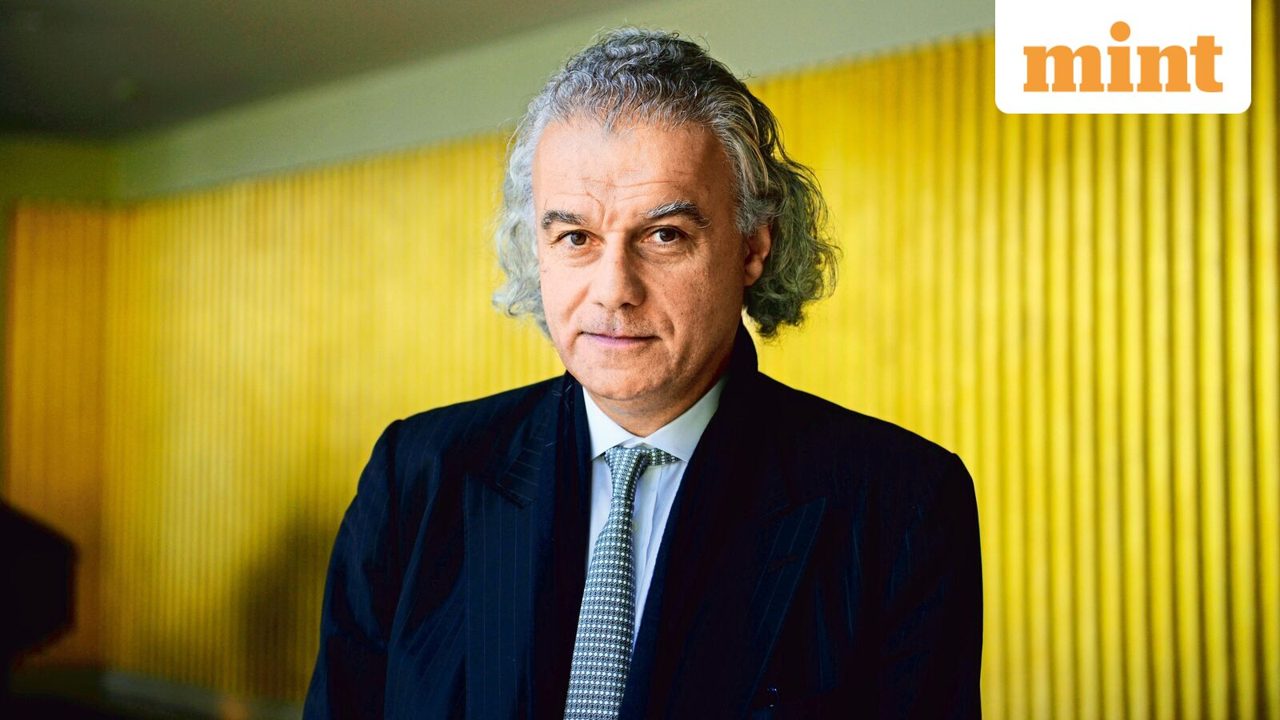
Jefferies has upgraded its allocation to Indian equities and turned bullish on China, as its top strategist warns that the global rally in artificial intelligence stocks is losing momentum. Christopher Wood, the firm's global head of equity strategy, told clients that investors are increasingly discussing "AI fatigue" as capital rotates away from expensive momentum trades toward cheaper Asian value opportunities.
The shift is driven by mounting concerns over the staggering financial commitments required to fund the AI arms race. The four major US hyperscalers are projected to spend roughly $700 billion on capital expenditure this year, rising above $800 billion next year. When including other tech firms and cloud providers, total AI-related spending is expected to exceed $1 trillion by 2027. That figure would equate to roughly 3% of US GDP and about a third of the pre-tax profits of all US non-financial companies.
Wood highlighted the growing balance sheet stress supporting this spending. The leading tech groups have increased their projected capital expenditure to 92% of operating cash flow, issued $169 billion in bonds this year, and accumulated $969 billion in total undiscounted lease obligations. He noted that US investment in information-processing equipment and software has already hit 4.88% of nominal GDP, surpassing the 4.46% peak seen during the dot-com boom in 2000.
While Wood remains constructive on the long-term AI investment cycle, he expressed deep skepticism about whether the companies spending the most money will generate adequate returns. "I have no idea which of the hyperscalers, if any, are going to be successfully monetising their AI capex," he wrote. Instead, he argued that investors should focus on the infrastructure suppliers. "So long as the AI capex arms race continues, the beneficiaries will remain the picks and shovels trade."
This preference extends to memory chip manufacturers, even after a sharp correction in Asian tech markets. Wood described the Kospi's 22% drop from its June 19 peak, and the 30% plunge in leveraged ETFs tracking SK Hynix and Samsung Electronics, as "both natural and healthy" following "hyperbolic moves." "Long-term GREED & Fear would still rather own the DRAM makers," he said, noting that compute demand can persist even as token costs collapse.
Despite his faith in memory chips, Wood has adjusted Jefferies' Asia Pacific ex-Japan portfolio. The firm has moved to an overweight position in India, assigning it a 12% weight against a 10.9% benchmark. Taiwan is now underweight, while South Korea has been reduced to a neutral stance, with its allocation cut from 24.6% to 20.8% since late June.
China is also positioned to benefit from the rotation out of AI momentum names. "It is too late to sell MSCI China or indeed Hong Kong," Wood argued, pointing out that the index has de-rated sharply to 10.6 times forward earnings from 13.9 times in October 2025. He believes consumer and domestic-demand stocks have already priced in macroeconomic weakness, making the region a prime target for mean reversion.