Inside Nigerian startup using solar power to rescue wasted crops
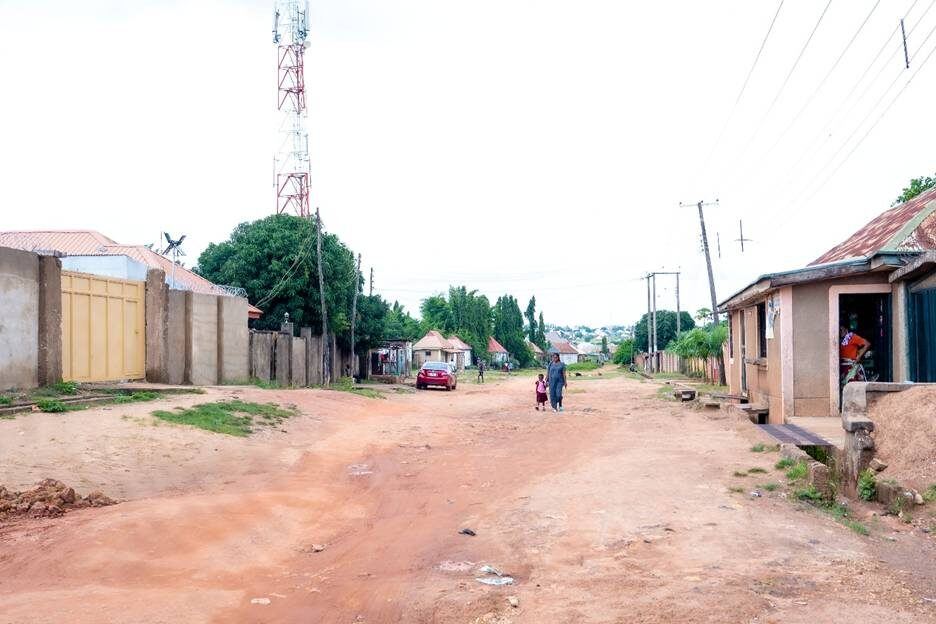
On a stretch of farmland outside Kudenda community, in Kaduna State, rows of tomatoes ripen faster than anyone can sell
On a stretch of farmland outside Kudenda community, in Kaduna State, rows of tomatoes ripen faster than anyone can sell them. Some weeks, trucks come. Other weeks, they don’t. When they don’t, the fruit rots in baskets, sacks, and on the ground, a scene that repeats across Nigeria’s food belt every harvest season, year after year. It’s the kind of loss that has been estimated to range between 5 and 20 percent for grains, 20 percent for fish, and as high as between 50 and 60 percent for tubers, fruits and vegetables nationally, according to industry figures cited by Nigerian business press. Kudenda community, in Kaduna State For tomatoes specifically, government researchers have put annual post-harvest losses at around 40 percent, even as national demand for the crop has climbed past 2.4 million metric tonnes a year against production of just over 1.8 million tonnes, a shortfall that makes every rotten basket sting twice as much. Fatima Jimoh has spent a decade trying to close that gap with sunlight. Jimoh is the co-founder and chief executive of NaFarm Foods, a Nigerian agribusiness that builds solar-powered dryers and installs them directly on farmland, so that produce farmers can preserve their fresh produce before it spoils. In 2025, the company won the Zayed Sustainability Prize in the Food category, the UAE’s pioneering global award that recognises small and growing businesses solving real-world sustainability problems. For NaFarm, the prize wasn’t a finish line. It was fuel for an expansion the company is only now beginning to feel the weight of. “Since we received the Zayed Sustainability Prize, it has really brought a lot of growth to NaFarm Foods,” Jimoh said, sitting in what used to be a much smaller operation. “Formerly, we were operating in a three-bedroom flat space for our processing and other activities. But now, we’ve been able to expand to this facility where we are right now.” From a Home Kitchen to Six States Every founder story has an origin scene, and Jimoh’s is disarmingly domestic: a kitchen, a pile of tomatoes, and a problem nobody in the room could solve with the tools they had. “We actually started very small, right from our kitchen,” she said. “We discovered tomatoes are a kind of fruit that is being used in various homes. So, there are peak harvest periods, and there are scarcity periods.” Tomatoes flood the market for a few months, prices collapse, farmers lose money on fruit they can’t move fast enough, and then, for the rest of the year, the same fruit becomes scarce and expensive. It’s a boom-and-bust cycle that repeats across much of Nigeria’s fresh produce sector, and it was the itch that got NaFarm started. “We decided to come together as a team to work on how we could actually research providing solutions to this tomato scarcity,” Jimoh said. “So we came up with the idea of providing solar food dryers for farmers to help them dry these fruits so it will improve the shelf life.” Eleven years later, that kitchen experiment has become a six-state operation spanning Kaduna, Kwara, Kano, Benue, and expansion projects underway in Abuja’s Federal Capital Territory and Jigawa. NaFarm has constructed more than 30 hybrid solar food dryers directly on or near farmland since inception, Jimoh said, with roughly 40 currently in active use at the company’s core sites, all of them operational. The company now counts more than 15 permanent staff and about 10 additional workers, a modest headcount for an operation that touches tens of thousands of farming households. How dryer actually works The technology at the center of NaFarm’s business is deceptively simple, and that’s precisely the point. A hybrid solar food dryer combines two things: direct solar heat, and electricity generated by solar panels. The heat does the primary work of drying, pulling moisture out of tomatoes, peppers, onions, and other perishables. But heat alone is unreliable in a country where rainy seasons and overcast skies can shut down a purely thermal drying process for days. That’s where the electricity comes in. Solar-generated power keeps the system running through cloudy stretches, so drying doesn’t simply stop when the sky doesn’t cooperate. “It’s a technology that’s constructed that uses hybrid solar food dryers that has the combination of heat energy and electricity that is generated from solar panels for drying fruits and vegetables,” Jimoh explained. The output is straightforward: dried fruit and vegetables that last far longer than their fresh counterparts, are lighter and cheaper to transport, and don’t require refrigeration, a serious advantage in a country where cold-chain infrastructure remains thin outside major cities. Crucially, farmers don’t pay for any of it. “The farmer doesn’t pay for it,” Jimoh said, more than once, as if anticipating disbelief. “We actually have some partners and supporters that do give us funding to provide support to farmers.” NaFarm’s business model works less like a vendor selling equipment and more like a cooperative buyer: the company installs the dryers near farms at its own cost, farmers bring their excess harvest, the produce that would otherwise miss the market window and rot, and NaFarm purchases the dried output from them directly. “The excess harvest, excess produce from farmers, we receive it, we use the hybrid solar food dryer to dry them, then we process it and package it and then sell to market,” Jimoh said. “From those sales they make to us, we will give them money, and that will be a way that they can actually improve their income.” It’s a loop designed to solve two problems at once: it gives farmers a buyer for produce that would otherwise be worthless, and it gives NaFarm a steady supply of raw material for its own branded, packaged food products. The Numbers Behind the Mission Scale is where NaFarm’s story starts to look less like a village workshop and more like an emerging supply chain. The company works through farmer cooperatives that aggregate growers across a region, a structural choice that lets a company with fewer than 30 staff reach a farmer base in the tens of thousands. Jimoh named three: the Baraka Lau Cooperative, with about 480 farmers; the Loyal Child Cooperative; and Sheriff Global, which she said represents more than 23,000 farmers and processors on its own. Zoom out further, and the totals get striking. Since 2015, Abdullateef Olaosebikan, NaFarm’s business development manager, said the company has reached more than 65,000 farmers and cottage food processors across the six states where it operates. During peak harvest months, which vary by crop, running roughly September through December for tubers like yam and sweet potato, and December through April for fruits and vegetables like tomatoes, onions, and peppers, that number swells further. “Within the peak period of harvest… we interact with sometimes more than 30,000 farmers on monthly basis,” Olaosebikan said. “And this lasts for four, five to six months.” Since winning the Zayed Sustainability Prize, NaFarm set an initial target of reaching 7,000 additional farmers. Jimoh said demand has run well ahead of that plan. “It’s so fortunate that we have an overwhelming number of prospects of farmers,” she said. “As we speak, we’re looking at reaching 130,000 on our database.” Job creation is the harder metric to pin down, and Jimoh was candid about that. Across NaFarm’s bases in Benue, Kaduna, and Kwara State, she said the company is aiming to create “at least up to maybe 1,500 jobs” as the Zayed Sustainability Prize-fueled expansion continues, a target she described as “overwhelming” given how quickly interest has grown. The company’s own long-range ambition is bigger still: 10,000 solar food dryers distributed across Nigeria, aimed at pushing post-harvest losses “to the barest minimum,” in Jimoh’s words, while training more women in cottage food processing so they can build sustaining businesses of their own. The training is the hard part If the solar dryer is NaFarm’s technology, the training program is arguably its real innovation, because in parts of northern Nigeria, getting women into a workshop at all requires more than an invitation. “We train women and youths on capacity-building programmes such as processing of food,” Jimoh said. “Then we teach them how to have a particular business that they can actually venture into, because women in the north believe only men should work.” That single line does a lot of work in explaining why NaFarm’s approach to expansion looks less like a franchise rollout and more like door-to-door organising. “We go as far as organising our teams to meet them in their various homes to encourage them to actually come out and partake in this training, because they will actually benefit a lot from it,” she said. “Most of them are turning up. They do come out for the training.” It’s a detail that separates NaFarm from a straightforward hardware business. The dryers solve a physical problem, moisture, spoilage, shelf life. The home visits solve a social one, and by Jimoh’s account, that second problem is often the harder of the two to move. Partners, Packaging, and a Bank Card NaFarm doesn’t build or fund everything alone. Jimoh named several partners threaded through the operation: Green Silicon Technology, which constructs the hybrid solar dryers and distributes them to farms; Revenix Energy; and Novatex, which supplies packaging materials for NaFarm’s finished products. The Zayed Sustainability Prize itself functions less as a one-time cash award in Jimoh’s telling and more as a credibility marker that unlocked the current facility and a wider circle of supporters. One detail that surfaced only briefly in conversation, and deserves more scrutiny than a single interview can offer: some NaFarm beneficiaries carry a NaFarm Foods-branded ATM card, issued through Lotus Bank. Exactly how that card functions, whether it’s used to disburse payments for dried produce, track farmer transactions, or serve some other function within the cooperative structure, wasn’t fully established in the conversations that informed this story, and is worth its own follow-up reporting before any claims are made about its scale or purpose. Sourcing Local, Building Local Olaosebikan, who handles business development and spends much of his time talking to farmers and partners, was asked how much of the dryer construction actually happens on Nigerian soil, given that greenhouse-style covering materials are often imported. “We actually source everything locally, from the foundation to the finishing of our dryers,” he said. “Some of them can actually be imported, because we don’t manufacture them in Nigeria, but we source them locally here in Kaduna or in Lagos.” It’s a small distinction, sourcing locally-available imported components versus manufacturing from scratch, but it matters for understanding how much of NaFarm’s supply chain is genuinely domestic versus assembled from parts that originate elsewhere and pass-through Nigerian hands before reaching a farm. Downstream, the processed output shows up under NaFarm’s own brand. The Kaduna facility processes tomatoes, onions, and peppers into a packaged, ready-to-eat product the company calls Royal Stew, a bet that the same produce nearly lost to spoilage can be turned into a shelf-stable consumer good with national reach. “We are looking at extending this product to all corners of the country,” Olaosebikan said. The company’s marketing runs through familiar channels for a small Nigerian food brand: a website, a Facebook page, an Instagram page. Nothing exotic, just the standard digital toolkit layered on top of a physical distribution network built one cooperative at a time. The Next Frontier: Charcoal From Farm Waste The most forward-looking part of NaFarm’s plan has nothing to do with drying tomatoes at all. It’s about fuel. Jimoh said the rising cost of cooking gas has become a serious burden for the cottage food processors NaFarm trains and works with, women running small food businesses who can’t absorb high energy costs on thin margins. ” For our cottage food processors, it’s going to be a lot. It’s going to be very difficult for them to use gas or firewood,” she said. NaFarm’s answer has been to go back to the farm itself: partnering with charcoal producers to source agricultural waste, which can be compressed into charcoal briquettes as a cleaner-burning, lower-cost cooking fuel. “It will actually help reduce carbon emissions,” Jimoh said. It’s an example of a pattern that shows up throughout NaFarm’s growth: the company doesn’t wait for a single silver-bullet technology. It layers solutions, solar drying for produce, briquettes for fuel, cooperative buying for market access, home visits for adoption, because rural Nigerian agriculture rarely has one bottleneck. It has several, stacked on top of each other. What Customers Actually Think For all the talk of cooperatives and megawatts, NaFarm’s credibility ultimately rests on whether ordinary people buy what it makes. Olabisi Vitoria, a Lagos-area businesswoman, has been buying NaFarm’s chin chin, a popular fried snack, for two or three months. Asked to compare it with what she buys elsewhere, her answer was blunt and specific: “It’s different because they don’t have milk, and they put butter.” Pressed on quality more broadly, she didn’t hedge. “Very fine,” she said, adding that she plans to keep buying and would happily recommend the brand to others. It’s a small, unglamorous endorsement, no market research firm, no focus group, but it’s the kind of repeat-customer loyalty that any food brand, however well-intentioned its supply chain, ultimately needs to survive. Related News Nigeria spends more than its revenue to service N7.7tn debt in H1, World Bank Nigeria’s SEC flags Wayvepay over suspected investment fraud CJN urges 68 new SANs to uphold ethics and professional standards Share
When they don’t, the fruit rots in baskets, sacks, and on the ground, a scene that repeats across Nigeria’s food belt every harvest season, year after year. It’s the kind of loss that has been estimated to range between 5 and 20 percent for grains, 20 percent for fish, and as high as between 50 and 60 percent for tubers, fruits and vegetables nationally, according to industry figures cited by Nigerian business press. Kudenda community, in Kaduna State For tomatoes specifically, government researchers have put annual post-harvest losses at around 40 percent, even as national demand for the crop has climbed past 2.4 million metric tonnes a year against production of just over 1.8 million tonnes, a shortfall that makes every rotten basket sting twice as much. Fatima Jimoh has spent a decade trying to close that gap with sunlight. Jimoh is the co-founder and chief executive of NaFarm Foods, a Nigerian agribusiness that builds solar-powered dryers and installs them directly on farmland, so that produce farmers can preserve their fresh produce before it spoils. In 2025, the company won the Zayed Sustainability Prize in the Food category, the UAE’s pioneering global award that recognises small and growing businesses solving real-world sustainability problems. For NaFarm, the prize wasn’t a finish line. It was fuel for an expansion the company is only now beginning to feel the weight of. “Since we received the Zayed Sustainability Prize, it has really brought a lot of growth to NaFarm Foods,” Jimoh said, sitting in what used to be a much smaller operation. “Formerly, we were operating in a three-bedroom flat space for our processing and other activities. But now, we’ve been able to expand to this facility where we are right now.” From a Home Kitchen to Six States Every founder story has an origin scene, and Jimoh’s is disarmingly domestic: a kitchen, a pile of tomatoes, and a problem nobody in the room could solve with the tools they had. “We actually started very small, right from our kitchen,” she said. “We discovered tomatoes are a kind of fruit that is being used in various homes. So, there are peak harvest periods, and there are scarcity periods.” Tomatoes flood the market for a few months, prices collapse, farmers lose money on fruit they can’t move fast enough, and then, for the rest of the year, the same fruit becomes scarce and expensive. It’s a boom-and-bust cycle that repeats across much of Nigeria’s fresh produce sector, and it was the itch that got NaFarm started. “We decided to come together as a team to work on how we could actually research providing solutions to this tomato scarcity,” Jimoh said. “So we came up with the idea of providing solar food dryers for farmers to help them dry these fruits so it will improve the shelf life.” Eleven years later, that kitchen experiment has become a six-state operation spanning Kaduna, Kwara, Kano, Benue, and expansion projects underway in Abuja’s Federal Capital Territory and Jigawa. NaFarm has constructed more than 30 hybrid solar food dryers directly on or near farmland since inception, Jimoh said, with roughly 40 currently in active use at the company’s core sites, all of them operational. The company now counts more than 15 permanent staff and about 10 additional workers, a modest headcount for an operation that touches tens of thousands of farming households. How dryer actually works The technology at the center of NaFarm’s business is deceptively simple, and that’s precisely the point. A hybrid solar food dryer combines two things: direct solar heat, and electricity generated by solar panels. The heat does the primary work of drying, pulling moisture out of tomatoes, peppers, onions, and other perishables. But heat alone is unreliable in a country where rainy seasons and overcast skies can shut down a purely thermal drying process for days. That’s where the electricity comes in. Solar-generated power keeps the system running through cloudy stretches, so drying doesn’t simply stop when the sky doesn’t cooperate. “It’s a technology that’s constructed that uses hybrid solar food dryers that has the combination of heat energy and electricity that is generated from solar panels for drying fruits and vegetables,” Jimoh explained. The output is straightforward: dried fruit and vegetables that last far longer than their fresh counterparts, are lighter and cheaper to transport, and don’t require refrigeration, a serious advantage in a country where cold-chain infrastructure remains thin outside major cities. Crucially, farmers don’t pay for any of it. “The farmer doesn’t pay for it,” Jimoh said, more than once, as if anticipating disbelief. “We actually have some partners and supporters that do give us funding to provide support to farmers.” NaFarm’s business model works less like a vendor selling equipment and more like a cooperative buyer: the company installs the dryers near farms at its own cost, farmers bring their excess harvest, the produce that would otherwise miss the market window and rot, and NaFarm purchases the dried output from them directly. “The excess harvest, excess produce from farmers, we receive it, we use the hybrid solar food dryer to dry them, then we process it and package it and then sell to market,” Jimoh said. “From those sales they make to us, we will give them money, and that will be a way that they can actually improve their income.” It’s a loop designed to solve two problems at once: it gives farmers a buyer for produce that would otherwise be worthless, and it gives NaFarm a steady supply of raw material for its own branded, packaged food products. The Numbers Behind the Mission Scale is where NaFarm’s story starts to look less like a village workshop and more like an emerging supply chain. The company works through farmer cooperatives that aggregate growers across a region, a structural choice that lets a company with fewer than 30 staff reach a farmer base in the tens of thousands. Jimoh named three: the Baraka Lau Cooperative, with about 480 farmers; the Loyal Child Cooperative; and Sheriff Global, which she said represents more than 23,000 farmers and processors on its own. Zoom out further, and the totals get striking. Since 2015, Abdullateef Olaosebikan, NaFarm’s business development manager, said the company has reached more than 65,000 farmers and cottage food processors across the six states where it operates. During peak harvest months, which vary by crop, running roughly September through December for tubers like yam and sweet potato, and December through April for fruits and vegetables like tomatoes, onions, and peppers, that number swells further. “Within the peak period of harvest… we interact with sometimes more than 30,000 farmers on monthly basis,” Olaosebikan said. “And this lasts for four, five to six months.” Since winning the Zayed Sustainability Prize, NaFarm set an initial target of reaching 7,000 additional farmers. Jimoh said demand has run well ahead of that plan. “It’s so fortunate that we have an overwhelming number of prospects of farmers,” she said. “As we speak, we’re looking at reaching 130,000 on our database.” Job creation is the harder metric to pin down, and Jimoh was candid about that. Across NaFarm’s bases in Benue, Kaduna, and Kwara State, she said the company is aiming to create “at least up to maybe 1,500 jobs” as the Zayed Sustainability Prize-fueled expansion continues, a target she described as “overwhelming” given how quickly interest has grown. The company’s own long-range ambition is bigger still: 10,000 solar food dryers distributed across Nigeria, aimed at pushing post-harvest losses “to the barest minimum,” in Jimoh’s words, while training more women in cottage food processing so they can build sustaining businesses of their own. The training is the hard part If the solar dryer is NaFarm’s technology, the training program is arguably its real innovation, because in parts of northern Nigeria, getting women into a workshop at all requires more than an invitation. “We train women and youths on capacity-building programmes such as processing of food,” Jimoh said. “Then we teach them how to have a particular business that they can actually venture into, because women in the north believe only men should work.” That single line does a lot of work in explaining why NaFarm’s approach to expansion looks less like a franchise rollout and more like door-to-door organising. “We go as far as organising our teams to meet them in their various homes to encourage them to actually come out and partake in this training, because they will actually benefit a lot from it,” she said. “Most of them are turning up. They do come out for the training.” It’s a detail that separates NaFarm from a straightforward hardware business. The dryers solve a physical problem, moisture, spoilage, shelf life. The home visits solve a social one, and by Jimoh’s account, that second problem is often the harder of the two to move. Partners, Packaging, and a Bank Card NaFarm doesn’t build or fund everything alone. Jimoh named several partners threaded through the operation: Green Silicon Technology, which constructs the hybrid solar dryers and distributes them to farms; Revenix Energy; and Novatex, which supplies packaging materials for NaFarm’s finished products. The Zayed Sustainability Prize itself functions less as a one-time cash award in Jimoh’s telling and more as a credibility marker that unlocked the current facility and a wider circle of supporters. One detail that surfaced only briefly in conversation, and deserves more scrutiny than a single interview can offer: some NaFarm beneficiaries carry a NaFarm Foods-branded ATM card, issued through Lotus Bank. Exactly how that card functions, whether it’s used to disburse payments for dried produce, track farmer transactions, or serve some other function within the cooperative structure, wasn’t fully established in the conversations that informed this story, and is worth its own follow-up reporting before any claims are made about its scale or purpose. Sourcing Local, Building Local Olaosebikan, who handles business development and spends much of his time talking to farmers and partners, was asked how much of the dryer construction actually happens on Nigerian soil, given that greenhouse-style covering materials are often imported. “We actually source everything locally, from the foundation to the finishing of our dryers,” he said. “Some of them can actually be imported, because we don’t manufacture them in Nigeria, but we source them locally here in Kaduna or in Lagos.” It’s a small distinction, sourcing locally-available imported components versus manufacturing from scratch, but it matters for understanding how much of NaFarm’s supply chain is genuinely domestic versus assembled from parts that originate elsewhere and pass-through Nigerian hands before reaching a farm. Downstream, the processed output shows up under NaFarm’s own brand. The Kaduna facility processes tomatoes, onions, and peppers into a packaged, ready-to-eat product the company calls Royal Stew, a bet that the same produce nearly lost to spoilage can be turned into a shelf-stable consumer good with national reach. “We are looking at extending this product to all corners of the country,” Olaosebikan said. The company’s marketing runs through familiar channels for a small Nigerian food brand: a website, a Facebook page, an Instagram page. Nothing exotic, just the standard digital toolkit layered on top of a physical distribution network built one cooperative at a time. The Next Frontier: Charcoal From Farm Waste The most forward-looking part of NaFarm’s plan has nothing to do with drying tomatoes at all. It’s about fuel. Jimoh said the rising cost of cooking gas has become a serious burden for the cottage food processors NaFarm trains and works with, women running small food businesses who can’t absorb high energy costs on thin margins. ” For our cottage food processors, it’s going to be a lot. It’s going to be very difficult for them to use gas or firewood,” she said. NaFarm’s answer has been to go back to the farm itself: partnering with charcoal producers to source agricultural waste, which can be compressed into charcoal briquettes as a cleaner-burning, lower-cost cooking fuel. “It will actually help reduce carbon emissions,” Jimoh said. It’s an example of a pattern that shows up throughout NaFarm’s growth: the company doesn’t wait for a single silver-bullet technology. It layers solutions, solar drying for produce, briquettes for fuel, cooperative buying for market access, home visits for adoption, because rural Nigerian agriculture rarely has one bottleneck. It has several, stacked on top of each other. What Customers Actually Think For all the talk of cooperatives and megawatts, NaFarm’s credibility ultimately rests on whether ordinary people buy what it makes. Olabisi Vitoria, a Lagos-area businesswoman, has been buying NaFarm’s chin chin, a popular fried snack, for two or three months. Asked to compare it with what she buys elsewhere, her answer was blunt and specific: “It’s different because they don’t have milk, and they put butter.” Pressed on quality more broadly, she didn’t hedge. “Very fine,” she said, adding that she plans to keep buying and would happily recommend the brand to others. It’s a small, unglamorous endorsement, no market research firm, no focus group, but it’s the kind of repeat-customer loyalty that any food brand, however well-intentioned its supply chain, ultimately needs to survive. Related News Nigeria spends more than its revenue to service N7.7tn debt in H1, World Bank Nigeria’s SEC flags Wayvepay over suspected investment fraud CJN urges 68 new SANs to uphold ethics and professional standards Share
It’s the kind of loss that has been estimated to range between 5 and 20 percent for grains, 20 percent for fish, and as high as between 50 and 60 percent for tubers, fruits and vegetables nationally, according to industry figures cited by Nigerian business press. Kudenda community, in Kaduna State For tomatoes specifically, government researchers have put annual post-harvest losses at around 40 percent, even as national demand for the crop has climbed past 2.4 million metric tonnes a year against production of just over 1.8 million tonnes, a shortfall that makes every rotten basket sting twice as much. Fatima Jimoh has spent a decade trying to close that gap with sunlight. Jimoh is the co-founder and chief executive of NaFarm Foods, a Nigerian agribusiness that builds solar-powered dryers and installs them directly on farmland, so that produce farmers can preserve their fresh produce before it spoils. In 2025, the company won the Zayed Sustainability Prize in the Food category, the UAE’s pioneering global award that recognises small and growing businesses solving real-world sustainability problems. For NaFarm, the prize wasn’t a finish line. It was fuel for an expansion the company is only now beginning to feel the weight of. “Since we received the Zayed Sustainability Prize, it has really brought a lot of growth to NaFarm Foods,” Jimoh said, sitting in what used to be a much smaller operation. “Formerly, we were operating in a three-bedroom flat space for our processing and other activities. But now, we’ve been able to expand to this facility where we are right now.” From a Home Kitchen to Six States Every founder story has an origin scene, and Jimoh’s is disarmingly domestic: a kitchen, a pile of tomatoes, and a problem nobody in the room could solve with the tools they had. “We actually started very small, right from our kitchen,” she said. “We discovered tomatoes are a kind of fruit that is being used in various homes. So, there are peak harvest periods, and there are scarcity periods.” Tomatoes flood the market for a few months, prices collapse, farmers lose money on fruit they can’t move fast enough, and then, for the rest of the year, the same fruit becomes scarce and expensive. It’s a boom-and-bust cycle that repeats across much of Nigeria’s fresh produce sector, and it was the itch that got NaFarm started. “We decided to come together as a team to work on how we could actually research providing solutions to this tomato scarcity,” Jimoh said. “So we came up with the idea of providing solar food dryers for farmers to help them dry these fruits so it will improve the shelf life.” Eleven years later, that kitchen experiment has become a six-state operation spanning Kaduna, Kwara, Kano, Benue, and expansion projects underway in Abuja’s Federal Capital Territory and Jigawa. NaFarm has constructed more than 30 hybrid solar food dryers directly on or near farmland since inception, Jimoh said, with roughly 40 currently in active use at the company’s core sites, all of them operational. The company now counts more than 15 permanent staff and about 10 additional workers, a modest headcount for an operation that touches tens of thousands of farming households. How dryer actually works The technology at the center of NaFarm’s business is deceptively simple, and that’s precisely the point. A hybrid solar food dryer combines two things: direct solar heat, and electricity generated by solar panels. The heat does the primary work of drying, pulling moisture out of tomatoes, peppers, onions, and other perishables. But heat alone is unreliable in a country where rainy seasons and overcast skies can shut down a purely thermal drying process for days. That’s where the electricity comes in. Solar-generated power keeps the system running through cloudy stretches, so drying doesn’t simply stop when the sky doesn’t cooperate. “It’s a technology that’s constructed that uses hybrid solar food dryers that has the combination of heat energy and electricity that is generated from solar panels for drying fruits and vegetables,” Jimoh explained. The output is straightforward: dried fruit and vegetables that last far longer than their fresh counterparts, are lighter and cheaper to transport, and don’t require refrigeration, a serious advantage in a country where cold-chain infrastructure remains thin outside major cities. Crucially, farmers don’t pay for any of it. “The farmer doesn’t pay for it,” Jimoh said, more than once, as if anticipating disbelief. “We actually have some partners and supporters that do give us funding to provide support to farmers.” NaFarm’s business model works less like a vendor selling equipment and more like a cooperative buyer: the company installs the dryers near farms at its own cost, farmers bring their excess harvest, the produce that would otherwise miss the market window and rot, and NaFarm purchases the dried output from them directly. “The excess harvest, excess produce from farmers, we receive it, we use the hybrid solar food dryer to dry them, then we process it and package it and then sell to market,” Jimoh said. “From those sales they make to us, we will give them money, and that will be a way that they can actually improve their income.” It’s a loop designed to solve two problems at once: it gives farmers a buyer for produce that would otherwise be worthless, and it gives NaFarm a steady supply of raw material for its own branded, packaged food products. The Numbers Behind the Mission Scale is where NaFarm’s story starts to look less like a village workshop and more like an emerging supply chain. The company works through farmer cooperatives that aggregate growers across a region, a structural choice that lets a company with fewer than 30 staff reach a farmer base in the tens of thousands. Jimoh named three: the Baraka Lau Cooperative, with about 480 farmers; the Loyal Child Cooperative; and Sheriff Global, which she said represents more than 23,000 farmers and processors on its own. Zoom out further, and the totals get striking. Since 2015, Abdullateef Olaosebikan, NaFarm’s business development manager, said the company has reached more than 65,000 farmers and cottage food processors across the six states where it operates. During peak harvest months, which vary by crop, running roughly September through December for tubers like yam and sweet potato, and December through April for fruits and vegetables like tomatoes, onions, and peppers, that number swells further. “Within the peak period of harvest… we interact with sometimes more than 30,000 farmers on monthly basis,” Olaosebikan said. “And this lasts for four, five to six months.” Since winning the Zayed Sustainability Prize, NaFarm set an initial target of reaching 7,000 additional farmers. Jimoh said demand has run well ahead of that plan. “It’s so fortunate that we have an overwhelming number of prospects of farmers,” she said. “As we speak, we’re looking at reaching 130,000 on our database.” Job creation is the harder metric to pin down, and Jimoh was candid about that. Across NaFarm’s bases in Benue, Kaduna, and Kwara State, she said the company is aiming to create “at least up to maybe 1,500 jobs” as the Zayed Sustainability Prize-fueled expansion continues, a target she described as “overwhelming” given how quickly interest has grown. The company’s own long-range ambition is bigger still: 10,000 solar food dryers distributed across Nigeria, aimed at pushing post-harvest losses “to the barest minimum,” in Jimoh’s words, while training more women in cottage food processing so they can build sustaining businesses of their own. The training is the hard part If the solar dryer is NaFarm’s technology, the training program is arguably its real innovation, because in parts of northern Nigeria, getting women into a workshop at all requires more than an invitation. “We train women and youths on capacity-building programmes such as processing of food,” Jimoh said. “Then we teach them how to have a particular business that they can actually venture into, because women in the north believe only men should work.” That single line does a lot of work in explaining why NaFarm’s approach to expansion looks less like a franchise rollout and more like door-to-door organising. “We go as far as organising our teams to meet them in their various homes to encourage them to actually come out and partake in this training, because they will actually benefit a lot from it,” she said. “Most of them are turning up. They do come out for the training.” It’s a detail that separates NaFarm from a straightforward hardware business. The dryers solve a physical problem, moisture, spoilage, shelf life. The home visits solve a social one, and by Jimoh’s account, that second problem is often the harder of the two to move. Partners, Packaging, and a Bank Card NaFarm doesn’t build or fund everything alone. Jimoh named several partners threaded through the operation: Green Silicon Technology, which constructs the hybrid solar dryers and distributes them to farms; Revenix Energy; and Novatex, which supplies packaging materials for NaFarm’s finished products. The Zayed Sustainability Prize itself functions less as a one-time cash award in Jimoh’s telling and more as a credibility marker that unlocked the current facility and a wider circle of supporters. One detail that surfaced only briefly in conversation, and deserves more scrutiny than a single interview can offer: some NaFarm beneficiaries carry a NaFarm Foods-branded ATM card, issued through Lotus Bank. Exactly how that card functions, whether it’s used to disburse payments for dried produce, track farmer transactions, or serve some other function within the cooperative structure, wasn’t fully established in the conversations that informed this story, and is worth its own follow-up reporting before any claims are made about its scale or purpose. Sourcing Local, Building Local Olaosebikan, who handles business development and spends much of his time talking to farmers and partners, was asked how much of the dryer construction actually happens on Nigerian soil, given that greenhouse-style covering materials are often imported. “We actually source everything locally, from the foundation to the finishing of our dryers,” he said. “Some of them can actually be imported, because we don’t manufacture them in Nigeria, but we source them locally here in Kaduna or in Lagos.” It’s a small distinction, sourcing locally-available imported components versus manufacturing from scratch, but it matters for understanding how much of NaFarm’s supply chain is genuinely domestic versus assembled from parts that originate elsewhere and pass-through Nigerian hands before reaching a farm. Downstream, the processed output shows up under NaFarm’s own brand. The Kaduna facility processes tomatoes, onions, and peppers into a packaged, ready-to-eat product the company calls Royal Stew, a bet that the same produce nearly lost to spoilage can be turned into a shelf-stable consumer good with national reach. “We are looking at extending this product to all corners of the country,” Olaosebikan said. The company’s marketing runs through familiar channels for a small Nigerian food brand: a website, a Facebook page, an Instagram page. Nothing exotic, just the standard digital toolkit layered on top of a physical distribution network built one cooperative at a time. The Next Frontier: Charcoal From Farm Waste The most forward-looking part of NaFarm’s plan has nothing to do with drying tomatoes at all. It’s about fuel. Jimoh said the rising cost of cooking gas has become a serious burden for the cottage food processors NaFarm trains and works with, women running small food businesses who can’t absorb high energy costs on thin margins. ” For our cottage food processors, it’s going to be a lot. It’s going to be very difficult for them to use gas or firewood,” she said. NaFarm’s answer has been to go back to the farm itself: partnering with charcoal producers to source agricultural waste, which can be compressed into charcoal briquettes as a cleaner-burning, lower-cost cooking fuel. “It will actually help reduce carbon emissions,” Jimoh said. It’s an example of a pattern that shows up throughout NaFarm’s growth: the company doesn’t wait for a single silver-bullet technology. It layers solutions, solar drying for produce, briquettes for fuel, cooperative buying for market access, home visits for adoption, because rural Nigerian agriculture rarely has one bottleneck. It has several, stacked on top of each other. What Customers Actually Think For all the talk of cooperatives and megawatts, NaFarm’s credibility ultimately rests on whether ordinary people buy what it makes. Olabisi Vitoria, a Lagos-area businesswoman, has been buying NaFarm’s chin chin, a popular fried snack, for two or three months. Asked to compare it with what she buys elsewhere, her answer was blunt and specific: “It’s different because they don’t have milk, and they put butter.” Pressed on quality more broadly, she didn’t hedge. “Very fine,” she said, adding that she plans to keep buying and would happily recommend the brand to others. It’s a small, unglamorous endorsement, no market research firm, no focus group, but it’s the kind of repeat-customer loyalty that any food brand, however well-intentioned its supply chain, ultimately needs to survive. Related News Nigeria spends more than its revenue to service N7.7tn debt in H1, World Bank Nigeria’s SEC flags Wayvepay over suspected investment fraud CJN urges 68 new SANs to uphold ethics and professional standards Share
Kudenda community, in Kaduna State For tomatoes specifically, government researchers have put annual post-harvest losses at around 40 percent, even as national demand for the crop has climbed past 2.4 million metric tonnes a year against production of just over 1.8 million tonnes, a shortfall that makes every rotten basket sting twice as much. Fatima Jimoh has spent a decade trying to close that gap with sunlight. Jimoh is the co-founder and chief executive of NaFarm Foods, a Nigerian agribusiness that builds solar-powered dryers and installs them directly on farmland, so that produce farmers can preserve their fresh produce before it spoils. In 2025, the company won the Zayed Sustainability Prize in the Food category, the UAE’s pioneering global award that recognises small and growing businesses solving real-world sustainability problems. For NaFarm, the prize wasn’t a finish line. It was fuel for an expansion the company is only now beginning to feel the weight of. “Since we received the Zayed Sustainability Prize, it has really brought a lot of growth to NaFarm Foods,” Jimoh said, sitting in what used to be a much smaller operation. “Formerly, we were operating in a three-bedroom flat space for our processing and other activities. But now, we’ve been able to expand to this facility where we are right now.” From a Home Kitchen to Six States Every founder story has an origin scene, and Jimoh’s is disarmingly domestic: a kitchen, a pile of tomatoes, and a problem nobody in the room could solve with the tools they had. “We actually started very small, right from our kitchen,” she said. “We discovered tomatoes are a kind of fruit that is being used in various homes. So, there are peak harvest periods, and there are scarcity periods.” Tomatoes flood the market for a few months, prices collapse, farmers lose money on fruit they can’t move fast enough, and then, for the rest of the year, the same fruit becomes scarce and expensive. It’s a boom-and-bust cycle that repeats across much of Nigeria’s fresh produce sector, and it was the itch that got NaFarm started. “We decided to come together as a team to work on how we could actually research providing solutions to this tomato scarcity,” Jimoh said. “So we came up with the idea of providing solar food dryers for farmers to help them dry these fruits so it will improve the shelf life.” Eleven years later, that kitchen experiment has become a six-state operation spanning Kaduna, Kwara, Kano, Benue, and expansion projects underway in Abuja’s Federal Capital Territory and Jigawa. NaFarm has constructed more than 30 hybrid solar food dryers directly on or near farmland since inception, Jimoh said, with roughly 40 currently in active use at the company’s core sites, all of them operational. The company now counts more than 15 permanent staff and about 10 additional workers, a modest headcount for an operation that touches tens of thousands of farming households. How dryer actually works The technology at the center of NaFarm’s business is deceptively simple, and that’s precisely the point. A hybrid solar food dryer combines two things: direct solar heat, and electricity generated by solar panels. The heat does the primary work of drying, pulling moisture out of tomatoes, peppers, onions, and other perishables. But heat alone is unreliable in a country where rainy seasons and overcast skies can shut down a purely thermal drying process for days. That’s where the electricity comes in. Solar-generated power keeps the system running through cloudy stretches, so drying doesn’t simply stop when the sky doesn’t cooperate. “It’s a technology that’s constructed that uses hybrid solar food dryers that has the combination of heat energy and electricity that is generated from solar panels for drying fruits and vegetables,” Jimoh explained. The output is straightforward: dried fruit and vegetables that last far longer than their fresh counterparts, are lighter and cheaper to transport, and don’t require refrigeration, a serious advantage in a country where cold-chain infrastructure remains thin outside major cities. Crucially, farmers don’t pay for any of it. “The farmer doesn’t pay for it,” Jimoh said, more than once, as if anticipating disbelief. “We actually have some partners and supporters that do give us funding to provide support to farmers.” NaFarm’s business model works less like a vendor selling equipment and more like a cooperative buyer: the company installs the dryers near farms at its own cost, farmers bring their excess harvest, the produce that would otherwise miss the market window and rot, and NaFarm purchases the dried output from them directly. “The excess harvest, excess produce from farmers, we receive it, we use the hybrid solar food dryer to dry them, then we process it and package it and then sell to market,” Jimoh said. “From those sales they make to us, we will give them money, and that will be a way that they can actually improve their income.” It’s a loop designed to solve two problems at once: it gives farmers a buyer for produce that would otherwise be worthless, and it gives NaFarm a steady supply of raw material for its own branded, packaged food products. The Numbers Behind the Mission Scale is where NaFarm’s story starts to look less like a village workshop and more like an emerging supply chain. The company works through farmer cooperatives that aggregate growers across a region, a structural choice that lets a company with fewer than 30 staff reach a farmer base in the tens of thousands. Jimoh named three: the Baraka Lau Cooperative, with about 480 farmers; the Loyal Child Cooperative; and Sheriff Global, which she said represents more than 23,000 farmers and processors on its own. Zoom out further, and the totals get striking. Since 2015, Abdullateef Olaosebikan, NaFarm’s business development manager, said the company has reached more than 65,000 farmers and cottage food processors across the six states where it operates. During peak harvest months, which vary by crop, running roughly September through December for tubers like yam and sweet potato, and December through April for fruits and vegetables like tomatoes, onions, and peppers, that number swells further. “Within the peak period of harvest… we interact with sometimes more than 30,000 farmers on monthly basis,” Olaosebikan said. “And this lasts for four, five to six months.” Since winning the Zayed Sustainability Prize, NaFarm set an initial target of reaching 7,000 additional farmers. Jimoh said demand has run well ahead of that plan. “It’s so fortunate that we have an overwhelming number of prospects of farmers,” she said. “As we speak, we’re looking at reaching 130,000 on our database.” Job creation is the harder metric to pin down, and Jimoh was candid about that. Across NaFarm’s bases in Benue, Kaduna, and Kwara State, she said the company is aiming to create “at least up to maybe 1,500 jobs” as the Zayed Sustainability Prize-fueled expansion continues, a target she described as “overwhelming” given how quickly interest has grown. The company’s own long-range ambition is bigger still: 10,000 solar food dryers distributed across Nigeria, aimed at pushing post-harvest losses “to the barest minimum,” in Jimoh’s words, while training more women in cottage food processing so they can build sustaining businesses of their own. The training is the hard part If the solar dryer is NaFarm’s technology, the training program is arguably its real innovation, because in parts of northern Nigeria, getting women into a workshop at all requires more than an invitation. “We train women and youths on capacity-building programmes such as processing of food,” Jimoh said. “Then we teach them how to have a particular business that they can actually venture into, because women in the north believe only men should work.” That single line does a lot of work in explaining why NaFarm’s approach to expansion looks less like a franchise rollout and more like door-to-door organising. “We go as far as organising our teams to meet them in their various homes to encourage them to actually come out and partake in this training, because they will actually benefit a lot from it,” she said. “Most of them are turning up. They do come out for the training.” It’s a detail that separates NaFarm from a straightforward hardware business. The dryers solve a physical problem, moisture, spoilage, shelf life. The home visits solve a social one, and by Jimoh’s account, that second problem is often the harder of the two to move. Partners, Packaging, and a Bank Card NaFarm doesn’t build or fund everything alone. Jimoh named several partners threaded through the operation: Green Silicon Technology, which constructs the hybrid solar dryers and distributes them to farms; Revenix Energy; and Novatex, which supplies packaging materials for NaFarm’s finished products. The Zayed Sustainability Prize itself functions less as a one-time cash award in Jimoh’s telling and more as a credibility marker that unlocked the current facility and a wider circle of supporters. One detail that surfaced only briefly in conversation, and deserves more scrutiny than a single interview can offer: some NaFarm beneficiaries carry a NaFarm Foods-branded ATM card, issued through Lotus Bank. Exactly how that card functions, whether it’s used to disburse payments for dried produce, track farmer transactions, or serve some other function within the cooperative structure, wasn’t fully established in the conversations that informed this story, and is worth its own follow-up reporting before any claims are made about its scale or purpose. Sourcing Local, Building Local Olaosebikan, who handles business development and spends much of his time talking to farmers and partners, was asked how much of the dryer construction actually happens on Nigerian soil, given that greenhouse-style covering materials are often imported. “We actually source everything locally, from the foundation to the finishing of our dryers,” he said. “Some of them can actually be imported, because we don’t manufacture them in Nigeria, but we source them locally here in Kaduna or in Lagos.” It’s a small distinction, sourcing locally-available imported components versus manufacturing from scratch, but it matters for understanding how much of NaFarm’s supply chain is genuinely domestic versus assembled from parts that originate elsewhere and pass-through Nigerian hands before reaching a farm. Downstream, the processed output shows up under NaFarm’s own brand. The Kaduna facility processes tomatoes, onions, and peppers into a packaged, ready-to-eat product the company calls Royal Stew, a bet that the same produce nearly lost to spoilage can be turned into a shelf-stable consumer good with national reach. “We are looking at extending this product to all corners of the country,” Olaosebikan said. The company’s marketing runs through familiar channels for a small Nigerian food brand: a website, a Facebook page, an Instagram page. Nothing exotic, just the standard digital toolkit layered on top of a physical distribution network built one cooperative at a time. The Next Frontier: Charcoal From Farm Waste The most forward-looking part of NaFarm’s plan has nothing to do with drying tomatoes at all. It’s about fuel. Jimoh said the rising cost of cooking gas has become a serious burden for the cottage food processors NaFarm trains and works with, women running small food businesses who can’t absorb high energy costs on thin margins. ” For our cottage food processors, it’s going to be a lot. It’s going to be very difficult for them to use gas or firewood,” she said. NaFarm’s answer has been to go back to the farm itself: partnering with charcoal producers to source agricultural waste, which can be compressed into charcoal briquettes as a cleaner-burning, lower-cost cooking fuel. “It will actually help reduce carbon emissions,” Jimoh said. It’s an example of a pattern that shows up throughout NaFarm’s growth: the company doesn’t wait for a single silver-bullet technology. It layers solutions, solar drying for produce, briquettes for fuel, cooperative buying for market access, home visits for adoption, because rural Nigerian agriculture rarely has one bottleneck. It has several, stacked on top of each other. What Customers Actually Think For all the talk of cooperatives and megawatts, NaFarm’s credibility ultimately rests on whether ordinary people buy what it makes. Olabisi Vitoria, a Lagos-area businesswoman, has been buying NaFarm’s chin chin, a popular fried snack, for two or three months. Asked to compare it with what she buys elsewhere, her answer was blunt and specific: “It’s different because they don’t have milk, and they put butter.” Pressed on quality more broadly, she didn’t hedge. “Very fine,” she said, adding that she plans to keep buying and would happily recommend the brand to others. It’s a small, unglamorous endorsement, no market research firm, no focus group, but it’s the kind of repeat-customer loyalty that any food brand, however well-intentioned its supply chain, ultimately needs to survive. Related News Nigeria spends more than its revenue to service N7.7tn debt in H1, World Bank Nigeria’s SEC flags Wayvepay over suspected investment fraud CJN urges 68 new SANs to uphold ethics and professional standards Share
For tomatoes specifically, government researchers have put annual post-harvest losses at around 40 percent, even as national demand for the crop has climbed past 2.4 million metric tonnes a year against production of just over 1.8 million tonnes, a shortfall that makes every rotten basket sting twice as much. Fatima Jimoh has spent a decade trying to close that gap with sunlight. Jimoh is the co-founder and chief executive of NaFarm Foods, a Nigerian agribusiness that builds solar-powered dryers and installs them directly on farmland, so that produce farmers can preserve their fresh produce before it spoils. In 2025, the company won the Zayed Sustainability Prize in the Food category, the UAE’s pioneering global award that recognises small and growing businesses solving real-world sustainability problems. For NaFarm, the prize wasn’t a finish line. It was fuel for an expansion the company is only now beginning to feel the weight of. “Since we received the Zayed Sustainability Prize, it has really brought a lot of growth to NaFarm Foods,” Jimoh said, sitting in what used to be a much smaller operation. “Formerly, we were operating in a three-bedroom flat space for our processing and other activities. But now, we’ve been able to expand to this facility where we are right now.” From a Home Kitchen to Six States Every founder story has an origin scene, and Jimoh’s is disarmingly domestic: a kitchen, a pile of tomatoes, and a problem nobody in the room could solve with the tools they had. “We actually started very small, right from our kitchen,” she said. “We discovered tomatoes are a kind of fruit that is being used in various homes. So, there are peak harvest periods, and there are scarcity periods.” Tomatoes flood the market for a few months, prices collapse, farmers lose money on fruit they can’t move fast enough, and then, for the rest of the year, the same fruit becomes scarce and expensive. It’s a boom-and-bust cycle that repeats across much of Nigeria’s fresh produce sector, and it was the itch that got NaFarm started. “We decided to come together as a team to work on how we could actually research providing solutions to this tomato scarcity,” Jimoh said. “So we came up with the idea of providing solar food dryers for farmers to help them dry these fruits so it will improve the shelf life.” Eleven years later, that kitchen experiment has become a six-state operation spanning Kaduna, Kwara, Kano, Benue, and expansion projects underway in Abuja’s Federal Capital Territory and Jigawa. NaFarm has constructed more than 30 hybrid solar food dryers directly on or near farmland since inception, Jimoh said, with roughly 40 currently in active use at the company’s core sites, all of them operational. The company now counts more than 15 permanent staff and about 10 additional workers, a modest headcount for an operation that touches tens of thousands of farming households. How dryer actually works The technology at the center of NaFarm’s business is deceptively simple, and that’s precisely the point. A hybrid solar food dryer combines two things: direct solar heat, and electricity generated by solar panels. The heat does the primary work of drying, pulling moisture out of tomatoes, peppers, onions, and other perishables. But heat alone is unreliable in a country where rainy seasons and overcast skies can shut down a purely thermal drying process for days. That’s where the electricity comes in. Solar-generated power keeps the system running through cloudy stretches, so drying doesn’t simply stop when the sky doesn’t cooperate. “It’s a technology that’s constructed that uses hybrid solar food dryers that has the combination of heat energy and electricity that is generated from solar panels for drying fruits and vegetables,” Jimoh explained. The output is straightforward: dried fruit and vegetables that last far longer than their fresh counterparts, are lighter and cheaper to transport, and don’t require refrigeration, a serious advantage in a country where cold-chain infrastructure remains thin outside major cities. Crucially, farmers don’t pay for any of it. “The farmer doesn’t pay for it,” Jimoh said, more than once, as if anticipating disbelief. “We actually have some partners and supporters that do give us funding to provide support to farmers.” NaFarm’s business model works less like a vendor selling equipment and more like a cooperative buyer: the company installs the dryers near farms at its own cost, farmers bring their excess harvest, the produce that would otherwise miss the market window and rot, and NaFarm purchases the dried output from them directly. “The excess harvest, excess produce from farmers, we receive it, we use the hybrid solar food dryer to dry them, then we process it and package it and then sell to market,” Jimoh said. “From those sales they make to us, we will give them money, and that will be a way that they can actually improve their income.” It’s a loop designed to solve two problems at once: it gives farmers a buyer for produce that would otherwise be worthless, and it gives NaFarm a steady supply of raw material for its own branded, packaged food products. The Numbers Behind the Mission Scale is where NaFarm’s story starts to look less like a village workshop and more like an emerging supply chain. The company works through farmer cooperatives that aggregate growers across a region, a structural choice that lets a company with fewer than 30 staff reach a farmer base in the tens of thousands. Jimoh named three: the Baraka Lau Cooperative, with about 480 farmers; the Loyal Child Cooperative; and Sheriff Global, which she said represents more than 23,000 farmers and processors on its own. Zoom out further, and the totals get striking. Since 2015, Abdullateef Olaosebikan, NaFarm’s business development manager, said the company has reached more than 65,000 farmers and cottage food processors across the six states where it operates. During peak harvest months, which vary by crop, running roughly September through December for tubers like yam and sweet potato, and December through April for fruits and vegetables like tomatoes, onions, and peppers, that number swells further. “Within the peak period of harvest… we interact with sometimes more than 30,000 farmers on monthly basis,” Olaosebikan said. “And this lasts for four, five to six months.” Since winning the Zayed Sustainability Prize, NaFarm set an initial target of reaching 7,000 additional farmers. Jimoh said demand has run well ahead of that plan. “It’s so fortunate that we have an overwhelming number of prospects of farmers,” she said. “As we speak, we’re looking at reaching 130,000 on our database.” Job creation is the harder metric to pin down, and Jimoh was candid about that. Across NaFarm’s bases in Benue, Kaduna, and Kwara State, she said the company is aiming to create “at least up to maybe 1,500 jobs” as the Zayed Sustainability Prize-fueled expansion continues, a target she described as “overwhelming” given how quickly interest has grown. The company’s own long-range ambition is bigger still: 10,000 solar food dryers distributed across Nigeria, aimed at pushing post-harvest losses “to the barest minimum,” in Jimoh’s words, while training more women in cottage food processing so they can build sustaining businesses of their own. The training is the hard part If the solar dryer is NaFarm’s technology, the training program is arguably its real innovation, because in parts of northern Nigeria, getting women into a workshop at all requires more than an invitation. “We train women and youths on capacity-building programmes such as processing of food,” Jimoh said. “Then we teach them how to have a particular business that they can actually venture into, because women in the north believe only men should work.” That single line does a lot of work in explaining why NaFarm’s approach to expansion looks less like a franchise rollout and more like door-to-door organising. “We go as far as organising our teams to meet them in their various homes to encourage them to actually come out and partake in this training, because they will actually benefit a lot from it,” she said. “Most of them are turning up. They do come out for the training.” It’s a detail that separates NaFarm from a straightforward hardware business. The dryers solve a physical problem, moisture, spoilage, shelf life. The home visits solve a social one, and by Jimoh’s account, that second problem is often the harder of the two to move. Partners, Packaging, and a Bank Card NaFarm doesn’t build or fund everything alone. Jimoh named several partners threaded through the operation: Green Silicon Technology, which constructs the hybrid solar dryers and distributes them to farms; Revenix Energy; and Novatex, which supplies packaging materials for NaFarm’s finished products. The Zayed Sustainability Prize itself functions less as a one-time cash award in Jimoh’s telling and more as a credibility marker that unlocked the current facility and a wider circle of supporters. One detail that surfaced only briefly in conversation, and deserves more scrutiny than a single interview can offer: some NaFarm beneficiaries carry a NaFarm Foods-branded ATM card, issued through Lotus Bank. Exactly how that card functions, whether it’s used to disburse payments for dried produce, track farmer transactions, or serve some other function within the cooperative structure, wasn’t fully established in the conversations that informed this story, and is worth its own follow-up reporting before any claims are made about its scale or purpose. Sourcing Local, Building Local Olaosebikan, who handles business development and spends much of his time talking to farmers and partners, was asked how much of the dryer construction actually happens on Nigerian soil, given that greenhouse-style covering materials are often imported. “We actually source everything locally, from the foundation to the finishing of our dryers,” he said. “Some of them can actually be imported, because we don’t manufacture them in Nigeria, but we source them locally here in Kaduna or in Lagos.” It’s a small distinction, sourcing locally-available imported components versus manufacturing from scratch, but it matters for understanding how much of NaFarm’s supply chain is genuinely domestic versus assembled from parts that originate elsewhere and pass-through Nigerian hands before reaching a farm. Downstream, the processed output shows up under NaFarm’s own brand. The Kaduna facility processes tomatoes, onions, and peppers into a packaged, ready-to-eat product the company calls Royal Stew, a bet that the same produce nearly lost to spoilage can be turned into a shelf-stable consumer good with national reach. “We are looking at extending this product to all corners of the country,” Olaosebikan said. The company’s marketing runs through familiar channels for a small Nigerian food brand: a website, a Facebook page, an Instagram page. Nothing exotic, just the standard digital toolkit layered on top of a physical distribution network built one cooperative at a time. The Next Frontier: Charcoal From Farm Waste The most forward-looking part of NaFarm’s plan has nothing to do with drying tomatoes at all. It’s about fuel. Jimoh said the rising cost of cooking gas has become a serious burden for the cottage food processors NaFarm trains and works with, women running small food businesses who can’t absorb high energy costs on thin margins. ” For our cottage food processors, it’s going to be a lot. It’s going to be very difficult for them to use gas or firewood,” she said. NaFarm’s answer has been to go back to the farm itself: partnering with charcoal producers to source agricultural waste, which can be compressed into charcoal briquettes as a cleaner-burning, lower-cost cooking fuel. “It will actually help reduce carbon emissions,” Jimoh said. It’s an example of a pattern that shows up throughout NaFarm’s growth: the company doesn’t wait for a single silver-bullet technology. It layers solutions, solar drying for produce, briquettes for fuel, cooperative buying for market access, home visits for adoption, because rural Nigerian agriculture rarely has one bottleneck. It has several, stacked on top of each other. What Customers Actually Think For all the talk of cooperatives and megawatts, NaFarm’s credibility ultimately rests on whether ordinary people buy what it makes. Olabisi Vitoria, a Lagos-area businesswoman, has been buying NaFarm’s chin chin, a popular fried snack, for two or three months. Asked to compare it with what she buys elsewhere, her answer was blunt and specific: “It’s different because they don’t have milk, and they put butter.” Pressed on quality more broadly, she didn’t hedge. “Very fine,” she said, adding that she plans to keep buying and would happily recommend the brand to others. It’s a small, unglamorous endorsement, no market research firm, no focus group, but it’s the kind of repeat-customer loyalty that any food brand, however well-intentioned its supply chain, ultimately needs to survive. Related News Nigeria spends more than its revenue to service N7.7tn debt in H1, World Bank Nigeria’s SEC flags Wayvepay over suspected investment fraud CJN urges 68 new SANs to uphold ethics and professional standards Share
Fatima Jimoh has spent a decade trying to close that gap with sunlight. Jimoh is the co-founder and chief executive of NaFarm Foods, a Nigerian agribusiness that builds solar-powered dryers and installs them directly on farmland, so that produce farmers can preserve their fresh produce before it spoils. In 2025, the company won the Zayed Sustainability Prize in the Food category, the UAE’s pioneering global award that recognises small and growing businesses solving real-world sustainability problems. For NaFarm, the prize wasn’t a finish line. It was fuel for an expansion the company is only now beginning to feel the weight of. “Since we received the Zayed Sustainability Prize, it has really brought a lot of growth to NaFarm Foods,” Jimoh said, sitting in what used to be a much smaller operation. “Formerly, we were operating in a three-bedroom flat space for our processing and other activities. But now, we’ve been able to expand to this facility where we are right now.” From a Home Kitchen to Six States Every founder story has an origin scene, and Jimoh’s is disarmingly domestic: a kitchen, a pile of tomatoes, and a problem nobody in the room could solve with the tools they had. “We actually started very small, right from our kitchen,” she said. “We discovered tomatoes are a kind of fruit that is being used in various homes. So, there are peak harvest periods, and there are scarcity periods.” Tomatoes flood the market for a few months, prices collapse, farmers lose money on fruit they can’t move fast enough, and then, for the rest of the year, the same fruit becomes scarce and expensive. It’s a boom-and-bust cycle that repeats across much of Nigeria’s fresh produce sector, and it was the itch that got NaFarm started. “We decided to come together as a team to work on how we could actually research providing solutions to this tomato scarcity,” Jimoh said. “So we came up with the idea of providing solar food dryers for farmers to help them dry these fruits so it will improve the shelf life.” Eleven years later, that kitchen experiment has become a six-state operation spanning Kaduna, Kwara, Kano, Benue, and expansion projects underway in Abuja’s Federal Capital Territory and Jigawa. NaFarm has constructed more than 30 hybrid solar food dryers directly on or near farmland since inception, Jimoh said, with roughly 40 currently in active use at the company’s core sites, all of them operational. The company now counts more than 15 permanent staff and about 10 additional workers, a modest headcount for an operation that touches tens of thousands of farming households. How dryer actually works The technology at the center of NaFarm’s business is deceptively simple, and that’s precisely the point. A hybrid solar food dryer combines two things: direct solar heat, and electricity generated by solar panels. The heat does the primary work of drying, pulling moisture out of tomatoes, peppers, onions, and other perishables. But heat alone is unreliable in a country where rainy seasons and overcast skies can shut down a purely thermal drying process for days. That’s where the electricity comes in. Solar-generated power keeps the system running through cloudy stretches, so drying doesn’t simply stop when the sky doesn’t cooperate. “It’s a technology that’s constructed that uses hybrid solar food dryers that has the combination of heat energy and electricity that is generated from solar panels for drying fruits and vegetables,” Jimoh explained. The output is straightforward: dried fruit and vegetables that last far longer than their fresh counterparts, are lighter and cheaper to transport, and don’t require refrigeration, a serious advantage in a country where cold-chain infrastructure remains thin outside major cities. Crucially, farmers don’t pay for any of it. “The farmer doesn’t pay for it,” Jimoh said, more than once, as if anticipating disbelief. “We actually have some partners and supporters that do give us funding to provide support to farmers.” NaFarm’s business model works less like a vendor selling equipment and more like a cooperative buyer: the company installs the dryers near farms at its own cost, farmers bring their excess harvest, the produce that would otherwise miss the market window and rot, and NaFarm purchases the dried output from them directly. “The excess harvest, excess produce from farmers, we receive it, we use the hybrid solar food dryer to dry them, then we process it and package it and then sell to market,” Jimoh said. “From those sales they make to us, we will give them money, and that will be a way that they can actually improve their income.” It’s a loop designed to solve two problems at once: it gives farmers a buyer for produce that would otherwise be worthless, and it gives NaFarm a steady supply of raw material for its own branded, packaged food products. The Numbers Behind the Mission Scale is where NaFarm’s story starts to look less like a village workshop and more like an emerging supply chain. The company works through farmer cooperatives that aggregate growers across a region, a structural choice that lets a company with fewer than 30 staff reach a farmer base in the tens of thousands. Jimoh named three: the Baraka Lau Cooperative, with about 480 farmers; the Loyal Child Cooperative; and Sheriff Global, which she said represents more than 23,000 farmers and processors on its own. Zoom out further, and the totals get striking. Since 2015, Abdullateef Olaosebikan, NaFarm’s business development manager, said the company has reached more than 65,000 farmers and cottage food processors across the six states where it operates. During peak harvest months, which vary by crop, running roughly September through December for tubers like yam and sweet potato, and December through April for fruits and vegetables like tomatoes, onions, and peppers, that number swells further. “Within the peak period of harvest… we interact with sometimes more than 30,000 farmers on monthly basis,” Olaosebikan said. “And this lasts for four, five to six months.” Since winning the Zayed Sustainability Prize, NaFarm set an initial target of reaching 7,000 additional farmers. Jimoh said demand has run well ahead of that plan. “It’s so fortunate that we have an overwhelming number of prospects of farmers,” she said. “As we speak, we’re looking at reaching 130,000 on our database.” Job creation is the harder metric to pin down, and Jimoh was candid about that. Across NaFarm’s bases in Benue, Kaduna, and Kwara State, she said the company is aiming to create “at least up to maybe 1,500 jobs” as the Zayed Sustainability Prize-fueled expansion continues, a target she described as “overwhelming” given how quickly interest has grown. The company’s own long-range ambition is bigger still: 10,000 solar food dryers distributed across Nigeria, aimed at pushing post-harvest losses “to the barest minimum,” in Jimoh’s words, while training more women in cottage food processing so they can build sustaining businesses of their own. The training is the hard part If the solar dryer is NaFarm’s technology, the training program is arguably its real innovation, because in parts of northern Nigeria, getting women into a workshop at all requires more than an invitation. “We train women and youths on capacity-building programmes such as processing of food,” Jimoh said. “Then we teach them how to have a particular business that they can actually venture into, because women in the north believe only men should work.” That single line does a lot of work in explaining why NaFarm’s approach to expansion looks less like a franchise rollout and more like door-to-door organising. “We go as far as organising our teams to meet them in their various homes to encourage them to actually come out and partake in this training, because they will actually benefit a lot from it,” she said. “Most of them are turning up. They do come out for the training.” It’s a detail that separates NaFarm from a straightforward hardware business. The dryers solve a physical problem, moisture, spoilage, shelf life. The home visits solve a social one, and by Jimoh’s account, that second problem is often the harder of the two to move. Partners, Packaging, and a Bank Card NaFarm doesn’t build or fund everything alone. Jimoh named several partners threaded through the operation: Green Silicon Technology, which constructs the hybrid solar dryers and distributes them to farms; Revenix Energy; and Novatex, which supplies packaging materials for NaFarm’s finished products. The Zayed Sustainability Prize itself functions less as a one-time cash award in Jimoh’s telling and more as a credibility marker that unlocked the current facility and a wider circle of supporters. One detail that surfaced only briefly in conversation, and deserves more scrutiny than a single interview can offer: some NaFarm beneficiaries carry a NaFarm Foods-branded ATM card, issued through Lotus Bank. Exactly how that card functions, whether it’s used to disburse payments for dried produce, track farmer transactions, or serve some other function within the cooperative structure, wasn’t fully established in the conversations that informed this story, and is worth its own follow-up reporting before any claims are made about its scale or purpose. Sourcing Local, Building Local Olaosebikan, who handles business development and spends much of his time talking to farmers and partners, was asked how much of the dryer construction actually happens on Nigerian soil, given that greenhouse-style covering materials are often imported. “We actually source everything locally, from the foundation to the finishing of our dryers,” he said. “Some of them can actually be imported, because we don’t manufacture them in Nigeria, but we source them locally here in Kaduna or in Lagos.” It’s a small distinction, sourcing locally-available imported components versus manufacturing from scratch, but it matters for understanding how much of NaFarm’s supply chain is genuinely domestic versus assembled from parts that originate elsewhere and pass-through Nigerian hands before reaching a farm. Downstream, the processed output shows up under NaFarm’s own brand. The Kaduna facility processes tomatoes, onions, and peppers into a packaged, ready-to-eat product the company calls Royal Stew, a bet that the same produce nearly lost to spoilage can be turned into a shelf-stable consumer good with national reach. “We are looking at extending this product to all corners of the country,” Olaosebikan said. The company’s marketing runs through familiar channels for a small Nigerian food brand: a website, a Facebook page, an Instagram page. Nothing exotic, just the standard digital toolkit layered on top of a physical distribution network built one cooperative at a time. The Next Frontier: Charcoal From Farm Waste The most forward-looking part of NaFarm’s plan has nothing to do with drying tomatoes at all. It’s about fuel. Jimoh said the rising cost of cooking gas has become a serious burden for the cottage food processors NaFarm trains and works with, women running small food businesses who can’t absorb high energy costs on thin margins. ” For our cottage food processors, it’s going to be a lot. It’s going to be very difficult for them to use gas or firewood,” she said. NaFarm’s answer has been to go back to the farm itself: partnering with charcoal producers to source agricultural waste, which can be compressed into charcoal briquettes as a cleaner-burning, lower-cost cooking fuel. “It will actually help reduce carbon emissions,” Jimoh said. It’s an example of a pattern that shows up throughout NaFarm’s growth: the company doesn’t wait for a single silver-bullet technology. It layers solutions, solar drying for produce, briquettes for fuel, cooperative buying for market access, home visits for adoption, because rural Nigerian agriculture rarely has one bottleneck. It has several, stacked on top of each other. What Customers Actually Think For all the talk of cooperatives and megawatts, NaFarm’s credibility ultimately rests on whether ordinary people buy what it makes. Olabisi Vitoria, a Lagos-area businesswoman, has been buying NaFarm’s chin chin, a popular fried snack, for two or three months. Asked to compare it with what she buys elsewhere, her answer was blunt and specific: “It’s different because they don’t have milk, and they put butter.” Pressed on quality more broadly, she didn’t hedge. “Very fine,” she said, adding that she plans to keep buying and would happily recommend the brand to others. It’s a small, unglamorous endorsement, no market research firm, no focus group, but it’s the kind of repeat-customer loyalty that any food brand, however well-intentioned its supply chain, ultimately needs to survive. Related News Nigeria spends more than its revenue to service N7.7tn debt in H1, World Bank Nigeria’s SEC flags Wayvepay over suspected investment fraud CJN urges 68 new SANs to uphold ethics and professional standards Share
Jimoh is the co-founder and chief executive of NaFarm Foods, a Nigerian agribusiness that builds solar-powered dryers and installs them directly on farmland, so that produce farmers can preserve their fresh produce before it spoils. In 2025, the company won the Zayed Sustainability Prize in the Food category, the UAE’s pioneering global award that recognises small and growing businesses solving real-world sustainability problems. For NaFarm, the prize wasn’t a finish line. It was fuel for an expansion the company is only now beginning to feel the weight of. “Since we received the Zayed Sustainability Prize, it has really brought a lot of growth to NaFarm Foods,” Jimoh said, sitting in what used to be a much smaller operation. “Formerly, we were operating in a three-bedroom flat space for our processing and other activities. But now, we’ve been able to expand to this facility where we are right now.” From a Home Kitchen to Six States Every founder story has an origin scene, and Jimoh’s is disarmingly domestic: a kitchen, a pile of tomatoes, and a problem nobody in the room could solve with the tools they had. “We actually started very small, right from our kitchen,” she said. “We discovered tomatoes are a kind of fruit that is being used in various homes. So, there are peak harvest periods, and there are scarcity periods.” Tomatoes flood the market for a few months, prices collapse, farmers lose money on fruit they can’t move fast enough, and then, for the rest of the year, the same fruit becomes scarce and expensive. It’s a boom-and-bust cycle that repeats across much of Nigeria’s fresh produce sector, and it was the itch that got NaFarm started. “We decided to come together as a team to work on how we could actually research providing solutions to this tomato scarcity,” Jimoh said. “So we came up with the idea of providing solar food dryers for farmers to help them dry these fruits so it will improve the shelf life.” Eleven years later, that kitchen experiment has become a six-state operation spanning Kaduna, Kwara, Kano, Benue, and expansion projects underway in Abuja’s Federal Capital Territory and Jigawa. NaFarm has constructed more than 30 hybrid solar food dryers directly on or near farmland since inception, Jimoh said, with roughly 40 currently in active use at the company’s core sites, all of them operational. The company now counts more than 15 permanent staff and about 10 additional workers, a modest headcount for an operation that touches tens of thousands of farming households. How dryer actually works The technology at the center of NaFarm’s business is deceptively simple, and that’s precisely the point. A hybrid solar food dryer combines two things: direct solar heat, and electricity generated by solar panels. The heat does the primary work of drying, pulling moisture out of tomatoes, peppers, onions, and other perishables. But heat alone is unreliable in a country where rainy seasons and overcast skies can shut down a purely thermal drying process for days. That’s where the electricity comes in. Solar-generated power keeps the system running through cloudy stretches, so drying doesn’t simply stop when the sky doesn’t cooperate. “It’s a technology that’s constructed that uses hybrid solar food dryers that has the combination of heat energy and electricity that is generated from solar panels for drying fruits and vegetables,” Jimoh explained. The output is straightforward: dried fruit and vegetables that last far longer than their fresh counterparts, are lighter and cheaper to transport, and don’t require refrigeration, a serious advantage in a country where cold-chain infrastructure remains thin outside major cities. Crucially, farmers don’t pay for any of it. “The farmer doesn’t pay for it,” Jimoh said, more than once, as if anticipating disbelief. “We actually have some partners and supporters that do give us funding to provide support to farmers.” NaFarm’s business model works less like a vendor selling equipment and more like a cooperative buyer: the company installs the dryers near farms at its own cost, farmers bring their excess harvest, the produce that would otherwise miss the market window and rot, and NaFarm purchases the dried output from them directly. “The excess harvest, excess produce from farmers, we receive it, we use the hybrid solar food dryer to dry them, then we process it and package it and then sell to market,” Jimoh said. “From those sales they make to us, we will give them money, and that will be a way that they can actually improve their income.” It’s a loop designed to solve two problems at once: it gives farmers a buyer for produce that would otherwise be worthless, and it gives NaFarm a steady supply of raw material for its own branded, packaged food products. The Numbers Behind the Mission Scale is where NaFarm’s story starts to look less like a village workshop and more like an emerging supply chain. The company works through farmer cooperatives that aggregate growers across a region, a structural choice that lets a company with fewer than 30 staff reach a farmer base in the tens of thousands. Jimoh named three: the Baraka Lau Cooperative, with about 480 farmers; the Loyal Child Cooperative; and Sheriff Global, which she said represents more than 23,000 farmers and processors on its own. Zoom out further, and the totals get striking. Since 2015, Abdullateef Olaosebikan, NaFarm’s business development manager, said the company has reached more than 65,000 farmers and cottage food processors across the six states where it operates. During peak harvest months, which vary by crop, running roughly September through December for tubers like yam and sweet potato, and December through April for fruits and vegetables like tomatoes, onions, and peppers, that number swells further. “Within the peak period of harvest… we interact with sometimes more than 30,000 farmers on monthly basis,” Olaosebikan said. “And this lasts for four, five to six months.” Since winning the Zayed Sustainability Prize, NaFarm set an initial target of reaching 7,000 additional farmers. Jimoh said demand has run well ahead of that plan. “It’s so fortunate that we have an overwhelming number of prospects of farmers,” she said. “As we speak, we’re looking at reaching 130,000 on our database.” Job creation is the harder metric to pin down, and Jimoh was candid about that. Across NaFarm’s bases in Benue, Kaduna, and Kwara State, she said the company is aiming to create “at least up to maybe 1,500 jobs” as the Zayed Sustainability Prize-fueled expansion continues, a target she described as “overwhelming” given how quickly interest has grown. The company’s own long-range ambition is bigger still: 10,000 solar food dryers distributed across Nigeria, aimed at pushing post-harvest losses “to the barest minimum,” in Jimoh’s words, while training more women in cottage food processing so they can build sustaining businesses of their own. The training is the hard part If the solar dryer is NaFarm’s technology, the training program is arguably its real innovation, because in parts of northern Nigeria, getting women into a workshop at all requires more than an invitation. “We train women and youths on capacity-building programmes such as processing of food,” Jimoh said. “Then we teach them how to have a particular business that they can actually venture into, because women in the north believe only men should work.” That single line does a lot of work in explaining why NaFarm’s approach to expansion looks less like a franchise rollout and more like door-to-door organising. “We go as far as organising our teams to meet them in their various homes to encourage them to actually come out and partake in this training, because they will actually benefit a lot from it,” she said. “Most of them are turning up. They do come out for the training.” It’s a detail that separates NaFarm from a straightforward hardware business. The dryers solve a physical problem, moisture, spoilage, shelf life. The home visits solve a social one, and by Jimoh’s account, that second problem is often the harder of the two to move. Partners, Packaging, and a Bank Card NaFarm doesn’t build or fund everything alone. Jimoh named several partners threaded through the operation: Green Silicon Technology, which constructs the hybrid solar dryers and distributes them to farms; Revenix Energy; and Novatex, which supplies packaging materials for NaFarm’s finished products. The Zayed Sustainability Prize itself functions less as a one-time cash award in Jimoh’s telling and more as a credibility marker that unlocked the current facility and a wider circle of supporters. One detail that surfaced only briefly in conversation, and deserves more scrutiny than a single interview can offer: some NaFarm beneficiaries carry a NaFarm Foods-branded ATM card, issued through Lotus Bank. Exactly how that card functions, whether it’s used to disburse payments for dried produce, track farmer transactions, or serve some other function within the cooperative structure, wasn’t fully established in the conversations that informed this story, and is worth its own follow-up reporting before any claims are made about its scale or purpose. Sourcing Local, Building Local Olaosebikan, who handles business development and spends much of his time talking to farmers and partners, was asked how much of the dryer construction actually happens on Nigerian soil, given that greenhouse-style covering materials are often imported. “We actually source everything locally, from the foundation to the finishing of our dryers,” he said. “Some of them can actually be imported, because we don’t manufacture them in Nigeria, but we source them locally here in Kaduna or in Lagos.” It’s a small distinction, sourcing locally-available imported components versus manufacturing from scratch, but it matters for understanding how much of NaFarm’s supply chain is genuinely domestic versus assembled from parts that originate elsewhere and pass-through Nigerian hands before reaching a farm. Downstream, the processed output shows up under NaFarm’s own brand. The Kaduna facility processes tomatoes, onions, and peppers into a packaged, ready-to-eat product the company calls Royal Stew, a bet that the same produce nearly lost to spoilage can be turned into a shelf-stable consumer good with national reach. “We are looking at extending this product to all corners of the country,” Olaosebikan said. The company’s marketing runs through familiar channels for a small Nigerian food brand: a website, a Facebook page, an Instagram page. Nothing exotic, just the standard digital toolkit layered on top of a physical distribution network built one cooperative at a time. The Next Frontier: Charcoal From Farm Waste The most forward-looking part of NaFarm’s plan has nothing to do with drying tomatoes at all. It’s about fuel. Jimoh said the rising cost of cooking gas has become a serious burden for the cottage food processors NaFarm trains and works with, women running small food businesses who can’t absorb high energy costs on thin margins. ” For our cottage food processors, it’s going to be a lot. It’s going to be very difficult for them to use gas or firewood,” she said. NaFarm’s answer has been to go back to the farm itself: partnering with charcoal producers to source agricultural waste, which can be compressed into charcoal briquettes as a cleaner-burning, lower-cost cooking fuel. “It will actually help reduce carbon emissions,” Jimoh said. It’s an example of a pattern that shows up throughout NaFarm’s growth: the company doesn’t wait for a single silver-bullet technology. It layers solutions, solar drying for produce, briquettes for fuel, cooperative buying for market access, home visits for adoption, because rural Nigerian agriculture rarely has one bottleneck. It has several, stacked on top of each other. What Customers Actually Think For all the talk of cooperatives and megawatts, NaFarm’s credibility ultimately rests on whether ordinary people buy what it makes. Olabisi Vitoria, a Lagos-area businesswoman, has been buying NaFarm’s chin chin, a popular fried snack, for two or three months. Asked to compare it with what she buys elsewhere, her answer was blunt and specific: “It’s different because they don’t have milk, and they put butter.” Pressed on quality more broadly, she didn’t hedge. “Very fine,” she said, adding that she plans to keep buying and would happily recommend the brand to others. It’s a small, unglamorous endorsement, no market research firm, no focus group, but it’s the kind of repeat-customer loyalty that any food brand, however well-intentioned its supply chain, ultimately needs to survive. Related News Nigeria spends more than its revenue to service N7.7tn debt in H1, World Bank Nigeria’s SEC flags Wayvepay over suspected investment fraud CJN urges 68 new SANs to uphold ethics and professional standards Share
In 2025, the company won the Zayed Sustainability Prize in the Food category, the UAE’s pioneering global award that recognises small and growing businesses solving real-world sustainability problems. For NaFarm, the prize wasn’t a finish line. It was fuel for an expansion the company is only now beginning to feel the weight of. “Since we received the Zayed Sustainability Prize, it has really brought a lot of growth to NaFarm Foods,” Jimoh said, sitting in what used to be a much smaller operation. “Formerly, we were operating in a three-bedroom flat space for our processing and other activities. But now, we’ve been able to expand to this facility where we are right now.” From a Home Kitchen to Six States Every founder story has an origin scene, and Jimoh’s is disarmingly domestic: a kitchen, a pile of tomatoes, and a problem nobody in the room could solve with the tools they had. “We actually started very small, right from our kitchen,” she said. “We discovered tomatoes are a kind of fruit that is being used in various homes. So, there are peak harvest periods, and there are scarcity periods.” Tomatoes flood the market for a few months, prices collapse, farmers lose money on fruit they can’t move fast enough, and then, for the rest of the year, the same fruit becomes scarce and expensive. It’s a boom-and-bust cycle that repeats across much of Nigeria’s fresh produce sector, and it was the itch that got NaFarm started. “We decided to come together as a team to work on how we could actually research providing solutions to this tomato scarcity,” Jimoh said. “So we came up with the idea of providing solar food dryers for farmers to help them dry these fruits so it will improve the shelf life.” Eleven years later, that kitchen experiment has become a six-state operation spanning Kaduna, Kwara, Kano, Benue, and expansion projects underway in Abuja’s Federal Capital Territory and Jigawa. NaFarm has constructed more than 30 hybrid solar food dryers directly on or near farmland since inception, Jimoh said, with roughly 40 currently in active use at the company’s core sites, all of them operational. The company now counts more than 15 permanent staff and about 10 additional workers, a modest headcount for an operation that touches tens of thousands of farming households. How dryer actually works The technology at the center of NaFarm’s business is deceptively simple, and that’s precisely the point. A hybrid solar food dryer combines two things: direct solar heat, and electricity generated by solar panels. The heat does the primary work of drying, pulling moisture out of tomatoes, peppers, onions, and other perishables. But heat alone is unreliable in a country where rainy seasons and overcast skies can shut down a purely thermal drying process for days. That’s where the electricity comes in. Solar-generated power keeps the system running through cloudy stretches, so drying doesn’t simply stop when the sky doesn’t cooperate. “It’s a technology that’s constructed that uses hybrid solar food dryers that has the combination of heat energy and electricity that is generated from solar panels for drying fruits and vegetables,” Jimoh explained. The output is straightforward: dried fruit and vegetables that last far longer than their fresh counterparts, are lighter and cheaper to transport, and don’t require refrigeration, a serious advantage in a country where cold-chain infrastructure remains thin outside major cities. Crucially, farmers don’t pay for any of it. “The farmer doesn’t pay for it,” Jimoh said, more than once, as if anticipating disbelief. “We actually have some partners and supporters that do give us funding to provide support to farmers.” NaFarm’s business model works less like a vendor selling equipment and more like a cooperative buyer: the company installs the dryers near farms at its own cost, farmers bring their excess harvest, the produce that would otherwise miss the market window and rot, and NaFarm purchases the dried output from them directly. “The excess harvest, excess produce from farmers, we receive it, we use the hybrid solar food dryer to dry them, then we process it and package it and then sell to market,” Jimoh said. “From those sales they make to us, we will give them money, and that will be a way that they can actually improve their income.” It’s a loop designed to solve two problems at once: it gives farmers a buyer for produce that would otherwise be worthless, and it gives NaFarm a steady supply of raw material for its own branded, packaged food products. The Numbers Behind the Mission Scale is where NaFarm’s story starts to look less like a village workshop and more like an emerging supply chain. The company works through farmer cooperatives that aggregate growers across a region, a structural choice that lets a company with fewer than 30 staff reach a farmer base in the tens of thousands. Jimoh named three: the Baraka Lau Cooperative, with about 480 farmers; the Loyal Child Cooperative; and Sheriff Global, which she said represents more than 23,000 farmers and processors on its own. Zoom out further, and the totals get striking. Since 2015, Abdullateef Olaosebikan, NaFarm’s business development manager, said the company has reached more than 65,000 farmers and cottage food processors across the six states where it operates. During peak harvest months, which vary by crop, running roughly September through December for tubers like yam and sweet potato, and December through April for fruits and vegetables like tomatoes, onions, and peppers, that number swells further. “Within the peak period of harvest… we interact with sometimes more than 30,000 farmers on monthly basis,” Olaosebikan said. “And this lasts for four, five to six months.” Since winning the Zayed Sustainability Prize, NaFarm set an initial target of reaching 7,000 additional farmers. Jimoh said demand has run well ahead of that plan. “It’s so fortunate that we have an overwhelming number of prospects of farmers,” she said. “As we speak, we’re looking at reaching 130,000 on our database.” Job creation is the harder metric to pin down, and Jimoh was candid about that. Across NaFarm’s bases in Benue, Kaduna, and Kwara State, she said the company is aiming to create “at least up to maybe 1,500 jobs” as the Zayed Sustainability Prize-fueled expansion continues, a target she described as “overwhelming” given how quickly interest has grown. The company’s own long-range ambition is bigger still: 10,000 solar food dryers distributed across Nigeria, aimed at pushing post-harvest losses “to the barest minimum,” in Jimoh’s words, while training more women in cottage food processing so they can build sustaining businesses of their own. The training is the hard part If the solar dryer is NaFarm’s technology, the training program is arguably its real innovation, because in parts of northern Nigeria, getting women into a workshop at all requires more than an invitation. “We train women and youths on capacity-building programmes such as processing of food,” Jimoh said. “Then we teach them how to have a particular business that they can actually venture into, because women in the north believe only men should work.” That single line does a lot of work in explaining why NaFarm’s approach to expansion looks less like a franchise rollout and more like door-to-door organising. “We go as far as organising our teams to meet them in their various homes to encourage them to actually come out and partake in this training, because they will actually benefit a lot from it,” she said. “Most of them are turning up. They do come out for the training.” It’s a detail that separates NaFarm from a straightforward hardware business. The dryers solve a physical problem, moisture, spoilage, shelf life. The home visits solve a social one, and by Jimoh’s account, that second problem is often the harder of the two to move. Partners, Packaging, and a Bank Card NaFarm doesn’t build or fund everything alone. Jimoh named several partners threaded through the operation: Green Silicon Technology, which constructs the hybrid solar dryers and distributes them to farms; Revenix Energy; and Novatex, which supplies packaging materials for NaFarm’s finished products. The Zayed Sustainability Prize itself functions less as a one-time cash award in Jimoh’s telling and more as a credibility marker that unlocked the current facility and a wider circle of supporters. One detail that surfaced only briefly in conversation, and deserves more scrutiny than a single interview can offer: some NaFarm beneficiaries carry a NaFarm Foods-branded ATM card, issued through Lotus Bank. Exactly how that card functions, whether it’s used to disburse payments for dried produce, track farmer transactions, or serve some other function within the cooperative structure, wasn’t fully established in the conversations that informed this story, and is worth its own follow-up reporting before any claims are made about its scale or purpose. Sourcing Local, Building Local Olaosebikan, who handles business development and spends much of his time talking to farmers and partners, was asked how much of the dryer construction actually happens on Nigerian soil, given that greenhouse-style covering materials are often imported. “We actually source everything locally, from the foundation to the finishing of our dryers,” he said. “Some of them can actually be imported, because we don’t manufacture them in Nigeria, but we source them locally here in Kaduna or in Lagos.” It’s a small distinction, sourcing locally-available imported components versus manufacturing from scratch, but it matters for understanding how much of NaFarm’s supply chain is genuinely domestic versus assembled from parts that originate elsewhere and pass-through Nigerian hands before reaching a farm. Downstream, the processed output shows up under NaFarm’s own brand. The Kaduna facility processes tomatoes, onions, and peppers into a packaged, ready-to-eat product the company calls Royal Stew, a bet that the same produce nearly lost to spoilage can be turned into a shelf-stable consumer good with national reach. “We are looking at extending this product to all corners of the country,” Olaosebikan said. The company’s marketing runs through familiar channels for a small Nigerian food brand: a website, a Facebook page, an Instagram page. Nothing exotic, just the standard digital toolkit layered on top of a physical distribution network built one cooperative at a time. The Next Frontier: Charcoal From Farm Waste The most forward-looking part of NaFarm’s plan has nothing to do with drying tomatoes at all. It’s about fuel. Jimoh said the rising cost of cooking gas has become a serious burden for the cottage food processors NaFarm trains and works with, women running small food businesses who can’t absorb high energy costs on thin margins. ” For our cottage food processors, it’s going to be a lot. It’s going to be very difficult for them to use gas or firewood,” she said. NaFarm’s answer has been to go back to the farm itself: partnering with charcoal producers to source agricultural waste, which can be compressed into charcoal briquettes as a cleaner-burning, lower-cost cooking fuel. “It will actually help reduce carbon emissions,” Jimoh said. It’s an example of a pattern that shows up throughout NaFarm’s growth: the company doesn’t wait for a single silver-bullet technology. It layers solutions, solar drying for produce, briquettes for fuel, cooperative buying for market access, home visits for adoption, because rural Nigerian agriculture rarely has one bottleneck. It has several, stacked on top of each other. What Customers Actually Think For all the talk of cooperatives and megawatts, NaFarm’s credibility ultimately rests on whether ordinary people buy what it makes. Olabisi Vitoria, a Lagos-area businesswoman, has been buying NaFarm’s chin chin, a popular fried snack, for two or three months. Asked to compare it with what she buys elsewhere, her answer was blunt and specific: “It’s different because they don’t have milk, and they put butter.” Pressed on quality more broadly, she didn’t hedge. “Very fine,” she said, adding that she plans to keep buying and would happily recommend the brand to others. It’s a small, unglamorous endorsement, no market research firm, no focus group, but it’s the kind of repeat-customer loyalty that any food brand, however well-intentioned its supply chain, ultimately needs to survive. Related News Nigeria spends more than its revenue to service N7.7tn debt in H1, World Bank Nigeria’s SEC flags Wayvepay over suspected investment fraud CJN urges 68 new SANs to uphold ethics and professional standards Share
For NaFarm, the prize wasn’t a finish line. It was fuel for an expansion the company is only now beginning to feel the weight of. “Since we received the Zayed Sustainability Prize, it has really brought a lot of growth to NaFarm Foods,” Jimoh said, sitting in what used to be a much smaller operation. “Formerly, we were operating in a three-bedroom flat space for our processing and other activities. But now, we’ve been able to expand to this facility where we are right now.” From a Home Kitchen to Six States Every founder story has an origin scene, and Jimoh’s is disarmingly domestic: a kitchen, a pile of tomatoes, and a problem nobody in the room could solve with the tools they had. “We actually started very small, right from our kitchen,” she said. “We discovered tomatoes are a kind of fruit that is being used in various homes. So, there are peak harvest periods, and there are scarcity periods.” Tomatoes flood the market for a few months, prices collapse, farmers lose money on fruit they can’t move fast enough, and then, for the rest of the year, the same fruit becomes scarce and expensive. It’s a boom-and-bust cycle that repeats across much of Nigeria’s fresh produce sector, and it was the itch that got NaFarm started. “We decided to come together as a team to work on how we could actually research providing solutions to this tomato scarcity,” Jimoh said. “So we came up with the idea of providing solar food dryers for farmers to help them dry these fruits so it will improve the shelf life.” Eleven years later, that kitchen experiment has become a six-state operation spanning Kaduna, Kwara, Kano, Benue, and expansion projects underway in Abuja’s Federal Capital Territory and Jigawa. NaFarm has constructed more than 30 hybrid solar food dryers directly on or near farmland since inception, Jimoh said, with roughly 40 currently in active use at the company’s core sites, all of them operational. The company now counts more than 15 permanent staff and about 10 additional workers, a modest headcount for an operation that touches tens of thousands of farming households. How dryer actually works The technology at the center of NaFarm’s business is deceptively simple, and that’s precisely the point. A hybrid solar food dryer combines two things: direct solar heat, and electricity generated by solar panels. The heat does the primary work of drying, pulling moisture out of tomatoes, peppers, onions, and other perishables. But heat alone is unreliable in a country where rainy seasons and overcast skies can shut down a purely thermal drying process for days. That’s where the electricity comes in. Solar-generated power keeps the system running through cloudy stretches, so drying doesn’t simply stop when the sky doesn’t cooperate. “It’s a technology that’s constructed that uses hybrid solar food dryers that has the combination of heat energy and electricity that is generated from solar panels for drying fruits and vegetables,” Jimoh explained. The output is straightforward: dried fruit and vegetables that last far longer than their fresh counterparts, are lighter and cheaper to transport, and don’t require refrigeration, a serious advantage in a country where cold-chain infrastructure remains thin outside major cities. Crucially, farmers don’t pay for any of it. “The farmer doesn’t pay for it,” Jimoh said, more than once, as if anticipating disbelief. “We actually have some partners and supporters that do give us funding to provide support to farmers.” NaFarm’s business model works less like a vendor selling equipment and more like a cooperative buyer: the company installs the dryers near farms at its own cost, farmers bring their excess harvest, the produce that would otherwise miss the market window and rot, and NaFarm purchases the dried output from them directly. “The excess harvest, excess produce from farmers, we receive it, we use the hybrid solar food dryer to dry them, then we process it and package it and then sell to market,” Jimoh said. “From those sales they make to us, we will give them money, and that will be a way that they can actually improve their income.” It’s a loop designed to solve two problems at once: it gives farmers a buyer for produce that would otherwise be worthless, and it gives NaFarm a steady supply of raw material for its own branded, packaged food products. The Numbers Behind the Mission Scale is where NaFarm’s story starts to look less like a village workshop and more like an emerging supply chain. The company works through farmer cooperatives that aggregate growers across a region, a structural choice that lets a company with fewer than 30 staff reach a farmer base in the tens of thousands. Jimoh named three: the Baraka Lau Cooperative, with about 480 farmers; the Loyal Child Cooperative; and Sheriff Global, which she said represents more than 23,000 farmers and processors on its own. Zoom out further, and the totals get striking. Since 2015, Abdullateef Olaosebikan, NaFarm’s business development manager, said the company has reached more than 65,000 farmers and cottage food processors across the six states where it operates. During peak harvest months, which vary by crop, running roughly September through December for tubers like yam and sweet potato, and December through April for fruits and vegetables like tomatoes, onions, and peppers, that number swells further. “Within the peak period of harvest… we interact with sometimes more than 30,000 farmers on monthly basis,” Olaosebikan said. “And this lasts for four, five to six months.” Since winning the Zayed Sustainability Prize, NaFarm set an initial target of reaching 7,000 additional farmers. Jimoh said demand has run well ahead of that plan. “It’s so fortunate that we have an overwhelming number of prospects of farmers,” she said. “As we speak, we’re looking at reaching 130,000 on our database.” Job creation is the harder metric to pin down, and Jimoh was candid about that. Across NaFarm’s bases in Benue, Kaduna, and Kwara State, she said the company is aiming to create “at least up to maybe 1,500 jobs” as the Zayed Sustainability Prize-fueled expansion continues, a target she described as “overwhelming” given how quickly interest has grown. The company’s own long-range ambition is bigger still: 10,000 solar food dryers distributed across Nigeria, aimed at pushing post-harvest losses “to the barest minimum,” in Jimoh’s words, while training more women in cottage food processing so they can build sustaining businesses of their own. The training is the hard part If the solar dryer is NaFarm’s technology, the training program is arguably its real innovation, because in parts of northern Nigeria, getting women into a workshop at all requires more than an invitation. “We train women and youths on capacity-building programmes such as processing of food,” Jimoh said. “Then we teach them how to have a particular business that they can actually venture into, because women in the north believe only men should work.” That single line does a lot of work in explaining why NaFarm’s approach to expansion looks less like a franchise rollout and more like door-to-door organising. “We go as far as organising our teams to meet them in their various homes to encourage them to actually come out and partake in this training, because they will actually benefit a lot from it,” she said. “Most of them are turning up. They do come out for the training.” It’s a detail that separates NaFarm from a straightforward hardware business. The dryers solve a physical problem, moisture, spoilage, shelf life. The home visits solve a social one, and by Jimoh’s account, that second problem is often the harder of the two to move. Partners, Packaging, and a Bank Card NaFarm doesn’t build or fund everything alone. Jimoh named several partners threaded through the operation: Green Silicon Technology, which constructs the hybrid solar dryers and distributes them to farms; Revenix Energy; and Novatex, which supplies packaging materials for NaFarm’s finished products. The Zayed Sustainability Prize itself functions less as a one-time cash award in Jimoh’s telling and more as a credibility marker that unlocked the current facility and a wider circle of supporters. One detail that surfaced only briefly in conversation, and deserves more scrutiny than a single interview can offer: some NaFarm beneficiaries carry a NaFarm Foods-branded ATM card, issued through Lotus Bank. Exactly how that card functions, whether it’s used to disburse payments for dried produce, track farmer transactions, or serve some other function within the cooperative structure, wasn’t fully established in the conversations that informed this story, and is worth its own follow-up reporting before any claims are made about its scale or purpose. Sourcing Local, Building Local Olaosebikan, who handles business development and spends much of his time talking to farmers and partners, was asked how much of the dryer construction actually happens on Nigerian soil, given that greenhouse-style covering materials are often imported. “We actually source everything locally, from the foundation to the finishing of our dryers,” he said. “Some of them can actually be imported, because we don’t manufacture them in Nigeria, but we source them locally here in Kaduna or in Lagos.” It’s a small distinction, sourcing locally-available imported components versus manufacturing from scratch, but it matters for understanding how much of NaFarm’s supply chain is genuinely domestic versus assembled from parts that originate elsewhere and pass-through Nigerian hands before reaching a farm. Downstream, the processed output shows up under NaFarm’s own brand. The Kaduna facility processes tomatoes, onions, and peppers into a packaged, ready-to-eat product the company calls Royal Stew, a bet that the same produce nearly lost to spoilage can be turned into a shelf-stable consumer good with national reach. “We are looking at extending this product to all corners of the country,” Olaosebikan said. The company’s marketing runs through familiar channels for a small Nigerian food brand: a website, a Facebook page, an Instagram page. Nothing exotic, just the standard digital toolkit layered on top of a physical distribution network built one cooperative at a time. The Next Frontier: Charcoal From Farm Waste The most forward-looking part of NaFarm’s plan has nothing to do with drying tomatoes at all. It’s about fuel. Jimoh said the rising cost of cooking gas has become a serious burden for the cottage food processors NaFarm trains and works with, women running small food businesses who can’t absorb high energy costs on thin margins. ” For our cottage food processors, it’s going to be a lot. It’s going to be very difficult for them to use gas or firewood,” she said. NaFarm’s answer has been to go back to the farm itself: partnering with charcoal producers to source agricultural waste, which can be compressed into charcoal briquettes as a cleaner-burning, lower-cost cooking fuel. “It will actually help reduce carbon emissions,” Jimoh said. It’s an example of a pattern that shows up throughout NaFarm’s growth: the company doesn’t wait for a single silver-bullet technology. It layers solutions, solar drying for produce, briquettes for fuel, cooperative buying for market access, home visits for adoption, because rural Nigerian agriculture rarely has one bottleneck. It has several, stacked on top of each other. What Customers Actually Think For all the talk of cooperatives and megawatts, NaFarm’s credibility ultimately rests on whether ordinary people buy what it makes. Olabisi Vitoria, a Lagos-area businesswoman, has been buying NaFarm’s chin chin, a popular fried snack, for two or three months. Asked to compare it with what she buys elsewhere, her answer was blunt and specific: “It’s different because they don’t have milk, and they put butter.” Pressed on quality more broadly, she didn’t hedge. “Very fine,” she said, adding that she plans to keep buying and would happily recommend the brand to others. It’s a small, unglamorous endorsement, no market research firm, no focus group, but it’s the kind of repeat-customer loyalty that any food brand, however well-intentioned its supply chain, ultimately needs to survive. Related News Nigeria spends more than its revenue to service N7.7tn debt in H1, World Bank Nigeria’s SEC flags Wayvepay over suspected investment fraud CJN urges 68 new SANs to uphold ethics and professional standards Share
“Since we received the Zayed Sustainability Prize, it has really brought a lot of growth to NaFarm Foods,” Jimoh said, sitting in what used to be a much smaller operation. “Formerly, we were operating in a three-bedroom flat space for our processing and other activities. But now, we’ve been able to expand to this facility where we are right now.” From a Home Kitchen to Six States Every founder story has an origin scene, and Jimoh’s is disarmingly domestic: a kitchen, a pile of tomatoes, and a problem nobody in the room could solve with the tools they had. “We actually started very small, right from our kitchen,” she said. “We discovered tomatoes are a kind of fruit that is being used in various homes. So, there are peak harvest periods, and there are scarcity periods.” Tomatoes flood the market for a few months, prices collapse, farmers lose money on fruit they can’t move fast enough, and then, for the rest of the year, the same fruit becomes scarce and expensive. It’s a boom-and-bust cycle that repeats across much of Nigeria’s fresh produce sector, and it was the itch that got NaFarm started. “We decided to come together as a team to work on how we could actually research providing solutions to this tomato scarcity,” Jimoh said. “So we came up with the idea of providing solar food dryers for farmers to help them dry these fruits so it will improve the shelf life.” Eleven years later, that kitchen experiment has become a six-state operation spanning Kaduna, Kwara, Kano, Benue, and expansion projects underway in Abuja’s Federal Capital Territory and Jigawa. NaFarm has constructed more than 30 hybrid solar food dryers directly on or near farmland since inception, Jimoh said, with roughly 40 currently in active use at the company’s core sites, all of them operational. The company now counts more than 15 permanent staff and about 10 additional workers, a modest headcount for an operation that touches tens of thousands of farming households. How dryer actually works The technology at the center of NaFarm’s business is deceptively simple, and that’s precisely the point. A hybrid solar food dryer combines two things: direct solar heat, and electricity generated by solar panels. The heat does the primary work of drying, pulling moisture out of tomatoes, peppers, onions, and other perishables. But heat alone is unreliable in a country where rainy seasons and overcast skies can shut down a purely thermal drying process for days. That’s where the electricity comes in. Solar-generated power keeps the system running through cloudy stretches, so drying doesn’t simply stop when the sky doesn’t cooperate. “It’s a technology that’s constructed that uses hybrid solar food dryers that has the combination of heat energy and electricity that is generated from solar panels for drying fruits and vegetables,” Jimoh explained. The output is straightforward: dried fruit and vegetables that last far longer than their fresh counterparts, are lighter and cheaper to transport, and don’t require refrigeration, a serious advantage in a country where cold-chain infrastructure remains thin outside major cities. Crucially, farmers don’t pay for any of it. “The farmer doesn’t pay for it,” Jimoh said, more than once, as if anticipating disbelief. “We actually have some partners and supporters that do give us funding to provide support to farmers.” NaFarm’s business model works less like a vendor selling equipment and more like a cooperative buyer: the company installs the dryers near farms at its own cost, farmers bring their excess harvest, the produce that would otherwise miss the market window and rot, and NaFarm purchases the dried output from them directly. “The excess harvest, excess produce from farmers, we receive it, we use the hybrid solar food dryer to dry them, then we process it and package it and then sell to market,” Jimoh said. “From those sales they make to us, we will give them money, and that will be a way that they can actually improve their income.” It’s a loop designed to solve two problems at once: it gives farmers a buyer for produce that would otherwise be worthless, and it gives NaFarm a steady supply of raw material for its own branded, packaged food products. The Numbers Behind the Mission Scale is where NaFarm’s story starts to look less like a village workshop and more like an emerging supply chain. The company works through farmer cooperatives that aggregate growers across a region, a structural choice that lets a company with fewer than 30 staff reach a farmer base in the tens of thousands. Jimoh named three: the Baraka Lau Cooperative, with about 480 farmers; the Loyal Child Cooperative; and Sheriff Global, which she said represents more than 23,000 farmers and processors on its own. Zoom out further, and the totals get striking. Since 2015, Abdullateef Olaosebikan, NaFarm’s business development manager, said the company has reached more than 65,000 farmers and cottage food processors across the six states where it operates. During peak harvest months, which vary by crop, running roughly September through December for tubers like yam and sweet potato, and December through April for fruits and vegetables like tomatoes, onions, and peppers, that number swells further. “Within the peak period of harvest… we interact with sometimes more than 30,000 farmers on monthly basis,” Olaosebikan said. “And this lasts for four, five to six months.” Since winning the Zayed Sustainability Prize, NaFarm set an initial target of reaching 7,000 additional farmers. Jimoh said demand has run well ahead of that plan. “It’s so fortunate that we have an overwhelming number of prospects of farmers,” she said. “As we speak, we’re looking at reaching 130,000 on our database.” Job creation is the harder metric to pin down, and Jimoh was candid about that. Across NaFarm’s bases in Benue, Kaduna, and Kwara State, she said the company is aiming to create “at least up to maybe 1,500 jobs” as the Zayed Sustainability Prize-fueled expansion continues, a target she described as “overwhelming” given how quickly interest has grown. The company’s own long-range ambition is bigger still: 10,000 solar food dryers distributed across Nigeria, aimed at pushing post-harvest losses “to the barest minimum,” in Jimoh’s words, while training more women in cottage food processing so they can build sustaining businesses of their own. The training is the hard part If the solar dryer is NaFarm’s technology, the training program is arguably its real innovation, because in parts of northern Nigeria, getting women into a workshop at all requires more than an invitation. “We train women and youths on capacity-building programmes such as processing of food,” Jimoh said. “Then we teach them how to have a particular business that they can actually venture into, because women in the north believe only men should work.” That single line does a lot of work in explaining why NaFarm’s approach to expansion looks less like a franchise rollout and more like door-to-door organising. “We go as far as organising our teams to meet them in their various homes to encourage them to actually come out and partake in this training, because they will actually benefit a lot from it,” she said. “Most of them are turning up. They do come out for the training.” It’s a detail that separates NaFarm from a straightforward hardware business. The dryers solve a physical problem, moisture, spoilage, shelf life. The home visits solve a social one, and by Jimoh’s account, that second problem is often the harder of the two to move. Partners, Packaging, and a Bank Card NaFarm doesn’t build or fund everything alone. Jimoh named several partners threaded through the operation: Green Silicon Technology, which constructs the hybrid solar dryers and distributes them to farms; Revenix Energy; and Novatex, which supplies packaging materials for NaFarm’s finished products. The Zayed Sustainability Prize itself functions less as a one-time cash award in Jimoh’s telling and more as a credibility marker that unlocked the current facility and a wider circle of supporters. One detail that surfaced only briefly in conversation, and deserves more scrutiny than a single interview can offer: some NaFarm beneficiaries carry a NaFarm Foods-branded ATM card, issued through Lotus Bank. Exactly how that card functions, whether it’s used to disburse payments for dried produce, track farmer transactions, or serve some other function within the cooperative structure, wasn’t fully established in the conversations that informed this story, and is worth its own follow-up reporting before any claims are made about its scale or purpose. Sourcing Local, Building Local Olaosebikan, who handles business development and spends much of his time talking to farmers and partners, was asked how much of the dryer construction actually happens on Nigerian soil, given that greenhouse-style covering materials are often imported. “We actually source everything locally, from the foundation to the finishing of our dryers,” he said. “Some of them can actually be imported, because we don’t manufacture them in Nigeria, but we source them locally here in Kaduna or in Lagos.” It’s a small distinction, sourcing locally-available imported components versus manufacturing from scratch, but it matters for understanding how much of NaFarm’s supply chain is genuinely domestic versus assembled from parts that originate elsewhere and pass-through Nigerian hands before reaching a farm. Downstream, the processed output shows up under NaFarm’s own brand. The Kaduna facility processes tomatoes, onions, and peppers into a packaged, ready-to-eat product the company calls Royal Stew, a bet that the same produce nearly lost to spoilage can be turned into a shelf-stable consumer good with national reach. “We are looking at extending this product to all corners of the country,” Olaosebikan said. The company’s marketing runs through familiar channels for a small Nigerian food brand: a website, a Facebook page, an Instagram page. Nothing exotic, just the standard digital toolkit layered on top of a physical distribution network built one cooperative at a time. The Next Frontier: Charcoal From Farm Waste The most forward-looking part of NaFarm’s plan has nothing to do with drying tomatoes at all. It’s about fuel. Jimoh said the rising cost of cooking gas has become a serious burden for the cottage food processors NaFarm trains and works with, women running small food businesses who can’t absorb high energy costs on thin margins. ” For our cottage food processors, it’s going to be a lot. It’s going to be very difficult for them to use gas or firewood,” she said. NaFarm’s answer has been to go back to the farm itself: partnering with charcoal producers to source agricultural waste, which can be compressed into charcoal briquettes as a cleaner-burning, lower-cost cooking fuel. “It will actually help reduce carbon emissions,” Jimoh said. It’s an example of a pattern that shows up throughout NaFarm’s growth: the company doesn’t wait for a single silver-bullet technology. It layers solutions, solar drying for produce, briquettes for fuel, cooperative buying for market access, home visits for adoption, because rural Nigerian agriculture rarely has one bottleneck. It has several, stacked on top of each other. What Customers Actually Think For all the talk of cooperatives and megawatts, NaFarm’s credibility ultimately rests on whether ordinary people buy what it makes. Olabisi Vitoria, a Lagos-area businesswoman, has been buying NaFarm’s chin chin, a popular fried snack, for two or three months. Asked to compare it with what she buys elsewhere, her answer was blunt and specific: “It’s different because they don’t have milk, and they put butter.” Pressed on quality more broadly, she didn’t hedge. “Very fine,” she said, adding that she plans to keep buying and would happily recommend the brand to others. It’s a small, unglamorous endorsement, no market research firm, no focus group, but it’s the kind of repeat-customer loyalty that any food brand, however well-intentioned its supply chain, ultimately needs to survive. Related News Nigeria spends more than its revenue to service N7.7tn debt in H1, World Bank Nigeria’s SEC flags Wayvepay over suspected investment fraud CJN urges 68 new SANs to uphold ethics and professional standards Share
From a Home Kitchen to Six States Every founder story has an origin scene, and Jimoh’s is disarmingly domestic: a kitchen, a pile of tomatoes, and a problem nobody in the room could solve with the tools they had. “We actually started very small, right from our kitchen,” she said. “We discovered tomatoes are a kind of fruit that is being used in various homes. So, there are peak harvest periods, and there are scarcity periods.” Tomatoes flood the market for a few months, prices collapse, farmers lose money on fruit they can’t move fast enough, and then, for the rest of the year, the same fruit becomes scarce and expensive. It’s a boom-and-bust cycle that repeats across much of Nigeria’s fresh produce sector, and it was the itch that got NaFarm started. “We decided to come together as a team to work on how we could actually research providing solutions to this tomato scarcity,” Jimoh said. “So we came up with the idea of providing solar food dryers for farmers to help them dry these fruits so it will improve the shelf life.” Eleven years later, that kitchen experiment has become a six-state operation spanning Kaduna, Kwara, Kano, Benue, and expansion projects underway in Abuja’s Federal Capital Territory and Jigawa. NaFarm has constructed more than 30 hybrid solar food dryers directly on or near farmland since inception, Jimoh said, with roughly 40 currently in active use at the company’s core sites, all of them operational. The company now counts more than 15 permanent staff and about 10 additional workers, a modest headcount for an operation that touches tens of thousands of farming households. How dryer actually works The technology at the center of NaFarm’s business is deceptively simple, and that’s precisely the point. A hybrid solar food dryer combines two things: direct solar heat, and electricity generated by solar panels. The heat does the primary work of drying, pulling moisture out of tomatoes, peppers, onions, and other perishables. But heat alone is unreliable in a country where rainy seasons and overcast skies can shut down a purely thermal drying process for days. That’s where the electricity comes in. Solar-generated power keeps the system running through cloudy stretches, so drying doesn’t simply stop when the sky doesn’t cooperate. “It’s a technology that’s constructed that uses hybrid solar food dryers that has the combination of heat energy and electricity that is generated from solar panels for drying fruits and vegetables,” Jimoh explained. The output is straightforward: dried fruit and vegetables that last far longer than their fresh counterparts, are lighter and cheaper to transport, and don’t require refrigeration, a serious advantage in a country where cold-chain infrastructure remains thin outside major cities. Crucially, farmers don’t pay for any of it. “The farmer doesn’t pay for it,” Jimoh said, more than once, as if anticipating disbelief. “We actually have some partners and supporters that do give us funding to provide support to farmers.” NaFarm’s business model works less like a vendor selling equipment and more like a cooperative buyer: the company installs the dryers near farms at its own cost, farmers bring their excess harvest, the produce that would otherwise miss the market window and rot, and NaFarm purchases the dried output from them directly. “The excess harvest, excess produce from farmers, we receive it, we use the hybrid solar food dryer to dry them, then we process it and package it and then sell to market,” Jimoh said. “From those sales they make to us, we will give them money, and that will be a way that they can actually improve their income.” It’s a loop designed to solve two problems at once: it gives farmers a buyer for produce that would otherwise be worthless, and it gives NaFarm a steady supply of raw material for its own branded, packaged food products. The Numbers Behind the Mission Scale is where NaFarm’s story starts to look less like a village workshop and more like an emerging supply chain. The company works through farmer cooperatives that aggregate growers across a region, a structural choice that lets a company with fewer than 30 staff reach a farmer base in the tens of thousands. Jimoh named three: the Baraka Lau Cooperative, with about 480 farmers; the Loyal Child Cooperative; and Sheriff Global, which she said represents more than 23,000 farmers and processors on its own. Zoom out further, and the totals get striking. Since 2015, Abdullateef Olaosebikan, NaFarm’s business development manager, said the company has reached more than 65,000 farmers and cottage food processors across the six states where it operates. During peak harvest months, which vary by crop, running roughly September through December for tubers like yam and sweet potato, and December through April for fruits and vegetables like tomatoes, onions, and peppers, that number swells further. “Within the peak period of harvest… we interact with sometimes more than 30,000 farmers on monthly basis,” Olaosebikan said. “And this lasts for four, five to six months.” Since winning the Zayed Sustainability Prize, NaFarm set an initial target of reaching 7,000 additional farmers. Jimoh said demand has run well ahead of that plan. “It’s so fortunate that we have an overwhelming number of prospects of farmers,” she said. “As we speak, we’re looking at reaching 130,000 on our database.” Job creation is the harder metric to pin down, and Jimoh was candid about that. Across NaFarm’s bases in Benue, Kaduna, and Kwara State, she said the company is aiming to create “at least up to maybe 1,500 jobs” as the Zayed Sustainability Prize-fueled expansion continues, a target she described as “overwhelming” given how quickly interest has grown. The company’s own long-range ambition is bigger still: 10,000 solar food dryers distributed across Nigeria, aimed at pushing post-harvest losses “to the barest minimum,” in Jimoh’s words, while training more women in cottage food processing so they can build sustaining businesses of their own. The training is the hard part If the solar dryer is NaFarm’s technology, the training program is arguably its real innovation, because in parts of northern Nigeria, getting women into a workshop at all requires more than an invitation. “We train women and youths on capacity-building programmes such as processing of food,” Jimoh said. “Then we teach them how to have a particular business that they can actually venture into, because women in the north believe only men should work.” That single line does a lot of work in explaining why NaFarm’s approach to expansion looks less like a franchise rollout and more like door-to-door organising. “We go as far as organising our teams to meet them in their various homes to encourage them to actually come out and partake in this training, because they will actually benefit a lot from it,” she said. “Most of them are turning up. They do come out for the training.” It’s a detail that separates NaFarm from a straightforward hardware business. The dryers solve a physical problem, moisture, spoilage, shelf life. The home visits solve a social one, and by Jimoh’s account, that second problem is often the harder of the two to move. Partners, Packaging, and a Bank Card NaFarm doesn’t build or fund everything alone. Jimoh named several partners threaded through the operation: Green Silicon Technology, which constructs the hybrid solar dryers and distributes them to farms; Revenix Energy; and Novatex, which supplies packaging materials for NaFarm’s finished products. The Zayed Sustainability Prize itself functions less as a one-time cash award in Jimoh’s telling and more as a credibility marker that unlocked the current facility and a wider circle of supporters. One detail that surfaced only briefly in conversation, and deserves more scrutiny than a single interview can offer: some NaFarm beneficiaries carry a NaFarm Foods-branded ATM card, issued through Lotus Bank. Exactly how that card functions, whether it’s used to disburse payments for dried produce, track farmer transactions, or serve some other function within the cooperative structure, wasn’t fully established in the conversations that informed this story, and is worth its own follow-up reporting before any claims are made about its scale or purpose. Sourcing Local, Building Local Olaosebikan, who handles business development and spends much of his time talking to farmers and partners, was asked how much of the dryer construction actually happens on Nigerian soil, given that greenhouse-style covering materials are often imported. “We actually source everything locally, from the foundation to the finishing of our dryers,” he said. “Some of them can actually be imported, because we don’t manufacture them in Nigeria, but we source them locally here in Kaduna or in Lagos.” It’s a small distinction, sourcing locally-available imported components versus manufacturing from scratch, but it matters for understanding how much of NaFarm’s supply chain is genuinely domestic versus assembled from parts that originate elsewhere and pass-through Nigerian hands before reaching a farm. Downstream, the processed output shows up under NaFarm’s own brand. The Kaduna facility processes tomatoes, onions, and peppers into a packaged, ready-to-eat product the company calls Royal Stew, a bet that the same produce nearly lost to spoilage can be turned into a shelf-stable consumer good with national reach. “We are looking at extending this product to all corners of the country,” Olaosebikan said. The company’s marketing runs through familiar channels for a small Nigerian food brand: a website, a Facebook page, an Instagram page. Nothing exotic, just the standard digital toolkit layered on top of a physical distribution network built one cooperative at a time. The Next Frontier: Charcoal From Farm Waste The most forward-looking part of NaFarm’s plan has nothing to do with drying tomatoes at all. It’s about fuel. Jimoh said the rising cost of cooking gas has become a serious burden for the cottage food processors NaFarm trains and works with, women running small food businesses who can’t absorb high energy costs on thin margins. ” For our cottage food processors, it’s going to be a lot. It’s going to be very difficult for them to use gas or firewood,” she said. NaFarm’s answer has been to go back to the farm itself: partnering with charcoal producers to source agricultural waste, which can be compressed into charcoal briquettes as a cleaner-burning, lower-cost cooking fuel. “It will actually help reduce carbon emissions,” Jimoh said. It’s an example of a pattern that shows up throughout NaFarm’s growth: the company doesn’t wait for a single silver-bullet technology. It layers solutions, solar drying for produce, briquettes for fuel, cooperative buying for market access, home visits for adoption, because rural Nigerian agriculture rarely has one bottleneck. It has several, stacked on top of each other. What Customers Actually Think For all the talk of cooperatives and megawatts, NaFarm’s credibility ultimately rests on whether ordinary people buy what it makes. Olabisi Vitoria, a Lagos-area businesswoman, has been buying NaFarm’s chin chin, a popular fried snack, for two or three months. Asked to compare it with what she buys elsewhere, her answer was blunt and specific: “It’s different because they don’t have milk, and they put butter.” Pressed on quality more broadly, she didn’t hedge. “Very fine,” she said, adding that she plans to keep buying and would happily recommend the brand to others. It’s a small, unglamorous endorsement, no market research firm, no focus group, but it’s the kind of repeat-customer loyalty that any food brand, however well-intentioned its supply chain, ultimately needs to survive. Related News Nigeria spends more than its revenue to service N7.7tn debt in H1, World Bank Nigeria’s SEC flags Wayvepay over suspected investment fraud CJN urges 68 new SANs to uphold ethics and professional standards Share
Every founder story has an origin scene, and Jimoh’s is disarmingly domestic: a kitchen, a pile of tomatoes, and a problem nobody in the room could solve with the tools they had. “We actually started very small, right from our kitchen,” she said. “We discovered tomatoes are a kind of fruit that is being used in various homes. So, there are peak harvest periods, and there are scarcity periods.” Tomatoes flood the market for a few months, prices collapse, farmers lose money on fruit they can’t move fast enough, and then, for the rest of the year, the same fruit becomes scarce and expensive. It’s a boom-and-bust cycle that repeats across much of Nigeria’s fresh produce sector, and it was the itch that got NaFarm started. “We decided to come together as a team to work on how we could actually research providing solutions to this tomato scarcity,” Jimoh said. “So we came up with the idea of providing solar food dryers for farmers to help them dry these fruits so it will improve the shelf life.” Eleven years later, that kitchen experiment has become a six-state operation spanning Kaduna, Kwara, Kano, Benue, and expansion projects underway in Abuja’s Federal Capital Territory and Jigawa. NaFarm has constructed more than 30 hybrid solar food dryers directly on or near farmland since inception, Jimoh said, with roughly 40 currently in active use at the company’s core sites, all of them operational. The company now counts more than 15 permanent staff and about 10 additional workers, a modest headcount for an operation that touches tens of thousands of farming households. How dryer actually works The technology at the center of NaFarm’s business is deceptively simple, and that’s precisely the point. A hybrid solar food dryer combines two things: direct solar heat, and electricity generated by solar panels. The heat does the primary work of drying, pulling moisture out of tomatoes, peppers, onions, and other perishables. But heat alone is unreliable in a country where rainy seasons and overcast skies can shut down a purely thermal drying process for days. That’s where the electricity comes in. Solar-generated power keeps the system running through cloudy stretches, so drying doesn’t simply stop when the sky doesn’t cooperate. “It’s a technology that’s constructed that uses hybrid solar food dryers that has the combination of heat energy and electricity that is generated from solar panels for drying fruits and vegetables,” Jimoh explained. The output is straightforward: dried fruit and vegetables that last far longer than their fresh counterparts, are lighter and cheaper to transport, and don’t require refrigeration, a serious advantage in a country where cold-chain infrastructure remains thin outside major cities. Crucially, farmers don’t pay for any of it. “The farmer doesn’t pay for it,” Jimoh said, more than once, as if anticipating disbelief. “We actually have some partners and supporters that do give us funding to provide support to farmers.” NaFarm’s business model works less like a vendor selling equipment and more like a cooperative buyer: the company installs the dryers near farms at its own cost, farmers bring their excess harvest, the produce that would otherwise miss the market window and rot, and NaFarm purchases the dried output from them directly. “The excess harvest, excess produce from farmers, we receive it, we use the hybrid solar food dryer to dry them, then we process it and package it and then sell to market,” Jimoh said. “From those sales they make to us, we will give them money, and that will be a way that they can actually improve their income.” It’s a loop designed to solve two problems at once: it gives farmers a buyer for produce that would otherwise be worthless, and it gives NaFarm a steady supply of raw material for its own branded, packaged food products. The Numbers Behind the Mission Scale is where NaFarm’s story starts to look less like a village workshop and more like an emerging supply chain. The company works through farmer cooperatives that aggregate growers across a region, a structural choice that lets a company with fewer than 30 staff reach a farmer base in the tens of thousands. Jimoh named three: the Baraka Lau Cooperative, with about 480 farmers; the Loyal Child Cooperative; and Sheriff Global, which she said represents more than 23,000 farmers and processors on its own. Zoom out further, and the totals get striking. Since 2015, Abdullateef Olaosebikan, NaFarm’s business development manager, said the company has reached more than 65,000 farmers and cottage food processors across the six states where it operates. During peak harvest months, which vary by crop, running roughly September through December for tubers like yam and sweet potato, and December through April for fruits and vegetables like tomatoes, onions, and peppers, that number swells further. “Within the peak period of harvest… we interact with sometimes more than 30,000 farmers on monthly basis,” Olaosebikan said. “And this lasts for four, five to six months.” Since winning the Zayed Sustainability Prize, NaFarm set an initial target of reaching 7,000 additional farmers. Jimoh said demand has run well ahead of that plan. “It’s so fortunate that we have an overwhelming number of prospects of farmers,” she said. “As we speak, we’re looking at reaching 130,000 on our database.” Job creation is the harder metric to pin down, and Jimoh was candid about that. Across NaFarm’s bases in Benue, Kaduna, and Kwara State, she said the company is aiming to create “at least up to maybe 1,500 jobs” as the Zayed Sustainability Prize-fueled expansion continues, a target she described as “overwhelming” given how quickly interest has grown. The company’s own long-range ambition is bigger still: 10,000 solar food dryers distributed across Nigeria, aimed at pushing post-harvest losses “to the barest minimum,” in Jimoh’s words, while training more women in cottage food processing so they can build sustaining businesses of their own. The training is the hard part If the solar dryer is NaFarm’s technology, the training program is arguably its real innovation, because in parts of northern Nigeria, getting women into a workshop at all requires more than an invitation. “We train women and youths on capacity-building programmes such as processing of food,” Jimoh said. “Then we teach them how to have a particular business that they can actually venture into, because women in the north believe only men should work.” That single line does a lot of work in explaining why NaFarm’s approach to expansion looks less like a franchise rollout and more like door-to-door organising. “We go as far as organising our teams to meet them in their various homes to encourage them to actually come out and partake in this training, because they will actually benefit a lot from it,” she said. “Most of them are turning up. They do come out for the training.” It’s a detail that separates NaFarm from a straightforward hardware business. The dryers solve a physical problem, moisture, spoilage, shelf life. The home visits solve a social one, and by Jimoh’s account, that second problem is often the harder of the two to move. Partners, Packaging, and a Bank Card NaFarm doesn’t build or fund everything alone. Jimoh named several partners threaded through the operation: Green Silicon Technology, which constructs the hybrid solar dryers and distributes them to farms; Revenix Energy; and Novatex, which supplies packaging materials for NaFarm’s finished products. The Zayed Sustainability Prize itself functions less as a one-time cash award in Jimoh’s telling and more as a credibility marker that unlocked the current facility and a wider circle of supporters. One detail that surfaced only briefly in conversation, and deserves more scrutiny than a single interview can offer: some NaFarm beneficiaries carry a NaFarm Foods-branded ATM card, issued through Lotus Bank. Exactly how that card functions, whether it’s used to disburse payments for dried produce, track farmer transactions, or serve some other function within the cooperative structure, wasn’t fully established in the conversations that informed this story, and is worth its own follow-up reporting before any claims are made about its scale or purpose. Sourcing Local, Building Local Olaosebikan, who handles business development and spends much of his time talking to farmers and partners, was asked how much of the dryer construction actually happens on Nigerian soil, given that greenhouse-style covering materials are often imported. “We actually source everything locally, from the foundation to the finishing of our dryers,” he said. “Some of them can actually be imported, because we don’t manufacture them in Nigeria, but we source them locally here in Kaduna or in Lagos.” It’s a small distinction, sourcing locally-available imported components versus manufacturing from scratch, but it matters for understanding how much of NaFarm’s supply chain is genuinely domestic versus assembled from parts that originate elsewhere and pass-through Nigerian hands before reaching a farm. Downstream, the processed output shows up under NaFarm’s own brand. The Kaduna facility processes tomatoes, onions, and peppers into a packaged, ready-to-eat product the company calls Royal Stew, a bet that the same produce nearly lost to spoilage can be turned into a shelf-stable consumer good with national reach. “We are looking at extending this product to all corners of the country,” Olaosebikan said. The company’s marketing runs through familiar channels for a small Nigerian food brand: a website, a Facebook page, an Instagram page. Nothing exotic, just the standard digital toolkit layered on top of a physical distribution network built one cooperative at a time. The Next Frontier: Charcoal From Farm Waste The most forward-looking part of NaFarm’s plan has nothing to do with drying tomatoes at all. It’s about fuel. Jimoh said the rising cost of cooking gas has become a serious burden for the cottage food processors NaFarm trains and works with, women running small food businesses who can’t absorb high energy costs on thin margins. ” For our cottage food processors, it’s going to be a lot. It’s going to be very difficult for them to use gas or firewood,” she said. NaFarm’s answer has been to go back to the farm itself: partnering with charcoal producers to source agricultural waste, which can be compressed into charcoal briquettes as a cleaner-burning, lower-cost cooking fuel. “It will actually help reduce carbon emissions,” Jimoh said. It’s an example of a pattern that shows up throughout NaFarm’s growth: the company doesn’t wait for a single silver-bullet technology. It layers solutions, solar drying for produce, briquettes for fuel, cooperative buying for market access, home visits for adoption, because rural Nigerian agriculture rarely has one bottleneck. It has several, stacked on top of each other. What Customers Actually Think For all the talk of cooperatives and megawatts, NaFarm’s credibility ultimately rests on whether ordinary people buy what it makes. Olabisi Vitoria, a Lagos-area businesswoman, has been buying NaFarm’s chin chin, a popular fried snack, for two or three months. Asked to compare it with what she buys elsewhere, her answer was blunt and specific: “It’s different because they don’t have milk, and they put butter.” Pressed on quality more broadly, she didn’t hedge. “Very fine,” she said, adding that she plans to keep buying and would happily recommend the brand to others. It’s a small, unglamorous endorsement, no market research firm, no focus group, but it’s the kind of repeat-customer loyalty that any food brand, however well-intentioned its supply chain, ultimately needs to survive. Related News Nigeria spends more than its revenue to service N7.7tn debt in H1, World Bank Nigeria’s SEC flags Wayvepay over suspected investment fraud CJN urges 68 new SANs to uphold ethics and professional standards Share
“We actually started very small, right from our kitchen,” she said. “We discovered tomatoes are a kind of fruit that is being used in various homes. So, there are peak harvest periods, and there are scarcity periods.” Tomatoes flood the market for a few months, prices collapse, farmers lose money on fruit they can’t move fast enough, and then, for the rest of the year, the same fruit becomes scarce and expensive. It’s a boom-and-bust cycle that repeats across much of Nigeria’s fresh produce sector, and it was the itch that got NaFarm started. “We decided to come together as a team to work on how we could actually research providing solutions to this tomato scarcity,” Jimoh said. “So we came up with the idea of providing solar food dryers for farmers to help them dry these fruits so it will improve the shelf life.” Eleven years later, that kitchen experiment has become a six-state operation spanning Kaduna, Kwara, Kano, Benue, and expansion projects underway in Abuja’s Federal Capital Territory and Jigawa. NaFarm has constructed more than 30 hybrid solar food dryers directly on or near farmland since inception, Jimoh said, with roughly 40 currently in active use at the company’s core sites, all of them operational. The company now counts more than 15 permanent staff and about 10 additional workers, a modest headcount for an operation that touches tens of thousands of farming households. How dryer actually works The technology at the center of NaFarm’s business is deceptively simple, and that’s precisely the point. A hybrid solar food dryer combines two things: direct solar heat, and electricity generated by solar panels. The heat does the primary work of drying, pulling moisture out of tomatoes, peppers, onions, and other perishables. But heat alone is unreliable in a country where rainy seasons and overcast skies can shut down a purely thermal drying process for days. That’s where the electricity comes in. Solar-generated power keeps the system running through cloudy stretches, so drying doesn’t simply stop when the sky doesn’t cooperate. “It’s a technology that’s constructed that uses hybrid solar food dryers that has the combination of heat energy and electricity that is generated from solar panels for drying fruits and vegetables,” Jimoh explained. The output is straightforward: dried fruit and vegetables that last far longer than their fresh counterparts, are lighter and cheaper to transport, and don’t require refrigeration, a serious advantage in a country where cold-chain infrastructure remains thin outside major cities. Crucially, farmers don’t pay for any of it. “The farmer doesn’t pay for it,” Jimoh said, more than once, as if anticipating disbelief. “We actually have some partners and supporters that do give us funding to provide support to farmers.” NaFarm’s business model works less like a vendor selling equipment and more like a cooperative buyer: the company installs the dryers near farms at its own cost, farmers bring their excess harvest, the produce that would otherwise miss the market window and rot, and NaFarm purchases the dried output from them directly. “The excess harvest, excess produce from farmers, we receive it, we use the hybrid solar food dryer to dry them, then we process it and package it and then sell to market,” Jimoh said. “From those sales they make to us, we will give them money, and that will be a way that they can actually improve their income.” It’s a loop designed to solve two problems at once: it gives farmers a buyer for produce that would otherwise be worthless, and it gives NaFarm a steady supply of raw material for its own branded, packaged food products. The Numbers Behind the Mission Scale is where NaFarm’s story starts to look less like a village workshop and more like an emerging supply chain. The company works through farmer cooperatives that aggregate growers across a region, a structural choice that lets a company with fewer than 30 staff reach a farmer base in the tens of thousands. Jimoh named three: the Baraka Lau Cooperative, with about 480 farmers; the Loyal Child Cooperative; and Sheriff Global, which she said represents more than 23,000 farmers and processors on its own. Zoom out further, and the totals get striking. Since 2015, Abdullateef Olaosebikan, NaFarm’s business development manager, said the company has reached more than 65,000 farmers and cottage food processors across the six states where it operates. During peak harvest months, which vary by crop, running roughly September through December for tubers like yam and sweet potato, and December through April for fruits and vegetables like tomatoes, onions, and peppers, that number swells further. “Within the peak period of harvest… we interact with sometimes more than 30,000 farmers on monthly basis,” Olaosebikan said. “And this lasts for four, five to six months.” Since winning the Zayed Sustainability Prize, NaFarm set an initial target of reaching 7,000 additional farmers. Jimoh said demand has run well ahead of that plan. “It’s so fortunate that we have an overwhelming number of prospects of farmers,” she said. “As we speak, we’re looking at reaching 130,000 on our database.” Job creation is the harder metric to pin down, and Jimoh was candid about that. Across NaFarm’s bases in Benue, Kaduna, and Kwara State, she said the company is aiming to create “at least up to maybe 1,500 jobs” as the Zayed Sustainability Prize-fueled expansion continues, a target she described as “overwhelming” given how quickly interest has grown. The company’s own long-range ambition is bigger still: 10,000 solar food dryers distributed across Nigeria, aimed at pushing post-harvest losses “to the barest minimum,” in Jimoh’s words, while training more women in cottage food processing so they can build sustaining businesses of their own. The training is the hard part If the solar dryer is NaFarm’s technology, the training program is arguably its real innovation, because in parts of northern Nigeria, getting women into a workshop at all requires more than an invitation. “We train women and youths on capacity-building programmes such as processing of food,” Jimoh said. “Then we teach them how to have a particular business that they can actually venture into, because women in the north believe only men should work.” That single line does a lot of work in explaining why NaFarm’s approach to expansion looks less like a franchise rollout and more like door-to-door organising. “We go as far as organising our teams to meet them in their various homes to encourage them to actually come out and partake in this training, because they will actually benefit a lot from it,” she said. “Most of them are turning up. They do come out for the training.” It’s a detail that separates NaFarm from a straightforward hardware business. The dryers solve a physical problem, moisture, spoilage, shelf life. The home visits solve a social one, and by Jimoh’s account, that second problem is often the harder of the two to move. Partners, Packaging, and a Bank Card NaFarm doesn’t build or fund everything alone. Jimoh named several partners threaded through the operation: Green Silicon Technology, which constructs the hybrid solar dryers and distributes them to farms; Revenix Energy; and Novatex, which supplies packaging materials for NaFarm’s finished products. The Zayed Sustainability Prize itself functions less as a one-time cash award in Jimoh’s telling and more as a credibility marker that unlocked the current facility and a wider circle of supporters. One detail that surfaced only briefly in conversation, and deserves more scrutiny than a single interview can offer: some NaFarm beneficiaries carry a NaFarm Foods-branded ATM card, issued through Lotus Bank. Exactly how that card functions, whether it’s used to disburse payments for dried produce, track farmer transactions, or serve some other function within the cooperative structure, wasn’t fully established in the conversations that informed this story, and is worth its own follow-up reporting before any claims are made about its scale or purpose. Sourcing Local, Building Local Olaosebikan, who handles business development and spends much of his time talking to farmers and partners, was asked how much of the dryer construction actually happens on Nigerian soil, given that greenhouse-style covering materials are often imported. “We actually source everything locally, from the foundation to the finishing of our dryers,” he said. “Some of them can actually be imported, because we don’t manufacture them in Nigeria, but we source them locally here in Kaduna or in Lagos.” It’s a small distinction, sourcing locally-available imported components versus manufacturing from scratch, but it matters for understanding how much of NaFarm’s supply chain is genuinely domestic versus assembled from parts that originate elsewhere and pass-through Nigerian hands before reaching a farm. Downstream, the processed output shows up under NaFarm’s own brand. The Kaduna facility processes tomatoes, onions, and peppers into a packaged, ready-to-eat product the company calls Royal Stew, a bet that the same produce nearly lost to spoilage can be turned into a shelf-stable consumer good with national reach. “We are looking at extending this product to all corners of the country,” Olaosebikan said. The company’s marketing runs through familiar channels for a small Nigerian food brand: a website, a Facebook page, an Instagram page. Nothing exotic, just the standard digital toolkit layered on top of a physical distribution network built one cooperative at a time. The Next Frontier: Charcoal From Farm Waste The most forward-looking part of NaFarm’s plan has nothing to do with drying tomatoes at all. It’s about fuel. Jimoh said the rising cost of cooking gas has become a serious burden for the cottage food processors NaFarm trains and works with, women running small food businesses who can’t absorb high energy costs on thin margins. ” For our cottage food processors, it’s going to be a lot. It’s going to be very difficult for them to use gas or firewood,” she said. NaFarm’s answer has been to go back to the farm itself: partnering with charcoal producers to source agricultural waste, which can be compressed into charcoal briquettes as a cleaner-burning, lower-cost cooking fuel. “It will actually help reduce carbon emissions,” Jimoh said. It’s an example of a pattern that shows up throughout NaFarm’s growth: the company doesn’t wait for a single silver-bullet technology. It layers solutions, solar drying for produce, briquettes for fuel, cooperative buying for market access, home visits for adoption, because rural Nigerian agriculture rarely has one bottleneck. It has several, stacked on top of each other. What Customers Actually Think For all the talk of cooperatives and megawatts, NaFarm’s credibility ultimately rests on whether ordinary people buy what it makes. Olabisi Vitoria, a Lagos-area businesswoman, has been buying NaFarm’s chin chin, a popular fried snack, for two or three months. Asked to compare it with what she buys elsewhere, her answer was blunt and specific: “It’s different because they don’t have milk, and they put butter.” Pressed on quality more broadly, she didn’t hedge. “Very fine,” she said, adding that she plans to keep buying and would happily recommend the brand to others. It’s a small, unglamorous endorsement, no market research firm, no focus group, but it’s the kind of repeat-customer loyalty that any food brand, however well-intentioned its supply chain, ultimately needs to survive. Related News Nigeria spends more than its revenue to service N7.7tn debt in H1, World Bank Nigeria’s SEC flags Wayvepay over suspected investment fraud CJN urges 68 new SANs to uphold ethics and professional standards Share
Tomatoes flood the market for a few months, prices collapse, farmers lose money on fruit they can’t move fast enough, and then, for the rest of the year, the same fruit becomes scarce and expensive. It’s a boom-and-bust cycle that repeats across much of Nigeria’s fresh produce sector, and it was the itch that got NaFarm started. “We decided to come together as a team to work on how we could actually research providing solutions to this tomato scarcity,” Jimoh said. “So we came up with the idea of providing solar food dryers for farmers to help them dry these fruits so it will improve the shelf life.” Eleven years later, that kitchen experiment has become a six-state operation spanning Kaduna, Kwara, Kano, Benue, and expansion projects underway in Abuja’s Federal Capital Territory and Jigawa. NaFarm has constructed more than 30 hybrid solar food dryers directly on or near farmland since inception, Jimoh said, with roughly 40 currently in active use at the company’s core sites, all of them operational. The company now counts more than 15 permanent staff and about 10 additional workers, a modest headcount for an operation that touches tens of thousands of farming households. How dryer actually works The technology at the center of NaFarm’s business is deceptively simple, and that’s precisely the point. A hybrid solar food dryer combines two things: direct solar heat, and electricity generated by solar panels. The heat does the primary work of drying, pulling moisture out of tomatoes, peppers, onions, and other perishables. But heat alone is unreliable in a country where rainy seasons and overcast skies can shut down a purely thermal drying process for days. That’s where the electricity comes in. Solar-generated power keeps the system running through cloudy stretches, so drying doesn’t simply stop when the sky doesn’t cooperate. “It’s a technology that’s constructed that uses hybrid solar food dryers that has the combination of heat energy and electricity that is generated from solar panels for drying fruits and vegetables,” Jimoh explained. The output is straightforward: dried fruit and vegetables that last far longer than their fresh counterparts, are lighter and cheaper to transport, and don’t require refrigeration, a serious advantage in a country where cold-chain infrastructure remains thin outside major cities. Crucially, farmers don’t pay for any of it. “The farmer doesn’t pay for it,” Jimoh said, more than once, as if anticipating disbelief. “We actually have some partners and supporters that do give us funding to provide support to farmers.” NaFarm’s business model works less like a vendor selling equipment and more like a cooperative buyer: the company installs the dryers near farms at its own cost, farmers bring their excess harvest, the produce that would otherwise miss the market window and rot, and NaFarm purchases the dried output from them directly. “The excess harvest, excess produce from farmers, we receive it, we use the hybrid solar food dryer to dry them, then we process it and package it and then sell to market,” Jimoh said. “From those sales they make to us, we will give them money, and that will be a way that they can actually improve their income.” It’s a loop designed to solve two problems at once: it gives farmers a buyer for produce that would otherwise be worthless, and it gives NaFarm a steady supply of raw material for its own branded, packaged food products. The Numbers Behind the Mission Scale is where NaFarm’s story starts to look less like a village workshop and more like an emerging supply chain. The company works through farmer cooperatives that aggregate growers across a region, a structural choice that lets a company with fewer than 30 staff reach a farmer base in the tens of thousands. Jimoh named three: the Baraka Lau Cooperative, with about 480 farmers; the Loyal Child Cooperative; and Sheriff Global, which she said represents more than 23,000 farmers and processors on its own. Zoom out further, and the totals get striking. Since 2015, Abdullateef Olaosebikan, NaFarm’s business development manager, said the company has reached more than 65,000 farmers and cottage food processors across the six states where it operates. During peak harvest months, which vary by crop, running roughly September through December for tubers like yam and sweet potato, and December through April for fruits and vegetables like tomatoes, onions, and peppers, that number swells further. “Within the peak period of harvest… we interact with sometimes more than 30,000 farmers on monthly basis,” Olaosebikan said. “And this lasts for four, five to six months.” Since winning the Zayed Sustainability Prize, NaFarm set an initial target of reaching 7,000 additional farmers. Jimoh said demand has run well ahead of that plan. “It’s so fortunate that we have an overwhelming number of prospects of farmers,” she said. “As we speak, we’re looking at reaching 130,000 on our database.” Job creation is the harder metric to pin down, and Jimoh was candid about that. Across NaFarm’s bases in Benue, Kaduna, and Kwara State, she said the company is aiming to create “at least up to maybe 1,500 jobs” as the Zayed Sustainability Prize-fueled expansion continues, a target she described as “overwhelming” given how quickly interest has grown. The company’s own long-range ambition is bigger still: 10,000 solar food dryers distributed across Nigeria, aimed at pushing post-harvest losses “to the barest minimum,” in Jimoh’s words, while training more women in cottage food processing so they can build sustaining businesses of their own. The training is the hard part If the solar dryer is NaFarm’s technology, the training program is arguably its real innovation, because in parts of northern Nigeria, getting women into a workshop at all requires more than an invitation. “We train women and youths on capacity-building programmes such as processing of food,” Jimoh said. “Then we teach them how to have a particular business that they can actually venture into, because women in the north believe only men should work.” That single line does a lot of work in explaining why NaFarm’s approach to expansion looks less like a franchise rollout and more like door-to-door organising. “We go as far as organising our teams to meet them in their various homes to encourage them to actually come out and partake in this training, because they will actually benefit a lot from it,” she said. “Most of them are turning up. They do come out for the training.” It’s a detail that separates NaFarm from a straightforward hardware business. The dryers solve a physical problem, moisture, spoilage, shelf life. The home visits solve a social one, and by Jimoh’s account, that second problem is often the harder of the two to move. Partners, Packaging, and a Bank Card NaFarm doesn’t build or fund everything alone. Jimoh named several partners threaded through the operation: Green Silicon Technology, which constructs the hybrid solar dryers and distributes them to farms; Revenix Energy; and Novatex, which supplies packaging materials for NaFarm’s finished products. The Zayed Sustainability Prize itself functions less as a one-time cash award in Jimoh’s telling and more as a credibility marker that unlocked the current facility and a wider circle of supporters. One detail that surfaced only briefly in conversation, and deserves more scrutiny than a single interview can offer: some NaFarm beneficiaries carry a NaFarm Foods-branded ATM card, issued through Lotus Bank. Exactly how that card functions, whether it’s used to disburse payments for dried produce, track farmer transactions, or serve some other function within the cooperative structure, wasn’t fully established in the conversations that informed this story, and is worth its own follow-up reporting before any claims are made about its scale or purpose. Sourcing Local, Building Local Olaosebikan, who handles business development and spends much of his time talking to farmers and partners, was asked how much of the dryer construction actually happens on Nigerian soil, given that greenhouse-style covering materials are often imported. “We actually source everything locally, from the foundation to the finishing of our dryers,” he said. “Some of them can actually be imported, because we don’t manufacture them in Nigeria, but we source them locally here in Kaduna or in Lagos.” It’s a small distinction, sourcing locally-available imported components versus manufacturing from scratch, but it matters for understanding how much of NaFarm’s supply chain is genuinely domestic versus assembled from parts that originate elsewhere and pass-through Nigerian hands before reaching a farm. Downstream, the processed output shows up under NaFarm’s own brand. The Kaduna facility processes tomatoes, onions, and peppers into a packaged, ready-to-eat product the company calls Royal Stew, a bet that the same produce nearly lost to spoilage can be turned into a shelf-stable consumer good with national reach. “We are looking at extending this product to all corners of the country,” Olaosebikan said. The company’s marketing runs through familiar channels for a small Nigerian food brand: a website, a Facebook page, an Instagram page. Nothing exotic, just the standard digital toolkit layered on top of a physical distribution network built one cooperative at a time. The Next Frontier: Charcoal From Farm Waste The most forward-looking part of NaFarm’s plan has nothing to do with drying tomatoes at all. It’s about fuel. Jimoh said the rising cost of cooking gas has become a serious burden for the cottage food processors NaFarm trains and works with, women running small food businesses who can’t absorb high energy costs on thin margins. ” For our cottage food processors, it’s going to be a lot. It’s going to be very difficult for them to use gas or firewood,” she said. NaFarm’s answer has been to go back to the farm itself: partnering with charcoal producers to source agricultural waste, which can be compressed into charcoal briquettes as a cleaner-burning, lower-cost cooking fuel. “It will actually help reduce carbon emissions,” Jimoh said. It’s an example of a pattern that shows up throughout NaFarm’s growth: the company doesn’t wait for a single silver-bullet technology. It layers solutions, solar drying for produce, briquettes for fuel, cooperative buying for market access, home visits for adoption, because rural Nigerian agriculture rarely has one bottleneck. It has several, stacked on top of each other. What Customers Actually Think For all the talk of cooperatives and megawatts, NaFarm’s credibility ultimately rests on whether ordinary people buy what it makes. Olabisi Vitoria, a Lagos-area businesswoman, has been buying NaFarm’s chin chin, a popular fried snack, for two or three months. Asked to compare it with what she buys elsewhere, her answer was blunt and specific: “It’s different because they don’t have milk, and they put butter.” Pressed on quality more broadly, she didn’t hedge. “Very fine,” she said, adding that she plans to keep buying and would happily recommend the brand to others. It’s a small, unglamorous endorsement, no market research firm, no focus group, but it’s the kind of repeat-customer loyalty that any food brand, however well-intentioned its supply chain, ultimately needs to survive. Related News Nigeria spends more than its revenue to service N7.7tn debt in H1, World Bank Nigeria’s SEC flags Wayvepay over suspected investment fraud CJN urges 68 new SANs to uphold ethics and professional standards Share
“We decided to come together as a team to work on how we could actually research providing solutions to this tomato scarcity,” Jimoh said. “So we came up with the idea of providing solar food dryers for farmers to help them dry these fruits so it will improve the shelf life.” Eleven years later, that kitchen experiment has become a six-state operation spanning Kaduna, Kwara, Kano, Benue, and expansion projects underway in Abuja’s Federal Capital Territory and Jigawa. NaFarm has constructed more than 30 hybrid solar food dryers directly on or near farmland since inception, Jimoh said, with roughly 40 currently in active use at the company’s core sites, all of them operational. The company now counts more than 15 permanent staff and about 10 additional workers, a modest headcount for an operation that touches tens of thousands of farming households. How dryer actually works The technology at the center of NaFarm’s business is deceptively simple, and that’s precisely the point. A hybrid solar food dryer combines two things: direct solar heat, and electricity generated by solar panels. The heat does the primary work of drying, pulling moisture out of tomatoes, peppers, onions, and other perishables. But heat alone is unreliable in a country where rainy seasons and overcast skies can shut down a purely thermal drying process for days. That’s where the electricity comes in. Solar-generated power keeps the system running through cloudy stretches, so drying doesn’t simply stop when the sky doesn’t cooperate. “It’s a technology that’s constructed that uses hybrid solar food dryers that has the combination of heat energy and electricity that is generated from solar panels for drying fruits and vegetables,” Jimoh explained. The output is straightforward: dried fruit and vegetables that last far longer than their fresh counterparts, are lighter and cheaper to transport, and don’t require refrigeration, a serious advantage in a country where cold-chain infrastructure remains thin outside major cities. Crucially, farmers don’t pay for any of it. “The farmer doesn’t pay for it,” Jimoh said, more than once, as if anticipating disbelief. “We actually have some partners and supporters that do give us funding to provide support to farmers.” NaFarm’s business model works less like a vendor selling equipment and more like a cooperative buyer: the company installs the dryers near farms at its own cost, farmers bring their excess harvest, the produce that would otherwise miss the market window and rot, and NaFarm purchases the dried output from them directly. “The excess harvest, excess produce from farmers, we receive it, we use the hybrid solar food dryer to dry them, then we process it and package it and then sell to market,” Jimoh said. “From those sales they make to us, we will give them money, and that will be a way that they can actually improve their income.” It’s a loop designed to solve two problems at once: it gives farmers a buyer for produce that would otherwise be worthless, and it gives NaFarm a steady supply of raw material for its own branded, packaged food products. The Numbers Behind the Mission Scale is where NaFarm’s story starts to look less like a village workshop and more like an emerging supply chain. The company works through farmer cooperatives that aggregate growers across a region, a structural choice that lets a company with fewer than 30 staff reach a farmer base in the tens of thousands. Jimoh named three: the Baraka Lau Cooperative, with about 480 farmers; the Loyal Child Cooperative; and Sheriff Global, which she said represents more than 23,000 farmers and processors on its own. Zoom out further, and the totals get striking. Since 2015, Abdullateef Olaosebikan, NaFarm’s business development manager, said the company has reached more than 65,000 farmers and cottage food processors across the six states where it operates. During peak harvest months, which vary by crop, running roughly September through December for tubers like yam and sweet potato, and December through April for fruits and vegetables like tomatoes, onions, and peppers, that number swells further. “Within the peak period of harvest… we interact with sometimes more than 30,000 farmers on monthly basis,” Olaosebikan said. “And this lasts for four, five to six months.” Since winning the Zayed Sustainability Prize, NaFarm set an initial target of reaching 7,000 additional farmers. Jimoh said demand has run well ahead of that plan. “It’s so fortunate that we have an overwhelming number of prospects of farmers,” she said. “As we speak, we’re looking at reaching 130,000 on our database.” Job creation is the harder metric to pin down, and Jimoh was candid about that. Across NaFarm’s bases in Benue, Kaduna, and Kwara State, she said the company is aiming to create “at least up to maybe 1,500 jobs” as the Zayed Sustainability Prize-fueled expansion continues, a target she described as “overwhelming” given how quickly interest has grown. The company’s own long-range ambition is bigger still: 10,000 solar food dryers distributed across Nigeria, aimed at pushing post-harvest losses “to the barest minimum,” in Jimoh’s words, while training more women in cottage food processing so they can build sustaining businesses of their own. The training is the hard part If the solar dryer is NaFarm’s technology, the training program is arguably its real innovation, because in parts of northern Nigeria, getting women into a workshop at all requires more than an invitation. “We train women and youths on capacity-building programmes such as processing of food,” Jimoh said. “Then we teach them how to have a particular business that they can actually venture into, because women in the north believe only men should work.” That single line does a lot of work in explaining why NaFarm’s approach to expansion looks less like a franchise rollout and more like door-to-door organising. “We go as far as organising our teams to meet them in their various homes to encourage them to actually come out and partake in this training, because they will actually benefit a lot from it,” she said. “Most of them are turning up. They do come out for the training.” It’s a detail that separates NaFarm from a straightforward hardware business. The dryers solve a physical problem, moisture, spoilage, shelf life. The home visits solve a social one, and by Jimoh’s account, that second problem is often the harder of the two to move. Partners, Packaging, and a Bank Card NaFarm doesn’t build or fund everything alone. Jimoh named several partners threaded through the operation: Green Silicon Technology, which constructs the hybrid solar dryers and distributes them to farms; Revenix Energy; and Novatex, which supplies packaging materials for NaFarm’s finished products. The Zayed Sustainability Prize itself functions less as a one-time cash award in Jimoh’s telling and more as a credibility marker that unlocked the current facility and a wider circle of supporters. One detail that surfaced only briefly in conversation, and deserves more scrutiny than a single interview can offer: some NaFarm beneficiaries carry a NaFarm Foods-branded ATM card, issued through Lotus Bank. Exactly how that card functions, whether it’s used to disburse payments for dried produce, track farmer transactions, or serve some other function within the cooperative structure, wasn’t fully established in the conversations that informed this story, and is worth its own follow-up reporting before any claims are made about its scale or purpose. Sourcing Local, Building Local Olaosebikan, who handles business development and spends much of his time talking to farmers and partners, was asked how much of the dryer construction actually happens on Nigerian soil, given that greenhouse-style covering materials are often imported. “We actually source everything locally, from the foundation to the finishing of our dryers,” he said. “Some of them can actually be imported, because we don’t manufacture them in Nigeria, but we source them locally here in Kaduna or in Lagos.” It’s a small distinction, sourcing locally-available imported components versus manufacturing from scratch, but it matters for understanding how much of NaFarm’s supply chain is genuinely domestic versus assembled from parts that originate elsewhere and pass-through Nigerian hands before reaching a farm. Downstream, the processed output shows up under NaFarm’s own brand. The Kaduna facility processes tomatoes, onions, and peppers into a packaged, ready-to-eat product the company calls Royal Stew, a bet that the same produce nearly lost to spoilage can be turned into a shelf-stable consumer good with national reach. “We are looking at extending this product to all corners of the country,” Olaosebikan said. The company’s marketing runs through familiar channels for a small Nigerian food brand: a website, a Facebook page, an Instagram page. Nothing exotic, just the standard digital toolkit layered on top of a physical distribution network built one cooperative at a time. The Next Frontier: Charcoal From Farm Waste The most forward-looking part of NaFarm’s plan has nothing to do with drying tomatoes at all. It’s about fuel. Jimoh said the rising cost of cooking gas has become a serious burden for the cottage food processors NaFarm trains and works with, women running small food businesses who can’t absorb high energy costs on thin margins. ” For our cottage food processors, it’s going to be a lot. It’s going to be very difficult for them to use gas or firewood,” she said. NaFarm’s answer has been to go back to the farm itself: partnering with charcoal producers to source agricultural waste, which can be compressed into charcoal briquettes as a cleaner-burning, lower-cost cooking fuel. “It will actually help reduce carbon emissions,” Jimoh said. It’s an example of a pattern that shows up throughout NaFarm’s growth: the company doesn’t wait for a single silver-bullet technology. It layers solutions, solar drying for produce, briquettes for fuel, cooperative buying for market access, home visits for adoption, because rural Nigerian agriculture rarely has one bottleneck. It has several, stacked on top of each other. What Customers Actually Think For all the talk of cooperatives and megawatts, NaFarm’s credibility ultimately rests on whether ordinary people buy what it makes. Olabisi Vitoria, a Lagos-area businesswoman, has been buying NaFarm’s chin chin, a popular fried snack, for two or three months. Asked to compare it with what she buys elsewhere, her answer was blunt and specific: “It’s different because they don’t have milk, and they put butter.” Pressed on quality more broadly, she didn’t hedge. “Very fine,” she said, adding that she plans to keep buying and would happily recommend the brand to others. It’s a small, unglamorous endorsement, no market research firm, no focus group, but it’s the kind of repeat-customer loyalty that any food brand, however well-intentioned its supply chain, ultimately needs to survive. Related News Nigeria spends more than its revenue to service N7.7tn debt in H1, World Bank Nigeria’s SEC flags Wayvepay over suspected investment fraud CJN urges 68 new SANs to uphold ethics and professional standards Share
Eleven years later, that kitchen experiment has become a six-state operation spanning Kaduna, Kwara, Kano, Benue, and expansion projects underway in Abuja’s Federal Capital Territory and Jigawa. NaFarm has constructed more than 30 hybrid solar food dryers directly on or near farmland since inception, Jimoh said, with roughly 40 currently in active use at the company’s core sites, all of them operational. The company now counts more than 15 permanent staff and about 10 additional workers, a modest headcount for an operation that touches tens of thousands of farming households. How dryer actually works The technology at the center of NaFarm’s business is deceptively simple, and that’s precisely the point. A hybrid solar food dryer combines two things: direct solar heat, and electricity generated by solar panels. The heat does the primary work of drying, pulling moisture out of tomatoes, peppers, onions, and other perishables. But heat alone is unreliable in a country where rainy seasons and overcast skies can shut down a purely thermal drying process for days. That’s where the electricity comes in. Solar-generated power keeps the system running through cloudy stretches, so drying doesn’t simply stop when the sky doesn’t cooperate. “It’s a technology that’s constructed that uses hybrid solar food dryers that has the combination of heat energy and electricity that is generated from solar panels for drying fruits and vegetables,” Jimoh explained. The output is straightforward: dried fruit and vegetables that last far longer than their fresh counterparts, are lighter and cheaper to transport, and don’t require refrigeration, a serious advantage in a country where cold-chain infrastructure remains thin outside major cities. Crucially, farmers don’t pay for any of it. “The farmer doesn’t pay for it,” Jimoh said, more than once, as if anticipating disbelief. “We actually have some partners and supporters that do give us funding to provide support to farmers.” NaFarm’s business model works less like a vendor selling equipment and more like a cooperative buyer: the company installs the dryers near farms at its own cost, farmers bring their excess harvest, the produce that would otherwise miss the market window and rot, and NaFarm purchases the dried output from them directly. “The excess harvest, excess produce from farmers, we receive it, we use the hybrid solar food dryer to dry them, then we process it and package it and then sell to market,” Jimoh said. “From those sales they make to us, we will give them money, and that will be a way that they can actually improve their income.” It’s a loop designed to solve two problems at once: it gives farmers a buyer for produce that would otherwise be worthless, and it gives NaFarm a steady supply of raw material for its own branded, packaged food products. The Numbers Behind the Mission Scale is where NaFarm’s story starts to look less like a village workshop and more like an emerging supply chain. The company works through farmer cooperatives that aggregate growers across a region, a structural choice that lets a company with fewer than 30 staff reach a farmer base in the tens of thousands. Jimoh named three: the Baraka Lau Cooperative, with about 480 farmers; the Loyal Child Cooperative; and Sheriff Global, which she said represents more than 23,000 farmers and processors on its own. Zoom out further, and the totals get striking. Since 2015, Abdullateef Olaosebikan, NaFarm’s business development manager, said the company has reached more than 65,000 farmers and cottage food processors across the six states where it operates. During peak harvest months, which vary by crop, running roughly September through December for tubers like yam and sweet potato, and December through April for fruits and vegetables like tomatoes, onions, and peppers, that number swells further. “Within the peak period of harvest… we interact with sometimes more than 30,000 farmers on monthly basis,” Olaosebikan said. “And this lasts for four, five to six months.” Since winning the Zayed Sustainability Prize, NaFarm set an initial target of reaching 7,000 additional farmers. Jimoh said demand has run well ahead of that plan. “It’s so fortunate that we have an overwhelming number of prospects of farmers,” she said. “As we speak, we’re looking at reaching 130,000 on our database.” Job creation is the harder metric to pin down, and Jimoh was candid about that. Across NaFarm’s bases in Benue, Kaduna, and Kwara State, she said the company is aiming to create “at least up to maybe 1,500 jobs” as the Zayed Sustainability Prize-fueled expansion continues, a target she described as “overwhelming” given how quickly interest has grown. The company’s own long-range ambition is bigger still: 10,000 solar food dryers distributed across Nigeria, aimed at pushing post-harvest losses “to the barest minimum,” in Jimoh’s words, while training more women in cottage food processing so they can build sustaining businesses of their own. The training is the hard part If the solar dryer is NaFarm’s technology, the training program is arguably its real innovation, because in parts of northern Nigeria, getting women into a workshop at all requires more than an invitation. “We train women and youths on capacity-building programmes such as processing of food,” Jimoh said. “Then we teach them how to have a particular business that they can actually venture into, because women in the north believe only men should work.” That single line does a lot of work in explaining why NaFarm’s approach to expansion looks less like a franchise rollout and more like door-to-door organising. “We go as far as organising our teams to meet them in their various homes to encourage them to actually come out and partake in this training, because they will actually benefit a lot from it,” she said. “Most of them are turning up. They do come out for the training.” It’s a detail that separates NaFarm from a straightforward hardware business. The dryers solve a physical problem, moisture, spoilage, shelf life. The home visits solve a social one, and by Jimoh’s account, that second problem is often the harder of the two to move. Partners, Packaging, and a Bank Card NaFarm doesn’t build or fund everything alone. Jimoh named several partners threaded through the operation: Green Silicon Technology, which constructs the hybrid solar dryers and distributes them to farms; Revenix Energy; and Novatex, which supplies packaging materials for NaFarm’s finished products. The Zayed Sustainability Prize itself functions less as a one-time cash award in Jimoh’s telling and more as a credibility marker that unlocked the current facility and a wider circle of supporters. One detail that surfaced only briefly in conversation, and deserves more scrutiny than a single interview can offer: some NaFarm beneficiaries carry a NaFarm Foods-branded ATM card, issued through Lotus Bank. Exactly how that card functions, whether it’s used to disburse payments for dried produce, track farmer transactions, or serve some other function within the cooperative structure, wasn’t fully established in the conversations that informed this story, and is worth its own follow-up reporting before any claims are made about its scale or purpose. Sourcing Local, Building Local Olaosebikan, who handles business development and spends much of his time talking to farmers and partners, was asked how much of the dryer construction actually happens on Nigerian soil, given that greenhouse-style covering materials are often imported. “We actually source everything locally, from the foundation to the finishing of our dryers,” he said. “Some of them can actually be imported, because we don’t manufacture them in Nigeria, but we source them locally here in Kaduna or in Lagos.” It’s a small distinction, sourcing locally-available imported components versus manufacturing from scratch, but it matters for understanding how much of NaFarm’s supply chain is genuinely domestic versus assembled from parts that originate elsewhere and pass-through Nigerian hands before reaching a farm. Downstream, the processed output shows up under NaFarm’s own brand. The Kaduna facility processes tomatoes, onions, and peppers into a packaged, ready-to-eat product the company calls Royal Stew, a bet that the same produce nearly lost to spoilage can be turned into a shelf-stable consumer good with national reach. “We are looking at extending this product to all corners of the country,” Olaosebikan said. The company’s marketing runs through familiar channels for a small Nigerian food brand: a website, a Facebook page, an Instagram page. Nothing exotic, just the standard digital toolkit layered on top of a physical distribution network built one cooperative at a time. The Next Frontier: Charcoal From Farm Waste The most forward-looking part of NaFarm’s plan has nothing to do with drying tomatoes at all. It’s about fuel. Jimoh said the rising cost of cooking gas has become a serious burden for the cottage food processors NaFarm trains and works with, women running small food businesses who can’t absorb high energy costs on thin margins. ” For our cottage food processors, it’s going to be a lot. It’s going to be very difficult for them to use gas or firewood,” she said. NaFarm’s answer has been to go back to the farm itself: partnering with charcoal producers to source agricultural waste, which can be compressed into charcoal briquettes as a cleaner-burning, lower-cost cooking fuel. “It will actually help reduce carbon emissions,” Jimoh said. It’s an example of a pattern that shows up throughout NaFarm’s growth: the company doesn’t wait for a single silver-bullet technology. It layers solutions, solar drying for produce, briquettes for fuel, cooperative buying for market access, home visits for adoption, because rural Nigerian agriculture rarely has one bottleneck. It has several, stacked on top of each other. What Customers Actually Think For all the talk of cooperatives and megawatts, NaFarm’s credibility ultimately rests on whether ordinary people buy what it makes. Olabisi Vitoria, a Lagos-area businesswoman, has been buying NaFarm’s chin chin, a popular fried snack, for two or three months. Asked to compare it with what she buys elsewhere, her answer was blunt and specific: “It’s different because they don’t have milk, and they put butter.” Pressed on quality more broadly, she didn’t hedge. “Very fine,” she said, adding that she plans to keep buying and would happily recommend the brand to others. It’s a small, unglamorous endorsement, no market research firm, no focus group, but it’s the kind of repeat-customer loyalty that any food brand, however well-intentioned its supply chain, ultimately needs to survive. Related News Nigeria spends more than its revenue to service N7.7tn debt in H1, World Bank Nigeria’s SEC flags Wayvepay over suspected investment fraud CJN urges 68 new SANs to uphold ethics and professional standards Share
NaFarm has constructed more than 30 hybrid solar food dryers directly on or near farmland since inception, Jimoh said, with roughly 40 currently in active use at the company’s core sites, all of them operational. The company now counts more than 15 permanent staff and about 10 additional workers, a modest headcount for an operation that touches tens of thousands of farming households. How dryer actually works The technology at the center of NaFarm’s business is deceptively simple, and that’s precisely the point. A hybrid solar food dryer combines two things: direct solar heat, and electricity generated by solar panels. The heat does the primary work of drying, pulling moisture out of tomatoes, peppers, onions, and other perishables. But heat alone is unreliable in a country where rainy seasons and overcast skies can shut down a purely thermal drying process for days. That’s where the electricity comes in. Solar-generated power keeps the system running through cloudy stretches, so drying doesn’t simply stop when the sky doesn’t cooperate. “It’s a technology that’s constructed that uses hybrid solar food dryers that has the combination of heat energy and electricity that is generated from solar panels for drying fruits and vegetables,” Jimoh explained. The output is straightforward: dried fruit and vegetables that last far longer than their fresh counterparts, are lighter and cheaper to transport, and don’t require refrigeration, a serious advantage in a country where cold-chain infrastructure remains thin outside major cities. Crucially, farmers don’t pay for any of it. “The farmer doesn’t pay for it,” Jimoh said, more than once, as if anticipating disbelief. “We actually have some partners and supporters that do give us funding to provide support to farmers.” NaFarm’s business model works less like a vendor selling equipment and more like a cooperative buyer: the company installs the dryers near farms at its own cost, farmers bring their excess harvest, the produce that would otherwise miss the market window and rot, and NaFarm purchases the dried output from them directly. “The excess harvest, excess produce from farmers, we receive it, we use the hybrid solar food dryer to dry them, then we process it and package it and then sell to market,” Jimoh said. “From those sales they make to us, we will give them money, and that will be a way that they can actually improve their income.” It’s a loop designed to solve two problems at once: it gives farmers a buyer for produce that would otherwise be worthless, and it gives NaFarm a steady supply of raw material for its own branded, packaged food products. The Numbers Behind the Mission Scale is where NaFarm’s story starts to look less like a village workshop and more like an emerging supply chain. The company works through farmer cooperatives that aggregate growers across a region, a structural choice that lets a company with fewer than 30 staff reach a farmer base in the tens of thousands. Jimoh named three: the Baraka Lau Cooperative, with about 480 farmers; the Loyal Child Cooperative; and Sheriff Global, which she said represents more than 23,000 farmers and processors on its own. Zoom out further, and the totals get striking. Since 2015, Abdullateef Olaosebikan, NaFarm’s business development manager, said the company has reached more than 65,000 farmers and cottage food processors across the six states where it operates. During peak harvest months, which vary by crop, running roughly September through December for tubers like yam and sweet potato, and December through April for fruits and vegetables like tomatoes, onions, and peppers, that number swells further. “Within the peak period of harvest… we interact with sometimes more than 30,000 farmers on monthly basis,” Olaosebikan said. “And this lasts for four, five to six months.” Since winning the Zayed Sustainability Prize, NaFarm set an initial target of reaching 7,000 additional farmers. Jimoh said demand has run well ahead of that plan. “It’s so fortunate that we have an overwhelming number of prospects of farmers,” she said. “As we speak, we’re looking at reaching 130,000 on our database.” Job creation is the harder metric to pin down, and Jimoh was candid about that. Across NaFarm’s bases in Benue, Kaduna, and Kwara State, she said the company is aiming to create “at least up to maybe 1,500 jobs” as the Zayed Sustainability Prize-fueled expansion continues, a target she described as “overwhelming” given how quickly interest has grown. The company’s own long-range ambition is bigger still: 10,000 solar food dryers distributed across Nigeria, aimed at pushing post-harvest losses “to the barest minimum,” in Jimoh’s words, while training more women in cottage food processing so they can build sustaining businesses of their own. The training is the hard part If the solar dryer is NaFarm’s technology, the training program is arguably its real innovation, because in parts of northern Nigeria, getting women into a workshop at all requires more than an invitation. “We train women and youths on capacity-building programmes such as processing of food,” Jimoh said. “Then we teach them how to have a particular business that they can actually venture into, because women in the north believe only men should work.” That single line does a lot of work in explaining why NaFarm’s approach to expansion looks less like a franchise rollout and more like door-to-door organising. “We go as far as organising our teams to meet them in their various homes to encourage them to actually come out and partake in this training, because they will actually benefit a lot from it,” she said. “Most of them are turning up. They do come out for the training.” It’s a detail that separates NaFarm from a straightforward hardware business. The dryers solve a physical problem, moisture, spoilage, shelf life. The home visits solve a social one, and by Jimoh’s account, that second problem is often the harder of the two to move. Partners, Packaging, and a Bank Card NaFarm doesn’t build or fund everything alone. Jimoh named several partners threaded through the operation: Green Silicon Technology, which constructs the hybrid solar dryers and distributes them to farms; Revenix Energy; and Novatex, which supplies packaging materials for NaFarm’s finished products. The Zayed Sustainability Prize itself functions less as a one-time cash award in Jimoh’s telling and more as a credibility marker that unlocked the current facility and a wider circle of supporters. One detail that surfaced only briefly in conversation, and deserves more scrutiny than a single interview can offer: some NaFarm beneficiaries carry a NaFarm Foods-branded ATM card, issued through Lotus Bank. Exactly how that card functions, whether it’s used to disburse payments for dried produce, track farmer transactions, or serve some other function within the cooperative structure, wasn’t fully established in the conversations that informed this story, and is worth its own follow-up reporting before any claims are made about its scale or purpose. Sourcing Local, Building Local Olaosebikan, who handles business development and spends much of his time talking to farmers and partners, was asked how much of the dryer construction actually happens on Nigerian soil, given that greenhouse-style covering materials are often imported. “We actually source everything locally, from the foundation to the finishing of our dryers,” he said. “Some of them can actually be imported, because we don’t manufacture them in Nigeria, but we source them locally here in Kaduna or in Lagos.” It’s a small distinction, sourcing locally-available imported components versus manufacturing from scratch, but it matters for understanding how much of NaFarm’s supply chain is genuinely domestic versus assembled from parts that originate elsewhere and pass-through Nigerian hands before reaching a farm. Downstream, the processed output shows up under NaFarm’s own brand. The Kaduna facility processes tomatoes, onions, and peppers into a packaged, ready-to-eat product the company calls Royal Stew, a bet that the same produce nearly lost to spoilage can be turned into a shelf-stable consumer good with national reach. “We are looking at extending this product to all corners of the country,” Olaosebikan said. The company’s marketing runs through familiar channels for a small Nigerian food brand: a website, a Facebook page, an Instagram page. Nothing exotic, just the standard digital toolkit layered on top of a physical distribution network built one cooperative at a time. The Next Frontier: Charcoal From Farm Waste The most forward-looking part of NaFarm’s plan has nothing to do with drying tomatoes at all. It’s about fuel. Jimoh said the rising cost of cooking gas has become a serious burden for the cottage food processors NaFarm trains and works with, women running small food businesses who can’t absorb high energy costs on thin margins. ” For our cottage food processors, it’s going to be a lot. It’s going to be very difficult for them to use gas or firewood,” she said. NaFarm’s answer has been to go back to the farm itself: partnering with charcoal producers to source agricultural waste, which can be compressed into charcoal briquettes as a cleaner-burning, lower-cost cooking fuel. “It will actually help reduce carbon emissions,” Jimoh said. It’s an example of a pattern that shows up throughout NaFarm’s growth: the company doesn’t wait for a single silver-bullet technology. It layers solutions, solar drying for produce, briquettes for fuel, cooperative buying for market access, home visits for adoption, because rural Nigerian agriculture rarely has one bottleneck. It has several, stacked on top of each other. What Customers Actually Think For all the talk of cooperatives and megawatts, NaFarm’s credibility ultimately rests on whether ordinary people buy what it makes. Olabisi Vitoria, a Lagos-area businesswoman, has been buying NaFarm’s chin chin, a popular fried snack, for two or three months. Asked to compare it with what she buys elsewhere, her answer was blunt and specific: “It’s different because they don’t have milk, and they put butter.” Pressed on quality more broadly, she didn’t hedge. “Very fine,” she said, adding that she plans to keep buying and would happily recommend the brand to others. It’s a small, unglamorous endorsement, no market research firm, no focus group, but it’s the kind of repeat-customer loyalty that any food brand, however well-intentioned its supply chain, ultimately needs to survive. Related News Nigeria spends more than its revenue to service N7.7tn debt in H1, World Bank Nigeria’s SEC flags Wayvepay over suspected investment fraud CJN urges 68 new SANs to uphold ethics and professional standards Share
The company now counts more than 15 permanent staff and about 10 additional workers, a modest headcount for an operation that touches tens of thousands of farming households. How dryer actually works The technology at the center of NaFarm’s business is deceptively simple, and that’s precisely the point. A hybrid solar food dryer combines two things: direct solar heat, and electricity generated by solar panels. The heat does the primary work of drying, pulling moisture out of tomatoes, peppers, onions, and other perishables. But heat alone is unreliable in a country where rainy seasons and overcast skies can shut down a purely thermal drying process for days. That’s where the electricity comes in. Solar-generated power keeps the system running through cloudy stretches, so drying doesn’t simply stop when the sky doesn’t cooperate. “It’s a technology that’s constructed that uses hybrid solar food dryers that has the combination of heat energy and electricity that is generated from solar panels for drying fruits and vegetables,” Jimoh explained. The output is straightforward: dried fruit and vegetables that last far longer than their fresh counterparts, are lighter and cheaper to transport, and don’t require refrigeration, a serious advantage in a country where cold-chain infrastructure remains thin outside major cities. Crucially, farmers don’t pay for any of it. “The farmer doesn’t pay for it,” Jimoh said, more than once, as if anticipating disbelief. “We actually have some partners and supporters that do give us funding to provide support to farmers.” NaFarm’s business model works less like a vendor selling equipment and more like a cooperative buyer: the company installs the dryers near farms at its own cost, farmers bring their excess harvest, the produce that would otherwise miss the market window and rot, and NaFarm purchases the dried output from them directly. “The excess harvest, excess produce from farmers, we receive it, we use the hybrid solar food dryer to dry them, then we process it and package it and then sell to market,” Jimoh said. “From those sales they make to us, we will give them money, and that will be a way that they can actually improve their income.” It’s a loop designed to solve two problems at once: it gives farmers a buyer for produce that would otherwise be worthless, and it gives NaFarm a steady supply of raw material for its own branded, packaged food products. The Numbers Behind the Mission Scale is where NaFarm’s story starts to look less like a village workshop and more like an emerging supply chain. The company works through farmer cooperatives that aggregate growers across a region, a structural choice that lets a company with fewer than 30 staff reach a farmer base in the tens of thousands. Jimoh named three: the Baraka Lau Cooperative, with about 480 farmers; the Loyal Child Cooperative; and Sheriff Global, which she said represents more than 23,000 farmers and processors on its own. Zoom out further, and the totals get striking. Since 2015, Abdullateef Olaosebikan, NaFarm’s business development manager, said the company has reached more than 65,000 farmers and cottage food processors across the six states where it operates. During peak harvest months, which vary by crop, running roughly September through December for tubers like yam and sweet potato, and December through April for fruits and vegetables like tomatoes, onions, and peppers, that number swells further. “Within the peak period of harvest… we interact with sometimes more than 30,000 farmers on monthly basis,” Olaosebikan said. “And this lasts for four, five to six months.” Since winning the Zayed Sustainability Prize, NaFarm set an initial target of reaching 7,000 additional farmers. Jimoh said demand has run well ahead of that plan. “It’s so fortunate that we have an overwhelming number of prospects of farmers,” she said. “As we speak, we’re looking at reaching 130,000 on our database.” Job creation is the harder metric to pin down, and Jimoh was candid about that. Across NaFarm’s bases in Benue, Kaduna, and Kwara State, she said the company is aiming to create “at least up to maybe 1,500 jobs” as the Zayed Sustainability Prize-fueled expansion continues, a target she described as “overwhelming” given how quickly interest has grown. The company’s own long-range ambition is bigger still: 10,000 solar food dryers distributed across Nigeria, aimed at pushing post-harvest losses “to the barest minimum,” in Jimoh’s words, while training more women in cottage food processing so they can build sustaining businesses of their own. The training is the hard part If the solar dryer is NaFarm’s technology, the training program is arguably its real innovation, because in parts of northern Nigeria, getting women into a workshop at all requires more than an invitation. “We train women and youths on capacity-building programmes such as processing of food,” Jimoh said. “Then we teach them how to have a particular business that they can actually venture into, because women in the north believe only men should work.” That single line does a lot of work in explaining why NaFarm’s approach to expansion looks less like a franchise rollout and more like door-to-door organising. “We go as far as organising our teams to meet them in their various homes to encourage them to actually come out and partake in this training, because they will actually benefit a lot from it,” she said. “Most of them are turning up. They do come out for the training.” It’s a detail that separates NaFarm from a straightforward hardware business. The dryers solve a physical problem, moisture, spoilage, shelf life. The home visits solve a social one, and by Jimoh’s account, that second problem is often the harder of the two to move. Partners, Packaging, and a Bank Card NaFarm doesn’t build or fund everything alone. Jimoh named several partners threaded through the operation: Green Silicon Technology, which constructs the hybrid solar dryers and distributes them to farms; Revenix Energy; and Novatex, which supplies packaging materials for NaFarm’s finished products. The Zayed Sustainability Prize itself functions less as a one-time cash award in Jimoh’s telling and more as a credibility marker that unlocked the current facility and a wider circle of supporters. One detail that surfaced only briefly in conversation, and deserves more scrutiny than a single interview can offer: some NaFarm beneficiaries carry a NaFarm Foods-branded ATM card, issued through Lotus Bank. Exactly how that card functions, whether it’s used to disburse payments for dried produce, track farmer transactions, or serve some other function within the cooperative structure, wasn’t fully established in the conversations that informed this story, and is worth its own follow-up reporting before any claims are made about its scale or purpose. Sourcing Local, Building Local Olaosebikan, who handles business development and spends much of his time talking to farmers and partners, was asked how much of the dryer construction actually happens on Nigerian soil, given that greenhouse-style covering materials are often imported. “We actually source everything locally, from the foundation to the finishing of our dryers,” he said. “Some of them can actually be imported, because we don’t manufacture them in Nigeria, but we source them locally here in Kaduna or in Lagos.” It’s a small distinction, sourcing locally-available imported components versus manufacturing from scratch, but it matters for understanding how much of NaFarm’s supply chain is genuinely domestic versus assembled from parts that originate elsewhere and pass-through Nigerian hands before reaching a farm. Downstream, the processed output shows up under NaFarm’s own brand. The Kaduna facility processes tomatoes, onions, and peppers into a packaged, ready-to-eat product the company calls Royal Stew, a bet that the same produce nearly lost to spoilage can be turned into a shelf-stable consumer good with national reach. “We are looking at extending this product to all corners of the country,” Olaosebikan said. The company’s marketing runs through familiar channels for a small Nigerian food brand: a website, a Facebook page, an Instagram page. Nothing exotic, just the standard digital toolkit layered on top of a physical distribution network built one cooperative at a time. The Next Frontier: Charcoal From Farm Waste The most forward-looking part of NaFarm’s plan has nothing to do with drying tomatoes at all. It’s about fuel. Jimoh said the rising cost of cooking gas has become a serious burden for the cottage food processors NaFarm trains and works with, women running small food businesses who can’t absorb high energy costs on thin margins. ” For our cottage food processors, it’s going to be a lot. It’s going to be very difficult for them to use gas or firewood,” she said. NaFarm’s answer has been to go back to the farm itself: partnering with charcoal producers to source agricultural waste, which can be compressed into charcoal briquettes as a cleaner-burning, lower-cost cooking fuel. “It will actually help reduce carbon emissions,” Jimoh said. It’s an example of a pattern that shows up throughout NaFarm’s growth: the company doesn’t wait for a single silver-bullet technology. It layers solutions, solar drying for produce, briquettes for fuel, cooperative buying for market access, home visits for adoption, because rural Nigerian agriculture rarely has one bottleneck. It has several, stacked on top of each other. What Customers Actually Think For all the talk of cooperatives and megawatts, NaFarm’s credibility ultimately rests on whether ordinary people buy what it makes. Olabisi Vitoria, a Lagos-area businesswoman, has been buying NaFarm’s chin chin, a popular fried snack, for two or three months. Asked to compare it with what she buys elsewhere, her answer was blunt and specific: “It’s different because they don’t have milk, and they put butter.” Pressed on quality more broadly, she didn’t hedge. “Very fine,” she said, adding that she plans to keep buying and would happily recommend the brand to others. It’s a small, unglamorous endorsement, no market research firm, no focus group, but it’s the kind of repeat-customer loyalty that any food brand, however well-intentioned its supply chain, ultimately needs to survive. Related News Nigeria spends more than its revenue to service N7.7tn debt in H1, World Bank Nigeria’s SEC flags Wayvepay over suspected investment fraud CJN urges 68 new SANs to uphold ethics and professional standards Share
How dryer actually works The technology at the center of NaFarm’s business is deceptively simple, and that’s precisely the point. A hybrid solar food dryer combines two things: direct solar heat, and electricity generated by solar panels. The heat does the primary work of drying, pulling moisture out of tomatoes, peppers, onions, and other perishables. But heat alone is unreliable in a country where rainy seasons and overcast skies can shut down a purely thermal drying process for days. That’s where the electricity comes in. Solar-generated power keeps the system running through cloudy stretches, so drying doesn’t simply stop when the sky doesn’t cooperate. “It’s a technology that’s constructed that uses hybrid solar food dryers that has the combination of heat energy and electricity that is generated from solar panels for drying fruits and vegetables,” Jimoh explained. The output is straightforward: dried fruit and vegetables that last far longer than their fresh counterparts, are lighter and cheaper to transport, and don’t require refrigeration, a serious advantage in a country where cold-chain infrastructure remains thin outside major cities. Crucially, farmers don’t pay for any of it. “The farmer doesn’t pay for it,” Jimoh said, more than once, as if anticipating disbelief. “We actually have some partners and supporters that do give us funding to provide support to farmers.” NaFarm’s business model works less like a vendor selling equipment and more like a cooperative buyer: the company installs the dryers near farms at its own cost, farmers bring their excess harvest, the produce that would otherwise miss the market window and rot, and NaFarm purchases the dried output from them directly. “The excess harvest, excess produce from farmers, we receive it, we use the hybrid solar food dryer to dry them, then we process it and package it and then sell to market,” Jimoh said. “From those sales they make to us, we will give them money, and that will be a way that they can actually improve their income.” It’s a loop designed to solve two problems at once: it gives farmers a buyer for produce that would otherwise be worthless, and it gives NaFarm a steady supply of raw material for its own branded, packaged food products. The Numbers Behind the Mission Scale is where NaFarm’s story starts to look less like a village workshop and more like an emerging supply chain. The company works through farmer cooperatives that aggregate growers across a region, a structural choice that lets a company with fewer than 30 staff reach a farmer base in the tens of thousands. Jimoh named three: the Baraka Lau Cooperative, with about 480 farmers; the Loyal Child Cooperative; and Sheriff Global, which she said represents more than 23,000 farmers and processors on its own. Zoom out further, and the totals get striking. Since 2015, Abdullateef Olaosebikan, NaFarm’s business development manager, said the company has reached more than 65,000 farmers and cottage food processors across the six states where it operates. During peak harvest months, which vary by crop, running roughly September through December for tubers like yam and sweet potato, and December through April for fruits and vegetables like tomatoes, onions, and peppers, that number swells further. “Within the peak period of harvest… we interact with sometimes more than 30,000 farmers on monthly basis,” Olaosebikan said. “And this lasts for four, five to six months.” Since winning the Zayed Sustainability Prize, NaFarm set an initial target of reaching 7,000 additional farmers. Jimoh said demand has run well ahead of that plan. “It’s so fortunate that we have an overwhelming number of prospects of farmers,” she said. “As we speak, we’re looking at reaching 130,000 on our database.” Job creation is the harder metric to pin down, and Jimoh was candid about that. Across NaFarm’s bases in Benue, Kaduna, and Kwara State, she said the company is aiming to create “at least up to maybe 1,500 jobs” as the Zayed Sustainability Prize-fueled expansion continues, a target she described as “overwhelming” given how quickly interest has grown. The company’s own long-range ambition is bigger still: 10,000 solar food dryers distributed across Nigeria, aimed at pushing post-harvest losses “to the barest minimum,” in Jimoh’s words, while training more women in cottage food processing so they can build sustaining businesses of their own. The training is the hard part If the solar dryer is NaFarm’s technology, the training program is arguably its real innovation, because in parts of northern Nigeria, getting women into a workshop at all requires more than an invitation. “We train women and youths on capacity-building programmes such as processing of food,” Jimoh said. “Then we teach them how to have a particular business that they can actually venture into, because women in the north believe only men should work.” That single line does a lot of work in explaining why NaFarm’s approach to expansion looks less like a franchise rollout and more like door-to-door organising. “We go as far as organising our teams to meet them in their various homes to encourage them to actually come out and partake in this training, because they will actually benefit a lot from it,” she said. “Most of them are turning up. They do come out for the training.” It’s a detail that separates NaFarm from a straightforward hardware business. The dryers solve a physical problem, moisture, spoilage, shelf life. The home visits solve a social one, and by Jimoh’s account, that second problem is often the harder of the two to move. Partners, Packaging, and a Bank Card NaFarm doesn’t build or fund everything alone. Jimoh named several partners threaded through the operation: Green Silicon Technology, which constructs the hybrid solar dryers and distributes them to farms; Revenix Energy; and Novatex, which supplies packaging materials for NaFarm’s finished products. The Zayed Sustainability Prize itself functions less as a one-time cash award in Jimoh’s telling and more as a credibility marker that unlocked the current facility and a wider circle of supporters. One detail that surfaced only briefly in conversation, and deserves more scrutiny than a single interview can offer: some NaFarm beneficiaries carry a NaFarm Foods-branded ATM card, issued through Lotus Bank. Exactly how that card functions, whether it’s used to disburse payments for dried produce, track farmer transactions, or serve some other function within the cooperative structure, wasn’t fully established in the conversations that informed this story, and is worth its own follow-up reporting before any claims are made about its scale or purpose. Sourcing Local, Building Local Olaosebikan, who handles business development and spends much of his time talking to farmers and partners, was asked how much of the dryer construction actually happens on Nigerian soil, given that greenhouse-style covering materials are often imported. “We actually source everything locally, from the foundation to the finishing of our dryers,” he said. “Some of them can actually be imported, because we don’t manufacture them in Nigeria, but we source them locally here in Kaduna or in Lagos.” It’s a small distinction, sourcing locally-available imported components versus manufacturing from scratch, but it matters for understanding how much of NaFarm’s supply chain is genuinely domestic versus assembled from parts that originate elsewhere and pass-through Nigerian hands before reaching a farm. Downstream, the processed output shows up under NaFarm’s own brand. The Kaduna facility processes tomatoes, onions, and peppers into a packaged, ready-to-eat product the company calls Royal Stew, a bet that the same produce nearly lost to spoilage can be turned into a shelf-stable consumer good with national reach. “We are looking at extending this product to all corners of the country,” Olaosebikan said. The company’s marketing runs through familiar channels for a small Nigerian food brand: a website, a Facebook page, an Instagram page. Nothing exotic, just the standard digital toolkit layered on top of a physical distribution network built one cooperative at a time. The Next Frontier: Charcoal From Farm Waste The most forward-looking part of NaFarm’s plan has nothing to do with drying tomatoes at all. It’s about fuel. Jimoh said the rising cost of cooking gas has become a serious burden for the cottage food processors NaFarm trains and works with, women running small food businesses who can’t absorb high energy costs on thin margins. ” For our cottage food processors, it’s going to be a lot. It’s going to be very difficult for them to use gas or firewood,” she said. NaFarm’s answer has been to go back to the farm itself: partnering with charcoal producers to source agricultural waste, which can be compressed into charcoal briquettes as a cleaner-burning, lower-cost cooking fuel. “It will actually help reduce carbon emissions,” Jimoh said. It’s an example of a pattern that shows up throughout NaFarm’s growth: the company doesn’t wait for a single silver-bullet technology. It layers solutions, solar drying for produce, briquettes for fuel, cooperative buying for market access, home visits for adoption, because rural Nigerian agriculture rarely has one bottleneck. It has several, stacked on top of each other. What Customers Actually Think For all the talk of cooperatives and megawatts, NaFarm’s credibility ultimately rests on whether ordinary people buy what it makes. Olabisi Vitoria, a Lagos-area businesswoman, has been buying NaFarm’s chin chin, a popular fried snack, for two or three months. Asked to compare it with what she buys elsewhere, her answer was blunt and specific: “It’s different because they don’t have milk, and they put butter.” Pressed on quality more broadly, she didn’t hedge. “Very fine,” she said, adding that she plans to keep buying and would happily recommend the brand to others. It’s a small, unglamorous endorsement, no market research firm, no focus group, but it’s the kind of repeat-customer loyalty that any food brand, however well-intentioned its supply chain, ultimately needs to survive. Related News Nigeria spends more than its revenue to service N7.7tn debt in H1, World Bank Nigeria’s SEC flags Wayvepay over suspected investment fraud CJN urges 68 new SANs to uphold ethics and professional standards Share
The technology at the center of NaFarm’s business is deceptively simple, and that’s precisely the point. A hybrid solar food dryer combines two things: direct solar heat, and electricity generated by solar panels. The heat does the primary work of drying, pulling moisture out of tomatoes, peppers, onions, and other perishables. But heat alone is unreliable in a country where rainy seasons and overcast skies can shut down a purely thermal drying process for days. That’s where the electricity comes in. Solar-generated power keeps the system running through cloudy stretches, so drying doesn’t simply stop when the sky doesn’t cooperate. “It’s a technology that’s constructed that uses hybrid solar food dryers that has the combination of heat energy and electricity that is generated from solar panels for drying fruits and vegetables,” Jimoh explained. The output is straightforward: dried fruit and vegetables that last far longer than their fresh counterparts, are lighter and cheaper to transport, and don’t require refrigeration, a serious advantage in a country where cold-chain infrastructure remains thin outside major cities. Crucially, farmers don’t pay for any of it. “The farmer doesn’t pay for it,” Jimoh said, more than once, as if anticipating disbelief. “We actually have some partners and supporters that do give us funding to provide support to farmers.” NaFarm’s business model works less like a vendor selling equipment and more like a cooperative buyer: the company installs the dryers near farms at its own cost, farmers bring their excess harvest, the produce that would otherwise miss the market window and rot, and NaFarm purchases the dried output from them directly. “The excess harvest, excess produce from farmers, we receive it, we use the hybrid solar food dryer to dry them, then we process it and package it and then sell to market,” Jimoh said. “From those sales they make to us, we will give them money, and that will be a way that they can actually improve their income.” It’s a loop designed to solve two problems at once: it gives farmers a buyer for produce that would otherwise be worthless, and it gives NaFarm a steady supply of raw material for its own branded, packaged food products. The Numbers Behind the Mission Scale is where NaFarm’s story starts to look less like a village workshop and more like an emerging supply chain. The company works through farmer cooperatives that aggregate growers across a region, a structural choice that lets a company with fewer than 30 staff reach a farmer base in the tens of thousands. Jimoh named three: the Baraka Lau Cooperative, with about 480 farmers; the Loyal Child Cooperative; and Sheriff Global, which she said represents more than 23,000 farmers and processors on its own. Zoom out further, and the totals get striking. Since 2015, Abdullateef Olaosebikan, NaFarm’s business development manager, said the company has reached more than 65,000 farmers and cottage food processors across the six states where it operates. During peak harvest months, which vary by crop, running roughly September through December for tubers like yam and sweet potato, and December through April for fruits and vegetables like tomatoes, onions, and peppers, that number swells further. “Within the peak period of harvest… we interact with sometimes more than 30,000 farmers on monthly basis,” Olaosebikan said. “And this lasts for four, five to six months.” Since winning the Zayed Sustainability Prize, NaFarm set an initial target of reaching 7,000 additional farmers. Jimoh said demand has run well ahead of that plan. “It’s so fortunate that we have an overwhelming number of prospects of farmers,” she said. “As we speak, we’re looking at reaching 130,000 on our database.” Job creation is the harder metric to pin down, and Jimoh was candid about that. Across NaFarm’s bases in Benue, Kaduna, and Kwara State, she said the company is aiming to create “at least up to maybe 1,500 jobs” as the Zayed Sustainability Prize-fueled expansion continues, a target she described as “overwhelming” given how quickly interest has grown. The company’s own long-range ambition is bigger still: 10,000 solar food dryers distributed across Nigeria, aimed at pushing post-harvest losses “to the barest minimum,” in Jimoh’s words, while training more women in cottage food processing so they can build sustaining businesses of their own. The training is the hard part If the solar dryer is NaFarm’s technology, the training program is arguably its real innovation, because in parts of northern Nigeria, getting women into a workshop at all requires more than an invitation. “We train women and youths on capacity-building programmes such as processing of food,” Jimoh said. “Then we teach them how to have a particular business that they can actually venture into, because women in the north believe only men should work.” That single line does a lot of work in explaining why NaFarm’s approach to expansion looks less like a franchise rollout and more like door-to-door organising. “We go as far as organising our teams to meet them in their various homes to encourage them to actually come out and partake in this training, because they will actually benefit a lot from it,” she said. “Most of them are turning up. They do come out for the training.” It’s a detail that separates NaFarm from a straightforward hardware business. The dryers solve a physical problem, moisture, spoilage, shelf life. The home visits solve a social one, and by Jimoh’s account, that second problem is often the harder of the two to move. Partners, Packaging, and a Bank Card NaFarm doesn’t build or fund everything alone. Jimoh named several partners threaded through the operation: Green Silicon Technology, which constructs the hybrid solar dryers and distributes them to farms; Revenix Energy; and Novatex, which supplies packaging materials for NaFarm’s finished products. The Zayed Sustainability Prize itself functions less as a one-time cash award in Jimoh’s telling and more as a credibility marker that unlocked the current facility and a wider circle of supporters. One detail that surfaced only briefly in conversation, and deserves more scrutiny than a single interview can offer: some NaFarm beneficiaries carry a NaFarm Foods-branded ATM card, issued through Lotus Bank. Exactly how that card functions, whether it’s used to disburse payments for dried produce, track farmer transactions, or serve some other function within the cooperative structure, wasn’t fully established in the conversations that informed this story, and is worth its own follow-up reporting before any claims are made about its scale or purpose. Sourcing Local, Building Local Olaosebikan, who handles business development and spends much of his time talking to farmers and partners, was asked how much of the dryer construction actually happens on Nigerian soil, given that greenhouse-style covering materials are often imported. “We actually source everything locally, from the foundation to the finishing of our dryers,” he said. “Some of them can actually be imported, because we don’t manufacture them in Nigeria, but we source them locally here in Kaduna or in Lagos.” It’s a small distinction, sourcing locally-available imported components versus manufacturing from scratch, but it matters for understanding how much of NaFarm’s supply chain is genuinely domestic versus assembled from parts that originate elsewhere and pass-through Nigerian hands before reaching a farm. Downstream, the processed output shows up under NaFarm’s own brand. The Kaduna facility processes tomatoes, onions, and peppers into a packaged, ready-to-eat product the company calls Royal Stew, a bet that the same produce nearly lost to spoilage can be turned into a shelf-stable consumer good with national reach. “We are looking at extending this product to all corners of the country,” Olaosebikan said. The company’s marketing runs through familiar channels for a small Nigerian food brand: a website, a Facebook page, an Instagram page. Nothing exotic, just the standard digital toolkit layered on top of a physical distribution network built one cooperative at a time. The Next Frontier: Charcoal From Farm Waste The most forward-looking part of NaFarm’s plan has nothing to do with drying tomatoes at all. It’s about fuel. Jimoh said the rising cost of cooking gas has become a serious burden for the cottage food processors NaFarm trains and works with, women running small food businesses who can’t absorb high energy costs on thin margins. ” For our cottage food processors, it’s going to be a lot. It’s going to be very difficult for them to use gas or firewood,” she said. NaFarm’s answer has been to go back to the farm itself: partnering with charcoal producers to source agricultural waste, which can be compressed into charcoal briquettes as a cleaner-burning, lower-cost cooking fuel. “It will actually help reduce carbon emissions,” Jimoh said. It’s an example of a pattern that shows up throughout NaFarm’s growth: the company doesn’t wait for a single silver-bullet technology. It layers solutions, solar drying for produce, briquettes for fuel, cooperative buying for market access, home visits for adoption, because rural Nigerian agriculture rarely has one bottleneck. It has several, stacked on top of each other. What Customers Actually Think For all the talk of cooperatives and megawatts, NaFarm’s credibility ultimately rests on whether ordinary people buy what it makes. Olabisi Vitoria, a Lagos-area businesswoman, has been buying NaFarm’s chin chin, a popular fried snack, for two or three months. Asked to compare it with what she buys elsewhere, her answer was blunt and specific: “It’s different because they don’t have milk, and they put butter.” Pressed on quality more broadly, she didn’t hedge. “Very fine,” she said, adding that she plans to keep buying and would happily recommend the brand to others. It’s a small, unglamorous endorsement, no market research firm, no focus group, but it’s the kind of repeat-customer loyalty that any food brand, however well-intentioned its supply chain, ultimately needs to survive. Related News Nigeria spends more than its revenue to service N7.7tn debt in H1, World Bank Nigeria’s SEC flags Wayvepay over suspected investment fraud CJN urges 68 new SANs to uphold ethics and professional standards Share
A hybrid solar food dryer combines two things: direct solar heat, and electricity generated by solar panels. The heat does the primary work of drying, pulling moisture out of tomatoes, peppers, onions, and other perishables. But heat alone is unreliable in a country where rainy seasons and overcast skies can shut down a purely thermal drying process for days. That’s where the electricity comes in. Solar-generated power keeps the system running through cloudy stretches, so drying doesn’t simply stop when the sky doesn’t cooperate. “It’s a technology that’s constructed that uses hybrid solar food dryers that has the combination of heat energy and electricity that is generated from solar panels for drying fruits and vegetables,” Jimoh explained. The output is straightforward: dried fruit and vegetables that last far longer than their fresh counterparts, are lighter and cheaper to transport, and don’t require refrigeration, a serious advantage in a country where cold-chain infrastructure remains thin outside major cities. Crucially, farmers don’t pay for any of it. “The farmer doesn’t pay for it,” Jimoh said, more than once, as if anticipating disbelief. “We actually have some partners and supporters that do give us funding to provide support to farmers.” NaFarm’s business model works less like a vendor selling equipment and more like a cooperative buyer: the company installs the dryers near farms at its own cost, farmers bring their excess harvest, the produce that would otherwise miss the market window and rot, and NaFarm purchases the dried output from them directly. “The excess harvest, excess produce from farmers, we receive it, we use the hybrid solar food dryer to dry them, then we process it and package it and then sell to market,” Jimoh said. “From those sales they make to us, we will give them money, and that will be a way that they can actually improve their income.” It’s a loop designed to solve two problems at once: it gives farmers a buyer for produce that would otherwise be worthless, and it gives NaFarm a steady supply of raw material for its own branded, packaged food products. The Numbers Behind the Mission Scale is where NaFarm’s story starts to look less like a village workshop and more like an emerging supply chain. The company works through farmer cooperatives that aggregate growers across a region, a structural choice that lets a company with fewer than 30 staff reach a farmer base in the tens of thousands. Jimoh named three: the Baraka Lau Cooperative, with about 480 farmers; the Loyal Child Cooperative; and Sheriff Global, which she said represents more than 23,000 farmers and processors on its own. Zoom out further, and the totals get striking. Since 2015, Abdullateef Olaosebikan, NaFarm’s business development manager, said the company has reached more than 65,000 farmers and cottage food processors across the six states where it operates. During peak harvest months, which vary by crop, running roughly September through December for tubers like yam and sweet potato, and December through April for fruits and vegetables like tomatoes, onions, and peppers, that number swells further. “Within the peak period of harvest… we interact with sometimes more than 30,000 farmers on monthly basis,” Olaosebikan said. “And this lasts for four, five to six months.” Since winning the Zayed Sustainability Prize, NaFarm set an initial target of reaching 7,000 additional farmers. Jimoh said demand has run well ahead of that plan. “It’s so fortunate that we have an overwhelming number of prospects of farmers,” she said. “As we speak, we’re looking at reaching 130,000 on our database.” Job creation is the harder metric to pin down, and Jimoh was candid about that. Across NaFarm’s bases in Benue, Kaduna, and Kwara State, she said the company is aiming to create “at least up to maybe 1,500 jobs” as the Zayed Sustainability Prize-fueled expansion continues, a target she described as “overwhelming” given how quickly interest has grown. The company’s own long-range ambition is bigger still: 10,000 solar food dryers distributed across Nigeria, aimed at pushing post-harvest losses “to the barest minimum,” in Jimoh’s words, while training more women in cottage food processing so they can build sustaining businesses of their own. The training is the hard part If the solar dryer is NaFarm’s technology, the training program is arguably its real innovation, because in parts of northern Nigeria, getting women into a workshop at all requires more than an invitation. “We train women and youths on capacity-building programmes such as processing of food,” Jimoh said. “Then we teach them how to have a particular business that they can actually venture into, because women in the north believe only men should work.” That single line does a lot of work in explaining why NaFarm’s approach to expansion looks less like a franchise rollout and more like door-to-door organising. “We go as far as organising our teams to meet them in their various homes to encourage them to actually come out and partake in this training, because they will actually benefit a lot from it,” she said. “Most of them are turning up. They do come out for the training.” It’s a detail that separates NaFarm from a straightforward hardware business. The dryers solve a physical problem, moisture, spoilage, shelf life. The home visits solve a social one, and by Jimoh’s account, that second problem is often the harder of the two to move. Partners, Packaging, and a Bank Card NaFarm doesn’t build or fund everything alone. Jimoh named several partners threaded through the operation: Green Silicon Technology, which constructs the hybrid solar dryers and distributes them to farms; Revenix Energy; and Novatex, which supplies packaging materials for NaFarm’s finished products. The Zayed Sustainability Prize itself functions less as a one-time cash award in Jimoh’s telling and more as a credibility marker that unlocked the current facility and a wider circle of supporters. One detail that surfaced only briefly in conversation, and deserves more scrutiny than a single interview can offer: some NaFarm beneficiaries carry a NaFarm Foods-branded ATM card, issued through Lotus Bank. Exactly how that card functions, whether it’s used to disburse payments for dried produce, track farmer transactions, or serve some other function within the cooperative structure, wasn’t fully established in the conversations that informed this story, and is worth its own follow-up reporting before any claims are made about its scale or purpose. Sourcing Local, Building Local Olaosebikan, who handles business development and spends much of his time talking to farmers and partners, was asked how much of the dryer construction actually happens on Nigerian soil, given that greenhouse-style covering materials are often imported. “We actually source everything locally, from the foundation to the finishing of our dryers,” he said. “Some of them can actually be imported, because we don’t manufacture them in Nigeria, but we source them locally here in Kaduna or in Lagos.” It’s a small distinction, sourcing locally-available imported components versus manufacturing from scratch, but it matters for understanding how much of NaFarm’s supply chain is genuinely domestic versus assembled from parts that originate elsewhere and pass-through Nigerian hands before reaching a farm. Downstream, the processed output shows up under NaFarm’s own brand. The Kaduna facility processes tomatoes, onions, and peppers into a packaged, ready-to-eat product the company calls Royal Stew, a bet that the same produce nearly lost to spoilage can be turned into a shelf-stable consumer good with national reach. “We are looking at extending this product to all corners of the country,” Olaosebikan said. The company’s marketing runs through familiar channels for a small Nigerian food brand: a website, a Facebook page, an Instagram page. Nothing exotic, just the standard digital toolkit layered on top of a physical distribution network built one cooperative at a time. The Next Frontier: Charcoal From Farm Waste The most forward-looking part of NaFarm’s plan has nothing to do with drying tomatoes at all. It’s about fuel. Jimoh said the rising cost of cooking gas has become a serious burden for the cottage food processors NaFarm trains and works with, women running small food businesses who can’t absorb high energy costs on thin margins. ” For our cottage food processors, it’s going to be a lot. It’s going to be very difficult for them to use gas or firewood,” she said. NaFarm’s answer has been to go back to the farm itself: partnering with charcoal producers to source agricultural waste, which can be compressed into charcoal briquettes as a cleaner-burning, lower-cost cooking fuel. “It will actually help reduce carbon emissions,” Jimoh said. It’s an example of a pattern that shows up throughout NaFarm’s growth: the company doesn’t wait for a single silver-bullet technology. It layers solutions, solar drying for produce, briquettes for fuel, cooperative buying for market access, home visits for adoption, because rural Nigerian agriculture rarely has one bottleneck. It has several, stacked on top of each other. What Customers Actually Think For all the talk of cooperatives and megawatts, NaFarm’s credibility ultimately rests on whether ordinary people buy what it makes. Olabisi Vitoria, a Lagos-area businesswoman, has been buying NaFarm’s chin chin, a popular fried snack, for two or three months. Asked to compare it with what she buys elsewhere, her answer was blunt and specific: “It’s different because they don’t have milk, and they put butter.” Pressed on quality more broadly, she didn’t hedge. “Very fine,” she said, adding that she plans to keep buying and would happily recommend the brand to others. It’s a small, unglamorous endorsement, no market research firm, no focus group, but it’s the kind of repeat-customer loyalty that any food brand, however well-intentioned its supply chain, ultimately needs to survive. Related News Nigeria spends more than its revenue to service N7.7tn debt in H1, World Bank Nigeria’s SEC flags Wayvepay over suspected investment fraud CJN urges 68 new SANs to uphold ethics and professional standards Share
But heat alone is unreliable in a country where rainy seasons and overcast skies can shut down a purely thermal drying process for days. That’s where the electricity comes in. Solar-generated power keeps the system running through cloudy stretches, so drying doesn’t simply stop when the sky doesn’t cooperate. “It’s a technology that’s constructed that uses hybrid solar food dryers that has the combination of heat energy and electricity that is generated from solar panels for drying fruits and vegetables,” Jimoh explained. The output is straightforward: dried fruit and vegetables that last far longer than their fresh counterparts, are lighter and cheaper to transport, and don’t require refrigeration, a serious advantage in a country where cold-chain infrastructure remains thin outside major cities. Crucially, farmers don’t pay for any of it. “The farmer doesn’t pay for it,” Jimoh said, more than once, as if anticipating disbelief. “We actually have some partners and supporters that do give us funding to provide support to farmers.” NaFarm’s business model works less like a vendor selling equipment and more like a cooperative buyer: the company installs the dryers near farms at its own cost, farmers bring their excess harvest, the produce that would otherwise miss the market window and rot, and NaFarm purchases the dried output from them directly. “The excess harvest, excess produce from farmers, we receive it, we use the hybrid solar food dryer to dry them, then we process it and package it and then sell to market,” Jimoh said. “From those sales they make to us, we will give them money, and that will be a way that they can actually improve their income.” It’s a loop designed to solve two problems at once: it gives farmers a buyer for produce that would otherwise be worthless, and it gives NaFarm a steady supply of raw material for its own branded, packaged food products. The Numbers Behind the Mission Scale is where NaFarm’s story starts to look less like a village workshop and more like an emerging supply chain. The company works through farmer cooperatives that aggregate growers across a region, a structural choice that lets a company with fewer than 30 staff reach a farmer base in the tens of thousands. Jimoh named three: the Baraka Lau Cooperative, with about 480 farmers; the Loyal Child Cooperative; and Sheriff Global, which she said represents more than 23,000 farmers and processors on its own. Zoom out further, and the totals get striking. Since 2015, Abdullateef Olaosebikan, NaFarm’s business development manager, said the company has reached more than 65,000 farmers and cottage food processors across the six states where it operates. During peak harvest months, which vary by crop, running roughly September through December for tubers like yam and sweet potato, and December through April for fruits and vegetables like tomatoes, onions, and peppers, that number swells further. “Within the peak period of harvest… we interact with sometimes more than 30,000 farmers on monthly basis,” Olaosebikan said. “And this lasts for four, five to six months.” Since winning the Zayed Sustainability Prize, NaFarm set an initial target of reaching 7,000 additional farmers. Jimoh said demand has run well ahead of that plan. “It’s so fortunate that we have an overwhelming number of prospects of farmers,” she said. “As we speak, we’re looking at reaching 130,000 on our database.” Job creation is the harder metric to pin down, and Jimoh was candid about that. Across NaFarm’s bases in Benue, Kaduna, and Kwara State, she said the company is aiming to create “at least up to maybe 1,500 jobs” as the Zayed Sustainability Prize-fueled expansion continues, a target she described as “overwhelming” given how quickly interest has grown. The company’s own long-range ambition is bigger still: 10,000 solar food dryers distributed across Nigeria, aimed at pushing post-harvest losses “to the barest minimum,” in Jimoh’s words, while training more women in cottage food processing so they can build sustaining businesses of their own. The training is the hard part If the solar dryer is NaFarm’s technology, the training program is arguably its real innovation, because in parts of northern Nigeria, getting women into a workshop at all requires more than an invitation. “We train women and youths on capacity-building programmes such as processing of food,” Jimoh said. “Then we teach them how to have a particular business that they can actually venture into, because women in the north believe only men should work.” That single line does a lot of work in explaining why NaFarm’s approach to expansion looks less like a franchise rollout and more like door-to-door organising. “We go as far as organising our teams to meet them in their various homes to encourage them to actually come out and partake in this training, because they will actually benefit a lot from it,” she said. “Most of them are turning up. They do come out for the training.” It’s a detail that separates NaFarm from a straightforward hardware business. The dryers solve a physical problem, moisture, spoilage, shelf life. The home visits solve a social one, and by Jimoh’s account, that second problem is often the harder of the two to move. Partners, Packaging, and a Bank Card NaFarm doesn’t build or fund everything alone. Jimoh named several partners threaded through the operation: Green Silicon Technology, which constructs the hybrid solar dryers and distributes them to farms; Revenix Energy; and Novatex, which supplies packaging materials for NaFarm’s finished products. The Zayed Sustainability Prize itself functions less as a one-time cash award in Jimoh’s telling and more as a credibility marker that unlocked the current facility and a wider circle of supporters. One detail that surfaced only briefly in conversation, and deserves more scrutiny than a single interview can offer: some NaFarm beneficiaries carry a NaFarm Foods-branded ATM card, issued through Lotus Bank. Exactly how that card functions, whether it’s used to disburse payments for dried produce, track farmer transactions, or serve some other function within the cooperative structure, wasn’t fully established in the conversations that informed this story, and is worth its own follow-up reporting before any claims are made about its scale or purpose. Sourcing Local, Building Local Olaosebikan, who handles business development and spends much of his time talking to farmers and partners, was asked how much of the dryer construction actually happens on Nigerian soil, given that greenhouse-style covering materials are often imported. “We actually source everything locally, from the foundation to the finishing of our dryers,” he said. “Some of them can actually be imported, because we don’t manufacture them in Nigeria, but we source them locally here in Kaduna or in Lagos.” It’s a small distinction, sourcing locally-available imported components versus manufacturing from scratch, but it matters for understanding how much of NaFarm’s supply chain is genuinely domestic versus assembled from parts that originate elsewhere and pass-through Nigerian hands before reaching a farm. Downstream, the processed output shows up under NaFarm’s own brand. The Kaduna facility processes tomatoes, onions, and peppers into a packaged, ready-to-eat product the company calls Royal Stew, a bet that the same produce nearly lost to spoilage can be turned into a shelf-stable consumer good with national reach. “We are looking at extending this product to all corners of the country,” Olaosebikan said. The company’s marketing runs through familiar channels for a small Nigerian food brand: a website, a Facebook page, an Instagram page. Nothing exotic, just the standard digital toolkit layered on top of a physical distribution network built one cooperative at a time. The Next Frontier: Charcoal From Farm Waste The most forward-looking part of NaFarm’s plan has nothing to do with drying tomatoes at all. It’s about fuel. Jimoh said the rising cost of cooking gas has become a serious burden for the cottage food processors NaFarm trains and works with, women running small food businesses who can’t absorb high energy costs on thin margins. ” For our cottage food processors, it’s going to be a lot. It’s going to be very difficult for them to use gas or firewood,” she said. NaFarm’s answer has been to go back to the farm itself: partnering with charcoal producers to source agricultural waste, which can be compressed into charcoal briquettes as a cleaner-burning, lower-cost cooking fuel. “It will actually help reduce carbon emissions,” Jimoh said. It’s an example of a pattern that shows up throughout NaFarm’s growth: the company doesn’t wait for a single silver-bullet technology. It layers solutions, solar drying for produce, briquettes for fuel, cooperative buying for market access, home visits for adoption, because rural Nigerian agriculture rarely has one bottleneck. It has several, stacked on top of each other. What Customers Actually Think For all the talk of cooperatives and megawatts, NaFarm’s credibility ultimately rests on whether ordinary people buy what it makes. Olabisi Vitoria, a Lagos-area businesswoman, has been buying NaFarm’s chin chin, a popular fried snack, for two or three months. Asked to compare it with what she buys elsewhere, her answer was blunt and specific: “It’s different because they don’t have milk, and they put butter.” Pressed on quality more broadly, she didn’t hedge. “Very fine,” she said, adding that she plans to keep buying and would happily recommend the brand to others. It’s a small, unglamorous endorsement, no market research firm, no focus group, but it’s the kind of repeat-customer loyalty that any food brand, however well-intentioned its supply chain, ultimately needs to survive. Related News Nigeria spends more than its revenue to service N7.7tn debt in H1, World Bank Nigeria’s SEC flags Wayvepay over suspected investment fraud CJN urges 68 new SANs to uphold ethics and professional standards Share
That’s where the electricity comes in. Solar-generated power keeps the system running through cloudy stretches, so drying doesn’t simply stop when the sky doesn’t cooperate. “It’s a technology that’s constructed that uses hybrid solar food dryers that has the combination of heat energy and electricity that is generated from solar panels for drying fruits and vegetables,” Jimoh explained. The output is straightforward: dried fruit and vegetables that last far longer than their fresh counterparts, are lighter and cheaper to transport, and don’t require refrigeration, a serious advantage in a country where cold-chain infrastructure remains thin outside major cities. Crucially, farmers don’t pay for any of it. “The farmer doesn’t pay for it,” Jimoh said, more than once, as if anticipating disbelief. “We actually have some partners and supporters that do give us funding to provide support to farmers.” NaFarm’s business model works less like a vendor selling equipment and more like a cooperative buyer: the company installs the dryers near farms at its own cost, farmers bring their excess harvest, the produce that would otherwise miss the market window and rot, and NaFarm purchases the dried output from them directly. “The excess harvest, excess produce from farmers, we receive it, we use the hybrid solar food dryer to dry them, then we process it and package it and then sell to market,” Jimoh said. “From those sales they make to us, we will give them money, and that will be a way that they can actually improve their income.” It’s a loop designed to solve two problems at once: it gives farmers a buyer for produce that would otherwise be worthless, and it gives NaFarm a steady supply of raw material for its own branded, packaged food products. The Numbers Behind the Mission Scale is where NaFarm’s story starts to look less like a village workshop and more like an emerging supply chain. The company works through farmer cooperatives that aggregate growers across a region, a structural choice that lets a company with fewer than 30 staff reach a farmer base in the tens of thousands. Jimoh named three: the Baraka Lau Cooperative, with about 480 farmers; the Loyal Child Cooperative; and Sheriff Global, which she said represents more than 23,000 farmers and processors on its own. Zoom out further, and the totals get striking. Since 2015, Abdullateef Olaosebikan, NaFarm’s business development manager, said the company has reached more than 65,000 farmers and cottage food processors across the six states where it operates. During peak harvest months, which vary by crop, running roughly September through December for tubers like yam and sweet potato, and December through April for fruits and vegetables like tomatoes, onions, and peppers, that number swells further. “Within the peak period of harvest… we interact with sometimes more than 30,000 farmers on monthly basis,” Olaosebikan said. “And this lasts for four, five to six months.” Since winning the Zayed Sustainability Prize, NaFarm set an initial target of reaching 7,000 additional farmers. Jimoh said demand has run well ahead of that plan. “It’s so fortunate that we have an overwhelming number of prospects of farmers,” she said. “As we speak, we’re looking at reaching 130,000 on our database.” Job creation is the harder metric to pin down, and Jimoh was candid about that. Across NaFarm’s bases in Benue, Kaduna, and Kwara State, she said the company is aiming to create “at least up to maybe 1,500 jobs” as the Zayed Sustainability Prize-fueled expansion continues, a target she described as “overwhelming” given how quickly interest has grown. The company’s own long-range ambition is bigger still: 10,000 solar food dryers distributed across Nigeria, aimed at pushing post-harvest losses “to the barest minimum,” in Jimoh’s words, while training more women in cottage food processing so they can build sustaining businesses of their own. The training is the hard part If the solar dryer is NaFarm’s technology, the training program is arguably its real innovation, because in parts of northern Nigeria, getting women into a workshop at all requires more than an invitation. “We train women and youths on capacity-building programmes such as processing of food,” Jimoh said. “Then we teach them how to have a particular business that they can actually venture into, because women in the north believe only men should work.” That single line does a lot of work in explaining why NaFarm’s approach to expansion looks less like a franchise rollout and more like door-to-door organising. “We go as far as organising our teams to meet them in their various homes to encourage them to actually come out and partake in this training, because they will actually benefit a lot from it,” she said. “Most of them are turning up. They do come out for the training.” It’s a detail that separates NaFarm from a straightforward hardware business. The dryers solve a physical problem, moisture, spoilage, shelf life. The home visits solve a social one, and by Jimoh’s account, that second problem is often the harder of the two to move. Partners, Packaging, and a Bank Card NaFarm doesn’t build or fund everything alone. Jimoh named several partners threaded through the operation: Green Silicon Technology, which constructs the hybrid solar dryers and distributes them to farms; Revenix Energy; and Novatex, which supplies packaging materials for NaFarm’s finished products. The Zayed Sustainability Prize itself functions less as a one-time cash award in Jimoh’s telling and more as a credibility marker that unlocked the current facility and a wider circle of supporters. One detail that surfaced only briefly in conversation, and deserves more scrutiny than a single interview can offer: some NaFarm beneficiaries carry a NaFarm Foods-branded ATM card, issued through Lotus Bank. Exactly how that card functions, whether it’s used to disburse payments for dried produce, track farmer transactions, or serve some other function within the cooperative structure, wasn’t fully established in the conversations that informed this story, and is worth its own follow-up reporting before any claims are made about its scale or purpose. Sourcing Local, Building Local Olaosebikan, who handles business development and spends much of his time talking to farmers and partners, was asked how much of the dryer construction actually happens on Nigerian soil, given that greenhouse-style covering materials are often imported. “We actually source everything locally, from the foundation to the finishing of our dryers,” he said. “Some of them can actually be imported, because we don’t manufacture them in Nigeria, but we source them locally here in Kaduna or in Lagos.” It’s a small distinction, sourcing locally-available imported components versus manufacturing from scratch, but it matters for understanding how much of NaFarm’s supply chain is genuinely domestic versus assembled from parts that originate elsewhere and pass-through Nigerian hands before reaching a farm. Downstream, the processed output shows up under NaFarm’s own brand. The Kaduna facility processes tomatoes, onions, and peppers into a packaged, ready-to-eat product the company calls Royal Stew, a bet that the same produce nearly lost to spoilage can be turned into a shelf-stable consumer good with national reach. “We are looking at extending this product to all corners of the country,” Olaosebikan said. The company’s marketing runs through familiar channels for a small Nigerian food brand: a website, a Facebook page, an Instagram page. Nothing exotic, just the standard digital toolkit layered on top of a physical distribution network built one cooperative at a time. The Next Frontier: Charcoal From Farm Waste The most forward-looking part of NaFarm’s plan has nothing to do with drying tomatoes at all. It’s about fuel. Jimoh said the rising cost of cooking gas has become a serious burden for the cottage food processors NaFarm trains and works with, women running small food businesses who can’t absorb high energy costs on thin margins. ” For our cottage food processors, it’s going to be a lot. It’s going to be very difficult for them to use gas or firewood,” she said. NaFarm’s answer has been to go back to the farm itself: partnering with charcoal producers to source agricultural waste, which can be compressed into charcoal briquettes as a cleaner-burning, lower-cost cooking fuel. “It will actually help reduce carbon emissions,” Jimoh said. It’s an example of a pattern that shows up throughout NaFarm’s growth: the company doesn’t wait for a single silver-bullet technology. It layers solutions, solar drying for produce, briquettes for fuel, cooperative buying for market access, home visits for adoption, because rural Nigerian agriculture rarely has one bottleneck. It has several, stacked on top of each other. What Customers Actually Think For all the talk of cooperatives and megawatts, NaFarm’s credibility ultimately rests on whether ordinary people buy what it makes. Olabisi Vitoria, a Lagos-area businesswoman, has been buying NaFarm’s chin chin, a popular fried snack, for two or three months. Asked to compare it with what she buys elsewhere, her answer was blunt and specific: “It’s different because they don’t have milk, and they put butter.” Pressed on quality more broadly, she didn’t hedge. “Very fine,” she said, adding that she plans to keep buying and would happily recommend the brand to others. It’s a small, unglamorous endorsement, no market research firm, no focus group, but it’s the kind of repeat-customer loyalty that any food brand, however well-intentioned its supply chain, ultimately needs to survive. Related News Nigeria spends more than its revenue to service N7.7tn debt in H1, World Bank Nigeria’s SEC flags Wayvepay over suspected investment fraud CJN urges 68 new SANs to uphold ethics and professional standards Share
“It’s a technology that’s constructed that uses hybrid solar food dryers that has the combination of heat energy and electricity that is generated from solar panels for drying fruits and vegetables,” Jimoh explained. The output is straightforward: dried fruit and vegetables that last far longer than their fresh counterparts, are lighter and cheaper to transport, and don’t require refrigeration, a serious advantage in a country where cold-chain infrastructure remains thin outside major cities. Crucially, farmers don’t pay for any of it. “The farmer doesn’t pay for it,” Jimoh said, more than once, as if anticipating disbelief. “We actually have some partners and supporters that do give us funding to provide support to farmers.” NaFarm’s business model works less like a vendor selling equipment and more like a cooperative buyer: the company installs the dryers near farms at its own cost, farmers bring their excess harvest, the produce that would otherwise miss the market window and rot, and NaFarm purchases the dried output from them directly. “The excess harvest, excess produce from farmers, we receive it, we use the hybrid solar food dryer to dry them, then we process it and package it and then sell to market,” Jimoh said. “From those sales they make to us, we will give them money, and that will be a way that they can actually improve their income.” It’s a loop designed to solve two problems at once: it gives farmers a buyer for produce that would otherwise be worthless, and it gives NaFarm a steady supply of raw material for its own branded, packaged food products. The Numbers Behind the Mission Scale is where NaFarm’s story starts to look less like a village workshop and more like an emerging supply chain. The company works through farmer cooperatives that aggregate growers across a region, a structural choice that lets a company with fewer than 30 staff reach a farmer base in the tens of thousands. Jimoh named three: the Baraka Lau Cooperative, with about 480 farmers; the Loyal Child Cooperative; and Sheriff Global, which she said represents more than 23,000 farmers and processors on its own. Zoom out further, and the totals get striking. Since 2015, Abdullateef Olaosebikan, NaFarm’s business development manager, said the company has reached more than 65,000 farmers and cottage food processors across the six states where it operates. During peak harvest months, which vary by crop, running roughly September through December for tubers like yam and sweet potato, and December through April for fruits and vegetables like tomatoes, onions, and peppers, that number swells further. “Within the peak period of harvest… we interact with sometimes more than 30,000 farmers on monthly basis,” Olaosebikan said. “And this lasts for four, five to six months.” Since winning the Zayed Sustainability Prize, NaFarm set an initial target of reaching 7,000 additional farmers. Jimoh said demand has run well ahead of that plan. “It’s so fortunate that we have an overwhelming number of prospects of farmers,” she said. “As we speak, we’re looking at reaching 130,000 on our database.” Job creation is the harder metric to pin down, and Jimoh was candid about that. Across NaFarm’s bases in Benue, Kaduna, and Kwara State, she said the company is aiming to create “at least up to maybe 1,500 jobs” as the Zayed Sustainability Prize-fueled expansion continues, a target she described as “overwhelming” given how quickly interest has grown. The company’s own long-range ambition is bigger still: 10,000 solar food dryers distributed across Nigeria, aimed at pushing post-harvest losses “to the barest minimum,” in Jimoh’s words, while training more women in cottage food processing so they can build sustaining businesses of their own. The training is the hard part If the solar dryer is NaFarm’s technology, the training program is arguably its real innovation, because in parts of northern Nigeria, getting women into a workshop at all requires more than an invitation. “We train women and youths on capacity-building programmes such as processing of food,” Jimoh said. “Then we teach them how to have a particular business that they can actually venture into, because women in the north believe only men should work.” That single line does a lot of work in explaining why NaFarm’s approach to expansion looks less like a franchise rollout and more like door-to-door organising. “We go as far as organising our teams to meet them in their various homes to encourage them to actually come out and partake in this training, because they will actually benefit a lot from it,” she said. “Most of them are turning up. They do come out for the training.” It’s a detail that separates NaFarm from a straightforward hardware business. The dryers solve a physical problem, moisture, spoilage, shelf life. The home visits solve a social one, and by Jimoh’s account, that second problem is often the harder of the two to move. Partners, Packaging, and a Bank Card NaFarm doesn’t build or fund everything alone. Jimoh named several partners threaded through the operation: Green Silicon Technology, which constructs the hybrid solar dryers and distributes them to farms; Revenix Energy; and Novatex, which supplies packaging materials for NaFarm’s finished products. The Zayed Sustainability Prize itself functions less as a one-time cash award in Jimoh’s telling and more as a credibility marker that unlocked the current facility and a wider circle of supporters. One detail that surfaced only briefly in conversation, and deserves more scrutiny than a single interview can offer: some NaFarm beneficiaries carry a NaFarm Foods-branded ATM card, issued through Lotus Bank. Exactly how that card functions, whether it’s used to disburse payments for dried produce, track farmer transactions, or serve some other function within the cooperative structure, wasn’t fully established in the conversations that informed this story, and is worth its own follow-up reporting before any claims are made about its scale or purpose. Sourcing Local, Building Local Olaosebikan, who handles business development and spends much of his time talking to farmers and partners, was asked how much of the dryer construction actually happens on Nigerian soil, given that greenhouse-style covering materials are often imported. “We actually source everything locally, from the foundation to the finishing of our dryers,” he said. “Some of them can actually be imported, because we don’t manufacture them in Nigeria, but we source them locally here in Kaduna or in Lagos.” It’s a small distinction, sourcing locally-available imported components versus manufacturing from scratch, but it matters for understanding how much of NaFarm’s supply chain is genuinely domestic versus assembled from parts that originate elsewhere and pass-through Nigerian hands before reaching a farm. Downstream, the processed output shows up under NaFarm’s own brand. The Kaduna facility processes tomatoes, onions, and peppers into a packaged, ready-to-eat product the company calls Royal Stew, a bet that the same produce nearly lost to spoilage can be turned into a shelf-stable consumer good with national reach. “We are looking at extending this product to all corners of the country,” Olaosebikan said. The company’s marketing runs through familiar channels for a small Nigerian food brand: a website, a Facebook page, an Instagram page. Nothing exotic, just the standard digital toolkit layered on top of a physical distribution network built one cooperative at a time. The Next Frontier: Charcoal From Farm Waste The most forward-looking part of NaFarm’s plan has nothing to do with drying tomatoes at all. It’s about fuel. Jimoh said the rising cost of cooking gas has become a serious burden for the cottage food processors NaFarm trains and works with, women running small food businesses who can’t absorb high energy costs on thin margins. ” For our cottage food processors, it’s going to be a lot. It’s going to be very difficult for them to use gas or firewood,” she said. NaFarm’s answer has been to go back to the farm itself: partnering with charcoal producers to source agricultural waste, which can be compressed into charcoal briquettes as a cleaner-burning, lower-cost cooking fuel. “It will actually help reduce carbon emissions,” Jimoh said. It’s an example of a pattern that shows up throughout NaFarm’s growth: the company doesn’t wait for a single silver-bullet technology. It layers solutions, solar drying for produce, briquettes for fuel, cooperative buying for market access, home visits for adoption, because rural Nigerian agriculture rarely has one bottleneck. It has several, stacked on top of each other. What Customers Actually Think For all the talk of cooperatives and megawatts, NaFarm’s credibility ultimately rests on whether ordinary people buy what it makes. Olabisi Vitoria, a Lagos-area businesswoman, has been buying NaFarm’s chin chin, a popular fried snack, for two or three months. Asked to compare it with what she buys elsewhere, her answer was blunt and specific: “It’s different because they don’t have milk, and they put butter.” Pressed on quality more broadly, she didn’t hedge. “Very fine,” she said, adding that she plans to keep buying and would happily recommend the brand to others. It’s a small, unglamorous endorsement, no market research firm, no focus group, but it’s the kind of repeat-customer loyalty that any food brand, however well-intentioned its supply chain, ultimately needs to survive. Related News Nigeria spends more than its revenue to service N7.7tn debt in H1, World Bank Nigeria’s SEC flags Wayvepay over suspected investment fraud CJN urges 68 new SANs to uphold ethics and professional standards Share
The output is straightforward: dried fruit and vegetables that last far longer than their fresh counterparts, are lighter and cheaper to transport, and don’t require refrigeration, a serious advantage in a country where cold-chain infrastructure remains thin outside major cities. Crucially, farmers don’t pay for any of it. “The farmer doesn’t pay for it,” Jimoh said, more than once, as if anticipating disbelief. “We actually have some partners and supporters that do give us funding to provide support to farmers.” NaFarm’s business model works less like a vendor selling equipment and more like a cooperative buyer: the company installs the dryers near farms at its own cost, farmers bring their excess harvest, the produce that would otherwise miss the market window and rot, and NaFarm purchases the dried output from them directly. “The excess harvest, excess produce from farmers, we receive it, we use the hybrid solar food dryer to dry them, then we process it and package it and then sell to market,” Jimoh said. “From those sales they make to us, we will give them money, and that will be a way that they can actually improve their income.” It’s a loop designed to solve two problems at once: it gives farmers a buyer for produce that would otherwise be worthless, and it gives NaFarm a steady supply of raw material for its own branded, packaged food products. The Numbers Behind the Mission Scale is where NaFarm’s story starts to look less like a village workshop and more like an emerging supply chain. The company works through farmer cooperatives that aggregate growers across a region, a structural choice that lets a company with fewer than 30 staff reach a farmer base in the tens of thousands. Jimoh named three: the Baraka Lau Cooperative, with about 480 farmers; the Loyal Child Cooperative; and Sheriff Global, which she said represents more than 23,000 farmers and processors on its own. Zoom out further, and the totals get striking. Since 2015, Abdullateef Olaosebikan, NaFarm’s business development manager, said the company has reached more than 65,000 farmers and cottage food processors across the six states where it operates. During peak harvest months, which vary by crop, running roughly September through December for tubers like yam and sweet potato, and December through April for fruits and vegetables like tomatoes, onions, and peppers, that number swells further. “Within the peak period of harvest… we interact with sometimes more than 30,000 farmers on monthly basis,” Olaosebikan said. “And this lasts for four, five to six months.” Since winning the Zayed Sustainability Prize, NaFarm set an initial target of reaching 7,000 additional farmers. Jimoh said demand has run well ahead of that plan. “It’s so fortunate that we have an overwhelming number of prospects of farmers,” she said. “As we speak, we’re looking at reaching 130,000 on our database.” Job creation is the harder metric to pin down, and Jimoh was candid about that. Across NaFarm’s bases in Benue, Kaduna, and Kwara State, she said the company is aiming to create “at least up to maybe 1,500 jobs” as the Zayed Sustainability Prize-fueled expansion continues, a target she described as “overwhelming” given how quickly interest has grown. The company’s own long-range ambition is bigger still: 10,000 solar food dryers distributed across Nigeria, aimed at pushing post-harvest losses “to the barest minimum,” in Jimoh’s words, while training more women in cottage food processing so they can build sustaining businesses of their own. The training is the hard part If the solar dryer is NaFarm’s technology, the training program is arguably its real innovation, because in parts of northern Nigeria, getting women into a workshop at all requires more than an invitation. “We train women and youths on capacity-building programmes such as processing of food,” Jimoh said. “Then we teach them how to have a particular business that they can actually venture into, because women in the north believe only men should work.” That single line does a lot of work in explaining why NaFarm’s approach to expansion looks less like a franchise rollout and more like door-to-door organising. “We go as far as organising our teams to meet them in their various homes to encourage them to actually come out and partake in this training, because they will actually benefit a lot from it,” she said. “Most of them are turning up. They do come out for the training.” It’s a detail that separates NaFarm from a straightforward hardware business. The dryers solve a physical problem, moisture, spoilage, shelf life. The home visits solve a social one, and by Jimoh’s account, that second problem is often the harder of the two to move. Partners, Packaging, and a Bank Card NaFarm doesn’t build or fund everything alone. Jimoh named several partners threaded through the operation: Green Silicon Technology, which constructs the hybrid solar dryers and distributes them to farms; Revenix Energy; and Novatex, which supplies packaging materials for NaFarm’s finished products. The Zayed Sustainability Prize itself functions less as a one-time cash award in Jimoh’s telling and more as a credibility marker that unlocked the current facility and a wider circle of supporters. One detail that surfaced only briefly in conversation, and deserves more scrutiny than a single interview can offer: some NaFarm beneficiaries carry a NaFarm Foods-branded ATM card, issued through Lotus Bank. Exactly how that card functions, whether it’s used to disburse payments for dried produce, track farmer transactions, or serve some other function within the cooperative structure, wasn’t fully established in the conversations that informed this story, and is worth its own follow-up reporting before any claims are made about its scale or purpose. Sourcing Local, Building Local Olaosebikan, who handles business development and spends much of his time talking to farmers and partners, was asked how much of the dryer construction actually happens on Nigerian soil, given that greenhouse-style covering materials are often imported. “We actually source everything locally, from the foundation to the finishing of our dryers,” he said. “Some of them can actually be imported, because we don’t manufacture them in Nigeria, but we source them locally here in Kaduna or in Lagos.” It’s a small distinction, sourcing locally-available imported components versus manufacturing from scratch, but it matters for understanding how much of NaFarm’s supply chain is genuinely domestic versus assembled from parts that originate elsewhere and pass-through Nigerian hands before reaching a farm. Downstream, the processed output shows up under NaFarm’s own brand. The Kaduna facility processes tomatoes, onions, and peppers into a packaged, ready-to-eat product the company calls Royal Stew, a bet that the same produce nearly lost to spoilage can be turned into a shelf-stable consumer good with national reach. “We are looking at extending this product to all corners of the country,” Olaosebikan said. The company’s marketing runs through familiar channels for a small Nigerian food brand: a website, a Facebook page, an Instagram page. Nothing exotic, just the standard digital toolkit layered on top of a physical distribution network built one cooperative at a time. The Next Frontier: Charcoal From Farm Waste The most forward-looking part of NaFarm’s plan has nothing to do with drying tomatoes at all. It’s about fuel. Jimoh said the rising cost of cooking gas has become a serious burden for the cottage food processors NaFarm trains and works with, women running small food businesses who can’t absorb high energy costs on thin margins. ” For our cottage food processors, it’s going to be a lot. It’s going to be very difficult for them to use gas or firewood,” she said. NaFarm’s answer has been to go back to the farm itself: partnering with charcoal producers to source agricultural waste, which can be compressed into charcoal briquettes as a cleaner-burning, lower-cost cooking fuel. “It will actually help reduce carbon emissions,” Jimoh said. It’s an example of a pattern that shows up throughout NaFarm’s growth: the company doesn’t wait for a single silver-bullet technology. It layers solutions, solar drying for produce, briquettes for fuel, cooperative buying for market access, home visits for adoption, because rural Nigerian agriculture rarely has one bottleneck. It has several, stacked on top of each other. What Customers Actually Think For all the talk of cooperatives and megawatts, NaFarm’s credibility ultimately rests on whether ordinary people buy what it makes. Olabisi Vitoria, a Lagos-area businesswoman, has been buying NaFarm’s chin chin, a popular fried snack, for two or three months. Asked to compare it with what she buys elsewhere, her answer was blunt and specific: “It’s different because they don’t have milk, and they put butter.” Pressed on quality more broadly, she didn’t hedge. “Very fine,” she said, adding that she plans to keep buying and would happily recommend the brand to others. It’s a small, unglamorous endorsement, no market research firm, no focus group, but it’s the kind of repeat-customer loyalty that any food brand, however well-intentioned its supply chain, ultimately needs to survive. Related News Nigeria spends more than its revenue to service N7.7tn debt in H1, World Bank Nigeria’s SEC flags Wayvepay over suspected investment fraud CJN urges 68 new SANs to uphold ethics and professional standards Share
Crucially, farmers don’t pay for any of it. “The farmer doesn’t pay for it,” Jimoh said, more than once, as if anticipating disbelief. “We actually have some partners and supporters that do give us funding to provide support to farmers.” NaFarm’s business model works less like a vendor selling equipment and more like a cooperative buyer: the company installs the dryers near farms at its own cost, farmers bring their excess harvest, the produce that would otherwise miss the market window and rot, and NaFarm purchases the dried output from them directly. “The excess harvest, excess produce from farmers, we receive it, we use the hybrid solar food dryer to dry them, then we process it and package it and then sell to market,” Jimoh said. “From those sales they make to us, we will give them money, and that will be a way that they can actually improve their income.” It’s a loop designed to solve two problems at once: it gives farmers a buyer for produce that would otherwise be worthless, and it gives NaFarm a steady supply of raw material for its own branded, packaged food products. The Numbers Behind the Mission Scale is where NaFarm’s story starts to look less like a village workshop and more like an emerging supply chain. The company works through farmer cooperatives that aggregate growers across a region, a structural choice that lets a company with fewer than 30 staff reach a farmer base in the tens of thousands. Jimoh named three: the Baraka Lau Cooperative, with about 480 farmers; the Loyal Child Cooperative; and Sheriff Global, which she said represents more than 23,000 farmers and processors on its own. Zoom out further, and the totals get striking. Since 2015, Abdullateef Olaosebikan, NaFarm’s business development manager, said the company has reached more than 65,000 farmers and cottage food processors across the six states where it operates. During peak harvest months, which vary by crop, running roughly September through December for tubers like yam and sweet potato, and December through April for fruits and vegetables like tomatoes, onions, and peppers, that number swells further. “Within the peak period of harvest… we interact with sometimes more than 30,000 farmers on monthly basis,” Olaosebikan said. “And this lasts for four, five to six months.” Since winning the Zayed Sustainability Prize, NaFarm set an initial target of reaching 7,000 additional farmers. Jimoh said demand has run well ahead of that plan. “It’s so fortunate that we have an overwhelming number of prospects of farmers,” she said. “As we speak, we’re looking at reaching 130,000 on our database.” Job creation is the harder metric to pin down, and Jimoh was candid about that. Across NaFarm’s bases in Benue, Kaduna, and Kwara State, she said the company is aiming to create “at least up to maybe 1,500 jobs” as the Zayed Sustainability Prize-fueled expansion continues, a target she described as “overwhelming” given how quickly interest has grown. The company’s own long-range ambition is bigger still: 10,000 solar food dryers distributed across Nigeria, aimed at pushing post-harvest losses “to the barest minimum,” in Jimoh’s words, while training more women in cottage food processing so they can build sustaining businesses of their own. The training is the hard part If the solar dryer is NaFarm’s technology, the training program is arguably its real innovation, because in parts of northern Nigeria, getting women into a workshop at all requires more than an invitation. “We train women and youths on capacity-building programmes such as processing of food,” Jimoh said. “Then we teach them how to have a particular business that they can actually venture into, because women in the north believe only men should work.” That single line does a lot of work in explaining why NaFarm’s approach to expansion looks less like a franchise rollout and more like door-to-door organising. “We go as far as organising our teams to meet them in their various homes to encourage them to actually come out and partake in this training, because they will actually benefit a lot from it,” she said. “Most of them are turning up. They do come out for the training.” It’s a detail that separates NaFarm from a straightforward hardware business. The dryers solve a physical problem, moisture, spoilage, shelf life. The home visits solve a social one, and by Jimoh’s account, that second problem is often the harder of the two to move. Partners, Packaging, and a Bank Card NaFarm doesn’t build or fund everything alone. Jimoh named several partners threaded through the operation: Green Silicon Technology, which constructs the hybrid solar dryers and distributes them to farms; Revenix Energy; and Novatex, which supplies packaging materials for NaFarm’s finished products. The Zayed Sustainability Prize itself functions less as a one-time cash award in Jimoh’s telling and more as a credibility marker that unlocked the current facility and a wider circle of supporters. One detail that surfaced only briefly in conversation, and deserves more scrutiny than a single interview can offer: some NaFarm beneficiaries carry a NaFarm Foods-branded ATM card, issued through Lotus Bank. Exactly how that card functions, whether it’s used to disburse payments for dried produce, track farmer transactions, or serve some other function within the cooperative structure, wasn’t fully established in the conversations that informed this story, and is worth its own follow-up reporting before any claims are made about its scale or purpose. Sourcing Local, Building Local Olaosebikan, who handles business development and spends much of his time talking to farmers and partners, was asked how much of the dryer construction actually happens on Nigerian soil, given that greenhouse-style covering materials are often imported. “We actually source everything locally, from the foundation to the finishing of our dryers,” he said. “Some of them can actually be imported, because we don’t manufacture them in Nigeria, but we source them locally here in Kaduna or in Lagos.” It’s a small distinction, sourcing locally-available imported components versus manufacturing from scratch, but it matters for understanding how much of NaFarm’s supply chain is genuinely domestic versus assembled from parts that originate elsewhere and pass-through Nigerian hands before reaching a farm. Downstream, the processed output shows up under NaFarm’s own brand. The Kaduna facility processes tomatoes, onions, and peppers into a packaged, ready-to-eat product the company calls Royal Stew, a bet that the same produce nearly lost to spoilage can be turned into a shelf-stable consumer good with national reach. “We are looking at extending this product to all corners of the country,” Olaosebikan said. The company’s marketing runs through familiar channels for a small Nigerian food brand: a website, a Facebook page, an Instagram page. Nothing exotic, just the standard digital toolkit layered on top of a physical distribution network built one cooperative at a time. The Next Frontier: Charcoal From Farm Waste The most forward-looking part of NaFarm’s plan has nothing to do with drying tomatoes at all. It’s about fuel. Jimoh said the rising cost of cooking gas has become a serious burden for the cottage food processors NaFarm trains and works with, women running small food businesses who can’t absorb high energy costs on thin margins. ” For our cottage food processors, it’s going to be a lot. It’s going to be very difficult for them to use gas or firewood,” she said. NaFarm’s answer has been to go back to the farm itself: partnering with charcoal producers to source agricultural waste, which can be compressed into charcoal briquettes as a cleaner-burning, lower-cost cooking fuel. “It will actually help reduce carbon emissions,” Jimoh said. It’s an example of a pattern that shows up throughout NaFarm’s growth: the company doesn’t wait for a single silver-bullet technology. It layers solutions, solar drying for produce, briquettes for fuel, cooperative buying for market access, home visits for adoption, because rural Nigerian agriculture rarely has one bottleneck. It has several, stacked on top of each other. What Customers Actually Think For all the talk of cooperatives and megawatts, NaFarm’s credibility ultimately rests on whether ordinary people buy what it makes. Olabisi Vitoria, a Lagos-area businesswoman, has been buying NaFarm’s chin chin, a popular fried snack, for two or three months. Asked to compare it with what she buys elsewhere, her answer was blunt and specific: “It’s different because they don’t have milk, and they put butter.” Pressed on quality more broadly, she didn’t hedge. “Very fine,” she said, adding that she plans to keep buying and would happily recommend the brand to others. It’s a small, unglamorous endorsement, no market research firm, no focus group, but it’s the kind of repeat-customer loyalty that any food brand, however well-intentioned its supply chain, ultimately needs to survive. Related News Nigeria spends more than its revenue to service N7.7tn debt in H1, World Bank Nigeria’s SEC flags Wayvepay over suspected investment fraud CJN urges 68 new SANs to uphold ethics and professional standards Share
“The farmer doesn’t pay for it,” Jimoh said, more than once, as if anticipating disbelief. “We actually have some partners and supporters that do give us funding to provide support to farmers.” NaFarm’s business model works less like a vendor selling equipment and more like a cooperative buyer: the company installs the dryers near farms at its own cost, farmers bring their excess harvest, the produce that would otherwise miss the market window and rot, and NaFarm purchases the dried output from them directly. “The excess harvest, excess produce from farmers, we receive it, we use the hybrid solar food dryer to dry them, then we process it and package it and then sell to market,” Jimoh said. “From those sales they make to us, we will give them money, and that will be a way that they can actually improve their income.” It’s a loop designed to solve two problems at once: it gives farmers a buyer for produce that would otherwise be worthless, and it gives NaFarm a steady supply of raw material for its own branded, packaged food products. The Numbers Behind the Mission Scale is where NaFarm’s story starts to look less like a village workshop and more like an emerging supply chain. The company works through farmer cooperatives that aggregate growers across a region, a structural choice that lets a company with fewer than 30 staff reach a farmer base in the tens of thousands. Jimoh named three: the Baraka Lau Cooperative, with about 480 farmers; the Loyal Child Cooperative; and Sheriff Global, which she said represents more than 23,000 farmers and processors on its own. Zoom out further, and the totals get striking. Since 2015, Abdullateef Olaosebikan, NaFarm’s business development manager, said the company has reached more than 65,000 farmers and cottage food processors across the six states where it operates. During peak harvest months, which vary by crop, running roughly September through December for tubers like yam and sweet potato, and December through April for fruits and vegetables like tomatoes, onions, and peppers, that number swells further. “Within the peak period of harvest… we interact with sometimes more than 30,000 farmers on monthly basis,” Olaosebikan said. “And this lasts for four, five to six months.” Since winning the Zayed Sustainability Prize, NaFarm set an initial target of reaching 7,000 additional farmers. Jimoh said demand has run well ahead of that plan. “It’s so fortunate that we have an overwhelming number of prospects of farmers,” she said. “As we speak, we’re looking at reaching 130,000 on our database.” Job creation is the harder metric to pin down, and Jimoh was candid about that. Across NaFarm’s bases in Benue, Kaduna, and Kwara State, she said the company is aiming to create “at least up to maybe 1,500 jobs” as the Zayed Sustainability Prize-fueled expansion continues, a target she described as “overwhelming” given how quickly interest has grown. The company’s own long-range ambition is bigger still: 10,000 solar food dryers distributed across Nigeria, aimed at pushing post-harvest losses “to the barest minimum,” in Jimoh’s words, while training more women in cottage food processing so they can build sustaining businesses of their own. The training is the hard part If the solar dryer is NaFarm’s technology, the training program is arguably its real innovation, because in parts of northern Nigeria, getting women into a workshop at all requires more than an invitation. “We train women and youths on capacity-building programmes such as processing of food,” Jimoh said. “Then we teach them how to have a particular business that they can actually venture into, because women in the north believe only men should work.” That single line does a lot of work in explaining why NaFarm’s approach to expansion looks less like a franchise rollout and more like door-to-door organising. “We go as far as organising our teams to meet them in their various homes to encourage them to actually come out and partake in this training, because they will actually benefit a lot from it,” she said. “Most of them are turning up. They do come out for the training.” It’s a detail that separates NaFarm from a straightforward hardware business. The dryers solve a physical problem, moisture, spoilage, shelf life. The home visits solve a social one, and by Jimoh’s account, that second problem is often the harder of the two to move. Partners, Packaging, and a Bank Card NaFarm doesn’t build or fund everything alone. Jimoh named several partners threaded through the operation: Green Silicon Technology, which constructs the hybrid solar dryers and distributes them to farms; Revenix Energy; and Novatex, which supplies packaging materials for NaFarm’s finished products. The Zayed Sustainability Prize itself functions less as a one-time cash award in Jimoh’s telling and more as a credibility marker that unlocked the current facility and a wider circle of supporters. One detail that surfaced only briefly in conversation, and deserves more scrutiny than a single interview can offer: some NaFarm beneficiaries carry a NaFarm Foods-branded ATM card, issued through Lotus Bank. Exactly how that card functions, whether it’s used to disburse payments for dried produce, track farmer transactions, or serve some other function within the cooperative structure, wasn’t fully established in the conversations that informed this story, and is worth its own follow-up reporting before any claims are made about its scale or purpose. Sourcing Local, Building Local Olaosebikan, who handles business development and spends much of his time talking to farmers and partners, was asked how much of the dryer construction actually happens on Nigerian soil, given that greenhouse-style covering materials are often imported. “We actually source everything locally, from the foundation to the finishing of our dryers,” he said. “Some of them can actually be imported, because we don’t manufacture them in Nigeria, but we source them locally here in Kaduna or in Lagos.” It’s a small distinction, sourcing locally-available imported components versus manufacturing from scratch, but it matters for understanding how much of NaFarm’s supply chain is genuinely domestic versus assembled from parts that originate elsewhere and pass-through Nigerian hands before reaching a farm. Downstream, the processed output shows up under NaFarm’s own brand. The Kaduna facility processes tomatoes, onions, and peppers into a packaged, ready-to-eat product the company calls Royal Stew, a bet that the same produce nearly lost to spoilage can be turned into a shelf-stable consumer good with national reach. “We are looking at extending this product to all corners of the country,” Olaosebikan said. The company’s marketing runs through familiar channels for a small Nigerian food brand: a website, a Facebook page, an Instagram page. Nothing exotic, just the standard digital toolkit layered on top of a physical distribution network built one cooperative at a time. The Next Frontier: Charcoal From Farm Waste The most forward-looking part of NaFarm’s plan has nothing to do with drying tomatoes at all. It’s about fuel. Jimoh said the rising cost of cooking gas has become a serious burden for the cottage food processors NaFarm trains and works with, women running small food businesses who can’t absorb high energy costs on thin margins. ” For our cottage food processors, it’s going to be a lot. It’s going to be very difficult for them to use gas or firewood,” she said. NaFarm’s answer has been to go back to the farm itself: partnering with charcoal producers to source agricultural waste, which can be compressed into charcoal briquettes as a cleaner-burning, lower-cost cooking fuel. “It will actually help reduce carbon emissions,” Jimoh said. It’s an example of a pattern that shows up throughout NaFarm’s growth: the company doesn’t wait for a single silver-bullet technology. It layers solutions, solar drying for produce, briquettes for fuel, cooperative buying for market access, home visits for adoption, because rural Nigerian agriculture rarely has one bottleneck. It has several, stacked on top of each other. What Customers Actually Think For all the talk of cooperatives and megawatts, NaFarm’s credibility ultimately rests on whether ordinary people buy what it makes. Olabisi Vitoria, a Lagos-area businesswoman, has been buying NaFarm’s chin chin, a popular fried snack, for two or three months. Asked to compare it with what she buys elsewhere, her answer was blunt and specific: “It’s different because they don’t have milk, and they put butter.” Pressed on quality more broadly, she didn’t hedge. “Very fine,” she said, adding that she plans to keep buying and would happily recommend the brand to others. It’s a small, unglamorous endorsement, no market research firm, no focus group, but it’s the kind of repeat-customer loyalty that any food brand, however well-intentioned its supply chain, ultimately needs to survive. Related News Nigeria spends more than its revenue to service N7.7tn debt in H1, World Bank Nigeria’s SEC flags Wayvepay over suspected investment fraud CJN urges 68 new SANs to uphold ethics and professional standards Share
“The excess harvest, excess produce from farmers, we receive it, we use the hybrid solar food dryer to dry them, then we process it and package it and then sell to market,” Jimoh said. “From those sales they make to us, we will give them money, and that will be a way that they can actually improve their income.” It’s a loop designed to solve two problems at once: it gives farmers a buyer for produce that would otherwise be worthless, and it gives NaFarm a steady supply of raw material for its own branded, packaged food products. The Numbers Behind the Mission Scale is where NaFarm’s story starts to look less like a village workshop and more like an emerging supply chain. The company works through farmer cooperatives that aggregate growers across a region, a structural choice that lets a company with fewer than 30 staff reach a farmer base in the tens of thousands. Jimoh named three: the Baraka Lau Cooperative, with about 480 farmers; the Loyal Child Cooperative; and Sheriff Global, which she said represents more than 23,000 farmers and processors on its own. Zoom out further, and the totals get striking. Since 2015, Abdullateef Olaosebikan, NaFarm’s business development manager, said the company has reached more than 65,000 farmers and cottage food processors across the six states where it operates. During peak harvest months, which vary by crop, running roughly September through December for tubers like yam and sweet potato, and December through April for fruits and vegetables like tomatoes, onions, and peppers, that number swells further. “Within the peak period of harvest… we interact with sometimes more than 30,000 farmers on monthly basis,” Olaosebikan said. “And this lasts for four, five to six months.” Since winning the Zayed Sustainability Prize, NaFarm set an initial target of reaching 7,000 additional farmers. Jimoh said demand has run well ahead of that plan. “It’s so fortunate that we have an overwhelming number of prospects of farmers,” she said. “As we speak, we’re looking at reaching 130,000 on our database.” Job creation is the harder metric to pin down, and Jimoh was candid about that. Across NaFarm’s bases in Benue, Kaduna, and Kwara State, she said the company is aiming to create “at least up to maybe 1,500 jobs” as the Zayed Sustainability Prize-fueled expansion continues, a target she described as “overwhelming” given how quickly interest has grown. The company’s own long-range ambition is bigger still: 10,000 solar food dryers distributed across Nigeria, aimed at pushing post-harvest losses “to the barest minimum,” in Jimoh’s words, while training more women in cottage food processing so they can build sustaining businesses of their own. The training is the hard part If the solar dryer is NaFarm’s technology, the training program is arguably its real innovation, because in parts of northern Nigeria, getting women into a workshop at all requires more than an invitation. “We train women and youths on capacity-building programmes such as processing of food,” Jimoh said. “Then we teach them how to have a particular business that they can actually venture into, because women in the north believe only men should work.” That single line does a lot of work in explaining why NaFarm’s approach to expansion looks less like a franchise rollout and more like door-to-door organising. “We go as far as organising our teams to meet them in their various homes to encourage them to actually come out and partake in this training, because they will actually benefit a lot from it,” she said. “Most of them are turning up. They do come out for the training.” It’s a detail that separates NaFarm from a straightforward hardware business. The dryers solve a physical problem, moisture, spoilage, shelf life. The home visits solve a social one, and by Jimoh’s account, that second problem is often the harder of the two to move. Partners, Packaging, and a Bank Card NaFarm doesn’t build or fund everything alone. Jimoh named several partners threaded through the operation: Green Silicon Technology, which constructs the hybrid solar dryers and distributes them to farms; Revenix Energy; and Novatex, which supplies packaging materials for NaFarm’s finished products. The Zayed Sustainability Prize itself functions less as a one-time cash award in Jimoh’s telling and more as a credibility marker that unlocked the current facility and a wider circle of supporters. One detail that surfaced only briefly in conversation, and deserves more scrutiny than a single interview can offer: some NaFarm beneficiaries carry a NaFarm Foods-branded ATM card, issued through Lotus Bank. Exactly how that card functions, whether it’s used to disburse payments for dried produce, track farmer transactions, or serve some other function within the cooperative structure, wasn’t fully established in the conversations that informed this story, and is worth its own follow-up reporting before any claims are made about its scale or purpose. Sourcing Local, Building Local Olaosebikan, who handles business development and spends much of his time talking to farmers and partners, was asked how much of the dryer construction actually happens on Nigerian soil, given that greenhouse-style covering materials are often imported. “We actually source everything locally, from the foundation to the finishing of our dryers,” he said. “Some of them can actually be imported, because we don’t manufacture them in Nigeria, but we source them locally here in Kaduna or in Lagos.” It’s a small distinction, sourcing locally-available imported components versus manufacturing from scratch, but it matters for understanding how much of NaFarm’s supply chain is genuinely domestic versus assembled from parts that originate elsewhere and pass-through Nigerian hands before reaching a farm. Downstream, the processed output shows up under NaFarm’s own brand. The Kaduna facility processes tomatoes, onions, and peppers into a packaged, ready-to-eat product the company calls Royal Stew, a bet that the same produce nearly lost to spoilage can be turned into a shelf-stable consumer good with national reach. “We are looking at extending this product to all corners of the country,” Olaosebikan said. The company’s marketing runs through familiar channels for a small Nigerian food brand: a website, a Facebook page, an Instagram page. Nothing exotic, just the standard digital toolkit layered on top of a physical distribution network built one cooperative at a time. The Next Frontier: Charcoal From Farm Waste The most forward-looking part of NaFarm’s plan has nothing to do with drying tomatoes at all. It’s about fuel. Jimoh said the rising cost of cooking gas has become a serious burden for the cottage food processors NaFarm trains and works with, women running small food businesses who can’t absorb high energy costs on thin margins. ” For our cottage food processors, it’s going to be a lot. It’s going to be very difficult for them to use gas or firewood,” she said. NaFarm’s answer has been to go back to the farm itself: partnering with charcoal producers to source agricultural waste, which can be compressed into charcoal briquettes as a cleaner-burning, lower-cost cooking fuel. “It will actually help reduce carbon emissions,” Jimoh said. It’s an example of a pattern that shows up throughout NaFarm’s growth: the company doesn’t wait for a single silver-bullet technology. It layers solutions, solar drying for produce, briquettes for fuel, cooperative buying for market access, home visits for adoption, because rural Nigerian agriculture rarely has one bottleneck. It has several, stacked on top of each other. What Customers Actually Think For all the talk of cooperatives and megawatts, NaFarm’s credibility ultimately rests on whether ordinary people buy what it makes. Olabisi Vitoria, a Lagos-area businesswoman, has been buying NaFarm’s chin chin, a popular fried snack, for two or three months. Asked to compare it with what she buys elsewhere, her answer was blunt and specific: “It’s different because they don’t have milk, and they put butter.” Pressed on quality more broadly, she didn’t hedge. “Very fine,” she said, adding that she plans to keep buying and would happily recommend the brand to others. It’s a small, unglamorous endorsement, no market research firm, no focus group, but it’s the kind of repeat-customer loyalty that any food brand, however well-intentioned its supply chain, ultimately needs to survive. Related News Nigeria spends more than its revenue to service N7.7tn debt in H1, World Bank Nigeria’s SEC flags Wayvepay over suspected investment fraud CJN urges 68 new SANs to uphold ethics and professional standards Share
It’s a loop designed to solve two problems at once: it gives farmers a buyer for produce that would otherwise be worthless, and it gives NaFarm a steady supply of raw material for its own branded, packaged food products. The Numbers Behind the Mission Scale is where NaFarm’s story starts to look less like a village workshop and more like an emerging supply chain. The company works through farmer cooperatives that aggregate growers across a region, a structural choice that lets a company with fewer than 30 staff reach a farmer base in the tens of thousands. Jimoh named three: the Baraka Lau Cooperative, with about 480 farmers; the Loyal Child Cooperative; and Sheriff Global, which she said represents more than 23,000 farmers and processors on its own. Zoom out further, and the totals get striking. Since 2015, Abdullateef Olaosebikan, NaFarm’s business development manager, said the company has reached more than 65,000 farmers and cottage food processors across the six states where it operates. During peak harvest months, which vary by crop, running roughly September through December for tubers like yam and sweet potato, and December through April for fruits and vegetables like tomatoes, onions, and peppers, that number swells further. “Within the peak period of harvest… we interact with sometimes more than 30,000 farmers on monthly basis,” Olaosebikan said. “And this lasts for four, five to six months.” Since winning the Zayed Sustainability Prize, NaFarm set an initial target of reaching 7,000 additional farmers. Jimoh said demand has run well ahead of that plan. “It’s so fortunate that we have an overwhelming number of prospects of farmers,” she said. “As we speak, we’re looking at reaching 130,000 on our database.” Job creation is the harder metric to pin down, and Jimoh was candid about that. Across NaFarm’s bases in Benue, Kaduna, and Kwara State, she said the company is aiming to create “at least up to maybe 1,500 jobs” as the Zayed Sustainability Prize-fueled expansion continues, a target she described as “overwhelming” given how quickly interest has grown. The company’s own long-range ambition is bigger still: 10,000 solar food dryers distributed across Nigeria, aimed at pushing post-harvest losses “to the barest minimum,” in Jimoh’s words, while training more women in cottage food processing so they can build sustaining businesses of their own. The training is the hard part If the solar dryer is NaFarm’s technology, the training program is arguably its real innovation, because in parts of northern Nigeria, getting women into a workshop at all requires more than an invitation. “We train women and youths on capacity-building programmes such as processing of food,” Jimoh said. “Then we teach them how to have a particular business that they can actually venture into, because women in the north believe only men should work.” That single line does a lot of work in explaining why NaFarm’s approach to expansion looks less like a franchise rollout and more like door-to-door organising. “We go as far as organising our teams to meet them in their various homes to encourage them to actually come out and partake in this training, because they will actually benefit a lot from it,” she said. “Most of them are turning up. They do come out for the training.” It’s a detail that separates NaFarm from a straightforward hardware business. The dryers solve a physical problem, moisture, spoilage, shelf life. The home visits solve a social one, and by Jimoh’s account, that second problem is often the harder of the two to move. Partners, Packaging, and a Bank Card NaFarm doesn’t build or fund everything alone. Jimoh named several partners threaded through the operation: Green Silicon Technology, which constructs the hybrid solar dryers and distributes them to farms; Revenix Energy; and Novatex, which supplies packaging materials for NaFarm’s finished products. The Zayed Sustainability Prize itself functions less as a one-time cash award in Jimoh’s telling and more as a credibility marker that unlocked the current facility and a wider circle of supporters. One detail that surfaced only briefly in conversation, and deserves more scrutiny than a single interview can offer: some NaFarm beneficiaries carry a NaFarm Foods-branded ATM card, issued through Lotus Bank. Exactly how that card functions, whether it’s used to disburse payments for dried produce, track farmer transactions, or serve some other function within the cooperative structure, wasn’t fully established in the conversations that informed this story, and is worth its own follow-up reporting before any claims are made about its scale or purpose. Sourcing Local, Building Local Olaosebikan, who handles business development and spends much of his time talking to farmers and partners, was asked how much of the dryer construction actually happens on Nigerian soil, given that greenhouse-style covering materials are often imported. “We actually source everything locally, from the foundation to the finishing of our dryers,” he said. “Some of them can actually be imported, because we don’t manufacture them in Nigeria, but we source them locally here in Kaduna or in Lagos.” It’s a small distinction, sourcing locally-available imported components versus manufacturing from scratch, but it matters for understanding how much of NaFarm’s supply chain is genuinely domestic versus assembled from parts that originate elsewhere and pass-through Nigerian hands before reaching a farm. Downstream, the processed output shows up under NaFarm’s own brand. The Kaduna facility processes tomatoes, onions, and peppers into a packaged, ready-to-eat product the company calls Royal Stew, a bet that the same produce nearly lost to spoilage can be turned into a shelf-stable consumer good with national reach. “We are looking at extending this product to all corners of the country,” Olaosebikan said. The company’s marketing runs through familiar channels for a small Nigerian food brand: a website, a Facebook page, an Instagram page. Nothing exotic, just the standard digital toolkit layered on top of a physical distribution network built one cooperative at a time. The Next Frontier: Charcoal From Farm Waste The most forward-looking part of NaFarm’s plan has nothing to do with drying tomatoes at all. It’s about fuel. Jimoh said the rising cost of cooking gas has become a serious burden for the cottage food processors NaFarm trains and works with, women running small food businesses who can’t absorb high energy costs on thin margins. ” For our cottage food processors, it’s going to be a lot. It’s going to be very difficult for them to use gas or firewood,” she said. NaFarm’s answer has been to go back to the farm itself: partnering with charcoal producers to source agricultural waste, which can be compressed into charcoal briquettes as a cleaner-burning, lower-cost cooking fuel. “It will actually help reduce carbon emissions,” Jimoh said. It’s an example of a pattern that shows up throughout NaFarm’s growth: the company doesn’t wait for a single silver-bullet technology. It layers solutions, solar drying for produce, briquettes for fuel, cooperative buying for market access, home visits for adoption, because rural Nigerian agriculture rarely has one bottleneck. It has several, stacked on top of each other. What Customers Actually Think For all the talk of cooperatives and megawatts, NaFarm’s credibility ultimately rests on whether ordinary people buy what it makes. Olabisi Vitoria, a Lagos-area businesswoman, has been buying NaFarm’s chin chin, a popular fried snack, for two or three months. Asked to compare it with what she buys elsewhere, her answer was blunt and specific: “It’s different because they don’t have milk, and they put butter.” Pressed on quality more broadly, she didn’t hedge. “Very fine,” she said, adding that she plans to keep buying and would happily recommend the brand to others. It’s a small, unglamorous endorsement, no market research firm, no focus group, but it’s the kind of repeat-customer loyalty that any food brand, however well-intentioned its supply chain, ultimately needs to survive. Related News Nigeria spends more than its revenue to service N7.7tn debt in H1, World Bank Nigeria’s SEC flags Wayvepay over suspected investment fraud CJN urges 68 new SANs to uphold ethics and professional standards Share
The Numbers Behind the Mission Scale is where NaFarm’s story starts to look less like a village workshop and more like an emerging supply chain. The company works through farmer cooperatives that aggregate growers across a region, a structural choice that lets a company with fewer than 30 staff reach a farmer base in the tens of thousands. Jimoh named three: the Baraka Lau Cooperative, with about 480 farmers; the Loyal Child Cooperative; and Sheriff Global, which she said represents more than 23,000 farmers and processors on its own. Zoom out further, and the totals get striking. Since 2015, Abdullateef Olaosebikan, NaFarm’s business development manager, said the company has reached more than 65,000 farmers and cottage food processors across the six states where it operates. During peak harvest months, which vary by crop, running roughly September through December for tubers like yam and sweet potato, and December through April for fruits and vegetables like tomatoes, onions, and peppers, that number swells further. “Within the peak period of harvest… we interact with sometimes more than 30,000 farmers on monthly basis,” Olaosebikan said. “And this lasts for four, five to six months.” Since winning the Zayed Sustainability Prize, NaFarm set an initial target of reaching 7,000 additional farmers. Jimoh said demand has run well ahead of that plan. “It’s so fortunate that we have an overwhelming number of prospects of farmers,” she said. “As we speak, we’re looking at reaching 130,000 on our database.” Job creation is the harder metric to pin down, and Jimoh was candid about that. Across NaFarm’s bases in Benue, Kaduna, and Kwara State, she said the company is aiming to create “at least up to maybe 1,500 jobs” as the Zayed Sustainability Prize-fueled expansion continues, a target she described as “overwhelming” given how quickly interest has grown. The company’s own long-range ambition is bigger still: 10,000 solar food dryers distributed across Nigeria, aimed at pushing post-harvest losses “to the barest minimum,” in Jimoh’s words, while training more women in cottage food processing so they can build sustaining businesses of their own. The training is the hard part If the solar dryer is NaFarm’s technology, the training program is arguably its real innovation, because in parts of northern Nigeria, getting women into a workshop at all requires more than an invitation. “We train women and youths on capacity-building programmes such as processing of food,” Jimoh said. “Then we teach them how to have a particular business that they can actually venture into, because women in the north believe only men should work.” That single line does a lot of work in explaining why NaFarm’s approach to expansion looks less like a franchise rollout and more like door-to-door organising. “We go as far as organising our teams to meet them in their various homes to encourage them to actually come out and partake in this training, because they will actually benefit a lot from it,” she said. “Most of them are turning up. They do come out for the training.” It’s a detail that separates NaFarm from a straightforward hardware business. The dryers solve a physical problem, moisture, spoilage, shelf life. The home visits solve a social one, and by Jimoh’s account, that second problem is often the harder of the two to move. Partners, Packaging, and a Bank Card NaFarm doesn’t build or fund everything alone. Jimoh named several partners threaded through the operation: Green Silicon Technology, which constructs the hybrid solar dryers and distributes them to farms; Revenix Energy; and Novatex, which supplies packaging materials for NaFarm’s finished products. The Zayed Sustainability Prize itself functions less as a one-time cash award in Jimoh’s telling and more as a credibility marker that unlocked the current facility and a wider circle of supporters. One detail that surfaced only briefly in conversation, and deserves more scrutiny than a single interview can offer: some NaFarm beneficiaries carry a NaFarm Foods-branded ATM card, issued through Lotus Bank. Exactly how that card functions, whether it’s used to disburse payments for dried produce, track farmer transactions, or serve some other function within the cooperative structure, wasn’t fully established in the conversations that informed this story, and is worth its own follow-up reporting before any claims are made about its scale or purpose. Sourcing Local, Building Local Olaosebikan, who handles business development and spends much of his time talking to farmers and partners, was asked how much of the dryer construction actually happens on Nigerian soil, given that greenhouse-style covering materials are often imported. “We actually source everything locally, from the foundation to the finishing of our dryers,” he said. “Some of them can actually be imported, because we don’t manufacture them in Nigeria, but we source them locally here in Kaduna or in Lagos.” It’s a small distinction, sourcing locally-available imported components versus manufacturing from scratch, but it matters for understanding how much of NaFarm’s supply chain is genuinely domestic versus assembled from parts that originate elsewhere and pass-through Nigerian hands before reaching a farm. Downstream, the processed output shows up under NaFarm’s own brand. The Kaduna facility processes tomatoes, onions, and peppers into a packaged, ready-to-eat product the company calls Royal Stew, a bet that the same produce nearly lost to spoilage can be turned into a shelf-stable consumer good with national reach. “We are looking at extending this product to all corners of the country,” Olaosebikan said. The company’s marketing runs through familiar channels for a small Nigerian food brand: a website, a Facebook page, an Instagram page. Nothing exotic, just the standard digital toolkit layered on top of a physical distribution network built one cooperative at a time. The Next Frontier: Charcoal From Farm Waste The most forward-looking part of NaFarm’s plan has nothing to do with drying tomatoes at all. It’s about fuel. Jimoh said the rising cost of cooking gas has become a serious burden for the cottage food processors NaFarm trains and works with, women running small food businesses who can’t absorb high energy costs on thin margins. ” For our cottage food processors, it’s going to be a lot. It’s going to be very difficult for them to use gas or firewood,” she said. NaFarm’s answer has been to go back to the farm itself: partnering with charcoal producers to source agricultural waste, which can be compressed into charcoal briquettes as a cleaner-burning, lower-cost cooking fuel. “It will actually help reduce carbon emissions,” Jimoh said. It’s an example of a pattern that shows up throughout NaFarm’s growth: the company doesn’t wait for a single silver-bullet technology. It layers solutions, solar drying for produce, briquettes for fuel, cooperative buying for market access, home visits for adoption, because rural Nigerian agriculture rarely has one bottleneck. It has several, stacked on top of each other. What Customers Actually Think For all the talk of cooperatives and megawatts, NaFarm’s credibility ultimately rests on whether ordinary people buy what it makes. Olabisi Vitoria, a Lagos-area businesswoman, has been buying NaFarm’s chin chin, a popular fried snack, for two or three months. Asked to compare it with what she buys elsewhere, her answer was blunt and specific: “It’s different because they don’t have milk, and they put butter.” Pressed on quality more broadly, she didn’t hedge. “Very fine,” she said, adding that she plans to keep buying and would happily recommend the brand to others. It’s a small, unglamorous endorsement, no market research firm, no focus group, but it’s the kind of repeat-customer loyalty that any food brand, however well-intentioned its supply chain, ultimately needs to survive. Related News Nigeria spends more than its revenue to service N7.7tn debt in H1, World Bank Nigeria’s SEC flags Wayvepay over suspected investment fraud CJN urges 68 new SANs to uphold ethics and professional standards Share
Scale is where NaFarm’s story starts to look less like a village workshop and more like an emerging supply chain. The company works through farmer cooperatives that aggregate growers across a region, a structural choice that lets a company with fewer than 30 staff reach a farmer base in the tens of thousands. Jimoh named three: the Baraka Lau Cooperative, with about 480 farmers; the Loyal Child Cooperative; and Sheriff Global, which she said represents more than 23,000 farmers and processors on its own. Zoom out further, and the totals get striking. Since 2015, Abdullateef Olaosebikan, NaFarm’s business development manager, said the company has reached more than 65,000 farmers and cottage food processors across the six states where it operates. During peak harvest months, which vary by crop, running roughly September through December for tubers like yam and sweet potato, and December through April for fruits and vegetables like tomatoes, onions, and peppers, that number swells further. “Within the peak period of harvest… we interact with sometimes more than 30,000 farmers on monthly basis,” Olaosebikan said. “And this lasts for four, five to six months.” Since winning the Zayed Sustainability Prize, NaFarm set an initial target of reaching 7,000 additional farmers. Jimoh said demand has run well ahead of that plan. “It’s so fortunate that we have an overwhelming number of prospects of farmers,” she said. “As we speak, we’re looking at reaching 130,000 on our database.” Job creation is the harder metric to pin down, and Jimoh was candid about that. Across NaFarm’s bases in Benue, Kaduna, and Kwara State, she said the company is aiming to create “at least up to maybe 1,500 jobs” as the Zayed Sustainability Prize-fueled expansion continues, a target she described as “overwhelming” given how quickly interest has grown. The company’s own long-range ambition is bigger still: 10,000 solar food dryers distributed across Nigeria, aimed at pushing post-harvest losses “to the barest minimum,” in Jimoh’s words, while training more women in cottage food processing so they can build sustaining businesses of their own. The training is the hard part If the solar dryer is NaFarm’s technology, the training program is arguably its real innovation, because in parts of northern Nigeria, getting women into a workshop at all requires more than an invitation. “We train women and youths on capacity-building programmes such as processing of food,” Jimoh said. “Then we teach them how to have a particular business that they can actually venture into, because women in the north believe only men should work.” That single line does a lot of work in explaining why NaFarm’s approach to expansion looks less like a franchise rollout and more like door-to-door organising. “We go as far as organising our teams to meet them in their various homes to encourage them to actually come out and partake in this training, because they will actually benefit a lot from it,” she said. “Most of them are turning up. They do come out for the training.” It’s a detail that separates NaFarm from a straightforward hardware business. The dryers solve a physical problem, moisture, spoilage, shelf life. The home visits solve a social one, and by Jimoh’s account, that second problem is often the harder of the two to move. Partners, Packaging, and a Bank Card NaFarm doesn’t build or fund everything alone. Jimoh named several partners threaded through the operation: Green Silicon Technology, which constructs the hybrid solar dryers and distributes them to farms; Revenix Energy; and Novatex, which supplies packaging materials for NaFarm’s finished products. The Zayed Sustainability Prize itself functions less as a one-time cash award in Jimoh’s telling and more as a credibility marker that unlocked the current facility and a wider circle of supporters. One detail that surfaced only briefly in conversation, and deserves more scrutiny than a single interview can offer: some NaFarm beneficiaries carry a NaFarm Foods-branded ATM card, issued through Lotus Bank. Exactly how that card functions, whether it’s used to disburse payments for dried produce, track farmer transactions, or serve some other function within the cooperative structure, wasn’t fully established in the conversations that informed this story, and is worth its own follow-up reporting before any claims are made about its scale or purpose. Sourcing Local, Building Local Olaosebikan, who handles business development and spends much of his time talking to farmers and partners, was asked how much of the dryer construction actually happens on Nigerian soil, given that greenhouse-style covering materials are often imported. “We actually source everything locally, from the foundation to the finishing of our dryers,” he said. “Some of them can actually be imported, because we don’t manufacture them in Nigeria, but we source them locally here in Kaduna or in Lagos.” It’s a small distinction, sourcing locally-available imported components versus manufacturing from scratch, but it matters for understanding how much of NaFarm’s supply chain is genuinely domestic versus assembled from parts that originate elsewhere and pass-through Nigerian hands before reaching a farm. Downstream, the processed output shows up under NaFarm’s own brand. The Kaduna facility processes tomatoes, onions, and peppers into a packaged, ready-to-eat product the company calls Royal Stew, a bet that the same produce nearly lost to spoilage can be turned into a shelf-stable consumer good with national reach. “We are looking at extending this product to all corners of the country,” Olaosebikan said. The company’s marketing runs through familiar channels for a small Nigerian food brand: a website, a Facebook page, an Instagram page. Nothing exotic, just the standard digital toolkit layered on top of a physical distribution network built one cooperative at a time. The Next Frontier: Charcoal From Farm Waste The most forward-looking part of NaFarm’s plan has nothing to do with drying tomatoes at all. It’s about fuel. Jimoh said the rising cost of cooking gas has become a serious burden for the cottage food processors NaFarm trains and works with, women running small food businesses who can’t absorb high energy costs on thin margins. ” For our cottage food processors, it’s going to be a lot. It’s going to be very difficult for them to use gas or firewood,” she said. NaFarm’s answer has been to go back to the farm itself: partnering with charcoal producers to source agricultural waste, which can be compressed into charcoal briquettes as a cleaner-burning, lower-cost cooking fuel. “It will actually help reduce carbon emissions,” Jimoh said. It’s an example of a pattern that shows up throughout NaFarm’s growth: the company doesn’t wait for a single silver-bullet technology. It layers solutions, solar drying for produce, briquettes for fuel, cooperative buying for market access, home visits for adoption, because rural Nigerian agriculture rarely has one bottleneck. It has several, stacked on top of each other. What Customers Actually Think For all the talk of cooperatives and megawatts, NaFarm’s credibility ultimately rests on whether ordinary people buy what it makes. Olabisi Vitoria, a Lagos-area businesswoman, has been buying NaFarm’s chin chin, a popular fried snack, for two or three months. Asked to compare it with what she buys elsewhere, her answer was blunt and specific: “It’s different because they don’t have milk, and they put butter.” Pressed on quality more broadly, she didn’t hedge. “Very fine,” she said, adding that she plans to keep buying and would happily recommend the brand to others. It’s a small, unglamorous endorsement, no market research firm, no focus group, but it’s the kind of repeat-customer loyalty that any food brand, however well-intentioned its supply chain, ultimately needs to survive. Related News Nigeria spends more than its revenue to service N7.7tn debt in H1, World Bank Nigeria’s SEC flags Wayvepay over suspected investment fraud CJN urges 68 new SANs to uphold ethics and professional standards Share
The company works through farmer cooperatives that aggregate growers across a region, a structural choice that lets a company with fewer than 30 staff reach a farmer base in the tens of thousands. Jimoh named three: the Baraka Lau Cooperative, with about 480 farmers; the Loyal Child Cooperative; and Sheriff Global, which she said represents more than 23,000 farmers and processors on its own. Zoom out further, and the totals get striking. Since 2015, Abdullateef Olaosebikan, NaFarm’s business development manager, said the company has reached more than 65,000 farmers and cottage food processors across the six states where it operates. During peak harvest months, which vary by crop, running roughly September through December for tubers like yam and sweet potato, and December through April for fruits and vegetables like tomatoes, onions, and peppers, that number swells further. “Within the peak period of harvest… we interact with sometimes more than 30,000 farmers on monthly basis,” Olaosebikan said. “And this lasts for four, five to six months.” Since winning the Zayed Sustainability Prize, NaFarm set an initial target of reaching 7,000 additional farmers. Jimoh said demand has run well ahead of that plan. “It’s so fortunate that we have an overwhelming number of prospects of farmers,” she said. “As we speak, we’re looking at reaching 130,000 on our database.” Job creation is the harder metric to pin down, and Jimoh was candid about that. Across NaFarm’s bases in Benue, Kaduna, and Kwara State, she said the company is aiming to create “at least up to maybe 1,500 jobs” as the Zayed Sustainability Prize-fueled expansion continues, a target she described as “overwhelming” given how quickly interest has grown. The company’s own long-range ambition is bigger still: 10,000 solar food dryers distributed across Nigeria, aimed at pushing post-harvest losses “to the barest minimum,” in Jimoh’s words, while training more women in cottage food processing so they can build sustaining businesses of their own. The training is the hard part If the solar dryer is NaFarm’s technology, the training program is arguably its real innovation, because in parts of northern Nigeria, getting women into a workshop at all requires more than an invitation. “We train women and youths on capacity-building programmes such as processing of food,” Jimoh said. “Then we teach them how to have a particular business that they can actually venture into, because women in the north believe only men should work.” That single line does a lot of work in explaining why NaFarm’s approach to expansion looks less like a franchise rollout and more like door-to-door organising. “We go as far as organising our teams to meet them in their various homes to encourage them to actually come out and partake in this training, because they will actually benefit a lot from it,” she said. “Most of them are turning up. They do come out for the training.” It’s a detail that separates NaFarm from a straightforward hardware business. The dryers solve a physical problem, moisture, spoilage, shelf life. The home visits solve a social one, and by Jimoh’s account, that second problem is often the harder of the two to move. Partners, Packaging, and a Bank Card NaFarm doesn’t build or fund everything alone. Jimoh named several partners threaded through the operation: Green Silicon Technology, which constructs the hybrid solar dryers and distributes them to farms; Revenix Energy; and Novatex, which supplies packaging materials for NaFarm’s finished products. The Zayed Sustainability Prize itself functions less as a one-time cash award in Jimoh’s telling and more as a credibility marker that unlocked the current facility and a wider circle of supporters. One detail that surfaced only briefly in conversation, and deserves more scrutiny than a single interview can offer: some NaFarm beneficiaries carry a NaFarm Foods-branded ATM card, issued through Lotus Bank. Exactly how that card functions, whether it’s used to disburse payments for dried produce, track farmer transactions, or serve some other function within the cooperative structure, wasn’t fully established in the conversations that informed this story, and is worth its own follow-up reporting before any claims are made about its scale or purpose. Sourcing Local, Building Local Olaosebikan, who handles business development and spends much of his time talking to farmers and partners, was asked how much of the dryer construction actually happens on Nigerian soil, given that greenhouse-style covering materials are often imported. “We actually source everything locally, from the foundation to the finishing of our dryers,” he said. “Some of them can actually be imported, because we don’t manufacture them in Nigeria, but we source them locally here in Kaduna or in Lagos.” It’s a small distinction, sourcing locally-available imported components versus manufacturing from scratch, but it matters for understanding how much of NaFarm’s supply chain is genuinely domestic versus assembled from parts that originate elsewhere and pass-through Nigerian hands before reaching a farm. Downstream, the processed output shows up under NaFarm’s own brand. The Kaduna facility processes tomatoes, onions, and peppers into a packaged, ready-to-eat product the company calls Royal Stew, a bet that the same produce nearly lost to spoilage can be turned into a shelf-stable consumer good with national reach. “We are looking at extending this product to all corners of the country,” Olaosebikan said. The company’s marketing runs through familiar channels for a small Nigerian food brand: a website, a Facebook page, an Instagram page. Nothing exotic, just the standard digital toolkit layered on top of a physical distribution network built one cooperative at a time. The Next Frontier: Charcoal From Farm Waste The most forward-looking part of NaFarm’s plan has nothing to do with drying tomatoes at all. It’s about fuel. Jimoh said the rising cost of cooking gas has become a serious burden for the cottage food processors NaFarm trains and works with, women running small food businesses who can’t absorb high energy costs on thin margins. ” For our cottage food processors, it’s going to be a lot. It’s going to be very difficult for them to use gas or firewood,” she said. NaFarm’s answer has been to go back to the farm itself: partnering with charcoal producers to source agricultural waste, which can be compressed into charcoal briquettes as a cleaner-burning, lower-cost cooking fuel. “It will actually help reduce carbon emissions,” Jimoh said. It’s an example of a pattern that shows up throughout NaFarm’s growth: the company doesn’t wait for a single silver-bullet technology. It layers solutions, solar drying for produce, briquettes for fuel, cooperative buying for market access, home visits for adoption, because rural Nigerian agriculture rarely has one bottleneck. It has several, stacked on top of each other. What Customers Actually Think For all the talk of cooperatives and megawatts, NaFarm’s credibility ultimately rests on whether ordinary people buy what it makes. Olabisi Vitoria, a Lagos-area businesswoman, has been buying NaFarm’s chin chin, a popular fried snack, for two or three months. Asked to compare it with what she buys elsewhere, her answer was blunt and specific: “It’s different because they don’t have milk, and they put butter.” Pressed on quality more broadly, she didn’t hedge. “Very fine,” she said, adding that she plans to keep buying and would happily recommend the brand to others. It’s a small, unglamorous endorsement, no market research firm, no focus group, but it’s the kind of repeat-customer loyalty that any food brand, however well-intentioned its supply chain, ultimately needs to survive. Related News Nigeria spends more than its revenue to service N7.7tn debt in H1, World Bank Nigeria’s SEC flags Wayvepay over suspected investment fraud CJN urges 68 new SANs to uphold ethics and professional standards Share
Zoom out further, and the totals get striking. Since 2015, Abdullateef Olaosebikan, NaFarm’s business development manager, said the company has reached more than 65,000 farmers and cottage food processors across the six states where it operates. During peak harvest months, which vary by crop, running roughly September through December for tubers like yam and sweet potato, and December through April for fruits and vegetables like tomatoes, onions, and peppers, that number swells further. “Within the peak period of harvest… we interact with sometimes more than 30,000 farmers on monthly basis,” Olaosebikan said. “And this lasts for four, five to six months.” Since winning the Zayed Sustainability Prize, NaFarm set an initial target of reaching 7,000 additional farmers. Jimoh said demand has run well ahead of that plan. “It’s so fortunate that we have an overwhelming number of prospects of farmers,” she said. “As we speak, we’re looking at reaching 130,000 on our database.” Job creation is the harder metric to pin down, and Jimoh was candid about that. Across NaFarm’s bases in Benue, Kaduna, and Kwara State, she said the company is aiming to create “at least up to maybe 1,500 jobs” as the Zayed Sustainability Prize-fueled expansion continues, a target she described as “overwhelming” given how quickly interest has grown. The company’s own long-range ambition is bigger still: 10,000 solar food dryers distributed across Nigeria, aimed at pushing post-harvest losses “to the barest minimum,” in Jimoh’s words, while training more women in cottage food processing so they can build sustaining businesses of their own. The training is the hard part If the solar dryer is NaFarm’s technology, the training program is arguably its real innovation, because in parts of northern Nigeria, getting women into a workshop at all requires more than an invitation. “We train women and youths on capacity-building programmes such as processing of food,” Jimoh said. “Then we teach them how to have a particular business that they can actually venture into, because women in the north believe only men should work.” That single line does a lot of work in explaining why NaFarm’s approach to expansion looks less like a franchise rollout and more like door-to-door organising. “We go as far as organising our teams to meet them in their various homes to encourage them to actually come out and partake in this training, because they will actually benefit a lot from it,” she said. “Most of them are turning up. They do come out for the training.” It’s a detail that separates NaFarm from a straightforward hardware business. The dryers solve a physical problem, moisture, spoilage, shelf life. The home visits solve a social one, and by Jimoh’s account, that second problem is often the harder of the two to move. Partners, Packaging, and a Bank Card NaFarm doesn’t build or fund everything alone. Jimoh named several partners threaded through the operation: Green Silicon Technology, which constructs the hybrid solar dryers and distributes them to farms; Revenix Energy; and Novatex, which supplies packaging materials for NaFarm’s finished products. The Zayed Sustainability Prize itself functions less as a one-time cash award in Jimoh’s telling and more as a credibility marker that unlocked the current facility and a wider circle of supporters. One detail that surfaced only briefly in conversation, and deserves more scrutiny than a single interview can offer: some NaFarm beneficiaries carry a NaFarm Foods-branded ATM card, issued through Lotus Bank. Exactly how that card functions, whether it’s used to disburse payments for dried produce, track farmer transactions, or serve some other function within the cooperative structure, wasn’t fully established in the conversations that informed this story, and is worth its own follow-up reporting before any claims are made about its scale or purpose. Sourcing Local, Building Local Olaosebikan, who handles business development and spends much of his time talking to farmers and partners, was asked how much of the dryer construction actually happens on Nigerian soil, given that greenhouse-style covering materials are often imported. “We actually source everything locally, from the foundation to the finishing of our dryers,” he said. “Some of them can actually be imported, because we don’t manufacture them in Nigeria, but we source them locally here in Kaduna or in Lagos.” It’s a small distinction, sourcing locally-available imported components versus manufacturing from scratch, but it matters for understanding how much of NaFarm’s supply chain is genuinely domestic versus assembled from parts that originate elsewhere and pass-through Nigerian hands before reaching a farm. Downstream, the processed output shows up under NaFarm’s own brand. The Kaduna facility processes tomatoes, onions, and peppers into a packaged, ready-to-eat product the company calls Royal Stew, a bet that the same produce nearly lost to spoilage can be turned into a shelf-stable consumer good with national reach. “We are looking at extending this product to all corners of the country,” Olaosebikan said. The company’s marketing runs through familiar channels for a small Nigerian food brand: a website, a Facebook page, an Instagram page. Nothing exotic, just the standard digital toolkit layered on top of a physical distribution network built one cooperative at a time. The Next Frontier: Charcoal From Farm Waste The most forward-looking part of NaFarm’s plan has nothing to do with drying tomatoes at all. It’s about fuel. Jimoh said the rising cost of cooking gas has become a serious burden for the cottage food processors NaFarm trains and works with, women running small food businesses who can’t absorb high energy costs on thin margins. ” For our cottage food processors, it’s going to be a lot. It’s going to be very difficult for them to use gas or firewood,” she said. NaFarm’s answer has been to go back to the farm itself: partnering with charcoal producers to source agricultural waste, which can be compressed into charcoal briquettes as a cleaner-burning, lower-cost cooking fuel. “It will actually help reduce carbon emissions,” Jimoh said. It’s an example of a pattern that shows up throughout NaFarm’s growth: the company doesn’t wait for a single silver-bullet technology. It layers solutions, solar drying for produce, briquettes for fuel, cooperative buying for market access, home visits for adoption, because rural Nigerian agriculture rarely has one bottleneck. It has several, stacked on top of each other. What Customers Actually Think For all the talk of cooperatives and megawatts, NaFarm’s credibility ultimately rests on whether ordinary people buy what it makes. Olabisi Vitoria, a Lagos-area businesswoman, has been buying NaFarm’s chin chin, a popular fried snack, for two or three months. Asked to compare it with what she buys elsewhere, her answer was blunt and specific: “It’s different because they don’t have milk, and they put butter.” Pressed on quality more broadly, she didn’t hedge. “Very fine,” she said, adding that she plans to keep buying and would happily recommend the brand to others. It’s a small, unglamorous endorsement, no market research firm, no focus group, but it’s the kind of repeat-customer loyalty that any food brand, however well-intentioned its supply chain, ultimately needs to survive. Related News Nigeria spends more than its revenue to service N7.7tn debt in H1, World Bank Nigeria’s SEC flags Wayvepay over suspected investment fraud CJN urges 68 new SANs to uphold ethics and professional standards Share
Since 2015, Abdullateef Olaosebikan, NaFarm’s business development manager, said the company has reached more than 65,000 farmers and cottage food processors across the six states where it operates. During peak harvest months, which vary by crop, running roughly September through December for tubers like yam and sweet potato, and December through April for fruits and vegetables like tomatoes, onions, and peppers, that number swells further. “Within the peak period of harvest… we interact with sometimes more than 30,000 farmers on monthly basis,” Olaosebikan said. “And this lasts for four, five to six months.” Since winning the Zayed Sustainability Prize, NaFarm set an initial target of reaching 7,000 additional farmers. Jimoh said demand has run well ahead of that plan. “It’s so fortunate that we have an overwhelming number of prospects of farmers,” she said. “As we speak, we’re looking at reaching 130,000 on our database.” Job creation is the harder metric to pin down, and Jimoh was candid about that. Across NaFarm’s bases in Benue, Kaduna, and Kwara State, she said the company is aiming to create “at least up to maybe 1,500 jobs” as the Zayed Sustainability Prize-fueled expansion continues, a target she described as “overwhelming” given how quickly interest has grown. The company’s own long-range ambition is bigger still: 10,000 solar food dryers distributed across Nigeria, aimed at pushing post-harvest losses “to the barest minimum,” in Jimoh’s words, while training more women in cottage food processing so they can build sustaining businesses of their own. The training is the hard part If the solar dryer is NaFarm’s technology, the training program is arguably its real innovation, because in parts of northern Nigeria, getting women into a workshop at all requires more than an invitation. “We train women and youths on capacity-building programmes such as processing of food,” Jimoh said. “Then we teach them how to have a particular business that they can actually venture into, because women in the north believe only men should work.” That single line does a lot of work in explaining why NaFarm’s approach to expansion looks less like a franchise rollout and more like door-to-door organising. “We go as far as organising our teams to meet them in their various homes to encourage them to actually come out and partake in this training, because they will actually benefit a lot from it,” she said. “Most of them are turning up. They do come out for the training.” It’s a detail that separates NaFarm from a straightforward hardware business. The dryers solve a physical problem, moisture, spoilage, shelf life. The home visits solve a social one, and by Jimoh’s account, that second problem is often the harder of the two to move. Partners, Packaging, and a Bank Card NaFarm doesn’t build or fund everything alone. Jimoh named several partners threaded through the operation: Green Silicon Technology, which constructs the hybrid solar dryers and distributes them to farms; Revenix Energy; and Novatex, which supplies packaging materials for NaFarm’s finished products. The Zayed Sustainability Prize itself functions less as a one-time cash award in Jimoh’s telling and more as a credibility marker that unlocked the current facility and a wider circle of supporters. One detail that surfaced only briefly in conversation, and deserves more scrutiny than a single interview can offer: some NaFarm beneficiaries carry a NaFarm Foods-branded ATM card, issued through Lotus Bank. Exactly how that card functions, whether it’s used to disburse payments for dried produce, track farmer transactions, or serve some other function within the cooperative structure, wasn’t fully established in the conversations that informed this story, and is worth its own follow-up reporting before any claims are made about its scale or purpose. Sourcing Local, Building Local Olaosebikan, who handles business development and spends much of his time talking to farmers and partners, was asked how much of the dryer construction actually happens on Nigerian soil, given that greenhouse-style covering materials are often imported. “We actually source everything locally, from the foundation to the finishing of our dryers,” he said. “Some of them can actually be imported, because we don’t manufacture them in Nigeria, but we source them locally here in Kaduna or in Lagos.” It’s a small distinction, sourcing locally-available imported components versus manufacturing from scratch, but it matters for understanding how much of NaFarm’s supply chain is genuinely domestic versus assembled from parts that originate elsewhere and pass-through Nigerian hands before reaching a farm. Downstream, the processed output shows up under NaFarm’s own brand. The Kaduna facility processes tomatoes, onions, and peppers into a packaged, ready-to-eat product the company calls Royal Stew, a bet that the same produce nearly lost to spoilage can be turned into a shelf-stable consumer good with national reach. “We are looking at extending this product to all corners of the country,” Olaosebikan said. The company’s marketing runs through familiar channels for a small Nigerian food brand: a website, a Facebook page, an Instagram page. Nothing exotic, just the standard digital toolkit layered on top of a physical distribution network built one cooperative at a time. The Next Frontier: Charcoal From Farm Waste The most forward-looking part of NaFarm’s plan has nothing to do with drying tomatoes at all. It’s about fuel. Jimoh said the rising cost of cooking gas has become a serious burden for the cottage food processors NaFarm trains and works with, women running small food businesses who can’t absorb high energy costs on thin margins. ” For our cottage food processors, it’s going to be a lot. It’s going to be very difficult for them to use gas or firewood,” she said. NaFarm’s answer has been to go back to the farm itself: partnering with charcoal producers to source agricultural waste, which can be compressed into charcoal briquettes as a cleaner-burning, lower-cost cooking fuel. “It will actually help reduce carbon emissions,” Jimoh said. It’s an example of a pattern that shows up throughout NaFarm’s growth: the company doesn’t wait for a single silver-bullet technology. It layers solutions, solar drying for produce, briquettes for fuel, cooperative buying for market access, home visits for adoption, because rural Nigerian agriculture rarely has one bottleneck. It has several, stacked on top of each other. What Customers Actually Think For all the talk of cooperatives and megawatts, NaFarm’s credibility ultimately rests on whether ordinary people buy what it makes. Olabisi Vitoria, a Lagos-area businesswoman, has been buying NaFarm’s chin chin, a popular fried snack, for two or three months. Asked to compare it with what she buys elsewhere, her answer was blunt and specific: “It’s different because they don’t have milk, and they put butter.” Pressed on quality more broadly, she didn’t hedge. “Very fine,” she said, adding that she plans to keep buying and would happily recommend the brand to others. It’s a small, unglamorous endorsement, no market research firm, no focus group, but it’s the kind of repeat-customer loyalty that any food brand, however well-intentioned its supply chain, ultimately needs to survive. Related News Nigeria spends more than its revenue to service N7.7tn debt in H1, World Bank Nigeria’s SEC flags Wayvepay over suspected investment fraud CJN urges 68 new SANs to uphold ethics and professional standards Share
“Within the peak period of harvest… we interact with sometimes more than 30,000 farmers on monthly basis,” Olaosebikan said. “And this lasts for four, five to six months.” Since winning the Zayed Sustainability Prize, NaFarm set an initial target of reaching 7,000 additional farmers. Jimoh said demand has run well ahead of that plan. “It’s so fortunate that we have an overwhelming number of prospects of farmers,” she said. “As we speak, we’re looking at reaching 130,000 on our database.” Job creation is the harder metric to pin down, and Jimoh was candid about that. Across NaFarm’s bases in Benue, Kaduna, and Kwara State, she said the company is aiming to create “at least up to maybe 1,500 jobs” as the Zayed Sustainability Prize-fueled expansion continues, a target she described as “overwhelming” given how quickly interest has grown. The company’s own long-range ambition is bigger still: 10,000 solar food dryers distributed across Nigeria, aimed at pushing post-harvest losses “to the barest minimum,” in Jimoh’s words, while training more women in cottage food processing so they can build sustaining businesses of their own. The training is the hard part If the solar dryer is NaFarm’s technology, the training program is arguably its real innovation, because in parts of northern Nigeria, getting women into a workshop at all requires more than an invitation. “We train women and youths on capacity-building programmes such as processing of food,” Jimoh said. “Then we teach them how to have a particular business that they can actually venture into, because women in the north believe only men should work.” That single line does a lot of work in explaining why NaFarm’s approach to expansion looks less like a franchise rollout and more like door-to-door organising. “We go as far as organising our teams to meet them in their various homes to encourage them to actually come out and partake in this training, because they will actually benefit a lot from it,” she said. “Most of them are turning up. They do come out for the training.” It’s a detail that separates NaFarm from a straightforward hardware business. The dryers solve a physical problem, moisture, spoilage, shelf life. The home visits solve a social one, and by Jimoh’s account, that second problem is often the harder of the two to move. Partners, Packaging, and a Bank Card NaFarm doesn’t build or fund everything alone. Jimoh named several partners threaded through the operation: Green Silicon Technology, which constructs the hybrid solar dryers and distributes them to farms; Revenix Energy; and Novatex, which supplies packaging materials for NaFarm’s finished products. The Zayed Sustainability Prize itself functions less as a one-time cash award in Jimoh’s telling and more as a credibility marker that unlocked the current facility and a wider circle of supporters. One detail that surfaced only briefly in conversation, and deserves more scrutiny than a single interview can offer: some NaFarm beneficiaries carry a NaFarm Foods-branded ATM card, issued through Lotus Bank. Exactly how that card functions, whether it’s used to disburse payments for dried produce, track farmer transactions, or serve some other function within the cooperative structure, wasn’t fully established in the conversations that informed this story, and is worth its own follow-up reporting before any claims are made about its scale or purpose. Sourcing Local, Building Local Olaosebikan, who handles business development and spends much of his time talking to farmers and partners, was asked how much of the dryer construction actually happens on Nigerian soil, given that greenhouse-style covering materials are often imported. “We actually source everything locally, from the foundation to the finishing of our dryers,” he said. “Some of them can actually be imported, because we don’t manufacture them in Nigeria, but we source them locally here in Kaduna or in Lagos.” It’s a small distinction, sourcing locally-available imported components versus manufacturing from scratch, but it matters for understanding how much of NaFarm’s supply chain is genuinely domestic versus assembled from parts that originate elsewhere and pass-through Nigerian hands before reaching a farm. Downstream, the processed output shows up under NaFarm’s own brand. The Kaduna facility processes tomatoes, onions, and peppers into a packaged, ready-to-eat product the company calls Royal Stew, a bet that the same produce nearly lost to spoilage can be turned into a shelf-stable consumer good with national reach. “We are looking at extending this product to all corners of the country,” Olaosebikan said. The company’s marketing runs through familiar channels for a small Nigerian food brand: a website, a Facebook page, an Instagram page. Nothing exotic, just the standard digital toolkit layered on top of a physical distribution network built one cooperative at a time. The Next Frontier: Charcoal From Farm Waste The most forward-looking part of NaFarm’s plan has nothing to do with drying tomatoes at all. It’s about fuel. Jimoh said the rising cost of cooking gas has become a serious burden for the cottage food processors NaFarm trains and works with, women running small food businesses who can’t absorb high energy costs on thin margins. ” For our cottage food processors, it’s going to be a lot. It’s going to be very difficult for them to use gas or firewood,” she said. NaFarm’s answer has been to go back to the farm itself: partnering with charcoal producers to source agricultural waste, which can be compressed into charcoal briquettes as a cleaner-burning, lower-cost cooking fuel. “It will actually help reduce carbon emissions,” Jimoh said. It’s an example of a pattern that shows up throughout NaFarm’s growth: the company doesn’t wait for a single silver-bullet technology. It layers solutions, solar drying for produce, briquettes for fuel, cooperative buying for market access, home visits for adoption, because rural Nigerian agriculture rarely has one bottleneck. It has several, stacked on top of each other. What Customers Actually Think For all the talk of cooperatives and megawatts, NaFarm’s credibility ultimately rests on whether ordinary people buy what it makes. Olabisi Vitoria, a Lagos-area businesswoman, has been buying NaFarm’s chin chin, a popular fried snack, for two or three months. Asked to compare it with what she buys elsewhere, her answer was blunt and specific: “It’s different because they don’t have milk, and they put butter.” Pressed on quality more broadly, she didn’t hedge. “Very fine,” she said, adding that she plans to keep buying and would happily recommend the brand to others. It’s a small, unglamorous endorsement, no market research firm, no focus group, but it’s the kind of repeat-customer loyalty that any food brand, however well-intentioned its supply chain, ultimately needs to survive. Related News Nigeria spends more than its revenue to service N7.7tn debt in H1, World Bank Nigeria’s SEC flags Wayvepay over suspected investment fraud CJN urges 68 new SANs to uphold ethics and professional standards Share
Since winning the Zayed Sustainability Prize, NaFarm set an initial target of reaching 7,000 additional farmers. Jimoh said demand has run well ahead of that plan. “It’s so fortunate that we have an overwhelming number of prospects of farmers,” she said. “As we speak, we’re looking at reaching 130,000 on our database.” Job creation is the harder metric to pin down, and Jimoh was candid about that. Across NaFarm’s bases in Benue, Kaduna, and Kwara State, she said the company is aiming to create “at least up to maybe 1,500 jobs” as the Zayed Sustainability Prize-fueled expansion continues, a target she described as “overwhelming” given how quickly interest has grown. The company’s own long-range ambition is bigger still: 10,000 solar food dryers distributed across Nigeria, aimed at pushing post-harvest losses “to the barest minimum,” in Jimoh’s words, while training more women in cottage food processing so they can build sustaining businesses of their own. The training is the hard part If the solar dryer is NaFarm’s technology, the training program is arguably its real innovation, because in parts of northern Nigeria, getting women into a workshop at all requires more than an invitation. “We train women and youths on capacity-building programmes such as processing of food,” Jimoh said. “Then we teach them how to have a particular business that they can actually venture into, because women in the north believe only men should work.” That single line does a lot of work in explaining why NaFarm’s approach to expansion looks less like a franchise rollout and more like door-to-door organising. “We go as far as organising our teams to meet them in their various homes to encourage them to actually come out and partake in this training, because they will actually benefit a lot from it,” she said. “Most of them are turning up. They do come out for the training.” It’s a detail that separates NaFarm from a straightforward hardware business. The dryers solve a physical problem, moisture, spoilage, shelf life. The home visits solve a social one, and by Jimoh’s account, that second problem is often the harder of the two to move. Partners, Packaging, and a Bank Card NaFarm doesn’t build or fund everything alone. Jimoh named several partners threaded through the operation: Green Silicon Technology, which constructs the hybrid solar dryers and distributes them to farms; Revenix Energy; and Novatex, which supplies packaging materials for NaFarm’s finished products. The Zayed Sustainability Prize itself functions less as a one-time cash award in Jimoh’s telling and more as a credibility marker that unlocked the current facility and a wider circle of supporters. One detail that surfaced only briefly in conversation, and deserves more scrutiny than a single interview can offer: some NaFarm beneficiaries carry a NaFarm Foods-branded ATM card, issued through Lotus Bank. Exactly how that card functions, whether it’s used to disburse payments for dried produce, track farmer transactions, or serve some other function within the cooperative structure, wasn’t fully established in the conversations that informed this story, and is worth its own follow-up reporting before any claims are made about its scale or purpose. Sourcing Local, Building Local Olaosebikan, who handles business development and spends much of his time talking to farmers and partners, was asked how much of the dryer construction actually happens on Nigerian soil, given that greenhouse-style covering materials are often imported. “We actually source everything locally, from the foundation to the finishing of our dryers,” he said. “Some of them can actually be imported, because we don’t manufacture them in Nigeria, but we source them locally here in Kaduna or in Lagos.” It’s a small distinction, sourcing locally-available imported components versus manufacturing from scratch, but it matters for understanding how much of NaFarm’s supply chain is genuinely domestic versus assembled from parts that originate elsewhere and pass-through Nigerian hands before reaching a farm. Downstream, the processed output shows up under NaFarm’s own brand. The Kaduna facility processes tomatoes, onions, and peppers into a packaged, ready-to-eat product the company calls Royal Stew, a bet that the same produce nearly lost to spoilage can be turned into a shelf-stable consumer good with national reach. “We are looking at extending this product to all corners of the country,” Olaosebikan said. The company’s marketing runs through familiar channels for a small Nigerian food brand: a website, a Facebook page, an Instagram page. Nothing exotic, just the standard digital toolkit layered on top of a physical distribution network built one cooperative at a time. The Next Frontier: Charcoal From Farm Waste The most forward-looking part of NaFarm’s plan has nothing to do with drying tomatoes at all. It’s about fuel. Jimoh said the rising cost of cooking gas has become a serious burden for the cottage food processors NaFarm trains and works with, women running small food businesses who can’t absorb high energy costs on thin margins. ” For our cottage food processors, it’s going to be a lot. It’s going to be very difficult for them to use gas or firewood,” she said. NaFarm’s answer has been to go back to the farm itself: partnering with charcoal producers to source agricultural waste, which can be compressed into charcoal briquettes as a cleaner-burning, lower-cost cooking fuel. “It will actually help reduce carbon emissions,” Jimoh said. It’s an example of a pattern that shows up throughout NaFarm’s growth: the company doesn’t wait for a single silver-bullet technology. It layers solutions, solar drying for produce, briquettes for fuel, cooperative buying for market access, home visits for adoption, because rural Nigerian agriculture rarely has one bottleneck. It has several, stacked on top of each other. What Customers Actually Think For all the talk of cooperatives and megawatts, NaFarm’s credibility ultimately rests on whether ordinary people buy what it makes. Olabisi Vitoria, a Lagos-area businesswoman, has been buying NaFarm’s chin chin, a popular fried snack, for two or three months. Asked to compare it with what she buys elsewhere, her answer was blunt and specific: “It’s different because they don’t have milk, and they put butter.” Pressed on quality more broadly, she didn’t hedge. “Very fine,” she said, adding that she plans to keep buying and would happily recommend the brand to others. It’s a small, unglamorous endorsement, no market research firm, no focus group, but it’s the kind of repeat-customer loyalty that any food brand, however well-intentioned its supply chain, ultimately needs to survive. Related News Nigeria spends more than its revenue to service N7.7tn debt in H1, World Bank Nigeria’s SEC flags Wayvepay over suspected investment fraud CJN urges 68 new SANs to uphold ethics and professional standards Share
Jimoh said demand has run well ahead of that plan. “It’s so fortunate that we have an overwhelming number of prospects of farmers,” she said. “As we speak, we’re looking at reaching 130,000 on our database.” Job creation is the harder metric to pin down, and Jimoh was candid about that. Across NaFarm’s bases in Benue, Kaduna, and Kwara State, she said the company is aiming to create “at least up to maybe 1,500 jobs” as the Zayed Sustainability Prize-fueled expansion continues, a target she described as “overwhelming” given how quickly interest has grown. The company’s own long-range ambition is bigger still: 10,000 solar food dryers distributed across Nigeria, aimed at pushing post-harvest losses “to the barest minimum,” in Jimoh’s words, while training more women in cottage food processing so they can build sustaining businesses of their own. The training is the hard part If the solar dryer is NaFarm’s technology, the training program is arguably its real innovation, because in parts of northern Nigeria, getting women into a workshop at all requires more than an invitation. “We train women and youths on capacity-building programmes such as processing of food,” Jimoh said. “Then we teach them how to have a particular business that they can actually venture into, because women in the north believe only men should work.” That single line does a lot of work in explaining why NaFarm’s approach to expansion looks less like a franchise rollout and more like door-to-door organising. “We go as far as organising our teams to meet them in their various homes to encourage them to actually come out and partake in this training, because they will actually benefit a lot from it,” she said. “Most of them are turning up. They do come out for the training.” It’s a detail that separates NaFarm from a straightforward hardware business. The dryers solve a physical problem, moisture, spoilage, shelf life. The home visits solve a social one, and by Jimoh’s account, that second problem is often the harder of the two to move. Partners, Packaging, and a Bank Card NaFarm doesn’t build or fund everything alone. Jimoh named several partners threaded through the operation: Green Silicon Technology, which constructs the hybrid solar dryers and distributes them to farms; Revenix Energy; and Novatex, which supplies packaging materials for NaFarm’s finished products. The Zayed Sustainability Prize itself functions less as a one-time cash award in Jimoh’s telling and more as a credibility marker that unlocked the current facility and a wider circle of supporters. One detail that surfaced only briefly in conversation, and deserves more scrutiny than a single interview can offer: some NaFarm beneficiaries carry a NaFarm Foods-branded ATM card, issued through Lotus Bank. Exactly how that card functions, whether it’s used to disburse payments for dried produce, track farmer transactions, or serve some other function within the cooperative structure, wasn’t fully established in the conversations that informed this story, and is worth its own follow-up reporting before any claims are made about its scale or purpose. Sourcing Local, Building Local Olaosebikan, who handles business development and spends much of his time talking to farmers and partners, was asked how much of the dryer construction actually happens on Nigerian soil, given that greenhouse-style covering materials are often imported. “We actually source everything locally, from the foundation to the finishing of our dryers,” he said. “Some of them can actually be imported, because we don’t manufacture them in Nigeria, but we source them locally here in Kaduna or in Lagos.” It’s a small distinction, sourcing locally-available imported components versus manufacturing from scratch, but it matters for understanding how much of NaFarm’s supply chain is genuinely domestic versus assembled from parts that originate elsewhere and pass-through Nigerian hands before reaching a farm. Downstream, the processed output shows up under NaFarm’s own brand. The Kaduna facility processes tomatoes, onions, and peppers into a packaged, ready-to-eat product the company calls Royal Stew, a bet that the same produce nearly lost to spoilage can be turned into a shelf-stable consumer good with national reach. “We are looking at extending this product to all corners of the country,” Olaosebikan said. The company’s marketing runs through familiar channels for a small Nigerian food brand: a website, a Facebook page, an Instagram page. Nothing exotic, just the standard digital toolkit layered on top of a physical distribution network built one cooperative at a time. The Next Frontier: Charcoal From Farm Waste The most forward-looking part of NaFarm’s plan has nothing to do with drying tomatoes at all. It’s about fuel. Jimoh said the rising cost of cooking gas has become a serious burden for the cottage food processors NaFarm trains and works with, women running small food businesses who can’t absorb high energy costs on thin margins. ” For our cottage food processors, it’s going to be a lot. It’s going to be very difficult for them to use gas or firewood,” she said. NaFarm’s answer has been to go back to the farm itself: partnering with charcoal producers to source agricultural waste, which can be compressed into charcoal briquettes as a cleaner-burning, lower-cost cooking fuel. “It will actually help reduce carbon emissions,” Jimoh said. It’s an example of a pattern that shows up throughout NaFarm’s growth: the company doesn’t wait for a single silver-bullet technology. It layers solutions, solar drying for produce, briquettes for fuel, cooperative buying for market access, home visits for adoption, because rural Nigerian agriculture rarely has one bottleneck. It has several, stacked on top of each other. What Customers Actually Think For all the talk of cooperatives and megawatts, NaFarm’s credibility ultimately rests on whether ordinary people buy what it makes. Olabisi Vitoria, a Lagos-area businesswoman, has been buying NaFarm’s chin chin, a popular fried snack, for two or three months. Asked to compare it with what she buys elsewhere, her answer was blunt and specific: “It’s different because they don’t have milk, and they put butter.” Pressed on quality more broadly, she didn’t hedge. “Very fine,” she said, adding that she plans to keep buying and would happily recommend the brand to others. It’s a small, unglamorous endorsement, no market research firm, no focus group, but it’s the kind of repeat-customer loyalty that any food brand, however well-intentioned its supply chain, ultimately needs to survive. Related News Nigeria spends more than its revenue to service N7.7tn debt in H1, World Bank Nigeria’s SEC flags Wayvepay over suspected investment fraud CJN urges 68 new SANs to uphold ethics and professional standards Share
“It’s so fortunate that we have an overwhelming number of prospects of farmers,” she said. “As we speak, we’re looking at reaching 130,000 on our database.” Job creation is the harder metric to pin down, and Jimoh was candid about that. Across NaFarm’s bases in Benue, Kaduna, and Kwara State, she said the company is aiming to create “at least up to maybe 1,500 jobs” as the Zayed Sustainability Prize-fueled expansion continues, a target she described as “overwhelming” given how quickly interest has grown. The company’s own long-range ambition is bigger still: 10,000 solar food dryers distributed across Nigeria, aimed at pushing post-harvest losses “to the barest minimum,” in Jimoh’s words, while training more women in cottage food processing so they can build sustaining businesses of their own. The training is the hard part If the solar dryer is NaFarm’s technology, the training program is arguably its real innovation, because in parts of northern Nigeria, getting women into a workshop at all requires more than an invitation. “We train women and youths on capacity-building programmes such as processing of food,” Jimoh said. “Then we teach them how to have a particular business that they can actually venture into, because women in the north believe only men should work.” That single line does a lot of work in explaining why NaFarm’s approach to expansion looks less like a franchise rollout and more like door-to-door organising. “We go as far as organising our teams to meet them in their various homes to encourage them to actually come out and partake in this training, because they will actually benefit a lot from it,” she said. “Most of them are turning up. They do come out for the training.” It’s a detail that separates NaFarm from a straightforward hardware business. The dryers solve a physical problem, moisture, spoilage, shelf life. The home visits solve a social one, and by Jimoh’s account, that second problem is often the harder of the two to move. Partners, Packaging, and a Bank Card NaFarm doesn’t build or fund everything alone. Jimoh named several partners threaded through the operation: Green Silicon Technology, which constructs the hybrid solar dryers and distributes them to farms; Revenix Energy; and Novatex, which supplies packaging materials for NaFarm’s finished products. The Zayed Sustainability Prize itself functions less as a one-time cash award in Jimoh’s telling and more as a credibility marker that unlocked the current facility and a wider circle of supporters. One detail that surfaced only briefly in conversation, and deserves more scrutiny than a single interview can offer: some NaFarm beneficiaries carry a NaFarm Foods-branded ATM card, issued through Lotus Bank. Exactly how that card functions, whether it’s used to disburse payments for dried produce, track farmer transactions, or serve some other function within the cooperative structure, wasn’t fully established in the conversations that informed this story, and is worth its own follow-up reporting before any claims are made about its scale or purpose. Sourcing Local, Building Local Olaosebikan, who handles business development and spends much of his time talking to farmers and partners, was asked how much of the dryer construction actually happens on Nigerian soil, given that greenhouse-style covering materials are often imported. “We actually source everything locally, from the foundation to the finishing of our dryers,” he said. “Some of them can actually be imported, because we don’t manufacture them in Nigeria, but we source them locally here in Kaduna or in Lagos.” It’s a small distinction, sourcing locally-available imported components versus manufacturing from scratch, but it matters for understanding how much of NaFarm’s supply chain is genuinely domestic versus assembled from parts that originate elsewhere and pass-through Nigerian hands before reaching a farm. Downstream, the processed output shows up under NaFarm’s own brand. The Kaduna facility processes tomatoes, onions, and peppers into a packaged, ready-to-eat product the company calls Royal Stew, a bet that the same produce nearly lost to spoilage can be turned into a shelf-stable consumer good with national reach. “We are looking at extending this product to all corners of the country,” Olaosebikan said. The company’s marketing runs through familiar channels for a small Nigerian food brand: a website, a Facebook page, an Instagram page. Nothing exotic, just the standard digital toolkit layered on top of a physical distribution network built one cooperative at a time. The Next Frontier: Charcoal From Farm Waste The most forward-looking part of NaFarm’s plan has nothing to do with drying tomatoes at all. It’s about fuel. Jimoh said the rising cost of cooking gas has become a serious burden for the cottage food processors NaFarm trains and works with, women running small food businesses who can’t absorb high energy costs on thin margins. ” For our cottage food processors, it’s going to be a lot. It’s going to be very difficult for them to use gas or firewood,” she said. NaFarm’s answer has been to go back to the farm itself: partnering with charcoal producers to source agricultural waste, which can be compressed into charcoal briquettes as a cleaner-burning, lower-cost cooking fuel. “It will actually help reduce carbon emissions,” Jimoh said. It’s an example of a pattern that shows up throughout NaFarm’s growth: the company doesn’t wait for a single silver-bullet technology. It layers solutions, solar drying for produce, briquettes for fuel, cooperative buying for market access, home visits for adoption, because rural Nigerian agriculture rarely has one bottleneck. It has several, stacked on top of each other. What Customers Actually Think For all the talk of cooperatives and megawatts, NaFarm’s credibility ultimately rests on whether ordinary people buy what it makes. Olabisi Vitoria, a Lagos-area businesswoman, has been buying NaFarm’s chin chin, a popular fried snack, for two or three months. Asked to compare it with what she buys elsewhere, her answer was blunt and specific: “It’s different because they don’t have milk, and they put butter.” Pressed on quality more broadly, she didn’t hedge. “Very fine,” she said, adding that she plans to keep buying and would happily recommend the brand to others. It’s a small, unglamorous endorsement, no market research firm, no focus group, but it’s the kind of repeat-customer loyalty that any food brand, however well-intentioned its supply chain, ultimately needs to survive. Related News Nigeria spends more than its revenue to service N7.7tn debt in H1, World Bank Nigeria’s SEC flags Wayvepay over suspected investment fraud CJN urges 68 new SANs to uphold ethics and professional standards Share
Job creation is the harder metric to pin down, and Jimoh was candid about that. Across NaFarm’s bases in Benue, Kaduna, and Kwara State, she said the company is aiming to create “at least up to maybe 1,500 jobs” as the Zayed Sustainability Prize-fueled expansion continues, a target she described as “overwhelming” given how quickly interest has grown. The company’s own long-range ambition is bigger still: 10,000 solar food dryers distributed across Nigeria, aimed at pushing post-harvest losses “to the barest minimum,” in Jimoh’s words, while training more women in cottage food processing so they can build sustaining businesses of their own. The training is the hard part If the solar dryer is NaFarm’s technology, the training program is arguably its real innovation, because in parts of northern Nigeria, getting women into a workshop at all requires more than an invitation. “We train women and youths on capacity-building programmes such as processing of food,” Jimoh said. “Then we teach them how to have a particular business that they can actually venture into, because women in the north believe only men should work.” That single line does a lot of work in explaining why NaFarm’s approach to expansion looks less like a franchise rollout and more like door-to-door organising. “We go as far as organising our teams to meet them in their various homes to encourage them to actually come out and partake in this training, because they will actually benefit a lot from it,” she said. “Most of them are turning up. They do come out for the training.” It’s a detail that separates NaFarm from a straightforward hardware business. The dryers solve a physical problem, moisture, spoilage, shelf life. The home visits solve a social one, and by Jimoh’s account, that second problem is often the harder of the two to move. Partners, Packaging, and a Bank Card NaFarm doesn’t build or fund everything alone. Jimoh named several partners threaded through the operation: Green Silicon Technology, which constructs the hybrid solar dryers and distributes them to farms; Revenix Energy; and Novatex, which supplies packaging materials for NaFarm’s finished products. The Zayed Sustainability Prize itself functions less as a one-time cash award in Jimoh’s telling and more as a credibility marker that unlocked the current facility and a wider circle of supporters. One detail that surfaced only briefly in conversation, and deserves more scrutiny than a single interview can offer: some NaFarm beneficiaries carry a NaFarm Foods-branded ATM card, issued through Lotus Bank. Exactly how that card functions, whether it’s used to disburse payments for dried produce, track farmer transactions, or serve some other function within the cooperative structure, wasn’t fully established in the conversations that informed this story, and is worth its own follow-up reporting before any claims are made about its scale or purpose. Sourcing Local, Building Local Olaosebikan, who handles business development and spends much of his time talking to farmers and partners, was asked how much of the dryer construction actually happens on Nigerian soil, given that greenhouse-style covering materials are often imported. “We actually source everything locally, from the foundation to the finishing of our dryers,” he said. “Some of them can actually be imported, because we don’t manufacture them in Nigeria, but we source them locally here in Kaduna or in Lagos.” It’s a small distinction, sourcing locally-available imported components versus manufacturing from scratch, but it matters for understanding how much of NaFarm’s supply chain is genuinely domestic versus assembled from parts that originate elsewhere and pass-through Nigerian hands before reaching a farm. Downstream, the processed output shows up under NaFarm’s own brand. The Kaduna facility processes tomatoes, onions, and peppers into a packaged, ready-to-eat product the company calls Royal Stew, a bet that the same produce nearly lost to spoilage can be turned into a shelf-stable consumer good with national reach. “We are looking at extending this product to all corners of the country,” Olaosebikan said. The company’s marketing runs through familiar channels for a small Nigerian food brand: a website, a Facebook page, an Instagram page. Nothing exotic, just the standard digital toolkit layered on top of a physical distribution network built one cooperative at a time. The Next Frontier: Charcoal From Farm Waste The most forward-looking part of NaFarm’s plan has nothing to do with drying tomatoes at all. It’s about fuel. Jimoh said the rising cost of cooking gas has become a serious burden for the cottage food processors NaFarm trains and works with, women running small food businesses who can’t absorb high energy costs on thin margins. ” For our cottage food processors, it’s going to be a lot. It’s going to be very difficult for them to use gas or firewood,” she said. NaFarm’s answer has been to go back to the farm itself: partnering with charcoal producers to source agricultural waste, which can be compressed into charcoal briquettes as a cleaner-burning, lower-cost cooking fuel. “It will actually help reduce carbon emissions,” Jimoh said. It’s an example of a pattern that shows up throughout NaFarm’s growth: the company doesn’t wait for a single silver-bullet technology. It layers solutions, solar drying for produce, briquettes for fuel, cooperative buying for market access, home visits for adoption, because rural Nigerian agriculture rarely has one bottleneck. It has several, stacked on top of each other. What Customers Actually Think For all the talk of cooperatives and megawatts, NaFarm’s credibility ultimately rests on whether ordinary people buy what it makes. Olabisi Vitoria, a Lagos-area businesswoman, has been buying NaFarm’s chin chin, a popular fried snack, for two or three months. Asked to compare it with what she buys elsewhere, her answer was blunt and specific: “It’s different because they don’t have milk, and they put butter.” Pressed on quality more broadly, she didn’t hedge. “Very fine,” she said, adding that she plans to keep buying and would happily recommend the brand to others. It’s a small, unglamorous endorsement, no market research firm, no focus group, but it’s the kind of repeat-customer loyalty that any food brand, however well-intentioned its supply chain, ultimately needs to survive. Related News Nigeria spends more than its revenue to service N7.7tn debt in H1, World Bank Nigeria’s SEC flags Wayvepay over suspected investment fraud CJN urges 68 new SANs to uphold ethics and professional standards Share
The company’s own long-range ambition is bigger still: 10,000 solar food dryers distributed across Nigeria, aimed at pushing post-harvest losses “to the barest minimum,” in Jimoh’s words, while training more women in cottage food processing so they can build sustaining businesses of their own. The training is the hard part If the solar dryer is NaFarm’s technology, the training program is arguably its real innovation, because in parts of northern Nigeria, getting women into a workshop at all requires more than an invitation. “We train women and youths on capacity-building programmes such as processing of food,” Jimoh said. “Then we teach them how to have a particular business that they can actually venture into, because women in the north believe only men should work.” That single line does a lot of work in explaining why NaFarm’s approach to expansion looks less like a franchise rollout and more like door-to-door organising. “We go as far as organising our teams to meet them in their various homes to encourage them to actually come out and partake in this training, because they will actually benefit a lot from it,” she said. “Most of them are turning up. They do come out for the training.” It’s a detail that separates NaFarm from a straightforward hardware business. The dryers solve a physical problem, moisture, spoilage, shelf life. The home visits solve a social one, and by Jimoh’s account, that second problem is often the harder of the two to move. Partners, Packaging, and a Bank Card NaFarm doesn’t build or fund everything alone. Jimoh named several partners threaded through the operation: Green Silicon Technology, which constructs the hybrid solar dryers and distributes them to farms; Revenix Energy; and Novatex, which supplies packaging materials for NaFarm’s finished products. The Zayed Sustainability Prize itself functions less as a one-time cash award in Jimoh’s telling and more as a credibility marker that unlocked the current facility and a wider circle of supporters. One detail that surfaced only briefly in conversation, and deserves more scrutiny than a single interview can offer: some NaFarm beneficiaries carry a NaFarm Foods-branded ATM card, issued through Lotus Bank. Exactly how that card functions, whether it’s used to disburse payments for dried produce, track farmer transactions, or serve some other function within the cooperative structure, wasn’t fully established in the conversations that informed this story, and is worth its own follow-up reporting before any claims are made about its scale or purpose. Sourcing Local, Building Local Olaosebikan, who handles business development and spends much of his time talking to farmers and partners, was asked how much of the dryer construction actually happens on Nigerian soil, given that greenhouse-style covering materials are often imported. “We actually source everything locally, from the foundation to the finishing of our dryers,” he said. “Some of them can actually be imported, because we don’t manufacture them in Nigeria, but we source them locally here in Kaduna or in Lagos.” It’s a small distinction, sourcing locally-available imported components versus manufacturing from scratch, but it matters for understanding how much of NaFarm’s supply chain is genuinely domestic versus assembled from parts that originate elsewhere and pass-through Nigerian hands before reaching a farm. Downstream, the processed output shows up under NaFarm’s own brand. The Kaduna facility processes tomatoes, onions, and peppers into a packaged, ready-to-eat product the company calls Royal Stew, a bet that the same produce nearly lost to spoilage can be turned into a shelf-stable consumer good with national reach. “We are looking at extending this product to all corners of the country,” Olaosebikan said. The company’s marketing runs through familiar channels for a small Nigerian food brand: a website, a Facebook page, an Instagram page. Nothing exotic, just the standard digital toolkit layered on top of a physical distribution network built one cooperative at a time. The Next Frontier: Charcoal From Farm Waste The most forward-looking part of NaFarm’s plan has nothing to do with drying tomatoes at all. It’s about fuel. Jimoh said the rising cost of cooking gas has become a serious burden for the cottage food processors NaFarm trains and works with, women running small food businesses who can’t absorb high energy costs on thin margins. ” For our cottage food processors, it’s going to be a lot. It’s going to be very difficult for them to use gas or firewood,” she said. NaFarm’s answer has been to go back to the farm itself: partnering with charcoal producers to source agricultural waste, which can be compressed into charcoal briquettes as a cleaner-burning, lower-cost cooking fuel. “It will actually help reduce carbon emissions,” Jimoh said. It’s an example of a pattern that shows up throughout NaFarm’s growth: the company doesn’t wait for a single silver-bullet technology. It layers solutions, solar drying for produce, briquettes for fuel, cooperative buying for market access, home visits for adoption, because rural Nigerian agriculture rarely has one bottleneck. It has several, stacked on top of each other. What Customers Actually Think For all the talk of cooperatives and megawatts, NaFarm’s credibility ultimately rests on whether ordinary people buy what it makes. Olabisi Vitoria, a Lagos-area businesswoman, has been buying NaFarm’s chin chin, a popular fried snack, for two or three months. Asked to compare it with what she buys elsewhere, her answer was blunt and specific: “It’s different because they don’t have milk, and they put butter.” Pressed on quality more broadly, she didn’t hedge. “Very fine,” she said, adding that she plans to keep buying and would happily recommend the brand to others. It’s a small, unglamorous endorsement, no market research firm, no focus group, but it’s the kind of repeat-customer loyalty that any food brand, however well-intentioned its supply chain, ultimately needs to survive. Related News Nigeria spends more than its revenue to service N7.7tn debt in H1, World Bank Nigeria’s SEC flags Wayvepay over suspected investment fraud CJN urges 68 new SANs to uphold ethics and professional standards Share