Justice Department opens antitrust probe as White House press-access fight escalates
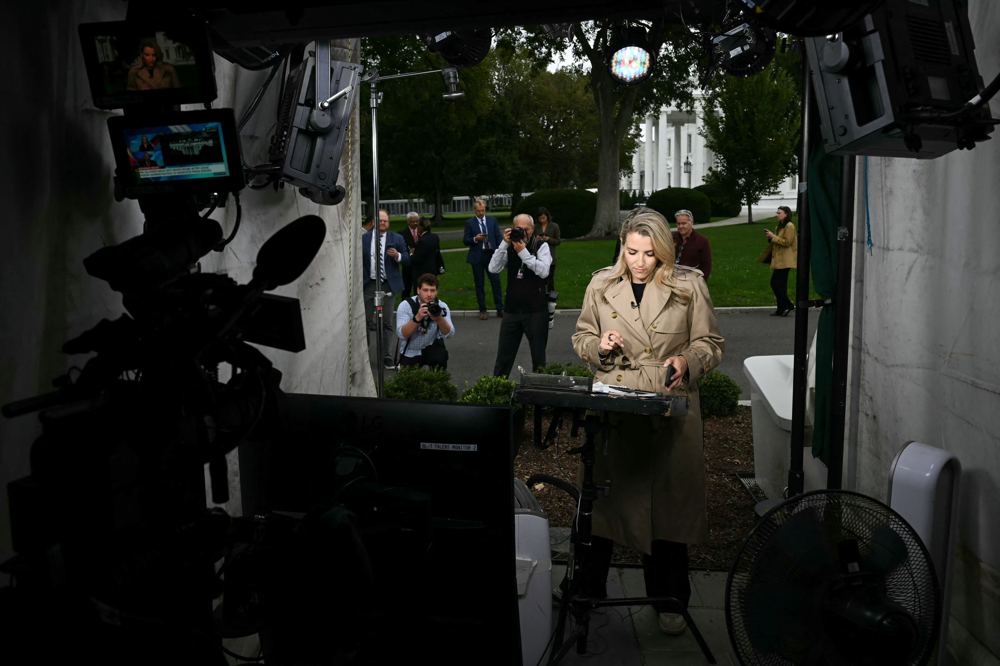
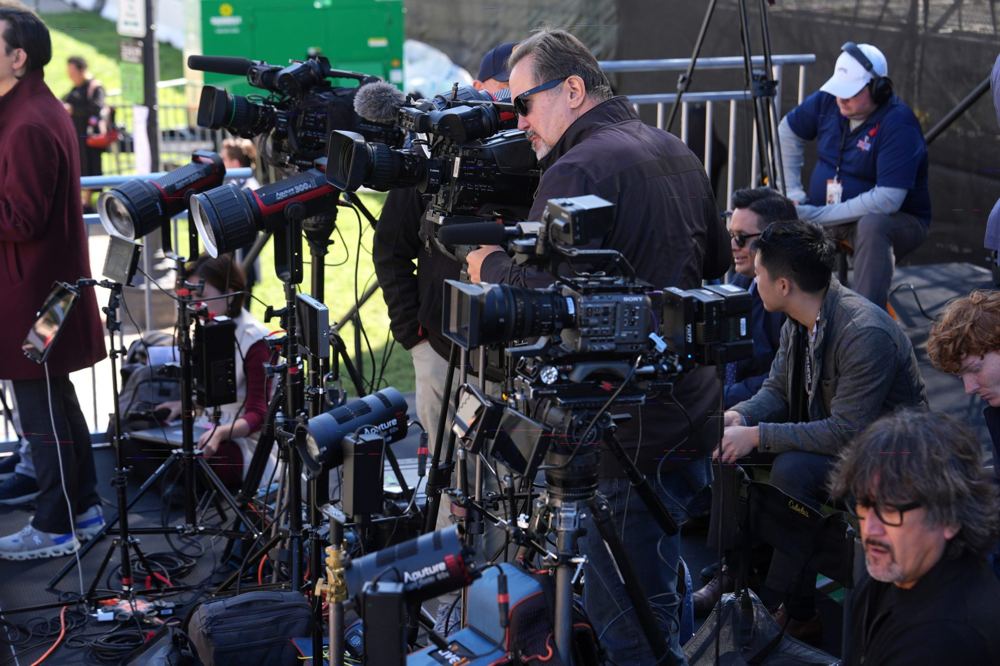
The Justice Department said in a statement that it is examining whether the White House TV press pool violated the Sherman Act.
The U.S. Department of Justice launched an investigation into whether the White House television press pool's decision to suspend coverage of President Donald Trump violated antitrust laws.
The Justice Department said in a statement that it is examining whether the White House TV press pool, a group of broadcasters including CNN, Fox News, ABC, CBS and NBC, violated the Sherman Act by temporarily halting pooled TV coverage of Trump.
The Sherman Act is a federal law that prohibits certain agreements that unreasonably restrain trade. Introduced in the 1890s, the law has rarely been applied to media organizations, particularly regarding their coverage.
Members of the press pool did not immediately respond to CNBC's requests for comment sent outside of normal business hours.
The DOJ investigation follows the White House television press pool ceased its coverage of Trump on Sept. 21, shortly after he prohibited CNN, MS NOW and Politico from accessing the White House.
In a Truth Social post , the president said then that those outlets "shouldn't be able to constantly write or report FICTION and LIES when they're covering the President of the United States, the Trump Administration, or the United States of America."
A judge lifted restrictions on those reporters on Sept. 24, several days after White House staff confiscated their press passes. Despite the ruling, reporters from CNN and Politico were barred from traveling with the president on Air Force One, the New York Times reported .
The Trump administration now faces a lawsuit from CNN, MS NOW and Politico over its ban of their reporters from the White House grounds.
Television pool coverage of the White House has also resumed.
The DOJ investigation marks another escalation in an ongoing dispute between Trump and the media over press rights.
The Trump administration has moved to restrict news agencies that have produced critical coverage of its policies.
Last year, Trump moved to rescind about $1.1 billion previously approved for the Corporation for Public Broadcasting, federal funding earmarked for public broadcasters NPR and PBS. Trump and his allies have also sued several media organizations, including The New York Times, The Wall Street Journal, and BBC News, over alleged biases or inaccuracies in their reporting.
Seth Stern, chief of advocacy for the Freedom of the Press Foundation, called the DOJ investigation "nonsense."
"Depriving Trump of the attention he craves is not a competitive harm and in any case, antitrust law has long recognized First Amendment exceptions even when there is anticompetitive impact," he said. "After all his 'fake news' rhetoric, Trump is weaponizing the DOJ to pressure the networks he calls the 'enemy of the people' to stay at the White House. It's a weird way of telling the press how much he missed them."
The White House Correspondents' Association did not immediately respond to a request for comment.