Naira shakes off rate-cut fears, hits two-year high
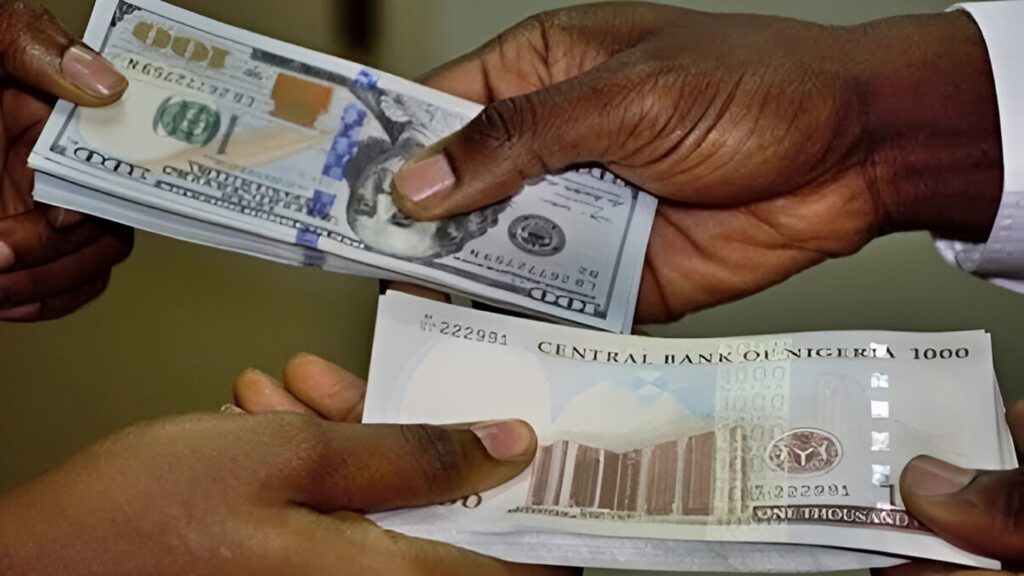
Nigeria’s naira has shrugged off fears of new pressure following the latest interest-rate cut, strengthening to a two-year high of read more Naira shakes off rate-cut fears, hits two-year high
Nigeria’s naira has shrugged off fears of new pressure following the latest interest-rate cut, strengthening to a two-year high of N1,331.77 per dollar in the official foreign exchange (FX) market as increased dollar inflows and improved market liquidity continue to support the currency. Data published by the Central Bank of Nigeria (CBN) showed that the naira appreciated by 24.68 percent or N328.72, to N1,331.77 per dollar on Wednesday, from N1,660.49 quoted on October 18, 2024. In the parallel market, data collated from black-market operators showed that the naira has gained 25.55 percent, or N350, from N1,720 per dollar traded in 2024. On a day-on-day basis, however, the local currency traded at about N1,370 per dollar on Wednesday. Nigeria’s external reserves, which give the CBN the firepower to defend the naira and meet other external obligations, have maintained a steady growth trajectory, rising to $54.98 billion as of October 6, 2026. This represented a 24.68 percent increase compared to $42.54 billion recorded in the corresponding period of 2025, according to data published on the CBN website. A new report by FSDH Merchant Bank noted that the naira strengthened from around N1,650 per dollar in December 2024 to N1,329 per dollar on September 24, 2026. “Exchange rate volatility has also moderated significantly compared with the sharp fluctuations recorded in 2025 and early 2026,” the report said. “The appreciation reflects stronger autonomous FX supply, rising external reserves and improved confidence in the market-based FX framework,” analysts at FSDH said. The CBN said its FX reforms, alongside tighter monetary policy and improved liquidity management, had contributed to greater stability in the foreign exchange market. Muhammad Sani Abdullahi, deputy governor of the CBN, said the improvement in foreign exchange supply had contributed to greater stability in the market. Read also: Conviction at the top: Moruf Oseni’s N98.67m share purchase highlights Wema Bank’s upside Speaking at the 38th Seminar for Finance Correspondents and Business Editors, Abdullahi said the sources of foreign exchange inflows had also changed significantly. Of the $10.82 billion in total inflows recorded in July 2026, $7.33 billion, or nearly 68 percent, came from autonomous sources, he said. Remittances through International Money Transfer Operators reached $950 million during the month, while net foreign portfolio inflows totalled $6.31 billion between January and August 2026. Although portfolio flows can reverse quickly, Abdullahi said the broader improvement in FX supply had reduced the market’s reliance on direct CBN intervention. Nigeria’s external buffers have also strengthened. Gross external reserves stood at $55.60 billion as of September 11, 2026, while the end-August reserve position provided 11.3 months of import cover. Abdullahi said the broader economic indicators also pointed to improved stability. Headline inflation, which rose during the initial adjustment to 34.8 percent in December 2024, has since moderated to 15.43 percent in July 2026. Real gross domestic product grew by 4.43 percent in the second quarter of 2026, driven largely by non-oil activity. “These outcomes reflect several influences, including monetary policy, oil receipts, remittances and global financial conditions,” Abdullahi said. “They show progress, but they do not mean the pressure on households and businesses has ended. Our task is to make the improvement more durable and to deepen the sources of investment and foreign exchange supply.” CardinalStone Research said Nigeria had recorded three consecutive months of disinflation despite geopolitical tensions in the Middle East, with the naira’s positive performance providing additional support. “Sustained FX inflows, from both domestic and foreign sources, alongside the current-account surplus, have lifted gross reserves to $54.98 billion as of October 6, 2026 and net reserves above $40.0 billion, providing an important buffer for the naira,” the research firm said. The naira’s resilience comes as the Monetary Policy Committee (MPC) voted to cut the Monetary Policy Rate (MPR) to 23.0 percent from 26.5 percent and recalibrate the asymmetric corridor to +50/-300 basis points from +50/-450 basis points. The committee left the Cash Reserve Ratio (CRR) and liquidity ratio unchanged. United Capital Plc said the naira had remained relatively stable, appreciating to around N1,327.78 per dollar, with a relatively narrow premium between the official and parallel markets. However, analysts warned that the composition of FX inflows remains important, given the substantial contribution from portfolio investors. “While stronger reserves and external balances provide policy flexibility, they do not eliminate Nigeria’s vulnerability to shifts in global risk and investor sentiment,” United Capital analysts said. Coronation Merchant Bank also cautioned against interpreting the latest rate cut as the beginning of a prolonged monetary easing cycle. “We do not interpret the Committee’s decision as the start of a sustained easing cycle,” its analysts said. “Rather, it represents a reset designed to restore the effectiveness of the monetary policy framework.” According to Coronation, a genuine easing cycle would require sustained progress on disinflation, greater confidence in exchange-rate stability and evidence that external-sector gains can be maintained without heavy reliance on portfolio inflows. For now, the naira’s two-year high reflects a combination of stronger FX supply, rising reserves, moderating inflation and improved confidence in the market-based exchange-rate regime. The durability of the gains, however, will depend on whether Nigeria can sustain these improvements while reducing its exposure to volatile capital flows. Related News Maternal Crisis: Nigeria steps up the fight, but old gaps remain Nigeria’s 103 million voter register faces fresh scrutiny ahead of 2027 elections 20 kidnapped corps members rescued after 7 days in captivity Hope Moses-Ashike Hope Moses-Ashike is an Associate Editor, Banking and Finance, with more than a decade of experience reporting on Nigeria’s financial system and broader economy. She closely tracks market movements, monetary policy decisions, company disclosures, regulatory actions, economic indicators, and global developments, and interprets what they mean for businesses, investors, policymakers, and households. Her reporting helps readers understand complex issues such as inflation trends, foreign exchange market dynamics, interest rate decisions, bank performance, and investment risks. She also covers major international events and periodically travels to Washington, D.C., to report on the World Bank/IMF Spring and Annual Meetings. Her dedication to financial journalism has earned her multiple recognitions and invitations to high-level professional development programmes. She is an alumna of the International Visitors Leadership Programme (IVLP) in the United States and holds an Advanced Financial Journalism Certificate from the Press Association Training in London, UK. Her other notable achievements include completing the Lagos Business School CMC Programme, the Bloomberg Media Africa Initiative Programme, and a Master Class in Journalism at Rhodes University in South Africa. Share
Data published by the Central Bank of Nigeria (CBN) showed that the naira appreciated by 24.68 percent or N328.72, to N1,331.77 per dollar on Wednesday, from N1,660.49 quoted on October 18, 2024. In the parallel market, data collated from black-market operators showed that the naira has gained 25.55 percent, or N350, from N1,720 per dollar traded in 2024. On a day-on-day basis, however, the local currency traded at about N1,370 per dollar on Wednesday. Nigeria’s external reserves, which give the CBN the firepower to defend the naira and meet other external obligations, have maintained a steady growth trajectory, rising to $54.98 billion as of October 6, 2026. This represented a 24.68 percent increase compared to $42.54 billion recorded in the corresponding period of 2025, according to data published on the CBN website. A new report by FSDH Merchant Bank noted that the naira strengthened from around N1,650 per dollar in December 2024 to N1,329 per dollar on September 24, 2026. “Exchange rate volatility has also moderated significantly compared with the sharp fluctuations recorded in 2025 and early 2026,” the report said. “The appreciation reflects stronger autonomous FX supply, rising external reserves and improved confidence in the market-based FX framework,” analysts at FSDH said. The CBN said its FX reforms, alongside tighter monetary policy and improved liquidity management, had contributed to greater stability in the foreign exchange market. Muhammad Sani Abdullahi, deputy governor of the CBN, said the improvement in foreign exchange supply had contributed to greater stability in the market. Read also: Conviction at the top: Moruf Oseni’s N98.67m share purchase highlights Wema Bank’s upside Speaking at the 38th Seminar for Finance Correspondents and Business Editors, Abdullahi said the sources of foreign exchange inflows had also changed significantly. Of the $10.82 billion in total inflows recorded in July 2026, $7.33 billion, or nearly 68 percent, came from autonomous sources, he said. Remittances through International Money Transfer Operators reached $950 million during the month, while net foreign portfolio inflows totalled $6.31 billion between January and August 2026. Although portfolio flows can reverse quickly, Abdullahi said the broader improvement in FX supply had reduced the market’s reliance on direct CBN intervention. Nigeria’s external buffers have also strengthened. Gross external reserves stood at $55.60 billion as of September 11, 2026, while the end-August reserve position provided 11.3 months of import cover. Abdullahi said the broader economic indicators also pointed to improved stability. Headline inflation, which rose during the initial adjustment to 34.8 percent in December 2024, has since moderated to 15.43 percent in July 2026. Real gross domestic product grew by 4.43 percent in the second quarter of 2026, driven largely by non-oil activity. “These outcomes reflect several influences, including monetary policy, oil receipts, remittances and global financial conditions,” Abdullahi said. “They show progress, but they do not mean the pressure on households and businesses has ended. Our task is to make the improvement more durable and to deepen the sources of investment and foreign exchange supply.” CardinalStone Research said Nigeria had recorded three consecutive months of disinflation despite geopolitical tensions in the Middle East, with the naira’s positive performance providing additional support. “Sustained FX inflows, from both domestic and foreign sources, alongside the current-account surplus, have lifted gross reserves to $54.98 billion as of October 6, 2026 and net reserves above $40.0 billion, providing an important buffer for the naira,” the research firm said. The naira’s resilience comes as the Monetary Policy Committee (MPC) voted to cut the Monetary Policy Rate (MPR) to 23.0 percent from 26.5 percent and recalibrate the asymmetric corridor to +50/-300 basis points from +50/-450 basis points. The committee left the Cash Reserve Ratio (CRR) and liquidity ratio unchanged. United Capital Plc said the naira had remained relatively stable, appreciating to around N1,327.78 per dollar, with a relatively narrow premium between the official and parallel markets. However, analysts warned that the composition of FX inflows remains important, given the substantial contribution from portfolio investors. “While stronger reserves and external balances provide policy flexibility, they do not eliminate Nigeria’s vulnerability to shifts in global risk and investor sentiment,” United Capital analysts said. Coronation Merchant Bank also cautioned against interpreting the latest rate cut as the beginning of a prolonged monetary easing cycle. “We do not interpret the Committee’s decision as the start of a sustained easing cycle,” its analysts said. “Rather, it represents a reset designed to restore the effectiveness of the monetary policy framework.” According to Coronation, a genuine easing cycle would require sustained progress on disinflation, greater confidence in exchange-rate stability and evidence that external-sector gains can be maintained without heavy reliance on portfolio inflows. For now, the naira’s two-year high reflects a combination of stronger FX supply, rising reserves, moderating inflation and improved confidence in the market-based exchange-rate regime. The durability of the gains, however, will depend on whether Nigeria can sustain these improvements while reducing its exposure to volatile capital flows. Related News Maternal Crisis: Nigeria steps up the fight, but old gaps remain Nigeria’s 103 million voter register faces fresh scrutiny ahead of 2027 elections 20 kidnapped corps members rescued after 7 days in captivity Hope Moses-Ashike Hope Moses-Ashike is an Associate Editor, Banking and Finance, with more than a decade of experience reporting on Nigeria’s financial system and broader economy. She closely tracks market movements, monetary policy decisions, company disclosures, regulatory actions, economic indicators, and global developments, and interprets what they mean for businesses, investors, policymakers, and households. Her reporting helps readers understand complex issues such as inflation trends, foreign exchange market dynamics, interest rate decisions, bank performance, and investment risks. She also covers major international events and periodically travels to Washington, D.C., to report on the World Bank/IMF Spring and Annual Meetings. Her dedication to financial journalism has earned her multiple recognitions and invitations to high-level professional development programmes. She is an alumna of the International Visitors Leadership Programme (IVLP) in the United States and holds an Advanced Financial Journalism Certificate from the Press Association Training in London, UK. Her other notable achievements include completing the Lagos Business School CMC Programme, the Bloomberg Media Africa Initiative Programme, and a Master Class in Journalism at Rhodes University in South Africa. Share
In the parallel market, data collated from black-market operators showed that the naira has gained 25.55 percent, or N350, from N1,720 per dollar traded in 2024. On a day-on-day basis, however, the local currency traded at about N1,370 per dollar on Wednesday. Nigeria’s external reserves, which give the CBN the firepower to defend the naira and meet other external obligations, have maintained a steady growth trajectory, rising to $54.98 billion as of October 6, 2026. This represented a 24.68 percent increase compared to $42.54 billion recorded in the corresponding period of 2025, according to data published on the CBN website. A new report by FSDH Merchant Bank noted that the naira strengthened from around N1,650 per dollar in December 2024 to N1,329 per dollar on September 24, 2026. “Exchange rate volatility has also moderated significantly compared with the sharp fluctuations recorded in 2025 and early 2026,” the report said. “The appreciation reflects stronger autonomous FX supply, rising external reserves and improved confidence in the market-based FX framework,” analysts at FSDH said. The CBN said its FX reforms, alongside tighter monetary policy and improved liquidity management, had contributed to greater stability in the foreign exchange market. Muhammad Sani Abdullahi, deputy governor of the CBN, said the improvement in foreign exchange supply had contributed to greater stability in the market. Read also: Conviction at the top: Moruf Oseni’s N98.67m share purchase highlights Wema Bank’s upside Speaking at the 38th Seminar for Finance Correspondents and Business Editors, Abdullahi said the sources of foreign exchange inflows had also changed significantly. Of the $10.82 billion in total inflows recorded in July 2026, $7.33 billion, or nearly 68 percent, came from autonomous sources, he said. Remittances through International Money Transfer Operators reached $950 million during the month, while net foreign portfolio inflows totalled $6.31 billion between January and August 2026. Although portfolio flows can reverse quickly, Abdullahi said the broader improvement in FX supply had reduced the market’s reliance on direct CBN intervention. Nigeria’s external buffers have also strengthened. Gross external reserves stood at $55.60 billion as of September 11, 2026, while the end-August reserve position provided 11.3 months of import cover. Abdullahi said the broader economic indicators also pointed to improved stability. Headline inflation, which rose during the initial adjustment to 34.8 percent in December 2024, has since moderated to 15.43 percent in July 2026. Real gross domestic product grew by 4.43 percent in the second quarter of 2026, driven largely by non-oil activity. “These outcomes reflect several influences, including monetary policy, oil receipts, remittances and global financial conditions,” Abdullahi said. “They show progress, but they do not mean the pressure on households and businesses has ended. Our task is to make the improvement more durable and to deepen the sources of investment and foreign exchange supply.” CardinalStone Research said Nigeria had recorded three consecutive months of disinflation despite geopolitical tensions in the Middle East, with the naira’s positive performance providing additional support. “Sustained FX inflows, from both domestic and foreign sources, alongside the current-account surplus, have lifted gross reserves to $54.98 billion as of October 6, 2026 and net reserves above $40.0 billion, providing an important buffer for the naira,” the research firm said. The naira’s resilience comes as the Monetary Policy Committee (MPC) voted to cut the Monetary Policy Rate (MPR) to 23.0 percent from 26.5 percent and recalibrate the asymmetric corridor to +50/-300 basis points from +50/-450 basis points. The committee left the Cash Reserve Ratio (CRR) and liquidity ratio unchanged. United Capital Plc said the naira had remained relatively stable, appreciating to around N1,327.78 per dollar, with a relatively narrow premium between the official and parallel markets. However, analysts warned that the composition of FX inflows remains important, given the substantial contribution from portfolio investors. “While stronger reserves and external balances provide policy flexibility, they do not eliminate Nigeria’s vulnerability to shifts in global risk and investor sentiment,” United Capital analysts said. Coronation Merchant Bank also cautioned against interpreting the latest rate cut as the beginning of a prolonged monetary easing cycle. “We do not interpret the Committee’s decision as the start of a sustained easing cycle,” its analysts said. “Rather, it represents a reset designed to restore the effectiveness of the monetary policy framework.” According to Coronation, a genuine easing cycle would require sustained progress on disinflation, greater confidence in exchange-rate stability and evidence that external-sector gains can be maintained without heavy reliance on portfolio inflows. For now, the naira’s two-year high reflects a combination of stronger FX supply, rising reserves, moderating inflation and improved confidence in the market-based exchange-rate regime. The durability of the gains, however, will depend on whether Nigeria can sustain these improvements while reducing its exposure to volatile capital flows. Related News Maternal Crisis: Nigeria steps up the fight, but old gaps remain Nigeria’s 103 million voter register faces fresh scrutiny ahead of 2027 elections 20 kidnapped corps members rescued after 7 days in captivity Hope Moses-Ashike Hope Moses-Ashike is an Associate Editor, Banking and Finance, with more than a decade of experience reporting on Nigeria’s financial system and broader economy. She closely tracks market movements, monetary policy decisions, company disclosures, regulatory actions, economic indicators, and global developments, and interprets what they mean for businesses, investors, policymakers, and households. Her reporting helps readers understand complex issues such as inflation trends, foreign exchange market dynamics, interest rate decisions, bank performance, and investment risks. She also covers major international events and periodically travels to Washington, D.C., to report on the World Bank/IMF Spring and Annual Meetings. Her dedication to financial journalism has earned her multiple recognitions and invitations to high-level professional development programmes. She is an alumna of the International Visitors Leadership Programme (IVLP) in the United States and holds an Advanced Financial Journalism Certificate from the Press Association Training in London, UK. Her other notable achievements include completing the Lagos Business School CMC Programme, the Bloomberg Media Africa Initiative Programme, and a Master Class in Journalism at Rhodes University in South Africa. Share
On a day-on-day basis, however, the local currency traded at about N1,370 per dollar on Wednesday. Nigeria’s external reserves, which give the CBN the firepower to defend the naira and meet other external obligations, have maintained a steady growth trajectory, rising to $54.98 billion as of October 6, 2026. This represented a 24.68 percent increase compared to $42.54 billion recorded in the corresponding period of 2025, according to data published on the CBN website. A new report by FSDH Merchant Bank noted that the naira strengthened from around N1,650 per dollar in December 2024 to N1,329 per dollar on September 24, 2026. “Exchange rate volatility has also moderated significantly compared with the sharp fluctuations recorded in 2025 and early 2026,” the report said. “The appreciation reflects stronger autonomous FX supply, rising external reserves and improved confidence in the market-based FX framework,” analysts at FSDH said. The CBN said its FX reforms, alongside tighter monetary policy and improved liquidity management, had contributed to greater stability in the foreign exchange market. Muhammad Sani Abdullahi, deputy governor of the CBN, said the improvement in foreign exchange supply had contributed to greater stability in the market. Read also: Conviction at the top: Moruf Oseni’s N98.67m share purchase highlights Wema Bank’s upside Speaking at the 38th Seminar for Finance Correspondents and Business Editors, Abdullahi said the sources of foreign exchange inflows had also changed significantly. Of the $10.82 billion in total inflows recorded in July 2026, $7.33 billion, or nearly 68 percent, came from autonomous sources, he said. Remittances through International Money Transfer Operators reached $950 million during the month, while net foreign portfolio inflows totalled $6.31 billion between January and August 2026. Although portfolio flows can reverse quickly, Abdullahi said the broader improvement in FX supply had reduced the market’s reliance on direct CBN intervention. Nigeria’s external buffers have also strengthened. Gross external reserves stood at $55.60 billion as of September 11, 2026, while the end-August reserve position provided 11.3 months of import cover. Abdullahi said the broader economic indicators also pointed to improved stability. Headline inflation, which rose during the initial adjustment to 34.8 percent in December 2024, has since moderated to 15.43 percent in July 2026. Real gross domestic product grew by 4.43 percent in the second quarter of 2026, driven largely by non-oil activity. “These outcomes reflect several influences, including monetary policy, oil receipts, remittances and global financial conditions,” Abdullahi said. “They show progress, but they do not mean the pressure on households and businesses has ended. Our task is to make the improvement more durable and to deepen the sources of investment and foreign exchange supply.” CardinalStone Research said Nigeria had recorded three consecutive months of disinflation despite geopolitical tensions in the Middle East, with the naira’s positive performance providing additional support. “Sustained FX inflows, from both domestic and foreign sources, alongside the current-account surplus, have lifted gross reserves to $54.98 billion as of October 6, 2026 and net reserves above $40.0 billion, providing an important buffer for the naira,” the research firm said. The naira’s resilience comes as the Monetary Policy Committee (MPC) voted to cut the Monetary Policy Rate (MPR) to 23.0 percent from 26.5 percent and recalibrate the asymmetric corridor to +50/-300 basis points from +50/-450 basis points. The committee left the Cash Reserve Ratio (CRR) and liquidity ratio unchanged. United Capital Plc said the naira had remained relatively stable, appreciating to around N1,327.78 per dollar, with a relatively narrow premium between the official and parallel markets. However, analysts warned that the composition of FX inflows remains important, given the substantial contribution from portfolio investors. “While stronger reserves and external balances provide policy flexibility, they do not eliminate Nigeria’s vulnerability to shifts in global risk and investor sentiment,” United Capital analysts said. Coronation Merchant Bank also cautioned against interpreting the latest rate cut as the beginning of a prolonged monetary easing cycle. “We do not interpret the Committee’s decision as the start of a sustained easing cycle,” its analysts said. “Rather, it represents a reset designed to restore the effectiveness of the monetary policy framework.” According to Coronation, a genuine easing cycle would require sustained progress on disinflation, greater confidence in exchange-rate stability and evidence that external-sector gains can be maintained without heavy reliance on portfolio inflows. For now, the naira’s two-year high reflects a combination of stronger FX supply, rising reserves, moderating inflation and improved confidence in the market-based exchange-rate regime. The durability of the gains, however, will depend on whether Nigeria can sustain these improvements while reducing its exposure to volatile capital flows. Related News Maternal Crisis: Nigeria steps up the fight, but old gaps remain Nigeria’s 103 million voter register faces fresh scrutiny ahead of 2027 elections 20 kidnapped corps members rescued after 7 days in captivity Hope Moses-Ashike Hope Moses-Ashike is an Associate Editor, Banking and Finance, with more than a decade of experience reporting on Nigeria’s financial system and broader economy. She closely tracks market movements, monetary policy decisions, company disclosures, regulatory actions, economic indicators, and global developments, and interprets what they mean for businesses, investors, policymakers, and households. Her reporting helps readers understand complex issues such as inflation trends, foreign exchange market dynamics, interest rate decisions, bank performance, and investment risks. She also covers major international events and periodically travels to Washington, D.C., to report on the World Bank/IMF Spring and Annual Meetings. Her dedication to financial journalism has earned her multiple recognitions and invitations to high-level professional development programmes. She is an alumna of the International Visitors Leadership Programme (IVLP) in the United States and holds an Advanced Financial Journalism Certificate from the Press Association Training in London, UK. Her other notable achievements include completing the Lagos Business School CMC Programme, the Bloomberg Media Africa Initiative Programme, and a Master Class in Journalism at Rhodes University in South Africa. Share
Nigeria’s external reserves, which give the CBN the firepower to defend the naira and meet other external obligations, have maintained a steady growth trajectory, rising to $54.98 billion as of October 6, 2026. This represented a 24.68 percent increase compared to $42.54 billion recorded in the corresponding period of 2025, according to data published on the CBN website. A new report by FSDH Merchant Bank noted that the naira strengthened from around N1,650 per dollar in December 2024 to N1,329 per dollar on September 24, 2026. “Exchange rate volatility has also moderated significantly compared with the sharp fluctuations recorded in 2025 and early 2026,” the report said. “The appreciation reflects stronger autonomous FX supply, rising external reserves and improved confidence in the market-based FX framework,” analysts at FSDH said. The CBN said its FX reforms, alongside tighter monetary policy and improved liquidity management, had contributed to greater stability in the foreign exchange market. Muhammad Sani Abdullahi, deputy governor of the CBN, said the improvement in foreign exchange supply had contributed to greater stability in the market. Read also: Conviction at the top: Moruf Oseni’s N98.67m share purchase highlights Wema Bank’s upside Speaking at the 38th Seminar for Finance Correspondents and Business Editors, Abdullahi said the sources of foreign exchange inflows had also changed significantly. Of the $10.82 billion in total inflows recorded in July 2026, $7.33 billion, or nearly 68 percent, came from autonomous sources, he said. Remittances through International Money Transfer Operators reached $950 million during the month, while net foreign portfolio inflows totalled $6.31 billion between January and August 2026. Although portfolio flows can reverse quickly, Abdullahi said the broader improvement in FX supply had reduced the market’s reliance on direct CBN intervention. Nigeria’s external buffers have also strengthened. Gross external reserves stood at $55.60 billion as of September 11, 2026, while the end-August reserve position provided 11.3 months of import cover. Abdullahi said the broader economic indicators also pointed to improved stability. Headline inflation, which rose during the initial adjustment to 34.8 percent in December 2024, has since moderated to 15.43 percent in July 2026. Real gross domestic product grew by 4.43 percent in the second quarter of 2026, driven largely by non-oil activity. “These outcomes reflect several influences, including monetary policy, oil receipts, remittances and global financial conditions,” Abdullahi said. “They show progress, but they do not mean the pressure on households and businesses has ended. Our task is to make the improvement more durable and to deepen the sources of investment and foreign exchange supply.” CardinalStone Research said Nigeria had recorded three consecutive months of disinflation despite geopolitical tensions in the Middle East, with the naira’s positive performance providing additional support. “Sustained FX inflows, from both domestic and foreign sources, alongside the current-account surplus, have lifted gross reserves to $54.98 billion as of October 6, 2026 and net reserves above $40.0 billion, providing an important buffer for the naira,” the research firm said. The naira’s resilience comes as the Monetary Policy Committee (MPC) voted to cut the Monetary Policy Rate (MPR) to 23.0 percent from 26.5 percent and recalibrate the asymmetric corridor to +50/-300 basis points from +50/-450 basis points. The committee left the Cash Reserve Ratio (CRR) and liquidity ratio unchanged. United Capital Plc said the naira had remained relatively stable, appreciating to around N1,327.78 per dollar, with a relatively narrow premium between the official and parallel markets. However, analysts warned that the composition of FX inflows remains important, given the substantial contribution from portfolio investors. “While stronger reserves and external balances provide policy flexibility, they do not eliminate Nigeria’s vulnerability to shifts in global risk and investor sentiment,” United Capital analysts said. Coronation Merchant Bank also cautioned against interpreting the latest rate cut as the beginning of a prolonged monetary easing cycle. “We do not interpret the Committee’s decision as the start of a sustained easing cycle,” its analysts said. “Rather, it represents a reset designed to restore the effectiveness of the monetary policy framework.” According to Coronation, a genuine easing cycle would require sustained progress on disinflation, greater confidence in exchange-rate stability and evidence that external-sector gains can be maintained without heavy reliance on portfolio inflows. For now, the naira’s two-year high reflects a combination of stronger FX supply, rising reserves, moderating inflation and improved confidence in the market-based exchange-rate regime. The durability of the gains, however, will depend on whether Nigeria can sustain these improvements while reducing its exposure to volatile capital flows. Related News Maternal Crisis: Nigeria steps up the fight, but old gaps remain Nigeria’s 103 million voter register faces fresh scrutiny ahead of 2027 elections 20 kidnapped corps members rescued after 7 days in captivity Hope Moses-Ashike Hope Moses-Ashike is an Associate Editor, Banking and Finance, with more than a decade of experience reporting on Nigeria’s financial system and broader economy. She closely tracks market movements, monetary policy decisions, company disclosures, regulatory actions, economic indicators, and global developments, and interprets what they mean for businesses, investors, policymakers, and households. Her reporting helps readers understand complex issues such as inflation trends, foreign exchange market dynamics, interest rate decisions, bank performance, and investment risks. She also covers major international events and periodically travels to Washington, D.C., to report on the World Bank/IMF Spring and Annual Meetings. Her dedication to financial journalism has earned her multiple recognitions and invitations to high-level professional development programmes. She is an alumna of the International Visitors Leadership Programme (IVLP) in the United States and holds an Advanced Financial Journalism Certificate from the Press Association Training in London, UK. Her other notable achievements include completing the Lagos Business School CMC Programme, the Bloomberg Media Africa Initiative Programme, and a Master Class in Journalism at Rhodes University in South Africa. Share
This represented a 24.68 percent increase compared to $42.54 billion recorded in the corresponding period of 2025, according to data published on the CBN website. A new report by FSDH Merchant Bank noted that the naira strengthened from around N1,650 per dollar in December 2024 to N1,329 per dollar on September 24, 2026. “Exchange rate volatility has also moderated significantly compared with the sharp fluctuations recorded in 2025 and early 2026,” the report said. “The appreciation reflects stronger autonomous FX supply, rising external reserves and improved confidence in the market-based FX framework,” analysts at FSDH said. The CBN said its FX reforms, alongside tighter monetary policy and improved liquidity management, had contributed to greater stability in the foreign exchange market. Muhammad Sani Abdullahi, deputy governor of the CBN, said the improvement in foreign exchange supply had contributed to greater stability in the market. Read also: Conviction at the top: Moruf Oseni’s N98.67m share purchase highlights Wema Bank’s upside Speaking at the 38th Seminar for Finance Correspondents and Business Editors, Abdullahi said the sources of foreign exchange inflows had also changed significantly. Of the $10.82 billion in total inflows recorded in July 2026, $7.33 billion, or nearly 68 percent, came from autonomous sources, he said. Remittances through International Money Transfer Operators reached $950 million during the month, while net foreign portfolio inflows totalled $6.31 billion between January and August 2026. Although portfolio flows can reverse quickly, Abdullahi said the broader improvement in FX supply had reduced the market’s reliance on direct CBN intervention. Nigeria’s external buffers have also strengthened. Gross external reserves stood at $55.60 billion as of September 11, 2026, while the end-August reserve position provided 11.3 months of import cover. Abdullahi said the broader economic indicators also pointed to improved stability. Headline inflation, which rose during the initial adjustment to 34.8 percent in December 2024, has since moderated to 15.43 percent in July 2026. Real gross domestic product grew by 4.43 percent in the second quarter of 2026, driven largely by non-oil activity. “These outcomes reflect several influences, including monetary policy, oil receipts, remittances and global financial conditions,” Abdullahi said. “They show progress, but they do not mean the pressure on households and businesses has ended. Our task is to make the improvement more durable and to deepen the sources of investment and foreign exchange supply.” CardinalStone Research said Nigeria had recorded three consecutive months of disinflation despite geopolitical tensions in the Middle East, with the naira’s positive performance providing additional support. “Sustained FX inflows, from both domestic and foreign sources, alongside the current-account surplus, have lifted gross reserves to $54.98 billion as of October 6, 2026 and net reserves above $40.0 billion, providing an important buffer for the naira,” the research firm said. The naira’s resilience comes as the Monetary Policy Committee (MPC) voted to cut the Monetary Policy Rate (MPR) to 23.0 percent from 26.5 percent and recalibrate the asymmetric corridor to +50/-300 basis points from +50/-450 basis points. The committee left the Cash Reserve Ratio (CRR) and liquidity ratio unchanged. United Capital Plc said the naira had remained relatively stable, appreciating to around N1,327.78 per dollar, with a relatively narrow premium between the official and parallel markets. However, analysts warned that the composition of FX inflows remains important, given the substantial contribution from portfolio investors. “While stronger reserves and external balances provide policy flexibility, they do not eliminate Nigeria’s vulnerability to shifts in global risk and investor sentiment,” United Capital analysts said. Coronation Merchant Bank also cautioned against interpreting the latest rate cut as the beginning of a prolonged monetary easing cycle. “We do not interpret the Committee’s decision as the start of a sustained easing cycle,” its analysts said. “Rather, it represents a reset designed to restore the effectiveness of the monetary policy framework.” According to Coronation, a genuine easing cycle would require sustained progress on disinflation, greater confidence in exchange-rate stability and evidence that external-sector gains can be maintained without heavy reliance on portfolio inflows. For now, the naira’s two-year high reflects a combination of stronger FX supply, rising reserves, moderating inflation and improved confidence in the market-based exchange-rate regime. The durability of the gains, however, will depend on whether Nigeria can sustain these improvements while reducing its exposure to volatile capital flows. Related News Maternal Crisis: Nigeria steps up the fight, but old gaps remain Nigeria’s 103 million voter register faces fresh scrutiny ahead of 2027 elections 20 kidnapped corps members rescued after 7 days in captivity Hope Moses-Ashike Hope Moses-Ashike is an Associate Editor, Banking and Finance, with more than a decade of experience reporting on Nigeria’s financial system and broader economy. She closely tracks market movements, monetary policy decisions, company disclosures, regulatory actions, economic indicators, and global developments, and interprets what they mean for businesses, investors, policymakers, and households. Her reporting helps readers understand complex issues such as inflation trends, foreign exchange market dynamics, interest rate decisions, bank performance, and investment risks. She also covers major international events and periodically travels to Washington, D.C., to report on the World Bank/IMF Spring and Annual Meetings. Her dedication to financial journalism has earned her multiple recognitions and invitations to high-level professional development programmes. She is an alumna of the International Visitors Leadership Programme (IVLP) in the United States and holds an Advanced Financial Journalism Certificate from the Press Association Training in London, UK. Her other notable achievements include completing the Lagos Business School CMC Programme, the Bloomberg Media Africa Initiative Programme, and a Master Class in Journalism at Rhodes University in South Africa. Share
A new report by FSDH Merchant Bank noted that the naira strengthened from around N1,650 per dollar in December 2024 to N1,329 per dollar on September 24, 2026. “Exchange rate volatility has also moderated significantly compared with the sharp fluctuations recorded in 2025 and early 2026,” the report said. “The appreciation reflects stronger autonomous FX supply, rising external reserves and improved confidence in the market-based FX framework,” analysts at FSDH said. The CBN said its FX reforms, alongside tighter monetary policy and improved liquidity management, had contributed to greater stability in the foreign exchange market. Muhammad Sani Abdullahi, deputy governor of the CBN, said the improvement in foreign exchange supply had contributed to greater stability in the market. Read also: Conviction at the top: Moruf Oseni’s N98.67m share purchase highlights Wema Bank’s upside Speaking at the 38th Seminar for Finance Correspondents and Business Editors, Abdullahi said the sources of foreign exchange inflows had also changed significantly. Of the $10.82 billion in total inflows recorded in July 2026, $7.33 billion, or nearly 68 percent, came from autonomous sources, he said. Remittances through International Money Transfer Operators reached $950 million during the month, while net foreign portfolio inflows totalled $6.31 billion between January and August 2026. Although portfolio flows can reverse quickly, Abdullahi said the broader improvement in FX supply had reduced the market’s reliance on direct CBN intervention. Nigeria’s external buffers have also strengthened. Gross external reserves stood at $55.60 billion as of September 11, 2026, while the end-August reserve position provided 11.3 months of import cover. Abdullahi said the broader economic indicators also pointed to improved stability. Headline inflation, which rose during the initial adjustment to 34.8 percent in December 2024, has since moderated to 15.43 percent in July 2026. Real gross domestic product grew by 4.43 percent in the second quarter of 2026, driven largely by non-oil activity. “These outcomes reflect several influences, including monetary policy, oil receipts, remittances and global financial conditions,” Abdullahi said. “They show progress, but they do not mean the pressure on households and businesses has ended. Our task is to make the improvement more durable and to deepen the sources of investment and foreign exchange supply.” CardinalStone Research said Nigeria had recorded three consecutive months of disinflation despite geopolitical tensions in the Middle East, with the naira’s positive performance providing additional support. “Sustained FX inflows, from both domestic and foreign sources, alongside the current-account surplus, have lifted gross reserves to $54.98 billion as of October 6, 2026 and net reserves above $40.0 billion, providing an important buffer for the naira,” the research firm said. The naira’s resilience comes as the Monetary Policy Committee (MPC) voted to cut the Monetary Policy Rate (MPR) to 23.0 percent from 26.5 percent and recalibrate the asymmetric corridor to +50/-300 basis points from +50/-450 basis points. The committee left the Cash Reserve Ratio (CRR) and liquidity ratio unchanged. United Capital Plc said the naira had remained relatively stable, appreciating to around N1,327.78 per dollar, with a relatively narrow premium between the official and parallel markets. However, analysts warned that the composition of FX inflows remains important, given the substantial contribution from portfolio investors. “While stronger reserves and external balances provide policy flexibility, they do not eliminate Nigeria’s vulnerability to shifts in global risk and investor sentiment,” United Capital analysts said. Coronation Merchant Bank also cautioned against interpreting the latest rate cut as the beginning of a prolonged monetary easing cycle. “We do not interpret the Committee’s decision as the start of a sustained easing cycle,” its analysts said. “Rather, it represents a reset designed to restore the effectiveness of the monetary policy framework.” According to Coronation, a genuine easing cycle would require sustained progress on disinflation, greater confidence in exchange-rate stability and evidence that external-sector gains can be maintained without heavy reliance on portfolio inflows. For now, the naira’s two-year high reflects a combination of stronger FX supply, rising reserves, moderating inflation and improved confidence in the market-based exchange-rate regime. The durability of the gains, however, will depend on whether Nigeria can sustain these improvements while reducing its exposure to volatile capital flows. Related News Maternal Crisis: Nigeria steps up the fight, but old gaps remain Nigeria’s 103 million voter register faces fresh scrutiny ahead of 2027 elections 20 kidnapped corps members rescued after 7 days in captivity Hope Moses-Ashike Hope Moses-Ashike is an Associate Editor, Banking and Finance, with more than a decade of experience reporting on Nigeria’s financial system and broader economy. She closely tracks market movements, monetary policy decisions, company disclosures, regulatory actions, economic indicators, and global developments, and interprets what they mean for businesses, investors, policymakers, and households. Her reporting helps readers understand complex issues such as inflation trends, foreign exchange market dynamics, interest rate decisions, bank performance, and investment risks. She also covers major international events and periodically travels to Washington, D.C., to report on the World Bank/IMF Spring and Annual Meetings. Her dedication to financial journalism has earned her multiple recognitions and invitations to high-level professional development programmes. She is an alumna of the International Visitors Leadership Programme (IVLP) in the United States and holds an Advanced Financial Journalism Certificate from the Press Association Training in London, UK. Her other notable achievements include completing the Lagos Business School CMC Programme, the Bloomberg Media Africa Initiative Programme, and a Master Class in Journalism at Rhodes University in South Africa. Share
“Exchange rate volatility has also moderated significantly compared with the sharp fluctuations recorded in 2025 and early 2026,” the report said. “The appreciation reflects stronger autonomous FX supply, rising external reserves and improved confidence in the market-based FX framework,” analysts at FSDH said. The CBN said its FX reforms, alongside tighter monetary policy and improved liquidity management, had contributed to greater stability in the foreign exchange market. Muhammad Sani Abdullahi, deputy governor of the CBN, said the improvement in foreign exchange supply had contributed to greater stability in the market. Read also: Conviction at the top: Moruf Oseni’s N98.67m share purchase highlights Wema Bank’s upside Speaking at the 38th Seminar for Finance Correspondents and Business Editors, Abdullahi said the sources of foreign exchange inflows had also changed significantly. Of the $10.82 billion in total inflows recorded in July 2026, $7.33 billion, or nearly 68 percent, came from autonomous sources, he said. Remittances through International Money Transfer Operators reached $950 million during the month, while net foreign portfolio inflows totalled $6.31 billion between January and August 2026. Although portfolio flows can reverse quickly, Abdullahi said the broader improvement in FX supply had reduced the market’s reliance on direct CBN intervention. Nigeria’s external buffers have also strengthened. Gross external reserves stood at $55.60 billion as of September 11, 2026, while the end-August reserve position provided 11.3 months of import cover. Abdullahi said the broader economic indicators also pointed to improved stability. Headline inflation, which rose during the initial adjustment to 34.8 percent in December 2024, has since moderated to 15.43 percent in July 2026. Real gross domestic product grew by 4.43 percent in the second quarter of 2026, driven largely by non-oil activity. “These outcomes reflect several influences, including monetary policy, oil receipts, remittances and global financial conditions,” Abdullahi said. “They show progress, but they do not mean the pressure on households and businesses has ended. Our task is to make the improvement more durable and to deepen the sources of investment and foreign exchange supply.” CardinalStone Research said Nigeria had recorded three consecutive months of disinflation despite geopolitical tensions in the Middle East, with the naira’s positive performance providing additional support. “Sustained FX inflows, from both domestic and foreign sources, alongside the current-account surplus, have lifted gross reserves to $54.98 billion as of October 6, 2026 and net reserves above $40.0 billion, providing an important buffer for the naira,” the research firm said. The naira’s resilience comes as the Monetary Policy Committee (MPC) voted to cut the Monetary Policy Rate (MPR) to 23.0 percent from 26.5 percent and recalibrate the asymmetric corridor to +50/-300 basis points from +50/-450 basis points. The committee left the Cash Reserve Ratio (CRR) and liquidity ratio unchanged. United Capital Plc said the naira had remained relatively stable, appreciating to around N1,327.78 per dollar, with a relatively narrow premium between the official and parallel markets. However, analysts warned that the composition of FX inflows remains important, given the substantial contribution from portfolio investors. “While stronger reserves and external balances provide policy flexibility, they do not eliminate Nigeria’s vulnerability to shifts in global risk and investor sentiment,” United Capital analysts said. Coronation Merchant Bank also cautioned against interpreting the latest rate cut as the beginning of a prolonged monetary easing cycle. “We do not interpret the Committee’s decision as the start of a sustained easing cycle,” its analysts said. “Rather, it represents a reset designed to restore the effectiveness of the monetary policy framework.” According to Coronation, a genuine easing cycle would require sustained progress on disinflation, greater confidence in exchange-rate stability and evidence that external-sector gains can be maintained without heavy reliance on portfolio inflows. For now, the naira’s two-year high reflects a combination of stronger FX supply, rising reserves, moderating inflation and improved confidence in the market-based exchange-rate regime. The durability of the gains, however, will depend on whether Nigeria can sustain these improvements while reducing its exposure to volatile capital flows. Related News Maternal Crisis: Nigeria steps up the fight, but old gaps remain Nigeria’s 103 million voter register faces fresh scrutiny ahead of 2027 elections 20 kidnapped corps members rescued after 7 days in captivity Hope Moses-Ashike Hope Moses-Ashike is an Associate Editor, Banking and Finance, with more than a decade of experience reporting on Nigeria’s financial system and broader economy. She closely tracks market movements, monetary policy decisions, company disclosures, regulatory actions, economic indicators, and global developments, and interprets what they mean for businesses, investors, policymakers, and households. Her reporting helps readers understand complex issues such as inflation trends, foreign exchange market dynamics, interest rate decisions, bank performance, and investment risks. She also covers major international events and periodically travels to Washington, D.C., to report on the World Bank/IMF Spring and Annual Meetings. Her dedication to financial journalism has earned her multiple recognitions and invitations to high-level professional development programmes. She is an alumna of the International Visitors Leadership Programme (IVLP) in the United States and holds an Advanced Financial Journalism Certificate from the Press Association Training in London, UK. Her other notable achievements include completing the Lagos Business School CMC Programme, the Bloomberg Media Africa Initiative Programme, and a Master Class in Journalism at Rhodes University in South Africa. Share
“The appreciation reflects stronger autonomous FX supply, rising external reserves and improved confidence in the market-based FX framework,” analysts at FSDH said. The CBN said its FX reforms, alongside tighter monetary policy and improved liquidity management, had contributed to greater stability in the foreign exchange market. Muhammad Sani Abdullahi, deputy governor of the CBN, said the improvement in foreign exchange supply had contributed to greater stability in the market. Read also: Conviction at the top: Moruf Oseni’s N98.67m share purchase highlights Wema Bank’s upside Speaking at the 38th Seminar for Finance Correspondents and Business Editors, Abdullahi said the sources of foreign exchange inflows had also changed significantly. Of the $10.82 billion in total inflows recorded in July 2026, $7.33 billion, or nearly 68 percent, came from autonomous sources, he said. Remittances through International Money Transfer Operators reached $950 million during the month, while net foreign portfolio inflows totalled $6.31 billion between January and August 2026. Although portfolio flows can reverse quickly, Abdullahi said the broader improvement in FX supply had reduced the market’s reliance on direct CBN intervention. Nigeria’s external buffers have also strengthened. Gross external reserves stood at $55.60 billion as of September 11, 2026, while the end-August reserve position provided 11.3 months of import cover. Abdullahi said the broader economic indicators also pointed to improved stability. Headline inflation, which rose during the initial adjustment to 34.8 percent in December 2024, has since moderated to 15.43 percent in July 2026. Real gross domestic product grew by 4.43 percent in the second quarter of 2026, driven largely by non-oil activity. “These outcomes reflect several influences, including monetary policy, oil receipts, remittances and global financial conditions,” Abdullahi said. “They show progress, but they do not mean the pressure on households and businesses has ended. Our task is to make the improvement more durable and to deepen the sources of investment and foreign exchange supply.” CardinalStone Research said Nigeria had recorded three consecutive months of disinflation despite geopolitical tensions in the Middle East, with the naira’s positive performance providing additional support. “Sustained FX inflows, from both domestic and foreign sources, alongside the current-account surplus, have lifted gross reserves to $54.98 billion as of October 6, 2026 and net reserves above $40.0 billion, providing an important buffer for the naira,” the research firm said. The naira’s resilience comes as the Monetary Policy Committee (MPC) voted to cut the Monetary Policy Rate (MPR) to 23.0 percent from 26.5 percent and recalibrate the asymmetric corridor to +50/-300 basis points from +50/-450 basis points. The committee left the Cash Reserve Ratio (CRR) and liquidity ratio unchanged. United Capital Plc said the naira had remained relatively stable, appreciating to around N1,327.78 per dollar, with a relatively narrow premium between the official and parallel markets. However, analysts warned that the composition of FX inflows remains important, given the substantial contribution from portfolio investors. “While stronger reserves and external balances provide policy flexibility, they do not eliminate Nigeria’s vulnerability to shifts in global risk and investor sentiment,” United Capital analysts said. Coronation Merchant Bank also cautioned against interpreting the latest rate cut as the beginning of a prolonged monetary easing cycle. “We do not interpret the Committee’s decision as the start of a sustained easing cycle,” its analysts said. “Rather, it represents a reset designed to restore the effectiveness of the monetary policy framework.” According to Coronation, a genuine easing cycle would require sustained progress on disinflation, greater confidence in exchange-rate stability and evidence that external-sector gains can be maintained without heavy reliance on portfolio inflows. For now, the naira’s two-year high reflects a combination of stronger FX supply, rising reserves, moderating inflation and improved confidence in the market-based exchange-rate regime. The durability of the gains, however, will depend on whether Nigeria can sustain these improvements while reducing its exposure to volatile capital flows. Related News Maternal Crisis: Nigeria steps up the fight, but old gaps remain Nigeria’s 103 million voter register faces fresh scrutiny ahead of 2027 elections 20 kidnapped corps members rescued after 7 days in captivity Hope Moses-Ashike Hope Moses-Ashike is an Associate Editor, Banking and Finance, with more than a decade of experience reporting on Nigeria’s financial system and broader economy. She closely tracks market movements, monetary policy decisions, company disclosures, regulatory actions, economic indicators, and global developments, and interprets what they mean for businesses, investors, policymakers, and households. Her reporting helps readers understand complex issues such as inflation trends, foreign exchange market dynamics, interest rate decisions, bank performance, and investment risks. She also covers major international events and periodically travels to Washington, D.C., to report on the World Bank/IMF Spring and Annual Meetings. Her dedication to financial journalism has earned her multiple recognitions and invitations to high-level professional development programmes. She is an alumna of the International Visitors Leadership Programme (IVLP) in the United States and holds an Advanced Financial Journalism Certificate from the Press Association Training in London, UK. Her other notable achievements include completing the Lagos Business School CMC Programme, the Bloomberg Media Africa Initiative Programme, and a Master Class in Journalism at Rhodes University in South Africa. Share
The CBN said its FX reforms, alongside tighter monetary policy and improved liquidity management, had contributed to greater stability in the foreign exchange market. Muhammad Sani Abdullahi, deputy governor of the CBN, said the improvement in foreign exchange supply had contributed to greater stability in the market. Read also: Conviction at the top: Moruf Oseni’s N98.67m share purchase highlights Wema Bank’s upside Speaking at the 38th Seminar for Finance Correspondents and Business Editors, Abdullahi said the sources of foreign exchange inflows had also changed significantly. Of the $10.82 billion in total inflows recorded in July 2026, $7.33 billion, or nearly 68 percent, came from autonomous sources, he said. Remittances through International Money Transfer Operators reached $950 million during the month, while net foreign portfolio inflows totalled $6.31 billion between January and August 2026. Although portfolio flows can reverse quickly, Abdullahi said the broader improvement in FX supply had reduced the market’s reliance on direct CBN intervention. Nigeria’s external buffers have also strengthened. Gross external reserves stood at $55.60 billion as of September 11, 2026, while the end-August reserve position provided 11.3 months of import cover. Abdullahi said the broader economic indicators also pointed to improved stability. Headline inflation, which rose during the initial adjustment to 34.8 percent in December 2024, has since moderated to 15.43 percent in July 2026. Real gross domestic product grew by 4.43 percent in the second quarter of 2026, driven largely by non-oil activity. “These outcomes reflect several influences, including monetary policy, oil receipts, remittances and global financial conditions,” Abdullahi said. “They show progress, but they do not mean the pressure on households and businesses has ended. Our task is to make the improvement more durable and to deepen the sources of investment and foreign exchange supply.” CardinalStone Research said Nigeria had recorded three consecutive months of disinflation despite geopolitical tensions in the Middle East, with the naira’s positive performance providing additional support. “Sustained FX inflows, from both domestic and foreign sources, alongside the current-account surplus, have lifted gross reserves to $54.98 billion as of October 6, 2026 and net reserves above $40.0 billion, providing an important buffer for the naira,” the research firm said. The naira’s resilience comes as the Monetary Policy Committee (MPC) voted to cut the Monetary Policy Rate (MPR) to 23.0 percent from 26.5 percent and recalibrate the asymmetric corridor to +50/-300 basis points from +50/-450 basis points. The committee left the Cash Reserve Ratio (CRR) and liquidity ratio unchanged. United Capital Plc said the naira had remained relatively stable, appreciating to around N1,327.78 per dollar, with a relatively narrow premium between the official and parallel markets. However, analysts warned that the composition of FX inflows remains important, given the substantial contribution from portfolio investors. “While stronger reserves and external balances provide policy flexibility, they do not eliminate Nigeria’s vulnerability to shifts in global risk and investor sentiment,” United Capital analysts said. Coronation Merchant Bank also cautioned against interpreting the latest rate cut as the beginning of a prolonged monetary easing cycle. “We do not interpret the Committee’s decision as the start of a sustained easing cycle,” its analysts said. “Rather, it represents a reset designed to restore the effectiveness of the monetary policy framework.” According to Coronation, a genuine easing cycle would require sustained progress on disinflation, greater confidence in exchange-rate stability and evidence that external-sector gains can be maintained without heavy reliance on portfolio inflows. For now, the naira’s two-year high reflects a combination of stronger FX supply, rising reserves, moderating inflation and improved confidence in the market-based exchange-rate regime. The durability of the gains, however, will depend on whether Nigeria can sustain these improvements while reducing its exposure to volatile capital flows. Related News Maternal Crisis: Nigeria steps up the fight, but old gaps remain Nigeria’s 103 million voter register faces fresh scrutiny ahead of 2027 elections 20 kidnapped corps members rescued after 7 days in captivity Hope Moses-Ashike Hope Moses-Ashike is an Associate Editor, Banking and Finance, with more than a decade of experience reporting on Nigeria’s financial system and broader economy. She closely tracks market movements, monetary policy decisions, company disclosures, regulatory actions, economic indicators, and global developments, and interprets what they mean for businesses, investors, policymakers, and households. Her reporting helps readers understand complex issues such as inflation trends, foreign exchange market dynamics, interest rate decisions, bank performance, and investment risks. She also covers major international events and periodically travels to Washington, D.C., to report on the World Bank/IMF Spring and Annual Meetings. Her dedication to financial journalism has earned her multiple recognitions and invitations to high-level professional development programmes. She is an alumna of the International Visitors Leadership Programme (IVLP) in the United States and holds an Advanced Financial Journalism Certificate from the Press Association Training in London, UK. Her other notable achievements include completing the Lagos Business School CMC Programme, the Bloomberg Media Africa Initiative Programme, and a Master Class in Journalism at Rhodes University in South Africa. Share
Muhammad Sani Abdullahi, deputy governor of the CBN, said the improvement in foreign exchange supply had contributed to greater stability in the market. Read also: Conviction at the top: Moruf Oseni’s N98.67m share purchase highlights Wema Bank’s upside Speaking at the 38th Seminar for Finance Correspondents and Business Editors, Abdullahi said the sources of foreign exchange inflows had also changed significantly. Of the $10.82 billion in total inflows recorded in July 2026, $7.33 billion, or nearly 68 percent, came from autonomous sources, he said. Remittances through International Money Transfer Operators reached $950 million during the month, while net foreign portfolio inflows totalled $6.31 billion between January and August 2026. Although portfolio flows can reverse quickly, Abdullahi said the broader improvement in FX supply had reduced the market’s reliance on direct CBN intervention. Nigeria’s external buffers have also strengthened. Gross external reserves stood at $55.60 billion as of September 11, 2026, while the end-August reserve position provided 11.3 months of import cover. Abdullahi said the broader economic indicators also pointed to improved stability. Headline inflation, which rose during the initial adjustment to 34.8 percent in December 2024, has since moderated to 15.43 percent in July 2026. Real gross domestic product grew by 4.43 percent in the second quarter of 2026, driven largely by non-oil activity. “These outcomes reflect several influences, including monetary policy, oil receipts, remittances and global financial conditions,” Abdullahi said. “They show progress, but they do not mean the pressure on households and businesses has ended. Our task is to make the improvement more durable and to deepen the sources of investment and foreign exchange supply.” CardinalStone Research said Nigeria had recorded three consecutive months of disinflation despite geopolitical tensions in the Middle East, with the naira’s positive performance providing additional support. “Sustained FX inflows, from both domestic and foreign sources, alongside the current-account surplus, have lifted gross reserves to $54.98 billion as of October 6, 2026 and net reserves above $40.0 billion, providing an important buffer for the naira,” the research firm said. The naira’s resilience comes as the Monetary Policy Committee (MPC) voted to cut the Monetary Policy Rate (MPR) to 23.0 percent from 26.5 percent and recalibrate the asymmetric corridor to +50/-300 basis points from +50/-450 basis points. The committee left the Cash Reserve Ratio (CRR) and liquidity ratio unchanged. United Capital Plc said the naira had remained relatively stable, appreciating to around N1,327.78 per dollar, with a relatively narrow premium between the official and parallel markets. However, analysts warned that the composition of FX inflows remains important, given the substantial contribution from portfolio investors. “While stronger reserves and external balances provide policy flexibility, they do not eliminate Nigeria’s vulnerability to shifts in global risk and investor sentiment,” United Capital analysts said. Coronation Merchant Bank also cautioned against interpreting the latest rate cut as the beginning of a prolonged monetary easing cycle. “We do not interpret the Committee’s decision as the start of a sustained easing cycle,” its analysts said. “Rather, it represents a reset designed to restore the effectiveness of the monetary policy framework.” According to Coronation, a genuine easing cycle would require sustained progress on disinflation, greater confidence in exchange-rate stability and evidence that external-sector gains can be maintained without heavy reliance on portfolio inflows. For now, the naira’s two-year high reflects a combination of stronger FX supply, rising reserves, moderating inflation and improved confidence in the market-based exchange-rate regime. The durability of the gains, however, will depend on whether Nigeria can sustain these improvements while reducing its exposure to volatile capital flows. Related News Maternal Crisis: Nigeria steps up the fight, but old gaps remain Nigeria’s 103 million voter register faces fresh scrutiny ahead of 2027 elections 20 kidnapped corps members rescued after 7 days in captivity Hope Moses-Ashike Hope Moses-Ashike is an Associate Editor, Banking and Finance, with more than a decade of experience reporting on Nigeria’s financial system and broader economy. She closely tracks market movements, monetary policy decisions, company disclosures, regulatory actions, economic indicators, and global developments, and interprets what they mean for businesses, investors, policymakers, and households. Her reporting helps readers understand complex issues such as inflation trends, foreign exchange market dynamics, interest rate decisions, bank performance, and investment risks. She also covers major international events and periodically travels to Washington, D.C., to report on the World Bank/IMF Spring and Annual Meetings. Her dedication to financial journalism has earned her multiple recognitions and invitations to high-level professional development programmes. She is an alumna of the International Visitors Leadership Programme (IVLP) in the United States and holds an Advanced Financial Journalism Certificate from the Press Association Training in London, UK. Her other notable achievements include completing the Lagos Business School CMC Programme, the Bloomberg Media Africa Initiative Programme, and a Master Class in Journalism at Rhodes University in South Africa. Share
Read also: Conviction at the top: Moruf Oseni’s N98.67m share purchase highlights Wema Bank’s upside Speaking at the 38th Seminar for Finance Correspondents and Business Editors, Abdullahi said the sources of foreign exchange inflows had also changed significantly. Of the $10.82 billion in total inflows recorded in July 2026, $7.33 billion, or nearly 68 percent, came from autonomous sources, he said. Remittances through International Money Transfer Operators reached $950 million during the month, while net foreign portfolio inflows totalled $6.31 billion between January and August 2026. Although portfolio flows can reverse quickly, Abdullahi said the broader improvement in FX supply had reduced the market’s reliance on direct CBN intervention. Nigeria’s external buffers have also strengthened. Gross external reserves stood at $55.60 billion as of September 11, 2026, while the end-August reserve position provided 11.3 months of import cover. Abdullahi said the broader economic indicators also pointed to improved stability. Headline inflation, which rose during the initial adjustment to 34.8 percent in December 2024, has since moderated to 15.43 percent in July 2026. Real gross domestic product grew by 4.43 percent in the second quarter of 2026, driven largely by non-oil activity. “These outcomes reflect several influences, including monetary policy, oil receipts, remittances and global financial conditions,” Abdullahi said. “They show progress, but they do not mean the pressure on households and businesses has ended. Our task is to make the improvement more durable and to deepen the sources of investment and foreign exchange supply.” CardinalStone Research said Nigeria had recorded three consecutive months of disinflation despite geopolitical tensions in the Middle East, with the naira’s positive performance providing additional support. “Sustained FX inflows, from both domestic and foreign sources, alongside the current-account surplus, have lifted gross reserves to $54.98 billion as of October 6, 2026 and net reserves above $40.0 billion, providing an important buffer for the naira,” the research firm said. The naira’s resilience comes as the Monetary Policy Committee (MPC) voted to cut the Monetary Policy Rate (MPR) to 23.0 percent from 26.5 percent and recalibrate the asymmetric corridor to +50/-300 basis points from +50/-450 basis points. The committee left the Cash Reserve Ratio (CRR) and liquidity ratio unchanged. United Capital Plc said the naira had remained relatively stable, appreciating to around N1,327.78 per dollar, with a relatively narrow premium between the official and parallel markets. However, analysts warned that the composition of FX inflows remains important, given the substantial contribution from portfolio investors. “While stronger reserves and external balances provide policy flexibility, they do not eliminate Nigeria’s vulnerability to shifts in global risk and investor sentiment,” United Capital analysts said. Coronation Merchant Bank also cautioned against interpreting the latest rate cut as the beginning of a prolonged monetary easing cycle. “We do not interpret the Committee’s decision as the start of a sustained easing cycle,” its analysts said. “Rather, it represents a reset designed to restore the effectiveness of the monetary policy framework.” According to Coronation, a genuine easing cycle would require sustained progress on disinflation, greater confidence in exchange-rate stability and evidence that external-sector gains can be maintained without heavy reliance on portfolio inflows. For now, the naira’s two-year high reflects a combination of stronger FX supply, rising reserves, moderating inflation and improved confidence in the market-based exchange-rate regime. The durability of the gains, however, will depend on whether Nigeria can sustain these improvements while reducing its exposure to volatile capital flows. Related News Maternal Crisis: Nigeria steps up the fight, but old gaps remain Nigeria’s 103 million voter register faces fresh scrutiny ahead of 2027 elections 20 kidnapped corps members rescued after 7 days in captivity Hope Moses-Ashike Hope Moses-Ashike is an Associate Editor, Banking and Finance, with more than a decade of experience reporting on Nigeria’s financial system and broader economy. She closely tracks market movements, monetary policy decisions, company disclosures, regulatory actions, economic indicators, and global developments, and interprets what they mean for businesses, investors, policymakers, and households. Her reporting helps readers understand complex issues such as inflation trends, foreign exchange market dynamics, interest rate decisions, bank performance, and investment risks. She also covers major international events and periodically travels to Washington, D.C., to report on the World Bank/IMF Spring and Annual Meetings. Her dedication to financial journalism has earned her multiple recognitions and invitations to high-level professional development programmes. She is an alumna of the International Visitors Leadership Programme (IVLP) in the United States and holds an Advanced Financial Journalism Certificate from the Press Association Training in London, UK. Her other notable achievements include completing the Lagos Business School CMC Programme, the Bloomberg Media Africa Initiative Programme, and a Master Class in Journalism at Rhodes University in South Africa. Share
Speaking at the 38th Seminar for Finance Correspondents and Business Editors, Abdullahi said the sources of foreign exchange inflows had also changed significantly. Of the $10.82 billion in total inflows recorded in July 2026, $7.33 billion, or nearly 68 percent, came from autonomous sources, he said. Remittances through International Money Transfer Operators reached $950 million during the month, while net foreign portfolio inflows totalled $6.31 billion between January and August 2026. Although portfolio flows can reverse quickly, Abdullahi said the broader improvement in FX supply had reduced the market’s reliance on direct CBN intervention. Nigeria’s external buffers have also strengthened. Gross external reserves stood at $55.60 billion as of September 11, 2026, while the end-August reserve position provided 11.3 months of import cover. Abdullahi said the broader economic indicators also pointed to improved stability. Headline inflation, which rose during the initial adjustment to 34.8 percent in December 2024, has since moderated to 15.43 percent in July 2026. Real gross domestic product grew by 4.43 percent in the second quarter of 2026, driven largely by non-oil activity. “These outcomes reflect several influences, including monetary policy, oil receipts, remittances and global financial conditions,” Abdullahi said. “They show progress, but they do not mean the pressure on households and businesses has ended. Our task is to make the improvement more durable and to deepen the sources of investment and foreign exchange supply.” CardinalStone Research said Nigeria had recorded three consecutive months of disinflation despite geopolitical tensions in the Middle East, with the naira’s positive performance providing additional support. “Sustained FX inflows, from both domestic and foreign sources, alongside the current-account surplus, have lifted gross reserves to $54.98 billion as of October 6, 2026 and net reserves above $40.0 billion, providing an important buffer for the naira,” the research firm said. The naira’s resilience comes as the Monetary Policy Committee (MPC) voted to cut the Monetary Policy Rate (MPR) to 23.0 percent from 26.5 percent and recalibrate the asymmetric corridor to +50/-300 basis points from +50/-450 basis points. The committee left the Cash Reserve Ratio (CRR) and liquidity ratio unchanged. United Capital Plc said the naira had remained relatively stable, appreciating to around N1,327.78 per dollar, with a relatively narrow premium between the official and parallel markets. However, analysts warned that the composition of FX inflows remains important, given the substantial contribution from portfolio investors. “While stronger reserves and external balances provide policy flexibility, they do not eliminate Nigeria’s vulnerability to shifts in global risk and investor sentiment,” United Capital analysts said. Coronation Merchant Bank also cautioned against interpreting the latest rate cut as the beginning of a prolonged monetary easing cycle. “We do not interpret the Committee’s decision as the start of a sustained easing cycle,” its analysts said. “Rather, it represents a reset designed to restore the effectiveness of the monetary policy framework.” According to Coronation, a genuine easing cycle would require sustained progress on disinflation, greater confidence in exchange-rate stability and evidence that external-sector gains can be maintained without heavy reliance on portfolio inflows. For now, the naira’s two-year high reflects a combination of stronger FX supply, rising reserves, moderating inflation and improved confidence in the market-based exchange-rate regime. The durability of the gains, however, will depend on whether Nigeria can sustain these improvements while reducing its exposure to volatile capital flows. Related News Maternal Crisis: Nigeria steps up the fight, but old gaps remain Nigeria’s 103 million voter register faces fresh scrutiny ahead of 2027 elections 20 kidnapped corps members rescued after 7 days in captivity Hope Moses-Ashike Hope Moses-Ashike is an Associate Editor, Banking and Finance, with more than a decade of experience reporting on Nigeria’s financial system and broader economy. She closely tracks market movements, monetary policy decisions, company disclosures, regulatory actions, economic indicators, and global developments, and interprets what they mean for businesses, investors, policymakers, and households. Her reporting helps readers understand complex issues such as inflation trends, foreign exchange market dynamics, interest rate decisions, bank performance, and investment risks. She also covers major international events and periodically travels to Washington, D.C., to report on the World Bank/IMF Spring and Annual Meetings. Her dedication to financial journalism has earned her multiple recognitions and invitations to high-level professional development programmes. She is an alumna of the International Visitors Leadership Programme (IVLP) in the United States and holds an Advanced Financial Journalism Certificate from the Press Association Training in London, UK. Her other notable achievements include completing the Lagos Business School CMC Programme, the Bloomberg Media Africa Initiative Programme, and a Master Class in Journalism at Rhodes University in South Africa. Share
Of the $10.82 billion in total inflows recorded in July 2026, $7.33 billion, or nearly 68 percent, came from autonomous sources, he said. Remittances through International Money Transfer Operators reached $950 million during the month, while net foreign portfolio inflows totalled $6.31 billion between January and August 2026. Although portfolio flows can reverse quickly, Abdullahi said the broader improvement in FX supply had reduced the market’s reliance on direct CBN intervention. Nigeria’s external buffers have also strengthened. Gross external reserves stood at $55.60 billion as of September 11, 2026, while the end-August reserve position provided 11.3 months of import cover. Abdullahi said the broader economic indicators also pointed to improved stability. Headline inflation, which rose during the initial adjustment to 34.8 percent in December 2024, has since moderated to 15.43 percent in July 2026. Real gross domestic product grew by 4.43 percent in the second quarter of 2026, driven largely by non-oil activity. “These outcomes reflect several influences, including monetary policy, oil receipts, remittances and global financial conditions,” Abdullahi said. “They show progress, but they do not mean the pressure on households and businesses has ended. Our task is to make the improvement more durable and to deepen the sources of investment and foreign exchange supply.” CardinalStone Research said Nigeria had recorded three consecutive months of disinflation despite geopolitical tensions in the Middle East, with the naira’s positive performance providing additional support. “Sustained FX inflows, from both domestic and foreign sources, alongside the current-account surplus, have lifted gross reserves to $54.98 billion as of October 6, 2026 and net reserves above $40.0 billion, providing an important buffer for the naira,” the research firm said. The naira’s resilience comes as the Monetary Policy Committee (MPC) voted to cut the Monetary Policy Rate (MPR) to 23.0 percent from 26.5 percent and recalibrate the asymmetric corridor to +50/-300 basis points from +50/-450 basis points. The committee left the Cash Reserve Ratio (CRR) and liquidity ratio unchanged. United Capital Plc said the naira had remained relatively stable, appreciating to around N1,327.78 per dollar, with a relatively narrow premium between the official and parallel markets. However, analysts warned that the composition of FX inflows remains important, given the substantial contribution from portfolio investors. “While stronger reserves and external balances provide policy flexibility, they do not eliminate Nigeria’s vulnerability to shifts in global risk and investor sentiment,” United Capital analysts said. Coronation Merchant Bank also cautioned against interpreting the latest rate cut as the beginning of a prolonged monetary easing cycle. “We do not interpret the Committee’s decision as the start of a sustained easing cycle,” its analysts said. “Rather, it represents a reset designed to restore the effectiveness of the monetary policy framework.” According to Coronation, a genuine easing cycle would require sustained progress on disinflation, greater confidence in exchange-rate stability and evidence that external-sector gains can be maintained without heavy reliance on portfolio inflows. For now, the naira’s two-year high reflects a combination of stronger FX supply, rising reserves, moderating inflation and improved confidence in the market-based exchange-rate regime. The durability of the gains, however, will depend on whether Nigeria can sustain these improvements while reducing its exposure to volatile capital flows. Related News Maternal Crisis: Nigeria steps up the fight, but old gaps remain Nigeria’s 103 million voter register faces fresh scrutiny ahead of 2027 elections 20 kidnapped corps members rescued after 7 days in captivity Hope Moses-Ashike Hope Moses-Ashike is an Associate Editor, Banking and Finance, with more than a decade of experience reporting on Nigeria’s financial system and broader economy. She closely tracks market movements, monetary policy decisions, company disclosures, regulatory actions, economic indicators, and global developments, and interprets what they mean for businesses, investors, policymakers, and households. Her reporting helps readers understand complex issues such as inflation trends, foreign exchange market dynamics, interest rate decisions, bank performance, and investment risks. She also covers major international events and periodically travels to Washington, D.C., to report on the World Bank/IMF Spring and Annual Meetings. Her dedication to financial journalism has earned her multiple recognitions and invitations to high-level professional development programmes. She is an alumna of the International Visitors Leadership Programme (IVLP) in the United States and holds an Advanced Financial Journalism Certificate from the Press Association Training in London, UK. Her other notable achievements include completing the Lagos Business School CMC Programme, the Bloomberg Media Africa Initiative Programme, and a Master Class in Journalism at Rhodes University in South Africa. Share
Although portfolio flows can reverse quickly, Abdullahi said the broader improvement in FX supply had reduced the market’s reliance on direct CBN intervention. Nigeria’s external buffers have also strengthened. Gross external reserves stood at $55.60 billion as of September 11, 2026, while the end-August reserve position provided 11.3 months of import cover. Abdullahi said the broader economic indicators also pointed to improved stability. Headline inflation, which rose during the initial adjustment to 34.8 percent in December 2024, has since moderated to 15.43 percent in July 2026. Real gross domestic product grew by 4.43 percent in the second quarter of 2026, driven largely by non-oil activity. “These outcomes reflect several influences, including monetary policy, oil receipts, remittances and global financial conditions,” Abdullahi said. “They show progress, but they do not mean the pressure on households and businesses has ended. Our task is to make the improvement more durable and to deepen the sources of investment and foreign exchange supply.” CardinalStone Research said Nigeria had recorded three consecutive months of disinflation despite geopolitical tensions in the Middle East, with the naira’s positive performance providing additional support. “Sustained FX inflows, from both domestic and foreign sources, alongside the current-account surplus, have lifted gross reserves to $54.98 billion as of October 6, 2026 and net reserves above $40.0 billion, providing an important buffer for the naira,” the research firm said. The naira’s resilience comes as the Monetary Policy Committee (MPC) voted to cut the Monetary Policy Rate (MPR) to 23.0 percent from 26.5 percent and recalibrate the asymmetric corridor to +50/-300 basis points from +50/-450 basis points. The committee left the Cash Reserve Ratio (CRR) and liquidity ratio unchanged. United Capital Plc said the naira had remained relatively stable, appreciating to around N1,327.78 per dollar, with a relatively narrow premium between the official and parallel markets. However, analysts warned that the composition of FX inflows remains important, given the substantial contribution from portfolio investors. “While stronger reserves and external balances provide policy flexibility, they do not eliminate Nigeria’s vulnerability to shifts in global risk and investor sentiment,” United Capital analysts said. Coronation Merchant Bank also cautioned against interpreting the latest rate cut as the beginning of a prolonged monetary easing cycle. “We do not interpret the Committee’s decision as the start of a sustained easing cycle,” its analysts said. “Rather, it represents a reset designed to restore the effectiveness of the monetary policy framework.” According to Coronation, a genuine easing cycle would require sustained progress on disinflation, greater confidence in exchange-rate stability and evidence that external-sector gains can be maintained without heavy reliance on portfolio inflows. For now, the naira’s two-year high reflects a combination of stronger FX supply, rising reserves, moderating inflation and improved confidence in the market-based exchange-rate regime. The durability of the gains, however, will depend on whether Nigeria can sustain these improvements while reducing its exposure to volatile capital flows. Related News Maternal Crisis: Nigeria steps up the fight, but old gaps remain Nigeria’s 103 million voter register faces fresh scrutiny ahead of 2027 elections 20 kidnapped corps members rescued after 7 days in captivity Hope Moses-Ashike Hope Moses-Ashike is an Associate Editor, Banking and Finance, with more than a decade of experience reporting on Nigeria’s financial system and broader economy. She closely tracks market movements, monetary policy decisions, company disclosures, regulatory actions, economic indicators, and global developments, and interprets what they mean for businesses, investors, policymakers, and households. Her reporting helps readers understand complex issues such as inflation trends, foreign exchange market dynamics, interest rate decisions, bank performance, and investment risks. She also covers major international events and periodically travels to Washington, D.C., to report on the World Bank/IMF Spring and Annual Meetings. Her dedication to financial journalism has earned her multiple recognitions and invitations to high-level professional development programmes. She is an alumna of the International Visitors Leadership Programme (IVLP) in the United States and holds an Advanced Financial Journalism Certificate from the Press Association Training in London, UK. Her other notable achievements include completing the Lagos Business School CMC Programme, the Bloomberg Media Africa Initiative Programme, and a Master Class in Journalism at Rhodes University in South Africa. Share
Nigeria’s external buffers have also strengthened. Gross external reserves stood at $55.60 billion as of September 11, 2026, while the end-August reserve position provided 11.3 months of import cover. Abdullahi said the broader economic indicators also pointed to improved stability. Headline inflation, which rose during the initial adjustment to 34.8 percent in December 2024, has since moderated to 15.43 percent in July 2026. Real gross domestic product grew by 4.43 percent in the second quarter of 2026, driven largely by non-oil activity. “These outcomes reflect several influences, including monetary policy, oil receipts, remittances and global financial conditions,” Abdullahi said. “They show progress, but they do not mean the pressure on households and businesses has ended. Our task is to make the improvement more durable and to deepen the sources of investment and foreign exchange supply.” CardinalStone Research said Nigeria had recorded three consecutive months of disinflation despite geopolitical tensions in the Middle East, with the naira’s positive performance providing additional support. “Sustained FX inflows, from both domestic and foreign sources, alongside the current-account surplus, have lifted gross reserves to $54.98 billion as of October 6, 2026 and net reserves above $40.0 billion, providing an important buffer for the naira,” the research firm said. The naira’s resilience comes as the Monetary Policy Committee (MPC) voted to cut the Monetary Policy Rate (MPR) to 23.0 percent from 26.5 percent and recalibrate the asymmetric corridor to +50/-300 basis points from +50/-450 basis points. The committee left the Cash Reserve Ratio (CRR) and liquidity ratio unchanged. United Capital Plc said the naira had remained relatively stable, appreciating to around N1,327.78 per dollar, with a relatively narrow premium between the official and parallel markets. However, analysts warned that the composition of FX inflows remains important, given the substantial contribution from portfolio investors. “While stronger reserves and external balances provide policy flexibility, they do not eliminate Nigeria’s vulnerability to shifts in global risk and investor sentiment,” United Capital analysts said. Coronation Merchant Bank also cautioned against interpreting the latest rate cut as the beginning of a prolonged monetary easing cycle. “We do not interpret the Committee’s decision as the start of a sustained easing cycle,” its analysts said. “Rather, it represents a reset designed to restore the effectiveness of the monetary policy framework.” According to Coronation, a genuine easing cycle would require sustained progress on disinflation, greater confidence in exchange-rate stability and evidence that external-sector gains can be maintained without heavy reliance on portfolio inflows. For now, the naira’s two-year high reflects a combination of stronger FX supply, rising reserves, moderating inflation and improved confidence in the market-based exchange-rate regime. The durability of the gains, however, will depend on whether Nigeria can sustain these improvements while reducing its exposure to volatile capital flows. Related News Maternal Crisis: Nigeria steps up the fight, but old gaps remain Nigeria’s 103 million voter register faces fresh scrutiny ahead of 2027 elections 20 kidnapped corps members rescued after 7 days in captivity Hope Moses-Ashike Hope Moses-Ashike is an Associate Editor, Banking and Finance, with more than a decade of experience reporting on Nigeria’s financial system and broader economy. She closely tracks market movements, monetary policy decisions, company disclosures, regulatory actions, economic indicators, and global developments, and interprets what they mean for businesses, investors, policymakers, and households. Her reporting helps readers understand complex issues such as inflation trends, foreign exchange market dynamics, interest rate decisions, bank performance, and investment risks. She also covers major international events and periodically travels to Washington, D.C., to report on the World Bank/IMF Spring and Annual Meetings. Her dedication to financial journalism has earned her multiple recognitions and invitations to high-level professional development programmes. She is an alumna of the International Visitors Leadership Programme (IVLP) in the United States and holds an Advanced Financial Journalism Certificate from the Press Association Training in London, UK. Her other notable achievements include completing the Lagos Business School CMC Programme, the Bloomberg Media Africa Initiative Programme, and a Master Class in Journalism at Rhodes University in South Africa. Share
Abdullahi said the broader economic indicators also pointed to improved stability. Headline inflation, which rose during the initial adjustment to 34.8 percent in December 2024, has since moderated to 15.43 percent in July 2026. Real gross domestic product grew by 4.43 percent in the second quarter of 2026, driven largely by non-oil activity. “These outcomes reflect several influences, including monetary policy, oil receipts, remittances and global financial conditions,” Abdullahi said. “They show progress, but they do not mean the pressure on households and businesses has ended. Our task is to make the improvement more durable and to deepen the sources of investment and foreign exchange supply.” CardinalStone Research said Nigeria had recorded three consecutive months of disinflation despite geopolitical tensions in the Middle East, with the naira’s positive performance providing additional support. “Sustained FX inflows, from both domestic and foreign sources, alongside the current-account surplus, have lifted gross reserves to $54.98 billion as of October 6, 2026 and net reserves above $40.0 billion, providing an important buffer for the naira,” the research firm said. The naira’s resilience comes as the Monetary Policy Committee (MPC) voted to cut the Monetary Policy Rate (MPR) to 23.0 percent from 26.5 percent and recalibrate the asymmetric corridor to +50/-300 basis points from +50/-450 basis points. The committee left the Cash Reserve Ratio (CRR) and liquidity ratio unchanged. United Capital Plc said the naira had remained relatively stable, appreciating to around N1,327.78 per dollar, with a relatively narrow premium between the official and parallel markets. However, analysts warned that the composition of FX inflows remains important, given the substantial contribution from portfolio investors. “While stronger reserves and external balances provide policy flexibility, they do not eliminate Nigeria’s vulnerability to shifts in global risk and investor sentiment,” United Capital analysts said. Coronation Merchant Bank also cautioned against interpreting the latest rate cut as the beginning of a prolonged monetary easing cycle. “We do not interpret the Committee’s decision as the start of a sustained easing cycle,” its analysts said. “Rather, it represents a reset designed to restore the effectiveness of the monetary policy framework.” According to Coronation, a genuine easing cycle would require sustained progress on disinflation, greater confidence in exchange-rate stability and evidence that external-sector gains can be maintained without heavy reliance on portfolio inflows. For now, the naira’s two-year high reflects a combination of stronger FX supply, rising reserves, moderating inflation and improved confidence in the market-based exchange-rate regime. The durability of the gains, however, will depend on whether Nigeria can sustain these improvements while reducing its exposure to volatile capital flows. Related News Maternal Crisis: Nigeria steps up the fight, but old gaps remain Nigeria’s 103 million voter register faces fresh scrutiny ahead of 2027 elections 20 kidnapped corps members rescued after 7 days in captivity Hope Moses-Ashike Hope Moses-Ashike is an Associate Editor, Banking and Finance, with more than a decade of experience reporting on Nigeria’s financial system and broader economy. She closely tracks market movements, monetary policy decisions, company disclosures, regulatory actions, economic indicators, and global developments, and interprets what they mean for businesses, investors, policymakers, and households. Her reporting helps readers understand complex issues such as inflation trends, foreign exchange market dynamics, interest rate decisions, bank performance, and investment risks. She also covers major international events and periodically travels to Washington, D.C., to report on the World Bank/IMF Spring and Annual Meetings. Her dedication to financial journalism has earned her multiple recognitions and invitations to high-level professional development programmes. She is an alumna of the International Visitors Leadership Programme (IVLP) in the United States and holds an Advanced Financial Journalism Certificate from the Press Association Training in London, UK. Her other notable achievements include completing the Lagos Business School CMC Programme, the Bloomberg Media Africa Initiative Programme, and a Master Class in Journalism at Rhodes University in South Africa. Share
Real gross domestic product grew by 4.43 percent in the second quarter of 2026, driven largely by non-oil activity. “These outcomes reflect several influences, including monetary policy, oil receipts, remittances and global financial conditions,” Abdullahi said. “They show progress, but they do not mean the pressure on households and businesses has ended. Our task is to make the improvement more durable and to deepen the sources of investment and foreign exchange supply.” CardinalStone Research said Nigeria had recorded three consecutive months of disinflation despite geopolitical tensions in the Middle East, with the naira’s positive performance providing additional support. “Sustained FX inflows, from both domestic and foreign sources, alongside the current-account surplus, have lifted gross reserves to $54.98 billion as of October 6, 2026 and net reserves above $40.0 billion, providing an important buffer for the naira,” the research firm said. The naira’s resilience comes as the Monetary Policy Committee (MPC) voted to cut the Monetary Policy Rate (MPR) to 23.0 percent from 26.5 percent and recalibrate the asymmetric corridor to +50/-300 basis points from +50/-450 basis points. The committee left the Cash Reserve Ratio (CRR) and liquidity ratio unchanged. United Capital Plc said the naira had remained relatively stable, appreciating to around N1,327.78 per dollar, with a relatively narrow premium between the official and parallel markets. However, analysts warned that the composition of FX inflows remains important, given the substantial contribution from portfolio investors. “While stronger reserves and external balances provide policy flexibility, they do not eliminate Nigeria’s vulnerability to shifts in global risk and investor sentiment,” United Capital analysts said. Coronation Merchant Bank also cautioned against interpreting the latest rate cut as the beginning of a prolonged monetary easing cycle. “We do not interpret the Committee’s decision as the start of a sustained easing cycle,” its analysts said. “Rather, it represents a reset designed to restore the effectiveness of the monetary policy framework.” According to Coronation, a genuine easing cycle would require sustained progress on disinflation, greater confidence in exchange-rate stability and evidence that external-sector gains can be maintained without heavy reliance on portfolio inflows. For now, the naira’s two-year high reflects a combination of stronger FX supply, rising reserves, moderating inflation and improved confidence in the market-based exchange-rate regime. The durability of the gains, however, will depend on whether Nigeria can sustain these improvements while reducing its exposure to volatile capital flows. Related News Maternal Crisis: Nigeria steps up the fight, but old gaps remain Nigeria’s 103 million voter register faces fresh scrutiny ahead of 2027 elections 20 kidnapped corps members rescued after 7 days in captivity Hope Moses-Ashike Hope Moses-Ashike is an Associate Editor, Banking and Finance, with more than a decade of experience reporting on Nigeria’s financial system and broader economy. She closely tracks market movements, monetary policy decisions, company disclosures, regulatory actions, economic indicators, and global developments, and interprets what they mean for businesses, investors, policymakers, and households. Her reporting helps readers understand complex issues such as inflation trends, foreign exchange market dynamics, interest rate decisions, bank performance, and investment risks. She also covers major international events and periodically travels to Washington, D.C., to report on the World Bank/IMF Spring and Annual Meetings. Her dedication to financial journalism has earned her multiple recognitions and invitations to high-level professional development programmes. She is an alumna of the International Visitors Leadership Programme (IVLP) in the United States and holds an Advanced Financial Journalism Certificate from the Press Association Training in London, UK. Her other notable achievements include completing the Lagos Business School CMC Programme, the Bloomberg Media Africa Initiative Programme, and a Master Class in Journalism at Rhodes University in South Africa. Share
“These outcomes reflect several influences, including monetary policy, oil receipts, remittances and global financial conditions,” Abdullahi said. “They show progress, but they do not mean the pressure on households and businesses has ended. Our task is to make the improvement more durable and to deepen the sources of investment and foreign exchange supply.” CardinalStone Research said Nigeria had recorded three consecutive months of disinflation despite geopolitical tensions in the Middle East, with the naira’s positive performance providing additional support. “Sustained FX inflows, from both domestic and foreign sources, alongside the current-account surplus, have lifted gross reserves to $54.98 billion as of October 6, 2026 and net reserves above $40.0 billion, providing an important buffer for the naira,” the research firm said. The naira’s resilience comes as the Monetary Policy Committee (MPC) voted to cut the Monetary Policy Rate (MPR) to 23.0 percent from 26.5 percent and recalibrate the asymmetric corridor to +50/-300 basis points from +50/-450 basis points. The committee left the Cash Reserve Ratio (CRR) and liquidity ratio unchanged. United Capital Plc said the naira had remained relatively stable, appreciating to around N1,327.78 per dollar, with a relatively narrow premium between the official and parallel markets. However, analysts warned that the composition of FX inflows remains important, given the substantial contribution from portfolio investors. “While stronger reserves and external balances provide policy flexibility, they do not eliminate Nigeria’s vulnerability to shifts in global risk and investor sentiment,” United Capital analysts said. Coronation Merchant Bank also cautioned against interpreting the latest rate cut as the beginning of a prolonged monetary easing cycle. “We do not interpret the Committee’s decision as the start of a sustained easing cycle,” its analysts said. “Rather, it represents a reset designed to restore the effectiveness of the monetary policy framework.” According to Coronation, a genuine easing cycle would require sustained progress on disinflation, greater confidence in exchange-rate stability and evidence that external-sector gains can be maintained without heavy reliance on portfolio inflows. For now, the naira’s two-year high reflects a combination of stronger FX supply, rising reserves, moderating inflation and improved confidence in the market-based exchange-rate regime. The durability of the gains, however, will depend on whether Nigeria can sustain these improvements while reducing its exposure to volatile capital flows. Related News Maternal Crisis: Nigeria steps up the fight, but old gaps remain Nigeria’s 103 million voter register faces fresh scrutiny ahead of 2027 elections 20 kidnapped corps members rescued after 7 days in captivity Hope Moses-Ashike Hope Moses-Ashike is an Associate Editor, Banking and Finance, with more than a decade of experience reporting on Nigeria’s financial system and broader economy. She closely tracks market movements, monetary policy decisions, company disclosures, regulatory actions, economic indicators, and global developments, and interprets what they mean for businesses, investors, policymakers, and households. Her reporting helps readers understand complex issues such as inflation trends, foreign exchange market dynamics, interest rate decisions, bank performance, and investment risks. She also covers major international events and periodically travels to Washington, D.C., to report on the World Bank/IMF Spring and Annual Meetings. Her dedication to financial journalism has earned her multiple recognitions and invitations to high-level professional development programmes. She is an alumna of the International Visitors Leadership Programme (IVLP) in the United States and holds an Advanced Financial Journalism Certificate from the Press Association Training in London, UK. Her other notable achievements include completing the Lagos Business School CMC Programme, the Bloomberg Media Africa Initiative Programme, and a Master Class in Journalism at Rhodes University in South Africa. Share
CardinalStone Research said Nigeria had recorded three consecutive months of disinflation despite geopolitical tensions in the Middle East, with the naira’s positive performance providing additional support. “Sustained FX inflows, from both domestic and foreign sources, alongside the current-account surplus, have lifted gross reserves to $54.98 billion as of October 6, 2026 and net reserves above $40.0 billion, providing an important buffer for the naira,” the research firm said. The naira’s resilience comes as the Monetary Policy Committee (MPC) voted to cut the Monetary Policy Rate (MPR) to 23.0 percent from 26.5 percent and recalibrate the asymmetric corridor to +50/-300 basis points from +50/-450 basis points. The committee left the Cash Reserve Ratio (CRR) and liquidity ratio unchanged. United Capital Plc said the naira had remained relatively stable, appreciating to around N1,327.78 per dollar, with a relatively narrow premium between the official and parallel markets. However, analysts warned that the composition of FX inflows remains important, given the substantial contribution from portfolio investors. “While stronger reserves and external balances provide policy flexibility, they do not eliminate Nigeria’s vulnerability to shifts in global risk and investor sentiment,” United Capital analysts said. Coronation Merchant Bank also cautioned against interpreting the latest rate cut as the beginning of a prolonged monetary easing cycle. “We do not interpret the Committee’s decision as the start of a sustained easing cycle,” its analysts said. “Rather, it represents a reset designed to restore the effectiveness of the monetary policy framework.” According to Coronation, a genuine easing cycle would require sustained progress on disinflation, greater confidence in exchange-rate stability and evidence that external-sector gains can be maintained without heavy reliance on portfolio inflows. For now, the naira’s two-year high reflects a combination of stronger FX supply, rising reserves, moderating inflation and improved confidence in the market-based exchange-rate regime. The durability of the gains, however, will depend on whether Nigeria can sustain these improvements while reducing its exposure to volatile capital flows. Related News Maternal Crisis: Nigeria steps up the fight, but old gaps remain Nigeria’s 103 million voter register faces fresh scrutiny ahead of 2027 elections 20 kidnapped corps members rescued after 7 days in captivity Hope Moses-Ashike Hope Moses-Ashike is an Associate Editor, Banking and Finance, with more than a decade of experience reporting on Nigeria’s financial system and broader economy. She closely tracks market movements, monetary policy decisions, company disclosures, regulatory actions, economic indicators, and global developments, and interprets what they mean for businesses, investors, policymakers, and households. Her reporting helps readers understand complex issues such as inflation trends, foreign exchange market dynamics, interest rate decisions, bank performance, and investment risks. She also covers major international events and periodically travels to Washington, D.C., to report on the World Bank/IMF Spring and Annual Meetings. Her dedication to financial journalism has earned her multiple recognitions and invitations to high-level professional development programmes. She is an alumna of the International Visitors Leadership Programme (IVLP) in the United States and holds an Advanced Financial Journalism Certificate from the Press Association Training in London, UK. Her other notable achievements include completing the Lagos Business School CMC Programme, the Bloomberg Media Africa Initiative Programme, and a Master Class in Journalism at Rhodes University in South Africa. Share
“Sustained FX inflows, from both domestic and foreign sources, alongside the current-account surplus, have lifted gross reserves to $54.98 billion as of October 6, 2026 and net reserves above $40.0 billion, providing an important buffer for the naira,” the research firm said. The naira’s resilience comes as the Monetary Policy Committee (MPC) voted to cut the Monetary Policy Rate (MPR) to 23.0 percent from 26.5 percent and recalibrate the asymmetric corridor to +50/-300 basis points from +50/-450 basis points. The committee left the Cash Reserve Ratio (CRR) and liquidity ratio unchanged. United Capital Plc said the naira had remained relatively stable, appreciating to around N1,327.78 per dollar, with a relatively narrow premium between the official and parallel markets. However, analysts warned that the composition of FX inflows remains important, given the substantial contribution from portfolio investors. “While stronger reserves and external balances provide policy flexibility, they do not eliminate Nigeria’s vulnerability to shifts in global risk and investor sentiment,” United Capital analysts said. Coronation Merchant Bank also cautioned against interpreting the latest rate cut as the beginning of a prolonged monetary easing cycle. “We do not interpret the Committee’s decision as the start of a sustained easing cycle,” its analysts said. “Rather, it represents a reset designed to restore the effectiveness of the monetary policy framework.” According to Coronation, a genuine easing cycle would require sustained progress on disinflation, greater confidence in exchange-rate stability and evidence that external-sector gains can be maintained without heavy reliance on portfolio inflows. For now, the naira’s two-year high reflects a combination of stronger FX supply, rising reserves, moderating inflation and improved confidence in the market-based exchange-rate regime. The durability of the gains, however, will depend on whether Nigeria can sustain these improvements while reducing its exposure to volatile capital flows. Related News Maternal Crisis: Nigeria steps up the fight, but old gaps remain Nigeria’s 103 million voter register faces fresh scrutiny ahead of 2027 elections 20 kidnapped corps members rescued after 7 days in captivity Hope Moses-Ashike Hope Moses-Ashike is an Associate Editor, Banking and Finance, with more than a decade of experience reporting on Nigeria’s financial system and broader economy. She closely tracks market movements, monetary policy decisions, company disclosures, regulatory actions, economic indicators, and global developments, and interprets what they mean for businesses, investors, policymakers, and households. Her reporting helps readers understand complex issues such as inflation trends, foreign exchange market dynamics, interest rate decisions, bank performance, and investment risks. She also covers major international events and periodically travels to Washington, D.C., to report on the World Bank/IMF Spring and Annual Meetings. Her dedication to financial journalism has earned her multiple recognitions and invitations to high-level professional development programmes. She is an alumna of the International Visitors Leadership Programme (IVLP) in the United States and holds an Advanced Financial Journalism Certificate from the Press Association Training in London, UK. Her other notable achievements include completing the Lagos Business School CMC Programme, the Bloomberg Media Africa Initiative Programme, and a Master Class in Journalism at Rhodes University in South Africa. Share
The naira’s resilience comes as the Monetary Policy Committee (MPC) voted to cut the Monetary Policy Rate (MPR) to 23.0 percent from 26.5 percent and recalibrate the asymmetric corridor to +50/-300 basis points from +50/-450 basis points. The committee left the Cash Reserve Ratio (CRR) and liquidity ratio unchanged. United Capital Plc said the naira had remained relatively stable, appreciating to around N1,327.78 per dollar, with a relatively narrow premium between the official and parallel markets. However, analysts warned that the composition of FX inflows remains important, given the substantial contribution from portfolio investors. “While stronger reserves and external balances provide policy flexibility, they do not eliminate Nigeria’s vulnerability to shifts in global risk and investor sentiment,” United Capital analysts said. Coronation Merchant Bank also cautioned against interpreting the latest rate cut as the beginning of a prolonged monetary easing cycle. “We do not interpret the Committee’s decision as the start of a sustained easing cycle,” its analysts said. “Rather, it represents a reset designed to restore the effectiveness of the monetary policy framework.” According to Coronation, a genuine easing cycle would require sustained progress on disinflation, greater confidence in exchange-rate stability and evidence that external-sector gains can be maintained without heavy reliance on portfolio inflows. For now, the naira’s two-year high reflects a combination of stronger FX supply, rising reserves, moderating inflation and improved confidence in the market-based exchange-rate regime. The durability of the gains, however, will depend on whether Nigeria can sustain these improvements while reducing its exposure to volatile capital flows. Related News Maternal Crisis: Nigeria steps up the fight, but old gaps remain Nigeria’s 103 million voter register faces fresh scrutiny ahead of 2027 elections 20 kidnapped corps members rescued after 7 days in captivity Hope Moses-Ashike Hope Moses-Ashike is an Associate Editor, Banking and Finance, with more than a decade of experience reporting on Nigeria’s financial system and broader economy. She closely tracks market movements, monetary policy decisions, company disclosures, regulatory actions, economic indicators, and global developments, and interprets what they mean for businesses, investors, policymakers, and households. Her reporting helps readers understand complex issues such as inflation trends, foreign exchange market dynamics, interest rate decisions, bank performance, and investment risks. She also covers major international events and periodically travels to Washington, D.C., to report on the World Bank/IMF Spring and Annual Meetings. Her dedication to financial journalism has earned her multiple recognitions and invitations to high-level professional development programmes. She is an alumna of the International Visitors Leadership Programme (IVLP) in the United States and holds an Advanced Financial Journalism Certificate from the Press Association Training in London, UK. Her other notable achievements include completing the Lagos Business School CMC Programme, the Bloomberg Media Africa Initiative Programme, and a Master Class in Journalism at Rhodes University in South Africa. Share
United Capital Plc said the naira had remained relatively stable, appreciating to around N1,327.78 per dollar, with a relatively narrow premium between the official and parallel markets. However, analysts warned that the composition of FX inflows remains important, given the substantial contribution from portfolio investors. “While stronger reserves and external balances provide policy flexibility, they do not eliminate Nigeria’s vulnerability to shifts in global risk and investor sentiment,” United Capital analysts said. Coronation Merchant Bank also cautioned against interpreting the latest rate cut as the beginning of a prolonged monetary easing cycle. “We do not interpret the Committee’s decision as the start of a sustained easing cycle,” its analysts said. “Rather, it represents a reset designed to restore the effectiveness of the monetary policy framework.” According to Coronation, a genuine easing cycle would require sustained progress on disinflation, greater confidence in exchange-rate stability and evidence that external-sector gains can be maintained without heavy reliance on portfolio inflows. For now, the naira’s two-year high reflects a combination of stronger FX supply, rising reserves, moderating inflation and improved confidence in the market-based exchange-rate regime. The durability of the gains, however, will depend on whether Nigeria can sustain these improvements while reducing its exposure to volatile capital flows. Related News Maternal Crisis: Nigeria steps up the fight, but old gaps remain Nigeria’s 103 million voter register faces fresh scrutiny ahead of 2027 elections 20 kidnapped corps members rescued after 7 days in captivity Hope Moses-Ashike Hope Moses-Ashike is an Associate Editor, Banking and Finance, with more than a decade of experience reporting on Nigeria’s financial system and broader economy. She closely tracks market movements, monetary policy decisions, company disclosures, regulatory actions, economic indicators, and global developments, and interprets what they mean for businesses, investors, policymakers, and households. Her reporting helps readers understand complex issues such as inflation trends, foreign exchange market dynamics, interest rate decisions, bank performance, and investment risks. She also covers major international events and periodically travels to Washington, D.C., to report on the World Bank/IMF Spring and Annual Meetings. Her dedication to financial journalism has earned her multiple recognitions and invitations to high-level professional development programmes. She is an alumna of the International Visitors Leadership Programme (IVLP) in the United States and holds an Advanced Financial Journalism Certificate from the Press Association Training in London, UK. Her other notable achievements include completing the Lagos Business School CMC Programme, the Bloomberg Media Africa Initiative Programme, and a Master Class in Journalism at Rhodes University in South Africa. Share
However, analysts warned that the composition of FX inflows remains important, given the substantial contribution from portfolio investors. “While stronger reserves and external balances provide policy flexibility, they do not eliminate Nigeria’s vulnerability to shifts in global risk and investor sentiment,” United Capital analysts said. Coronation Merchant Bank also cautioned against interpreting the latest rate cut as the beginning of a prolonged monetary easing cycle. “We do not interpret the Committee’s decision as the start of a sustained easing cycle,” its analysts said. “Rather, it represents a reset designed to restore the effectiveness of the monetary policy framework.” According to Coronation, a genuine easing cycle would require sustained progress on disinflation, greater confidence in exchange-rate stability and evidence that external-sector gains can be maintained without heavy reliance on portfolio inflows. For now, the naira’s two-year high reflects a combination of stronger FX supply, rising reserves, moderating inflation and improved confidence in the market-based exchange-rate regime. The durability of the gains, however, will depend on whether Nigeria can sustain these improvements while reducing its exposure to volatile capital flows. Related News Maternal Crisis: Nigeria steps up the fight, but old gaps remain Nigeria’s 103 million voter register faces fresh scrutiny ahead of 2027 elections 20 kidnapped corps members rescued after 7 days in captivity Hope Moses-Ashike Hope Moses-Ashike is an Associate Editor, Banking and Finance, with more than a decade of experience reporting on Nigeria’s financial system and broader economy. She closely tracks market movements, monetary policy decisions, company disclosures, regulatory actions, economic indicators, and global developments, and interprets what they mean for businesses, investors, policymakers, and households. Her reporting helps readers understand complex issues such as inflation trends, foreign exchange market dynamics, interest rate decisions, bank performance, and investment risks. She also covers major international events and periodically travels to Washington, D.C., to report on the World Bank/IMF Spring and Annual Meetings. Her dedication to financial journalism has earned her multiple recognitions and invitations to high-level professional development programmes. She is an alumna of the International Visitors Leadership Programme (IVLP) in the United States and holds an Advanced Financial Journalism Certificate from the Press Association Training in London, UK. Her other notable achievements include completing the Lagos Business School CMC Programme, the Bloomberg Media Africa Initiative Programme, and a Master Class in Journalism at Rhodes University in South Africa. Share
“While stronger reserves and external balances provide policy flexibility, they do not eliminate Nigeria’s vulnerability to shifts in global risk and investor sentiment,” United Capital analysts said. Coronation Merchant Bank also cautioned against interpreting the latest rate cut as the beginning of a prolonged monetary easing cycle. “We do not interpret the Committee’s decision as the start of a sustained easing cycle,” its analysts said. “Rather, it represents a reset designed to restore the effectiveness of the monetary policy framework.” According to Coronation, a genuine easing cycle would require sustained progress on disinflation, greater confidence in exchange-rate stability and evidence that external-sector gains can be maintained without heavy reliance on portfolio inflows. For now, the naira’s two-year high reflects a combination of stronger FX supply, rising reserves, moderating inflation and improved confidence in the market-based exchange-rate regime. The durability of the gains, however, will depend on whether Nigeria can sustain these improvements while reducing its exposure to volatile capital flows. Related News Maternal Crisis: Nigeria steps up the fight, but old gaps remain Nigeria’s 103 million voter register faces fresh scrutiny ahead of 2027 elections 20 kidnapped corps members rescued after 7 days in captivity Hope Moses-Ashike Hope Moses-Ashike is an Associate Editor, Banking and Finance, with more than a decade of experience reporting on Nigeria’s financial system and broader economy. She closely tracks market movements, monetary policy decisions, company disclosures, regulatory actions, economic indicators, and global developments, and interprets what they mean for businesses, investors, policymakers, and households. Her reporting helps readers understand complex issues such as inflation trends, foreign exchange market dynamics, interest rate decisions, bank performance, and investment risks. She also covers major international events and periodically travels to Washington, D.C., to report on the World Bank/IMF Spring and Annual Meetings. Her dedication to financial journalism has earned her multiple recognitions and invitations to high-level professional development programmes. She is an alumna of the International Visitors Leadership Programme (IVLP) in the United States and holds an Advanced Financial Journalism Certificate from the Press Association Training in London, UK. Her other notable achievements include completing the Lagos Business School CMC Programme, the Bloomberg Media Africa Initiative Programme, and a Master Class in Journalism at Rhodes University in South Africa. Share
Coronation Merchant Bank also cautioned against interpreting the latest rate cut as the beginning of a prolonged monetary easing cycle. “We do not interpret the Committee’s decision as the start of a sustained easing cycle,” its analysts said. “Rather, it represents a reset designed to restore the effectiveness of the monetary policy framework.” According to Coronation, a genuine easing cycle would require sustained progress on disinflation, greater confidence in exchange-rate stability and evidence that external-sector gains can be maintained without heavy reliance on portfolio inflows. For now, the naira’s two-year high reflects a combination of stronger FX supply, rising reserves, moderating inflation and improved confidence in the market-based exchange-rate regime. The durability of the gains, however, will depend on whether Nigeria can sustain these improvements while reducing its exposure to volatile capital flows. Related News Maternal Crisis: Nigeria steps up the fight, but old gaps remain Nigeria’s 103 million voter register faces fresh scrutiny ahead of 2027 elections 20 kidnapped corps members rescued after 7 days in captivity Hope Moses-Ashike Hope Moses-Ashike is an Associate Editor, Banking and Finance, with more than a decade of experience reporting on Nigeria’s financial system and broader economy. She closely tracks market movements, monetary policy decisions, company disclosures, regulatory actions, economic indicators, and global developments, and interprets what they mean for businesses, investors, policymakers, and households. Her reporting helps readers understand complex issues such as inflation trends, foreign exchange market dynamics, interest rate decisions, bank performance, and investment risks. She also covers major international events and periodically travels to Washington, D.C., to report on the World Bank/IMF Spring and Annual Meetings. Her dedication to financial journalism has earned her multiple recognitions and invitations to high-level professional development programmes. She is an alumna of the International Visitors Leadership Programme (IVLP) in the United States and holds an Advanced Financial Journalism Certificate from the Press Association Training in London, UK. Her other notable achievements include completing the Lagos Business School CMC Programme, the Bloomberg Media Africa Initiative Programme, and a Master Class in Journalism at Rhodes University in South Africa. Share
“We do not interpret the Committee’s decision as the start of a sustained easing cycle,” its analysts said. “Rather, it represents a reset designed to restore the effectiveness of the monetary policy framework.” According to Coronation, a genuine easing cycle would require sustained progress on disinflation, greater confidence in exchange-rate stability and evidence that external-sector gains can be maintained without heavy reliance on portfolio inflows. For now, the naira’s two-year high reflects a combination of stronger FX supply, rising reserves, moderating inflation and improved confidence in the market-based exchange-rate regime. The durability of the gains, however, will depend on whether Nigeria can sustain these improvements while reducing its exposure to volatile capital flows. Related News Maternal Crisis: Nigeria steps up the fight, but old gaps remain Nigeria’s 103 million voter register faces fresh scrutiny ahead of 2027 elections 20 kidnapped corps members rescued after 7 days in captivity Hope Moses-Ashike Hope Moses-Ashike is an Associate Editor, Banking and Finance, with more than a decade of experience reporting on Nigeria’s financial system and broader economy. She closely tracks market movements, monetary policy decisions, company disclosures, regulatory actions, economic indicators, and global developments, and interprets what they mean for businesses, investors, policymakers, and households. Her reporting helps readers understand complex issues such as inflation trends, foreign exchange market dynamics, interest rate decisions, bank performance, and investment risks. She also covers major international events and periodically travels to Washington, D.C., to report on the World Bank/IMF Spring and Annual Meetings. Her dedication to financial journalism has earned her multiple recognitions and invitations to high-level professional development programmes. She is an alumna of the International Visitors Leadership Programme (IVLP) in the United States and holds an Advanced Financial Journalism Certificate from the Press Association Training in London, UK. Her other notable achievements include completing the Lagos Business School CMC Programme, the Bloomberg Media Africa Initiative Programme, and a Master Class in Journalism at Rhodes University in South Africa. Share
According to Coronation, a genuine easing cycle would require sustained progress on disinflation, greater confidence in exchange-rate stability and evidence that external-sector gains can be maintained without heavy reliance on portfolio inflows. For now, the naira’s two-year high reflects a combination of stronger FX supply, rising reserves, moderating inflation and improved confidence in the market-based exchange-rate regime. The durability of the gains, however, will depend on whether Nigeria can sustain these improvements while reducing its exposure to volatile capital flows. Related News Maternal Crisis: Nigeria steps up the fight, but old gaps remain Nigeria’s 103 million voter register faces fresh scrutiny ahead of 2027 elections 20 kidnapped corps members rescued after 7 days in captivity Hope Moses-Ashike Hope Moses-Ashike is an Associate Editor, Banking and Finance, with more than a decade of experience reporting on Nigeria’s financial system and broader economy. She closely tracks market movements, monetary policy decisions, company disclosures, regulatory actions, economic indicators, and global developments, and interprets what they mean for businesses, investors, policymakers, and households. Her reporting helps readers understand complex issues such as inflation trends, foreign exchange market dynamics, interest rate decisions, bank performance, and investment risks. She also covers major international events and periodically travels to Washington, D.C., to report on the World Bank/IMF Spring and Annual Meetings. Her dedication to financial journalism has earned her multiple recognitions and invitations to high-level professional development programmes. She is an alumna of the International Visitors Leadership Programme (IVLP) in the United States and holds an Advanced Financial Journalism Certificate from the Press Association Training in London, UK. Her other notable achievements include completing the Lagos Business School CMC Programme, the Bloomberg Media Africa Initiative Programme, and a Master Class in Journalism at Rhodes University in South Africa. Share
For now, the naira’s two-year high reflects a combination of stronger FX supply, rising reserves, moderating inflation and improved confidence in the market-based exchange-rate regime. The durability of the gains, however, will depend on whether Nigeria can sustain these improvements while reducing its exposure to volatile capital flows. Related News Maternal Crisis: Nigeria steps up the fight, but old gaps remain Nigeria’s 103 million voter register faces fresh scrutiny ahead of 2027 elections 20 kidnapped corps members rescued after 7 days in captivity Hope Moses-Ashike Hope Moses-Ashike is an Associate Editor, Banking and Finance, with more than a decade of experience reporting on Nigeria’s financial system and broader economy. She closely tracks market movements, monetary policy decisions, company disclosures, regulatory actions, economic indicators, and global developments, and interprets what they mean for businesses, investors, policymakers, and households. Her reporting helps readers understand complex issues such as inflation trends, foreign exchange market dynamics, interest rate decisions, bank performance, and investment risks. She also covers major international events and periodically travels to Washington, D.C., to report on the World Bank/IMF Spring and Annual Meetings. Her dedication to financial journalism has earned her multiple recognitions and invitations to high-level professional development programmes. She is an alumna of the International Visitors Leadership Programme (IVLP) in the United States and holds an Advanced Financial Journalism Certificate from the Press Association Training in London, UK. Her other notable achievements include completing the Lagos Business School CMC Programme, the Bloomberg Media Africa Initiative Programme, and a Master Class in Journalism at Rhodes University in South Africa. Share
Hope Moses-Ashike is an Associate Editor, Banking and Finance, with more than a decade of experience reporting on Nigeria’s financial system and broader economy. She closely tracks market movements, monetary policy decisions, company disclosures, regulatory actions, economic indicators, and global developments, and interprets what they mean for businesses, investors, policymakers, and households. Her reporting helps readers understand complex issues such as inflation trends, foreign exchange market dynamics, interest rate decisions, bank performance, and investment risks. She also covers major international events and periodically travels to Washington, D.C., to report on the World Bank/IMF Spring and Annual Meetings. Her dedication to financial journalism has earned her multiple recognitions and invitations to high-level professional development programmes. She is an alumna of the International Visitors Leadership Programme (IVLP) in the United States and holds an Advanced Financial Journalism Certificate from the Press Association Training in London, UK. Her other notable achievements include completing the Lagos Business School CMC Programme, the Bloomberg Media Africa Initiative Programme, and a Master Class in Journalism at Rhodes University in South Africa.