Asia shares subdued, bonds swamped by AI debt wave
SYDNEY, Oct 8 : Asian shares slipped on Thursday as strains in sovereign bond markets were aggravated by reports some major tech companies were seeking to raise billions in debt in direct competition for limited funding.
A fresh rise in oil prices added to the pressure on Treasuries, though a strong auction of US 10-year debt overnight did help pull yields off 24-year peaks.
While lofty yields underpinned the dollar, the euro slid to near 17-month lows as concerns over France's finances spread to Italian and Greek debt.
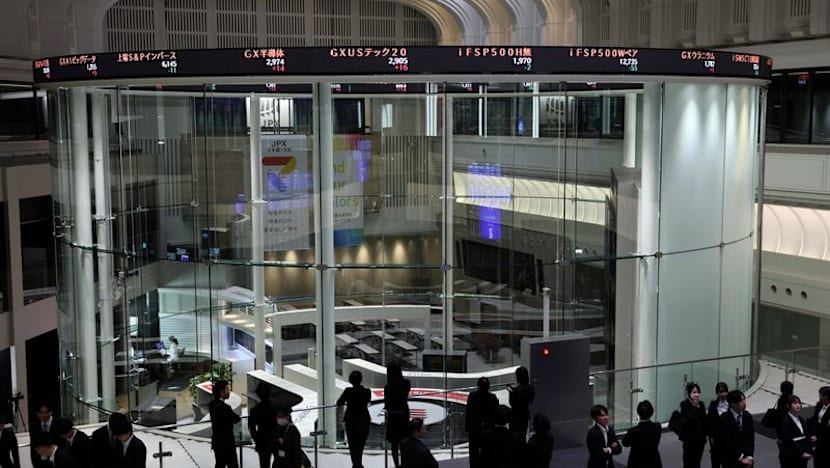
The steady climb in borrowing costs put equities on the defensive and Japan's Nikkei eased 0.9 per cent, with South Korea down 0.6 per cent. MSCI's broadest index of Asia-Pacific shares outside Japan dipped 0.1 per cent.
CNA Games Guess Word Crack the word, one row at a time Buzzword Create words using the given letters Mini Sudoku Tiny puzzle, mighty brain teaser Mini Crossword Small grid, big challenge Word Search Spot as many words as you can Show More Show Less On Wall Street, S&P 500 futures and Nasdaq futures were barely changed. In Europe, EUROSTOXX 50 futures, DAX futures and FTSE futures all edged up 0.1 per cent after sliding on Wednesday. The Wall Street Journal added to media reports that SpaceX, Broadcom and Oracle were looking to raise money to buy AI chips. Broadcom was looking for $50 billion in financing, while SpaceX was planning to issue $30 billion in investment-grade debt and raise $10 billion in loans to buy chips from Nvidia, which is a major shareholder in SpaceX. The news saw credit default insurance on SpaceX jump to record highs, while its shares and bonds lost ground. Nigel Green, CEO of deVere Group, warned of a dangerous loop where Nvidia was bankrolling the very customers who buy its products, leaving global investors at risk if the expected profits failed to materialise. "The AI build out started on cash," said Green. "It's increasingly running on credit, and credit changes the risk profile entirely." "Debt has to be repaid on schedule, whether the revenues show up or not," he added. "And this debt is landing in the bond funds and pension pots of savers right around the world.” SOVEREIGN BONDS VS CORPORATE DEBT Still, the fact much of this money will be spent on AI equipment could be positive for earnings in the semiconductor and memory sectors. Samsung Electronics on Thursday projected a 783 per cent jump in third-quarter operating profit to 107.4 trillion won ($80.17 billion), though its shares eased 0.3 per cent. All this corporate debt is coming at a time when sovereign bond markets are being sorely tested by inflation fears, ever-widening budget deficits and rising cash rates. Minutes of the Federal Reserve's last meeting released on Wednesday showed "most" members considered another rate hike likely by year end, though they would approach each meeting with an open mind. Markets imply just a 19 per cent chance the Fed will move again this month, but are 80 per cent priced for a rise in December. "We expect a second Fed hike in December, though we see a strong chance the Fed ultimately concludes further tightening is unnecessary," wrote analysts at Goldman Sachs in a note. The prospect of a pause in tightening helped keep 2-year Treasury yields at 4.78 per cent, while 10-year yields nudged up to 5.298 per cent having hit a 24-year top of 5.326 per cent overnight. Strains in the French bond market led Bank of France head Emmanuel Moulin to acknowledge the country's economic situation was serious, but he reassured investors it did not need help from the European Central Bank. Investors reacted by dumping the euro, which was pinned at $1.1198 having lost 0.6 per cent overnight. A break of the recent low at $1.1161 would risk a retreat to $1.1065. The dollar was the main beneficiary of the single currency's woes and its index rose to 102.22, near an 18-month peak. It was off 0.1 per cent on the yen at 157.90, with the Japanese currency protected by the threat of intervention. In commodity markets, Brent futures rose 0.9 per cent to $101.14 a barrel, while US crude futures added 0.8 per cent to $89.02 a barrel. Non-interest-bearing gold has suffered as yields climbed, leaving it at $4,105 an ounce and near two-month lows. [GOL/]
On Wall Street, S&P 500 futures and Nasdaq futures were barely changed. In Europe, EUROSTOXX 50 futures, DAX futures and FTSE futures all edged up 0.1 per cent after sliding on Wednesday.
The Wall Street Journal added to media reports that SpaceX, Broadcom and Oracle were looking to raise money to buy AI chips.
Broadcom was looking for $50 billion in financing, while SpaceX was planning to issue $30 billion in investment-grade debt and raise $10 billion in loans to buy chips from Nvidia, which is a major shareholder in SpaceX.
The news saw credit default insurance on SpaceX jump to record highs, while its shares and bonds lost ground.
Nigel Green, CEO of deVere Group, warned of a dangerous loop where Nvidia was bankrolling the very customers who buy its products, leaving global investors at risk if the expected profits failed to materialise.
"The AI build out started on cash," said Green. "It's increasingly running on credit, and credit changes the risk profile entirely."
"Debt has to be repaid on schedule, whether the revenues show up or not," he added. "And this debt is landing in the bond funds and pension pots of savers right around the world.”
Still, the fact much of this money will be spent on AI equipment could be positive for earnings in the semiconductor and memory sectors.
Samsung Electronics on Thursday projected a 783 per cent jump in third-quarter operating profit to 107.4 trillion won ($80.17 billion), though its shares eased 0.3 per cent.
All this corporate debt is coming at a time when sovereign bond markets are being sorely tested by inflation fears, ever-widening budget deficits and rising cash rates.
Minutes of the Federal Reserve's last meeting released on Wednesday showed "most" members considered another rate hike likely by year end, though they would approach each meeting with an open mind.
Markets imply just a 19 per cent chance the Fed will move again this month, but are 80 per cent priced for a rise in December.
"We expect a second Fed hike in December, though we see a strong chance the Fed ultimately concludes further tightening is unnecessary," wrote analysts at Goldman Sachs in a note.
The prospect of a pause in tightening helped keep 2-year Treasury yields at 4.78 per cent, while 10-year yields nudged up to 5.298 per cent having hit a 24-year top of 5.326 per cent overnight.
Strains in the French bond market led Bank of France head Emmanuel Moulin to acknowledge the country's economic situation was serious, but he reassured investors it did not need help from the European Central Bank.
Investors reacted by dumping the euro, which was pinned at $1.1198 having lost 0.6 per cent overnight. A break of the recent low at $1.1161 would risk a retreat to $1.1065.
The dollar was the main beneficiary of the single currency's woes and its index rose to 102.22, near an 18-month peak. It was off 0.1 per cent on the yen at 157.90, with the Japanese currency protected by the threat of intervention.
In commodity markets, Brent futures rose 0.9 per cent to $101.14 a barrel, while US crude futures added 0.8 per cent to $89.02 a barrel.
Non-interest-bearing gold has suffered as yields climbed, leaving it at $4,105 an ounce and near two-month lows. [GOL/]
Our chief editor shares analysis and picks of the week's biggest news every Saturday.
Get our pick of top stories and thought-provoking articles in your inbox
Stay updated with notifications for breaking news and our best stories
Join our channel for the top reads for the day on your preferred chat app