Spain's World Cup Win Drives Sponsor Windfall Beyond $50M Prize
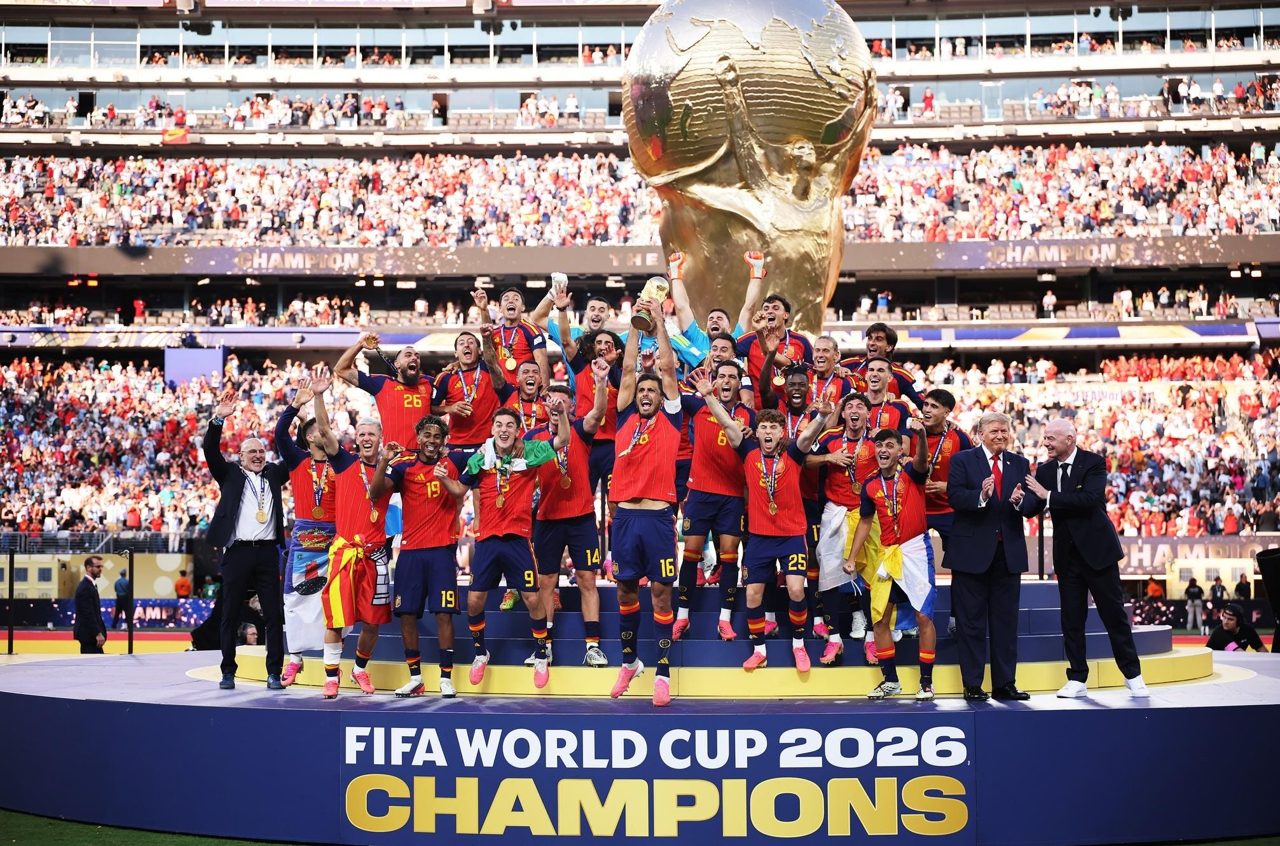
Spain's 1-0 World Cup final victory over Argentina secures a record $50 million FIFA payout while instantly revaluing a 35-brand sponsorship portfolio strengthened by dual-gender title dominance.
Spain defeated Argentina 1-0 in the 2026 World Cup final to claim a record $50 million prize from FIFA. The payout to the Royal Spanish Football Federation (RFEF) is the largest champion's check in tournament history, up from the $42 million Argentina took home in 2022.
FIFA funded the record prize pool through a massive expansion of the tournament. The governing body distributed $655 million among the 48 qualifying teams, plus $72 million in preparation funding, for a total financial contribution of $727 million. Shifting the field from 32 to 48 teams added 40 matches, generating substantial increases in broadcast inventory, ticket sales, and sponsorship placements.
The RFEF will retain the bulk of the $50 million for its operations and development budget. According to Diario AS, the federation has earmarked roughly 45 percent, or $22.5 million, for player bonuses. That amounts to approximately $865,000 gross for each of the 26 squad members, excluding separate individual endorsement payouts.
Commercial portfolio revaluation
The immediate financial significance for the RFEF extends well beyond the FIFA check. A World Cup title delivers a sudden visibility spike that effectively revalues the federation's 35-sponsor commercial roster.
Adidas leads the portfolio as technical sponsor, having recently fended off competition to extend a relationship spanning more than three decades. Beneath it sit principal partners with long-term commitments, including Mapfre and Telefónica's Movistar brand, both locked into deals running through 2030 across men's, women's, and youth teams.
This visibility gives the RFEF fresh leverage to court new global partners ahead of its next commercial cycle. The federation's negotiating position is uniquely strengthened because Spain currently holds both the men's and women's World Cup titles. No other nation has achieved that dual dominance, creating a broader demographic appeal for prospective sponsors.
FIFA's revenue engine
The escalating prize money reflects a broader structural boom in FIFA's revenues. The organization revised its 2023-2026 cycle revenue target upward to roughly $13 billion, from an initial $11 billion estimate. The 2026 World Cup alone is expected to generate about $8.9 billion, a 72 percent increase over the Qatar cycle.
Broadcasting rights account for roughly $4 billion of that total. Matchday revenue is the fastest-growing segment, forecast to jump up to 220 percent compared to 2022 due to higher ticket volumes and prices across the 104-game schedule.
For the RFEF, the victory caps a run that includes the 2024 European Championship. Heading into a cycle where Spain will co-host the 2030 World Cup, the federation holds two major men's titles and a highly marketable dual-gender championship pedigree to anchor its sponsorship pitches.