ASML hits $700bn on AI demand, eyes $1tn European record
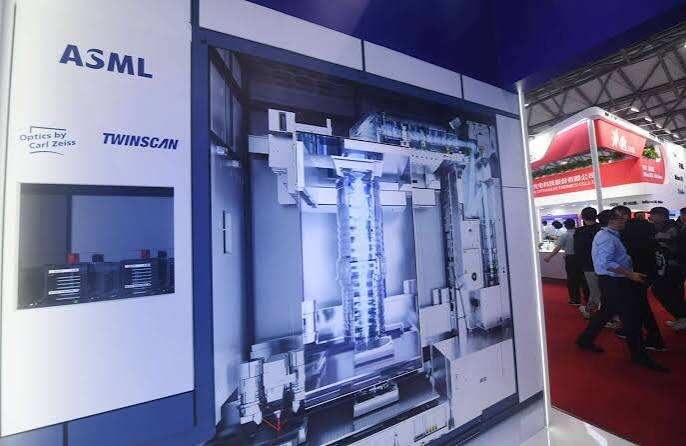
ASML has surged to a nearly $700 billion valuation, overtaking Europe's biggest companies on robust AI-driven chip equipment demand, though geopolitical and execution risks cloud its path to a historic $1 trillion milestone.
Strong second-quarter earnings have pushed ASML shares up roughly 60% this year, lifting its market capitalization to almost $700 billion. The Dutch semiconductor equipment maker has now definitively pulled ahead of major European corporate giants, surpassing the market valuations of LVMH, Novo Nordisk, SAP, Roche and AstraZeneca as investor enthusiasm for AI intensifies.
This outperformance stems from ASML's unassailable position as the sole manufacturer of extreme ultraviolet (EUV) lithography machines. These highly complex systems are indispensable for producing the most advanced logic and memory chips currently required by the technology sector. Financial markets are effectively treating ASML as a critical bottleneck in the AI supply chain, pricing the stock at a premium 38 times forecast 2027 earnings, according to LSEG data.
The demand outlook extends beyond the data centre processors driving the current AI frenzy. Major memory chip manufacturers, specifically SK Hynix, Samsung and Micron, are in the midst of a structural shift. They are migrating production away from older deep ultraviolet (DUV) processes toward newer EUV technology. This transition represents a significant, independent equipment upgrade cycle that should sustain ASML's order books. Furthermore, potential new semiconductor manufacturing projects, such as Elon Musk's planned Terafab facility in Texas to support SpaceX and Tesla, could generate fresh demand.
However, the path to becoming Europe's first trillion-dollar company is fraught with obstacles. The most immediate risk is whether hyperscale cloud providers like Google and Amazon will maintain their aggressive capital expenditure on AI infrastructure. Any hesitation or slowdown in these massive investments would inevitably reverberate through the semiconductor manufacturing supply chain and dampen demand for ASML's machinery.
Geopolitical tensions add another layer of uncertainty. Proposed US legislation, known as the MATCH Act, could impose further restrictions on ASML's ability to sell and service equipment in China. This is a material threat, as management expects the Chinese market to account for approximately 20% of its total sales in 2026. Finally, ASML must successfully manage its own execution risks, scaling its production capacity alongside key customers like TSMC and Samsung while untangling its intricate global supply chain.