Asia shares dip as $90 oil fans rate hikes, tech earnings loom
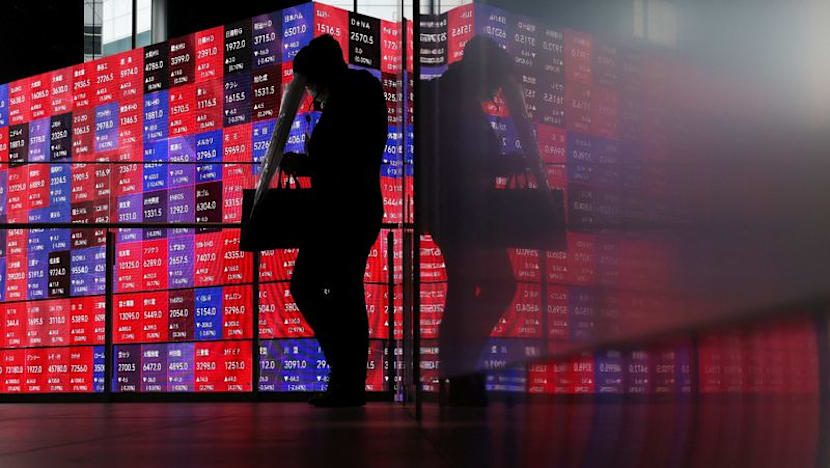
Escalating Gulf tensions have pushed Brent crude above $90, reviving inflation fears and forcing a repricing of interest rate expectations just as the tech sector faces a critical earnings week.
Asian equities traded lower on Monday as surging oil prices reignited inflation anxieties and upended expectations for central bank easing. Brent crude jumped 3 per cent to breach $90 a barrel for the first time in over a month. The catalyst was a ninth consecutive day of US military strikes against Iran, which has retaliated with attacks across the region.
The energy shock is pulling forward timelines for monetary tightening. Futures markets are now pricing in 29 basis points of Federal Reserve rate hikes by the end of the year, with a 60 per cent probability of a move as soon as September. This pushed 30-year Treasury yields back above the psychologically significant 5.0 per cent threshold, a level that historically draws capital away from equities and increases the valuation hurdle for future corporate earnings.
The swift shift in market positioning follows unexpectedly soft US consumer price data last week. However, the geopolitical premium on oil is altering the inflation calculus. "Our forecast is for a more gradual turn toward a Fed hike in 2027, but the balance of risks is shifting in the direction of an earlier hike than expected," said Bruce Kasman, chief economist at JPMorgan, pointing to a recent hawkish pivot in central bank rhetoric.
Rising borrowing costs are hitting markets precisely when the artificial intelligence trade is showing signs of strain. The Philadelphia Semiconductor Index has plummeted 20 per cent from its June record high after shedding 10 per cent last week. Sentiment worsened after Chinese AI firm Moonshot unveiled its Kimi K3 open-weight model, claiming performance that rivals Anthropic's Fable model.
The confluence of higher rates and tech volatility elevates the importance of this week's earnings releases from Alphabet, Intel and Tesla. BofA analyst Savita Subramanian forecast a 5 per cent beat on consensus estimates, translating to 28 per cent overall earnings growth. She expects semiconductors to drive more than half of that expansion, surging roughly 130 per cent year-on-year. Those expectations helped US and European futures edge slightly higher in early trading, though Asian benchmarks faltered.
MSCI's broadest index of Asia-Pacific shares outside Japan slipped 0.3 per cent, while South Korea's chip-heavy market fell 0.6 per cent following a near 9 per cent plunge last week triggered by the forced unwinding of retail leverage. Japan's Nikkei was closed for a holiday after a 6.4 per cent weekly drop.
The rising yield environment is also rippling through other asset classes ahead of the European Central Bank's Thursday meeting, where rates are expected to hold at 2.25 per cent. The euro was flat at $1.1433, while the dollar sat at 162.41 yen, just below a recent 40-year peak as Japanese authorities flag potential intervention. Non-yielding gold fell 0.6 per cent to $3,993 an ounce.