Solid-State Battery Breakthrough Clears Path for Automakers' Billions
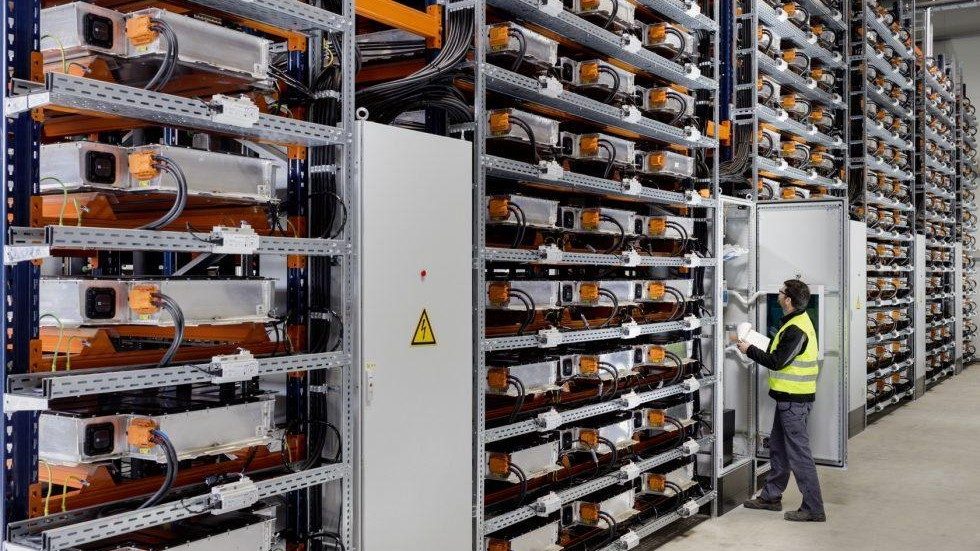
Two scientific studies have identified the root causes of solid-state battery failures, reducing technical risk for automakers and battery manufacturers that have already committed billions to the technology.
Two independent research teams have finally explained why solid-state batteries fail. Scientists at Germany’s Max Planck Institute for Sustainable Materials found that lithium deposits generate extreme internal pressure during charging, eventually cracking the solid electrolyte from within. Separately, researchers from MIT and the Technical University of Munich discovered that tiny electrical imbalances inside the electrolyte trigger the unwanted lithium growth.
The findings, published in Nature and Nature Nanotechnology, replace a persistent scientific mystery with a defined design problem. For financial markets, this reduces the existential risk surrounding the massive capital expenditures automakers have committed to the technology. Solid-state batteries promise higher energy density, faster charging, and improved safety over existing lithium-ion cells, offering a potential paradigm shift for electric vehicles, aviation, defense, and grid-scale energy storage.
Automakers are already acting on the assumption that these technical hurdles can be cleared. Honda has invested approximately $280 million in a 27,400-square-meter demonstration production line in Sakura City, Japan. Battery production at the facility began in January 2025, where the company is testing roll-pressing techniques to compress the solid electrolyte and reduce microscopic air gaps that impede ion transport.
Other major manufacturers are advancing rapidly along the value chain. Toyota is targeting commercial deployment between 2027 and 2028, supported by a new Idemitsu pilot facility producing sulfide solid electrolytes derived from petroleum-refined sulfur. Mercedes-Benz has already tested a modified EQS on public roads using Factorial Energy cells, completing a 1,205-kilometer journey from Stuttgart to Malmö with 137 kilometers of estimated range remaining.
BMW is simultaneously testing large-format Solid Power cells in an i7 around Munich, while Stellantis, Hyundai, Samsung SDI, and CATL are all expanding their pilot production or strategic partnerships.
Despite this momentum, commercialization is not guaranteed. Manufacturers must now prove they can consistently produce these cells at an automotive scale, ensure they survive thousands of charging cycles, and reach cost levels that compete with traditional lithium-ion batteries. The scientific debate over solid-state batteries is effectively over, and the focus has shifted entirely to the factory floor.